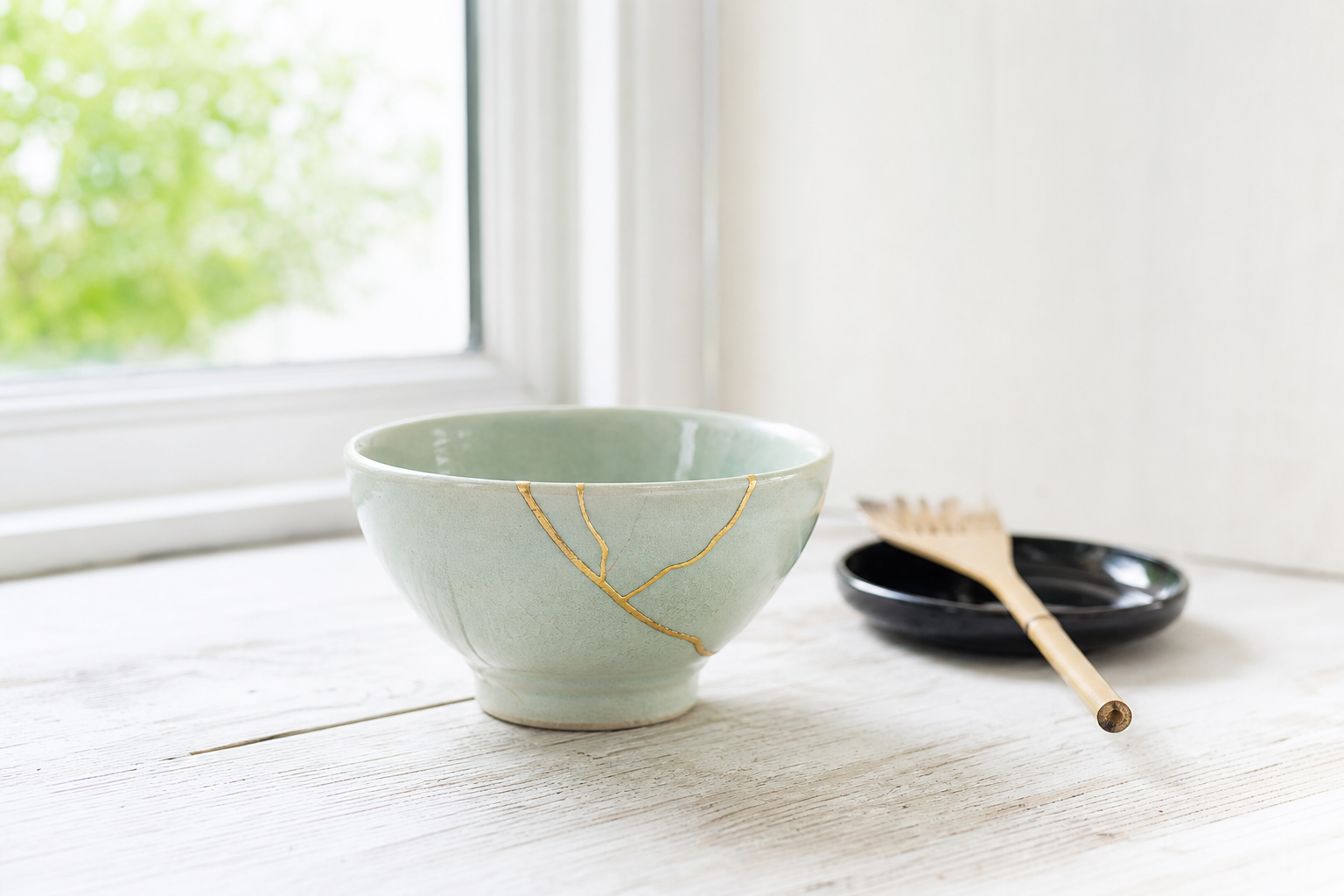
You have probably seen kintsugi in a photograph: a bowl broken and put back together, the cracks running through it in bright gold. It looks like something that happens to an object, not a thing you could do with your own hands. In Tokyo, you can do it yourself, at a table that smells faintly of lacquer, a broken piece and a fine brush in front of you. Kintsugi (金継ぎ) is the Japanese practice of repairing broken ceramics with lacquer and finishing the mended join in metal powder, usually gold. It is not only something to admire behind museum glass. Book
You have probably seen kintsugi in a photograph: a bowl broken and put back together, the cracks running through it in bright gold. It looks like something that happens to an object, not a thing you could do with your own hands. In Tokyo, you can do it yourself, at a table that smells faintly of lacquer, a broken piece and a fine brush in front of you.
You Can Actually Make One Yourself
Kintsugi (金継ぎ) is the Japanese practice of repairing broken ceramics with lacquer and finishing the mended join in metal powder, usually gold. It is not only something to admire behind museum glass. Book a kintsugi workshop in Tokyo and you sit down at a table, pick up a piece that is actually broken, and spend an afternoon closing the crack with your own hands. There is a brush, a small line of lacquer drawn along the break, and at the end a gold seam you set yourself.
This is a guide to the kintsugi workshop Tokyo options that use real urushi, and it is honest about one thing most workshop lists leave out. There is real kintsugi and there is the quick version, and they are not the same experience. Below are three Tokyo studios that use real urushi lacquer, starting with the one place a short-term visitor can finish a real piece in a single sitting. For the craft and history behind the repair, our guide to what kintsugi is covers the background this article assumes.
Real Kintsugi vs. the One-Hour Version
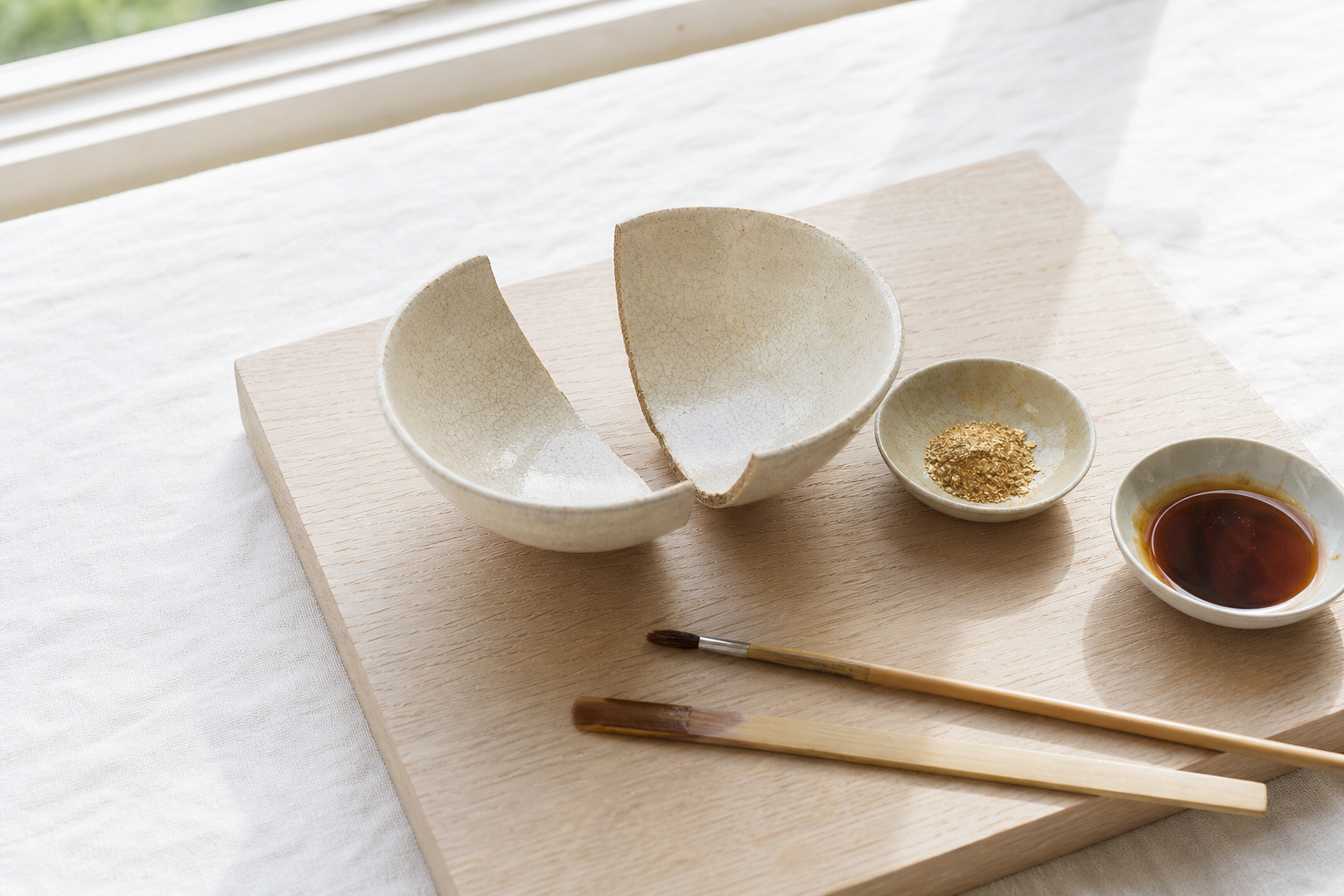
Real kintsugi uses urushi, the natural lacquer tapped from the urushi tree. Urushi does not dry the way glue dries. It cures slowly through a reaction with humidity, over days and sometimes weeks, which is exactly why a traditional repair usually takes several visits. The gold you see at the end sits on lacquer that has hardened on its own schedule, not yours.
That slowness is the point, not a flaw. Working with urushi means matching the pace of the material: apply a thin layer, wait for it to cure, come back, refine it, and only then set the metal. You are not decorating a bowl so much as repairing it and letting the lacquer earn its hold. The patience is part of what you are learning, and it is the part a one-hour session cannot give you.
Most workshops marketed to visitors use a faster method instead: a synthetic resin to bond the pieces and metallic powder or paint for the gold lines. You finish in an hour and walk out with the bowl the same day. In a photo the result looks close. The material and the feel of the work are different, and so is what you take home.
Neither one is wrong. If you have a single free hour, the synthetic version is a fair way to get the shape of the experience, and there are good studios for it near the end of this guide. But if you came to Tokyo curious about the actual craft, it helps to know which kintsugi workshop Tokyo options put real lacquer in your hands. These three do.
Uzumako Ceramic Art School: Real Urushi in One Afternoon
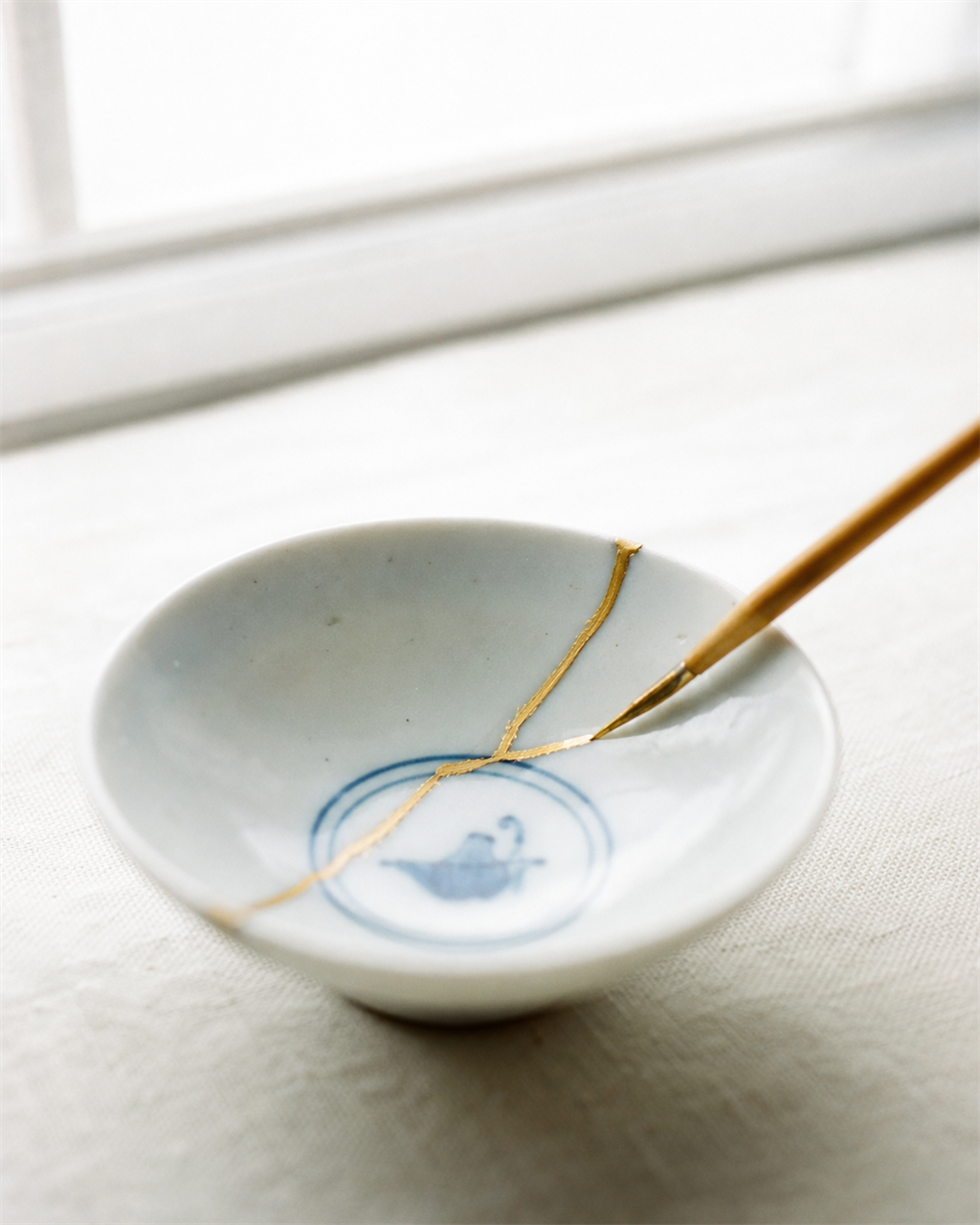
Most real-urushi workshops ask you to come back several times, because the lacquer needs to cure between steps. Uzumako Ceramic Art School is the rare studio that has built a single session around genuine lacquer, so a traveler with one open afternoon can still do the real thing and leave with a finished piece.
You work at a small table, no more than four people in the room, guided by an instructor trained in lacquer at Tokyo University of the Arts. You can bring a broken bowl or cup of your own, which is the version most people find quietly satisfying, or use one the studio provides. The instructor walks you through joining the break, drawing the lacquer along the crack, and setting the gold line on top. Two hours later you are holding a piece you repaired yourself, not a demonstration you watched.
As a first kintsugi workshop Tokyo visitors can complete in the genuine craft rather than the shortcut, this is the one to book.
The details: Shiba, Minato Ward. About two hours. Around 7,700 yen for the trial session, an introductory rate against a standard price nearer 11,000 yen. Ages 10 and up, small groups of up to four. Uzumako has an English-facing website and hosts international guests; instruction is mainly in Japanese with simple English support on paper and translation apps as needed, so confirm the level of English guidance when you reserve. Booking is online. If you want to go further, the studio also offers a three-session plan.
Tou to Urushi Nogizaka Atelier: For Going Deeper
If you would rather do it across several visits, closer to the slower traditional process, Tou to Urushi is a small atelier three minutes from Nogizaka Station. It runs on a pay-per-session basis with no enrollment fee and no monthly tuition, so you can come as many times as your piece needs and stop when it is finished.
This is the slow path. A full urushi repair here takes roughly four or five sessions, with drying time in between, because real lacquer will not be hurried. That makes it a better fit for residents or longer stays than for a two-day trip. What you get in return is the whole process rather than a compressed version of it, in a working atelier rather than a tourist setting. You come empty-handed; the tools and materials are there.
The details: Nogizaka Station, three-minute walk (Minato Ward). Around 7,700 yen per session, three hours each, held in the afternoon from 14:00 to 17:00. Confirm the current price when you book. Genuine urushi throughout. English support is not confirmed, so contact the atelier before booking if you need it. The same atelier also runs a one-day maki-e session, a real-lacquer gold-decoration class, if you want a single-day taste of working with urushi without the multi-visit commitment.
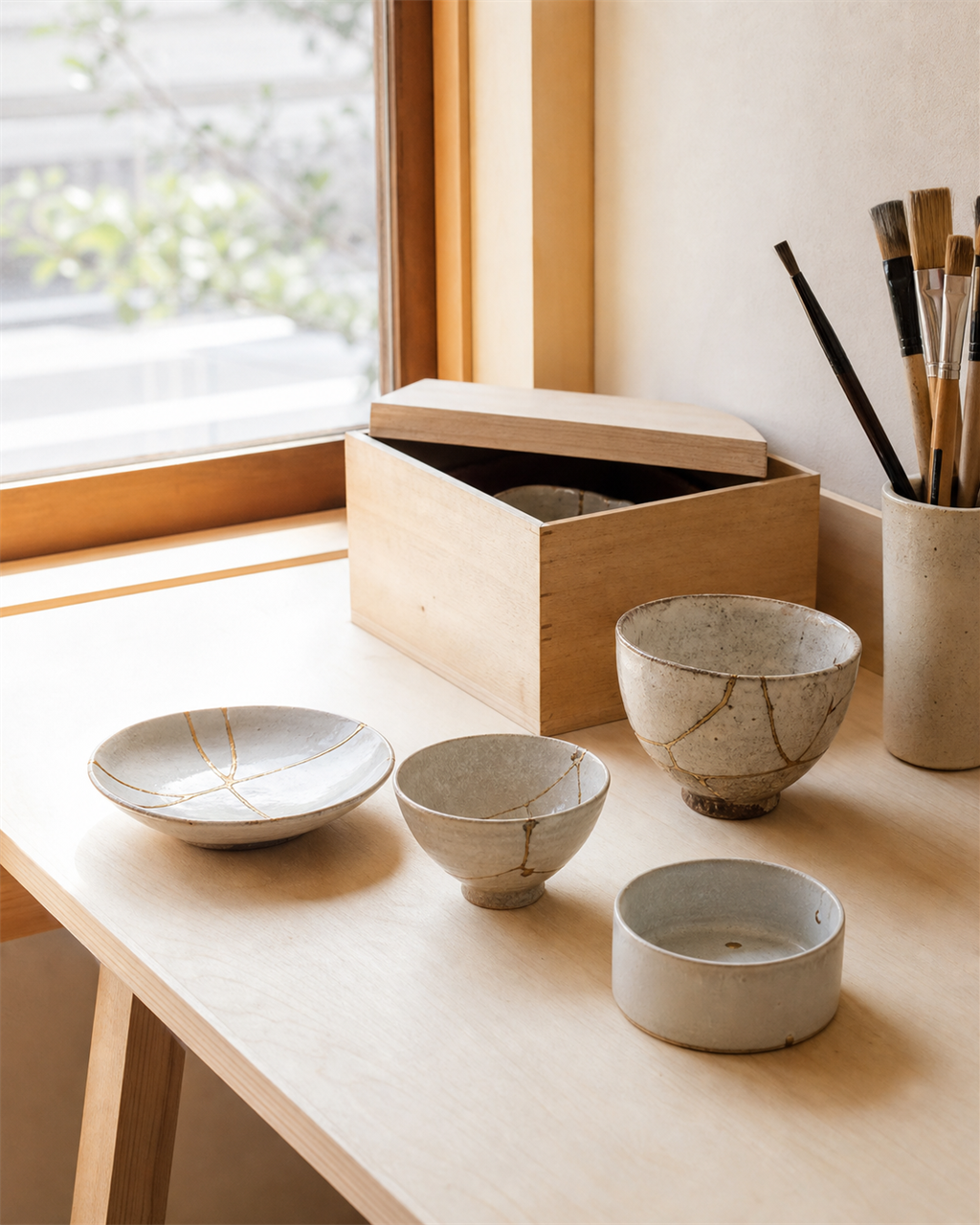
Mutoh Nihonbashi Yumeto: An Old Lacquer House
For the feeling of learning inside a place that has handled lacquer for a long time, there is Mutoh Nihonbashi Yumeto, a long-standing lacquerware shop in Nihonbashi that teaches hon-urushi, meaning genuine-lacquer, kintsugi in its own workroom.
The structure here is worth understanding before you book. Your first visit is a simplified introduction, a way to learn the motions without the full lacquer timeline. From the second visit it becomes the genuine urushi course, and you buy a small kit to continue. A complete repair runs somewhere between five and ten visits depending on the damage, again because the lacquer sets its own pace. It suits someone who wants the real craft in a traditional shop and can return more than once.
The details: Nihonbashi, Chuo Ward. 6,600 yen per 90-minute session. The session is conducted in Japanese; English, French, and Chinese interpretation is available for an added fee, arranged in advance, which makes the shop one of the more accessible options for visitors who want to ask questions as they work. Book by phone or online, or through experience platforms such as Jalan and Otonami. The same shop also runs a simplified one-day experience at 6,600 yen for anyone who only has a single slot.
At a Glance
| Studio | Area | Price | Time | Visits to finish | English | |—|—|—|—|—|—| | Uzumako Ceramic Art School | Shiba | approx. 7,700 yen (trial) | 2 hours | 1 (single session) | Japanese with simple English support | | Tou to Urushi Nogizaka Atelier | Nogizaka | approx. 7,700 yen/session | 3 hours | 4-5 | Not confirmed; ask ahead | | Mutoh Nihonbashi Yumeto | Nihonbashi | 6,600 yen/session | 90 min | 5-10 (1st is a simple intro) | Japanese; paid interpretation |
How to Choose the Right One
Start with how much time you have. If you want a finished piece and only have one afternoon, Uzumako is the clear pick for a kintsugi workshop Tokyo lets you complete in a single visit. If you want the full slow process and can return, Nogizaka or Nihonbashi will give you that.
Then think about the lacquer itself. Real urushi needs time to cure, so ask each studio how you get your piece home. Some let you take it in a drying box; some finish drying it for you and mail it. This matters more than it sounds when your piece is not fully hardened by the time your session ends. It is also worth knowing that raw urushi can irritate sensitive skin, so mention any concerns to your instructor.
On language, Uzumako and Mutoh are the most ready for visitors, Mutoh with paid interpretation booked in advance and Uzumako with an English-facing setup and simple on-paper support. At Nogizaka, confirm ahead. For booking, each studio takes reservations directly, and some also appear on experience platforms, which can be easier if you want to pay and confirm in English before you arrive.
The vessels you repair are worth a second look too. A chipped rice bowl or a small everyday Japanese dish is exactly the kind of object kintsugi was made for, and repairing one changes how you see it afterward. It also connects you to a much longer history of Japanese ceramics.
If You Only Have an Hour
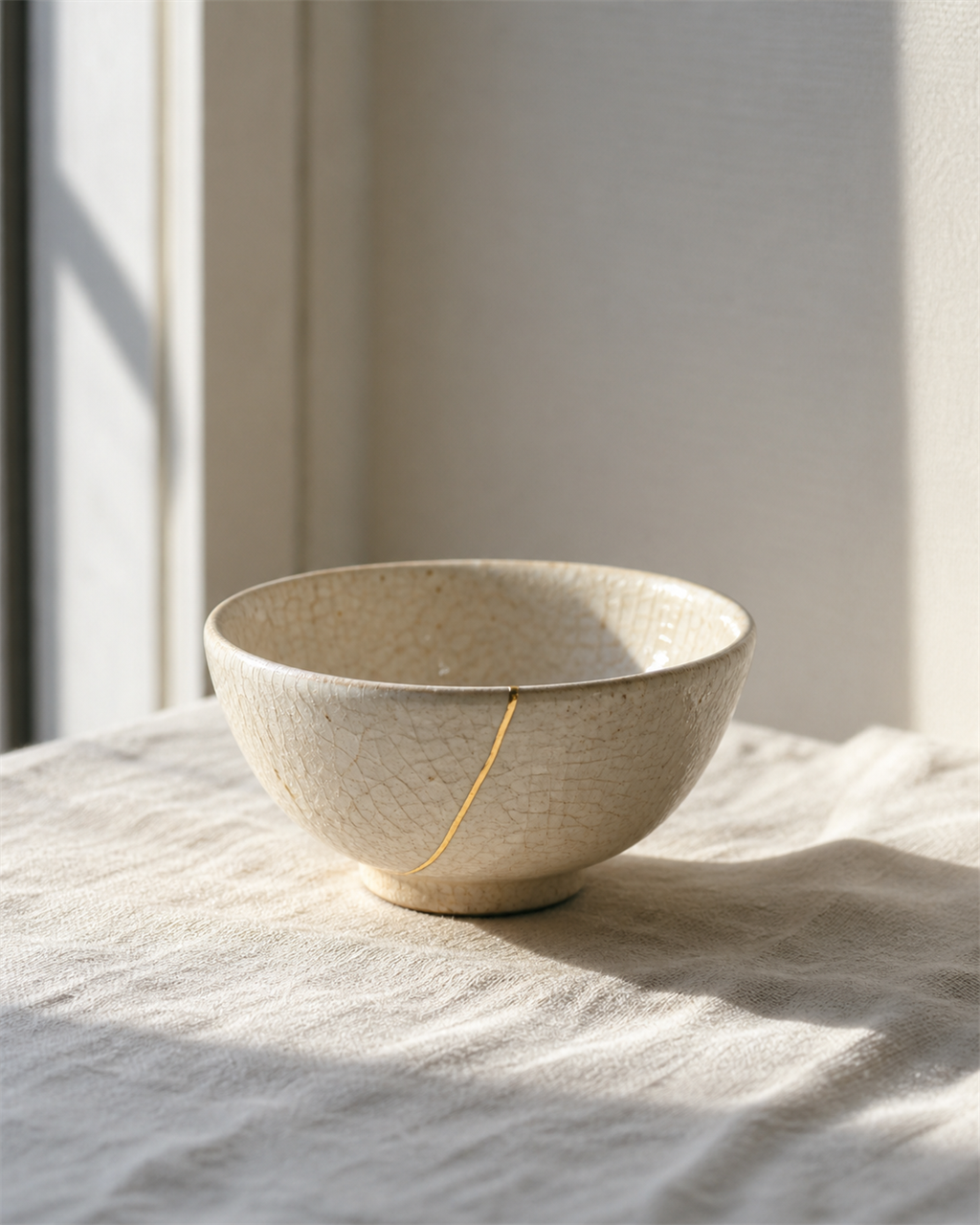
If your schedule cannot spare an afternoon, the same-day version is a reasonable trade. These workshops use synthetic resin and metallic powder rather than urushi, so you finish in one sitting and pay less in time, and you still learn the basic gesture of the repair. Just go in knowing it is the modern shortcut, not the lacquer craft.
A few that host visitors: Tsugu Tsugu, with studios in Ebisu and Asakusa and English-speaking instructors; mon cadeau in Shibuya, where the modern kintsugi class is taught in English; and Kuge Crafts near Shin-Koenji, a small-group studio with basic English and an intimate setting.
But if you can find the afternoon, the real lacquer is worth the wait. You leave with a bowl you can use again, its break closed in urushi and marked in gold where you set it. If you want to understand what you are really doing before you go, read what kintsugi is first.