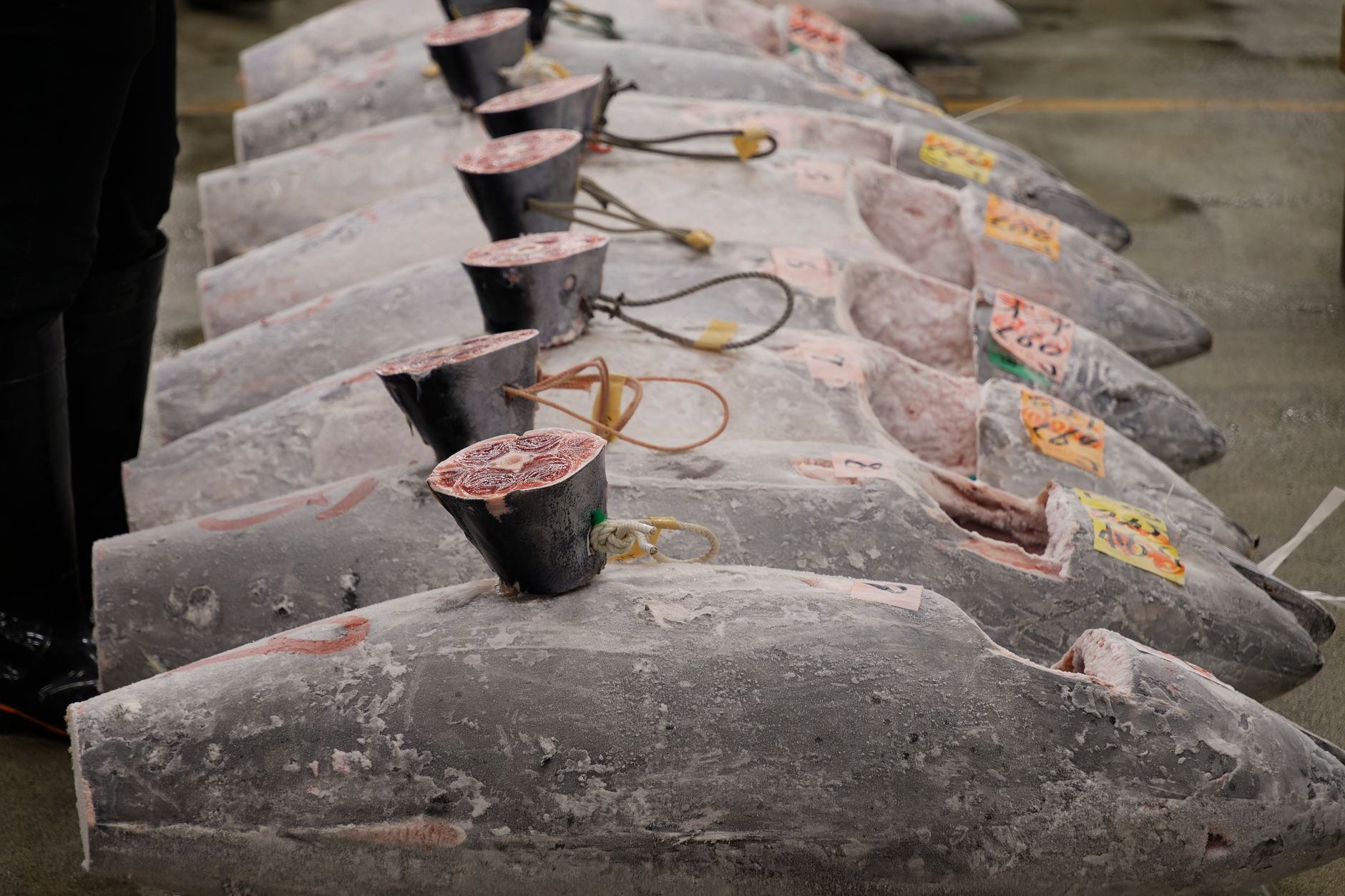
The wholesale fish market left Tsukiji in 2018. It moved to Toyosu, six kilometers east, and took the early-morning auctions with it. What remained was the outer market: the shops, the food stalls, the street vendors, and a particular kind of morning that had been forming around the wholesale trade for most of the twentieth century. That morning still exists. It just no longer depends on the fish. Tsukiji breakfast is not a tourist concept.
The wholesale fish market left Tsukiji in 2018. It moved to Toyosu, six kilometers east, and took the early-morning auctions with it. What remained was the outer market: the shops, the food stalls, the street vendors, and a particular kind of morning that had been forming around the wholesale trade for most of the twentieth century.
That morning still exists. It just no longer depends on the fish.
Tsukiji breakfast is not a tourist concept. It is a set of habits that formed when workers, buyers, and suppliers needed to eat before the real business started: quickly, affordably, and without much ceremony. Visitors can enter that culture now, but the culture does not adjust to them. The counter is where it is. The food is what it is. The queue is however long it happens to be.
There are three places below. They are not ranked. They are not the only options. They represent three different answers to the same question: what kind of morning does Tsukiji actually produce?
—
Tsukiji in the Morning: What It Actually Is
The outer market runs along the southern edge of the former wholesale site. It is a dense stretch of narrow lanes, mostly open-air or barely covered, with fishmongers, egg shops, kitchen supply dealers, and a handful of small restaurants that have been here long enough to have regulars who are themselves getting old.
The best time to come for tsukiji breakfast is before 8 a.m. Not because anything dramatic happens, but because the composition of the crowd is different. Before 8, the people eating are mostly working. After 10, the people eating are mostly visiting. Both are legitimate. They produce different mornings.
—
Kitsuneya: The Counter Since 1947
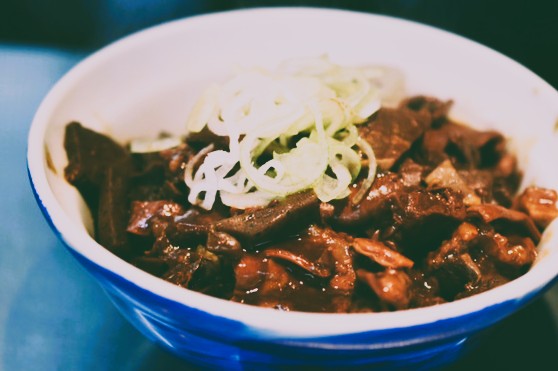
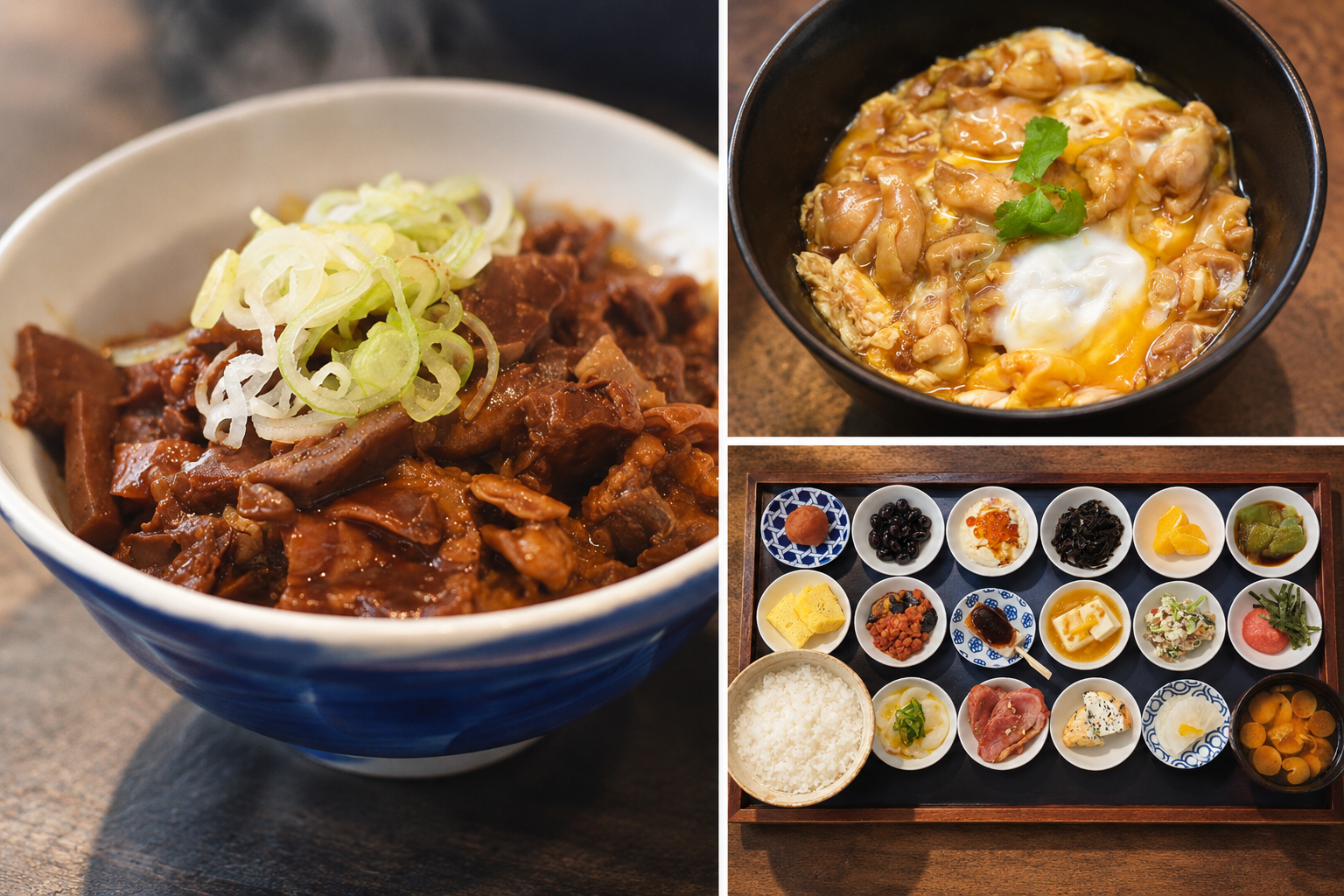
Kitsuneya opened in 1947. It has not updated the format much since. The setup is a counter with minimal seating, mostly standing, roughly five people wide. The menu is horumon-don (offal rice) and gyudon (beef rice), cooked in a sweet-savory sauce that has been adjusted incrementally over decades until it tastes like what it is supposed to taste like.
That is the full description. There is no interior to speak of. You eat, you leave.
There is usually a queue. A notable share of the people in it are from outside Japan. This is worth naming plainly: Kitsuneya is not a secret. Word has spread, and the word was accurate, and people come specifically for this. The food is the same regardless of who is eating it. The counter does not adjust.
What to Expect
The horumon-don is not mild. Offal has a distinct flavor that is unfamiliar to most people who did not grow up eating it. If this is your first time, that is part of the experience. You are eating what the people next to you have eaten before their working day began for the past several decades. That is not a romantic framing. It is just a fact about what the food is and where it comes from.
Hours are typically 6:30 to around 13:30. Closed Sundays, national holidays, and sometimes Wednesdays. Confirm before visiting.
KITSUNEYA
Kitsuneya is not performing its history. It has not been preserved or curated. It is simply still there, still making the same food, because the people who eat there keep coming back. That continuity is not always visible in Tokyo, where things change quickly. Here it is legible. The worn counter is not aesthetic. It is evidence.
—
Toritoh Bunten: Chicken Soup and the Logic of the Wholesaler
Toritoh Bunten is the direct-run restaurant of a chicken wholesaler that has been operating near Tsukiji for over a hundred years. The restaurant itself is modest: a counter with roughly sixteen seats, minimal decoration, and a morning-only menu.
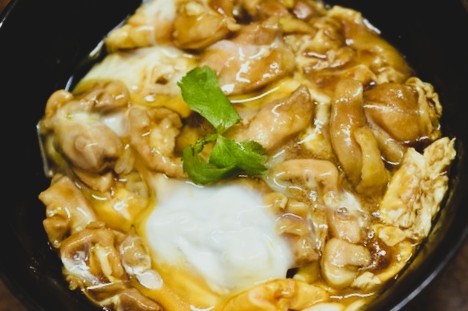
The morning set is tori-sui and tamago-kake-gohan (TKG). Tori-sui is a clear chicken broth, made from the stock that a business of this kind has always had access to. Tamago-kake-gohan is raw egg stirred into hot rice, a combination that is standard in Japanese breakfast culture but unfamiliar to most visitors. The price is around JPY 700 for the set; verify before visiting, as pricing changes.
The tori-sui is precise in the way that a long-established chicken business tends to be precise about chicken. The stock is clean and lightly seasoned enough to taste like the bird, not like seasoning. It arrives hot.
What It Is
The tamago-kake-gohan works like this: the heat of the rice begins to cook the egg just slightly on contact. Within a minute of stirring, the mixture is somewhere between a very soft scramble and a barely set custard, distributed through every bite. This is not a halfway measure. It is the intended result, and it is different from eating a fried or soft-boiled egg in a way that is worth experiencing once to understand.
Hours are roughly 7:30 to 14:00, though these can vary. Closed Sundays, national holidays, and sometimes Wednesdays. Confirm the morning set is available before making a special trip.
TORITOH
Toritoh Bunten does not need to explain itself. A long-established chicken wholesaler has a certain confidence in what its stock tastes like. The price of the set still feels rooted in the world where it originated: the world of suppliers eating before a full day of work.
The simplicity is the point. Not simplicity as a design choice, but simplicity as the natural result of a business that has never had a reason to complicate things.
—
Tsukiji Honganji Cafe Tsumugi: The Temple’s Different Clock
Tsukiji Honganji is a Buddhist temple founded in 1617. The original structure was destroyed in the 1923 Great Kanto Earthquake. The current building was completed in 1934, designed by architect Ito Chuta in an Indo-Saracenic style, a form that draws from South Asian and Mughal architectural traditions rather than Japanese temple conventions. The result still looks unexpected in its Tokyo surroundings.
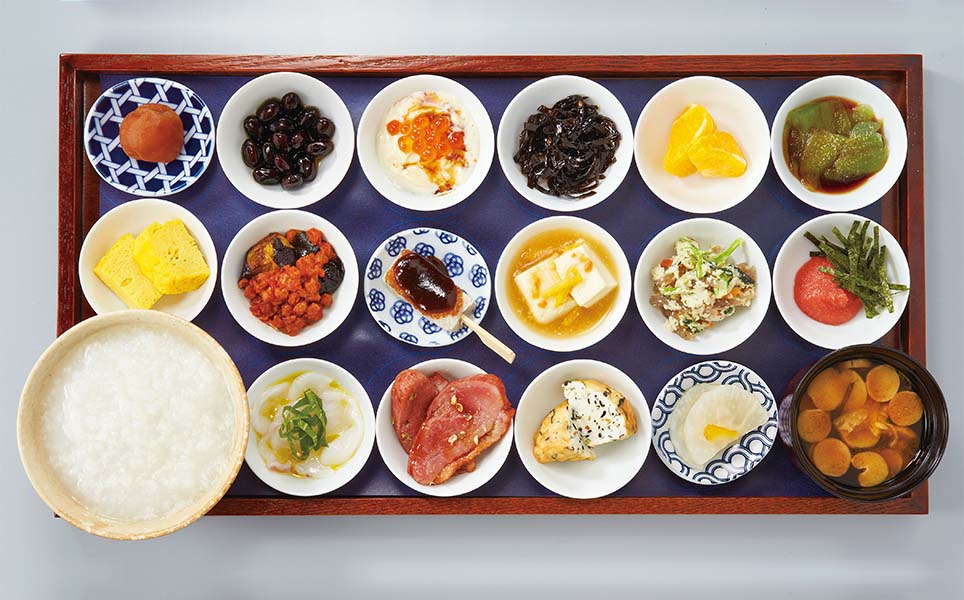
Tsumugi is the cafe on the temple grounds. It opens at 8:00 a.m. daily, with breakfast service running until around 10:30. The set is the 18-dish morning meal, priced at around JPY 2,640 including tax at the time of writing. Reservation is available and recommended for the breakfast time slot; check the official temple site for current booking details.
The number 18 has significance in the Jodo Shinshu Buddhist tradition that the temple follows. The 18 dishes are built around that framing. The breakfast works well enough as food without knowing this, but it is one reason the menu is structured the way it is.
What It Is
The set takes time to eat. It is built around rice or porridge, miso soup, and rotating small dishes. The small dishes change with the season while the 18-dish structure remains the named format: pickles, fish, egg preparations, seasonal vegetables, varied by what is available. Many small things, served at once, meant to be eaten slowly.
The dining room faces the temple’s main hall and courtyard. The pace here is very different from Kitsuneya or Toritoh Bunten. There is no queue mentality. No one is trying to turn the table. The breakfast is designed for a certain kind of unhurried morning.
Some people find this quietness formal or even uncomfortable if they are used to faster eating. That is worth knowing before sitting down. The price and the format are both higher-commitment than the market counters. But the commitment is to a particular pace, not to difficulty.
Tsukiji Honganji Cafe Tsumugi
The temple runs on its own schedule, indifferent to fish market hours. It has been on this site since 1617. The outer market is, by comparison, recent. This reversal of the usual Tsukiji hierarchy (where the market came first in most visitors’ mental map) is part of what makes Tsumugi an interesting option within the same neighborhood.
You can eat horumon-don at a market counter before 8 a.m., then walk ten minutes and sit at a table inside a Buddhist temple’s cafe for two hours. Both are Tsukiji. The neighborhood holds both without contradiction.
—
Which One to Choose
Each version of tsukiji breakfast offers something the others do not. The three are parallel, not hierarchical. The right choice depends on what kind of morning you are having.
Kitsuneya is for the earliest start and the most direct experience of what Tsukiji’s market culture actually ate. Minimal seating, short visit, unfamiliar but historically grounded food. Best before 8 a.m.
Toritoh Bunten is for those who want a seated, modest, affordable morning that does not perform its credentials. The tori-sui and TKG combination is worth trying once if tamago-kake-gohan is new to you. Still early, still quick, but with a seat.
Tsumugi is for those who want to stay longer, spend more, and eat in a way that belongs to the temple rather than the market. The 18-dish set rewards slowness. Best approached with a reservation and no tight schedule afterward; note that breakfast service ends around 10:30.
The neighborhood is denser with time than it looks from the outside. A tsukiji breakfast at any of these three places offers a version of that density: the 1947 counter still open, the century-old wholesaler still serving stock, the seventeenth-century temple still setting its own pace on the same block. What stays with you depends on which version you were looking for.
Tsukiji is one version of how Japanese mornings work. The piece on convenience store onigiri covers another: the everyday meal that connects daily life across the country, different in form but not entirely different in logic. For a longer look at how Japan holds space for slower rhythms, the quiet travel guide is a useful companion.
—
Shop hours, prices, and availability change. Confirm before visiting, especially for the Tsumugi breakfast reservation and the morning-only set at Toritoh Bunten.