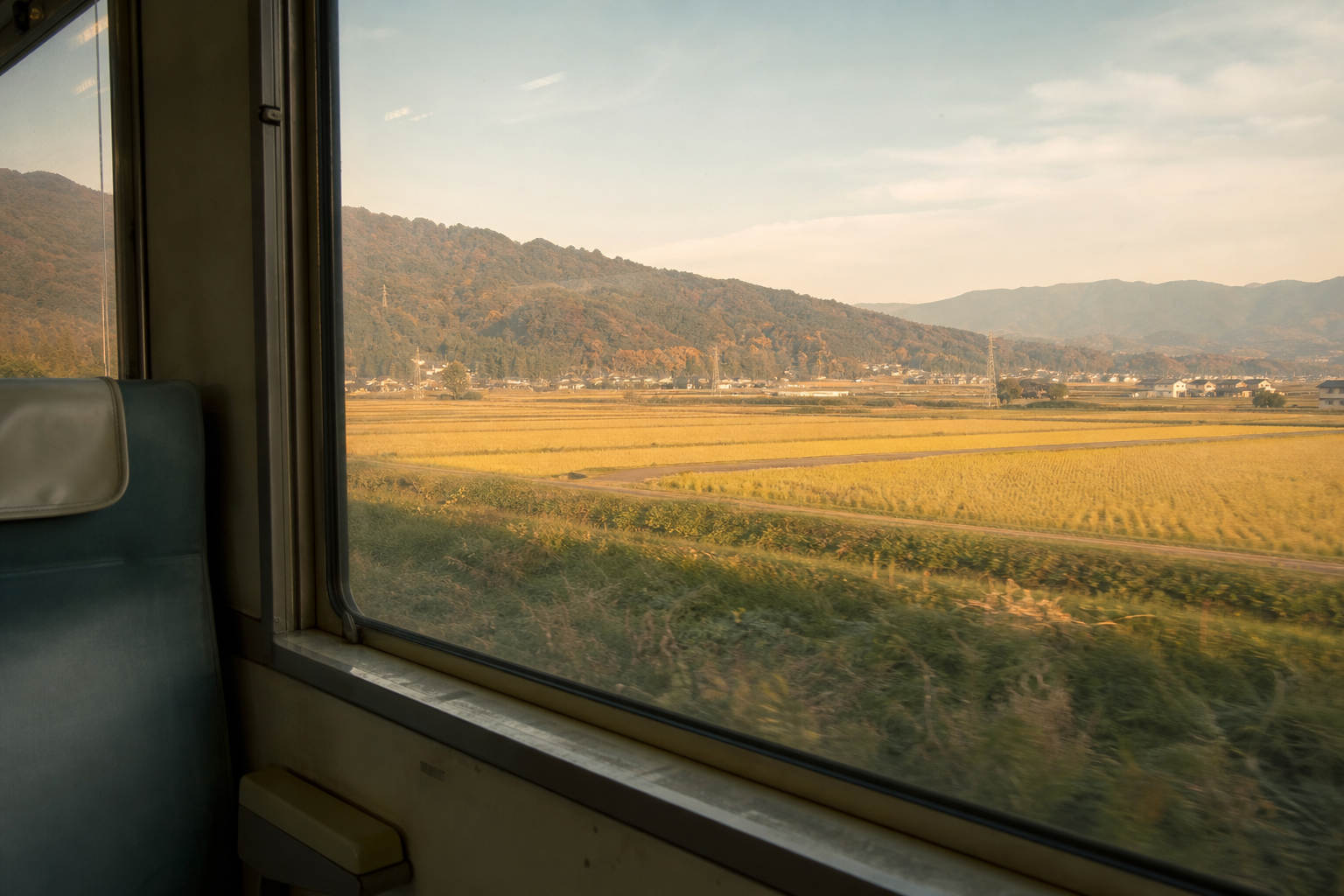
The train is a local one, the kind that stops at every station, even the ones with no platform shelter. At some point, you notice you are the only foreigner in the carriage. The woman across from you has a small bag of groceries. An elderly man reads a newspaper. The rice fields outside the window change almost imperceptibly. Nobody is going anywhere urgent. This is one version of quiet travel in Japan. Quiet travel in Japan, as a practice, is the decision to move slowly enough through a place that it can become more than a backdrop.
What Is Quiet Travel?
A Different Kind of Arrival
The train is a local one, the kind that stops at every station, even the ones with no platform shelter. At some point, you notice you are the only foreigner in the carriage. The woman across from you has a small bag of groceries. An elderly man reads a newspaper. The rice fields outside the window change almost imperceptibly. Nobody is going anywhere urgent.
This is one version of quiet travel in Japan.
Quiet travel in Japan, as a practice, is the decision to move slowly enough through a place that it can become more than a backdrop. To stay longer, notice more, and build in time that has no agenda. It is not a tour category or a certified style of tourism. It is closer to an attitude: a willingness to let the pace of a place set the pace of your visit.
What It Is Not
The phrase “slow travel” is sometimes used to mean long-haul trips spread over months. But quiet travel is not primarily about duration. It is about attention. You can move quietly through three days in a small onsen town, or you can spend two weeks checking landmarks off a list. The difference is not the calendar; it is the relationship to place.
Japan’s standard tourist circuit, Tokyo to Kyoto to Osaka punctuated by a day trip to Nara, is efficient and rewarding in its own way. But it is, by design, a series of arrivals and departures. Quiet travel asks a different question: what happens if you stay?
—
Why Japan Is Suited for Quiet Travel
A Cultural Infrastructure for Slowness
Japan has, in many of its traditional forms of hospitality and leisure, an infrastructure built around unhurried time. The ryokan, a traditional inn, is not simply a place to sleep. It tends to structure the day around meals, bathing, and rest in a way that discourages rushing. Breakfast is served at a specific time. The bath is available in the morning and evening. There is often little else to do, and that is, in some ways, the point.
The kissaten, Japan’s older style of coffee shop, operates on a similar logic in many cases. These are rooms where time moves at a different pace, where a cup of coffee can take an hour without anyone noticing. (For more on this culture, see what the kissaten tradition means in Japan.)
Onsen towns, pilgrimage routes, and rural train lines are all, in different ways, conditions that support quiet travel in Japan naturally — places where the cultural expectation is often that you will slow down. Japan does not always advertise this, but it tends to be there.
The Concept of Satoyama
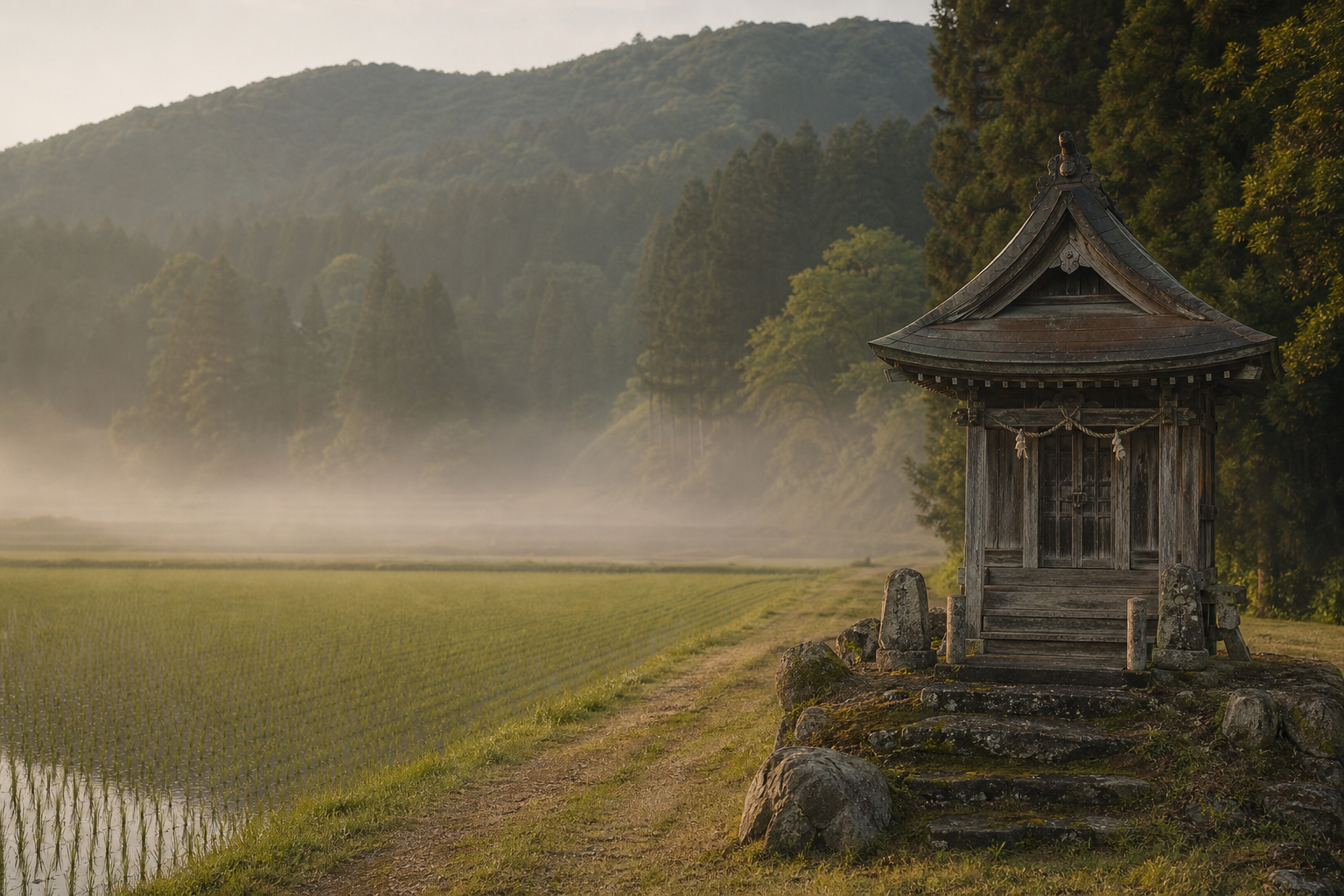
There is a Japanese word, satoyama (里山), that refers to the landscape between village and mountain. It is the inhabited, tended countryside that sits at the edge of the wild. It is not wilderness and not city. It is the land where rice grows, where small shrines mark old paths, where the forest begins just past the last house.
Satoyama describes a physical space, but it also suggests a pace of life. In these areas, the rhythms of agriculture and season are often still visible: spring planting, summer heat, autumn harvest, winter stillness. Traveling through satoyama country, on foot or by local train, means moving through a Japan that has not been shaped primarily for tourism.
Seasonal Change as a Natural Pace-setter
Japan’s four seasons genuinely structure daily life, cuisine, clothing, and cultural practice in ways that are still visible outside major cities. Quiet travel benefits from this because the season sets the pace for you. In late autumn, the light falls differently, the persimmons hang on bare branches, the mornings are cold. You dress accordingly. You walk more carefully. The season does not hurry.
—
What Quiet Travel Looks Like in Practice
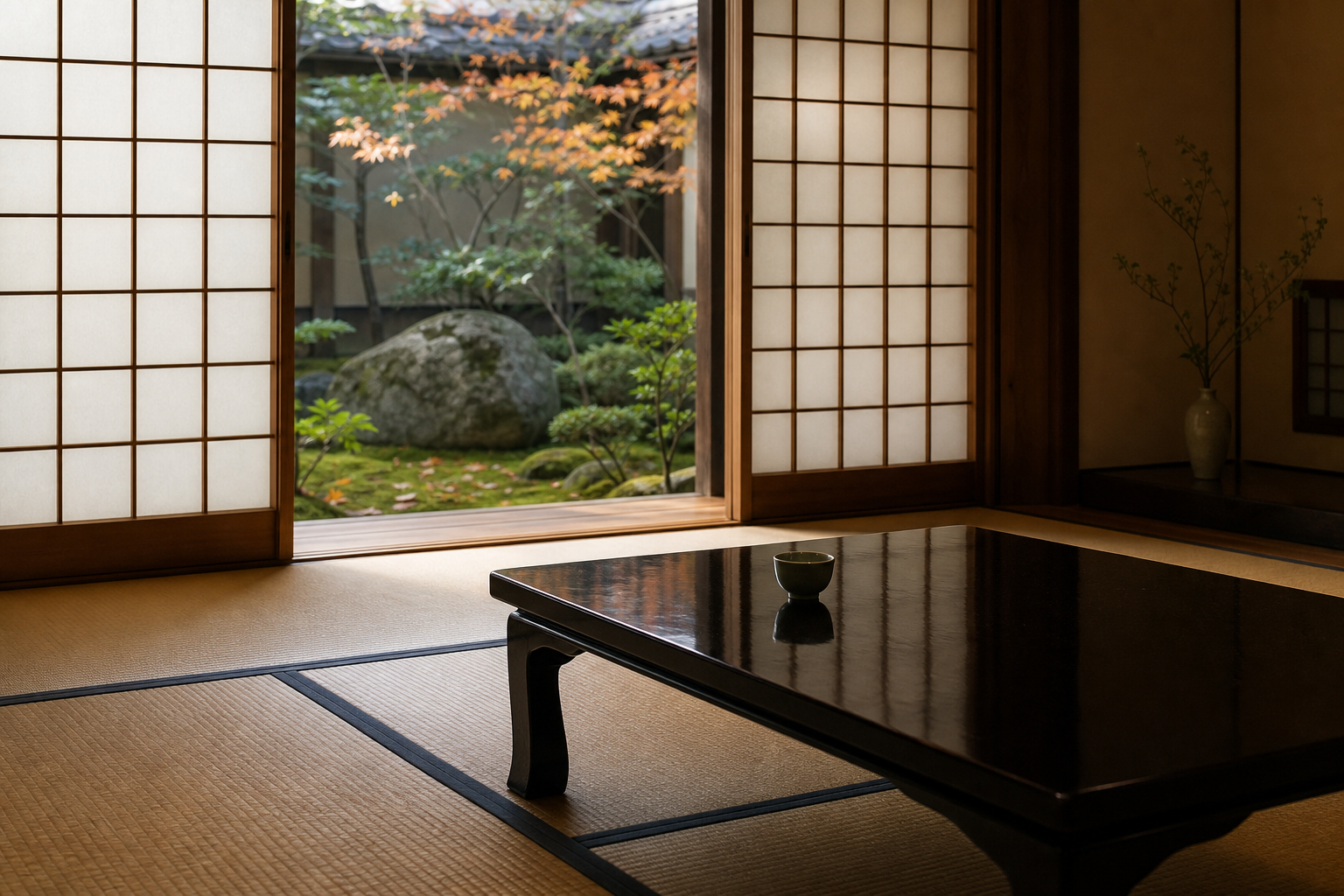
One working rule: one night is rarely enough. A single overnight is an impression. Two nights begin a relationship. Three nights is when you start to notice: the baker who opens at seven, the sound of the river in the morning, the rhythm of the neighborhood as people pass on their way to work.
In practical terms, this means choosing fewer places on a trip. Three towns over two weeks rather than seven. The calculation changes. Instead of asking “what can I see here?”, you ask “what would it feel like to be here for a while?”
Japan’s pilgrimage routes, the Kumano Kodo in the Kii Peninsula, the Nakasendo highway between Edo and Kyoto, sections of the 88-temple circuit in Shikoku, are often framed as journeys to complete. But sections of these routes can be walked without finishing the whole. And in some ways, the incomplete section is a truer form of quiet travel. You enter a path that others have walked for centuries, walk for two or three days, and return to ordinary life.
Staying Long Enough for the Place to Open
Walking a Pilgrim Route Without Finishing It
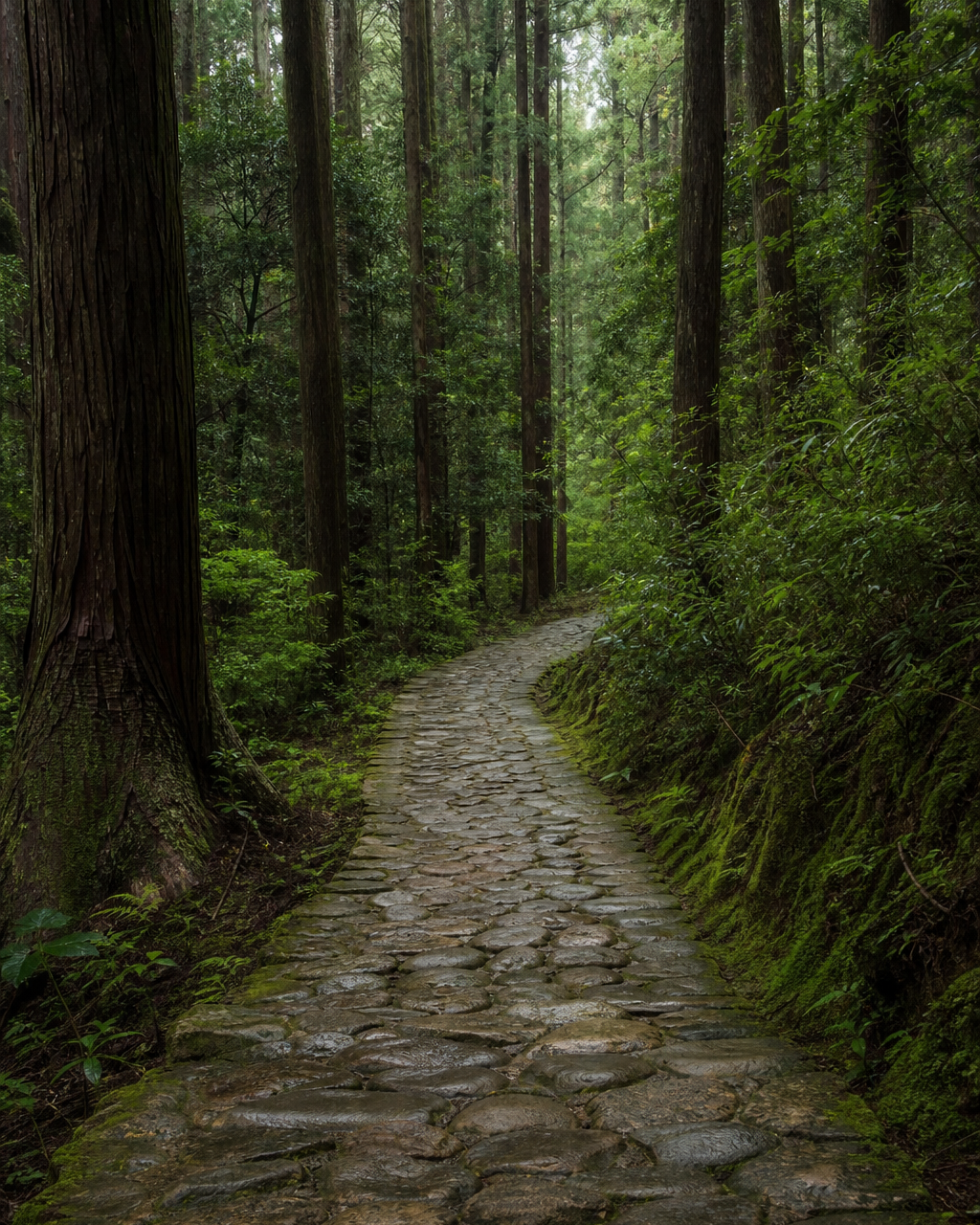
The Kumano Kodo, in particular, is a forest trail where the walking is the purpose. There are stone pavements worn smooth by centuries of pilgrims, moss-covered torii gates, and long stretches of tall cedar where the light filters down gradually. It is quiet in the literal sense: birdsong, your own breath, the sound of your footsteps on stone.
The Art of the Afternoon Without a Plan
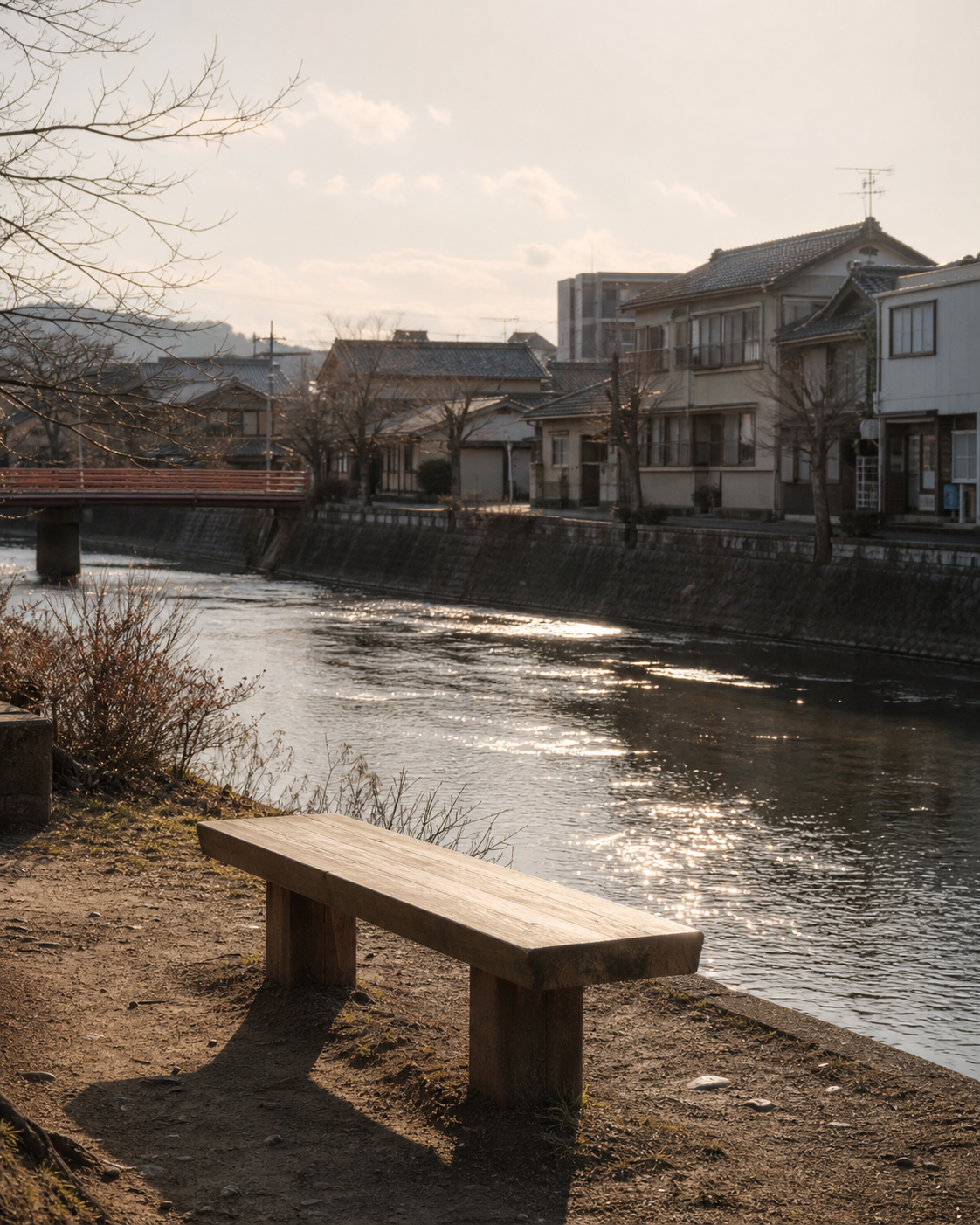
One of the harder skills in quiet travel is leaving time unscheduled. An afternoon with no destination and no deadline. A bench by a small river. A kissaten where you sit long enough to notice the other regulars, the radio playing softly, nobody in a hurry to leave.
Japan accommodates this in many contexts. The cultural norm in certain public spaces, a traditional garden, a quiet café, an onsen town in the late afternoon, is not to fill time but to inhabit it. People sit. They watch. It is not considered wasted. The quiet traveler can borrow that permission, at least for an afternoon.
—
How to Choose a Place for Quiet Travel
The question is not which places are “quiet,” since that changes with season and day. The question is which conditions tend to support a slower visit.
A few worth looking for:
This is what quiet travel in Japan tends to reward: places that pull you into a different rhythm almost without effort. Small onsen towns are a clear example. Their structure of bathing, meals, and rest pulls you into a different rhythm almost without effort. Rural train lines, traveled without a strict itinerary, offer something else: the possibility of getting off when something looks interesting, finding a lunch counter, sitting in a small station while the next train approaches.
- A place with fewer tourists than the alternatives. Not “no tourists,” just not the standard circuit. A town that is not yet on the usual itinerary.
- A local rhythm still intact. Small markets, neighborhood shops, residents going about their week.
- Accommodation that slows you down. A ryokan where dinner is served in your room, or a family-run guesthouse with knowledge of the area.
- A reason to stay more than one night. A walk, a bath, a local event, or simply enough to justify lingering.
Off-season timing also matters. A fishing town in late autumn, a mountain village after the foliage crowds have left. In these windows, the place is more itself, and the traveler is more visible to it.
—
The Internal Logic of Quiet Travel
Quiet travel is not compatible with seeing everything. If you spend three nights in a small town, you will not also see the major temples in the nearest city. If you walk a section of a pilgrimage route, you will not also visit a famous food market. This is the trade.
Volume and efficiency are real pleasures in travel. Arriving in a new place, seeing something you have read about, the satisfaction of a full itinerary. Quiet travel asks you to give those up, at least for a while.
What you gain is harder to describe but tends to be easier to remember. The particular quality of light in a mountain town at five in the afternoon. The sound a small harbor makes before dawn. The way a ryokan breakfast feels different from any other meal, not because of the food, but because of the pace.
What You Give Up
What You Gain
You also gain something like access. When you stay long enough in a place, it stops performing for you. The owner of the kissaten starts to nod when you come in. Someone offers a piece of local information, where the good walk is, when the evening market happens, that they would not offer a guest leaving the next morning.
Japan’s Cultural Permission to Simply Be
There is, in certain Japanese public contexts, a cultural permission to occupy space quietly without doing anything visible. The person sitting alone at a café for two hours. The couple at a viewpoint, not photographing, just looking. This is not universal; it varies by context, age, and region. But it exists, and it is different from the expectation in many other travel cultures that public time must be justified by activity.
The Japanese concept of ma, the value of empty space, of pause, of what is not said, offers something relevant here. The meaning of ma in Japanese culture is not easily summarized, but it is, among other things, a way of understanding that the spaces between things carry their own significance. Quiet travel is, in a sense, a way of moving through a country that takes that idea seriously.
—
Closing
There is a kind of tiredness that comes from traveling efficiently. You have seen a great deal, and you are ready to go home. There is a different kind of tiredness that comes from moving carefully: from walking, from adjusting to an unfamiliar rhythm, from paying attention to things that do not demand it. That second tiredness tends to feel like something was actually inhabited, not just covered.
Japan will accommodate speed and efficiency and a tight itinerary. But quiet travel in Japan asks for something different. Somewhere between the local train and the ryokan breakfast, between the forest path and the afternoon with nowhere to be, it also has other offerings. A bench by a river. The sound of rain on a quiet street. The particular light of a town you stayed in long enough to know.