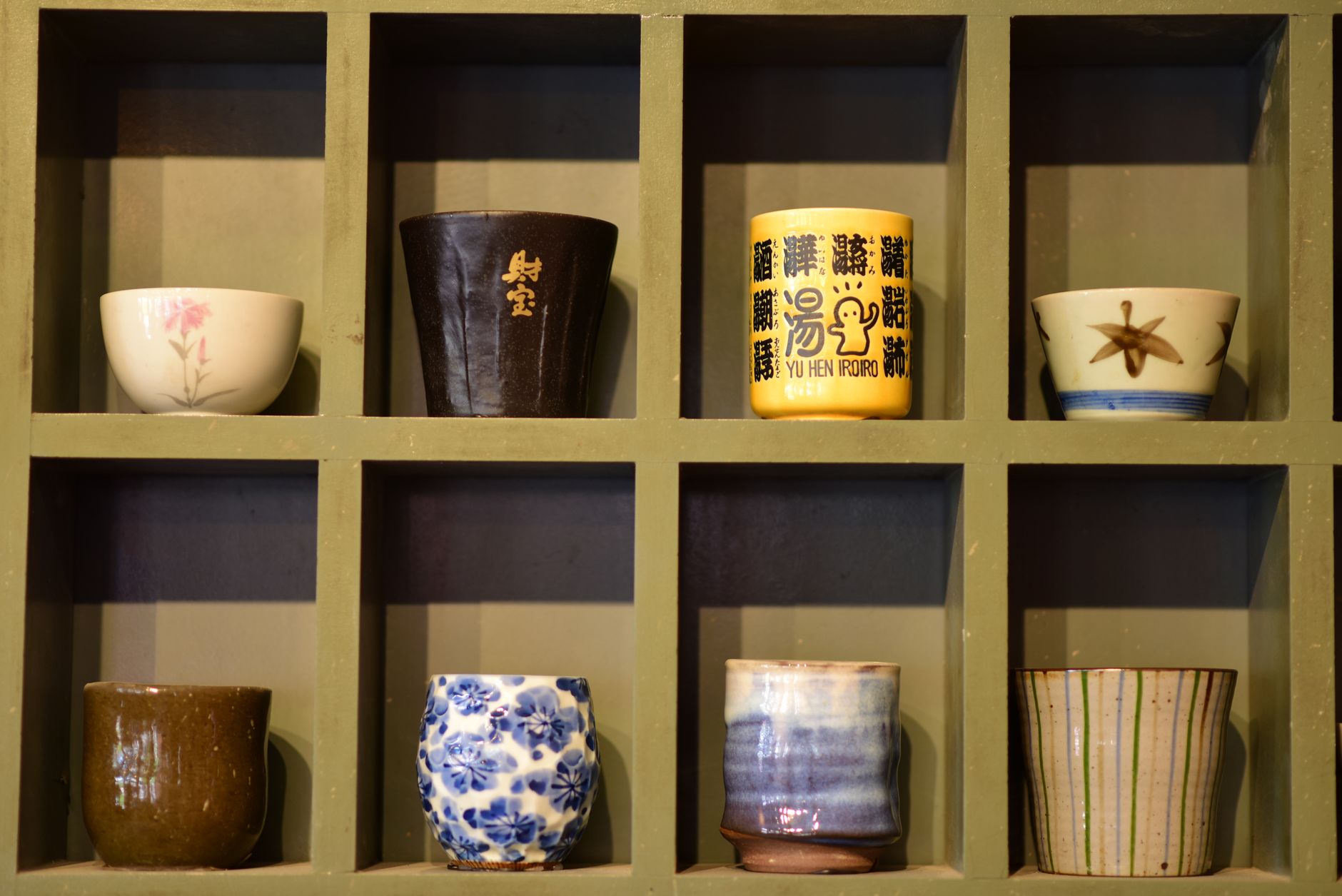
There is a weight to a Japanese tea bowl that photographs do not convey. The rough surface, the uneven lip, the slight asymmetry that makes it fit differently in each hand: these qualities are not accidents. They are, in part, the result of where the clay came from, and who formed it, and why. Japanese pottery history is long. It runs through nearly every region of Japan, from the cold hills of Echizen to the volcanic soil of Kyushu, and it reflects a relationship with fired clay that began before most other known ceramic traditions in the world.
There is a weight to a Japanese tea bowl that photographs do not convey. The rough surface, the uneven lip, the slight asymmetry that makes it fit differently in each hand: these qualities are not accidents. They are, in part, the result of where the clay came from, and who formed it, and why.
Japanese pottery history is long. It runs through nearly every region of Japan, from the cold hills of Echizen to the volcanic soil of Kyushu, and it reflects a relationship with fired clay that began before most other known ceramic traditions in the world. To understand Japanese pottery history is not to memorize kiln names and dynasty dates. It is to understand how closely the Japanese relationship with material has always been tied to place.
What Is Yakimono? The Range of Japanese Fired Clay
Yakimono (焼き物) is the broad Japanese term for fired ceramic ware. It encompasses earthenware, stoneware, and porcelain, and within each category, dozens of distinct regional traditions. In everyday speech, Japanese people might say setomono (瀬戸物, literally “Seto things,” after the pottery city of Seto in Aichi Prefecture) as a general shorthand, much the way English speakers say “china.” But yakimono itself is the larger category, one that contains far more variation than any single word suggests. The English word “pottery” often implies only earthenware or stoneware, while yakimono spans the full range from low-fired clay vessels to white translucent porcelain.
Japanese ceramics are typically grouped into three types. Doki (土器) is unglazed, low-fired earthenware, the oldest form, associated with Jomon and Yayoi period vessels. Toki, or touki (陶器), is glazed stoneware, the type produced across most of the Six Ancient Kilns. Jiki (磁器) is porcelain, made from kaolin clay and fired at high temperature, white and translucent when held to light.
The distinction is not just technical. Porcelain is precise, smooth, decorated. Stoneware is heavier, earthier, variable in surface and color. The choice between them, and what that choice implies about beauty and use, has shaped Japanese ceramic culture as much as any particular style or era.
A Brief History: From Jomon Vessels to the Tea Room
Japanese pottery history begins in the Jomon period, when people living in the Japanese archipelago were producing fired clay vessels that are among the world’s earliest known ceramics, roughly 16,000 years ago. Jomon pottery (the name comes from the cord-pattern impressions pressed into wet clay) was functional and ceremonial: storage vessels, cooking pots, figurines used in ritual.
With the Yayoi period (c. 300 BCE), techniques and forms arrived from the Korean peninsula and China. Over subsequent centuries, influence from Tang and Song dynasty Chinese ceramics shaped Japanese taste toward refinement and technical complexity.
The medieval period saw the emergence of the Six Ancient Kilns, established in regions with high-quality local clay. These kilns produced functional household wares across several centuries.
The decisive transformation in Japanese pottery history came in the late 16th and early 17th century. The tea ceremony, or chado (茶道), shaped by masters including Sen no Rikyu, brought new aesthetic standards: an appreciation for rough, asymmetrical, and humble forms rather than polished perfection. At the same time, Toyotomi Hideyoshi’s invasions of Korea (1592 and 1597) brought Korean potters to Japan, many of them by force. These potters settled primarily in Kyushu, where they introduced new firing techniques and helped identify local kaolin deposits that launched Japan’s porcelain tradition.
For more on the philosophy that shaped how Japanese people understand the practice of craft and tea, see what is do in Japanese culture.
The Six Ancient Kilns: Roots of Japanese Ceramic Culture
The Rokkoyo (六古窯), or Six Ancient Kilns, were designated as Japan Heritage in 2017. They are: Seto (Aichi), Tokoname (Aichi), Echizen (Fukui), Shigaraki (Shiga), Tamba, also known as Tachikui (Hyogo), and Bizen (Okayama). The term itself was coined in 1948 by ceramics scholar Fujio Koyama. More at the Six Ancient Kilns official site.
All six emerged in the medieval period, each using local clay without relying on imported materials or techniques. Their output was practical at first: jars for storing grain and water, sake vessels, containers for everyday use. The elevation of these objects to items of aesthetic value came later, through tea culture’s revaluation of the unrefined.
What characterizes the output of these kilns is a relative absence of applied glaze and a reliance on the kiln itself for surface quality. Natural ash from the firing settles on surfaces, creating colors and textures that cannot be designed in advance. The resulting marks, areas of green, brown, or orange called yohen (窯変, kiln transformation), are each one of a kind. Tokoname’s tall storage jars, Bizen’s iron-grey water vessels, Shigaraki’s tea jars with their orange-flashed surfaces: each piece carries its region in its clay body.
Tea practitioners eventually named this sensibility wabi (侘): an appreciation for restraint, plainness, and what age and use reveal.
Kyushu and the Porcelain Revolution
In the early 17th century, a Korean potter named Yi Sam-pyeong, known in Japan as Ri Sampei (李参平), helped identify deposits of kaolin clay at Izumiyama, near Arita in Saga Prefecture. This discovery is often credited as enabling Japan’s first porcelain production. Within decades, Arita had become a major production center, and its wares, exported through the port of Imari, reached European markets eager for alternatives to Chinese export porcelain. To European buyers, it represented an entirely new ceramic tradition: they called it Imari ware. The V&A holds a significant collection of this material.
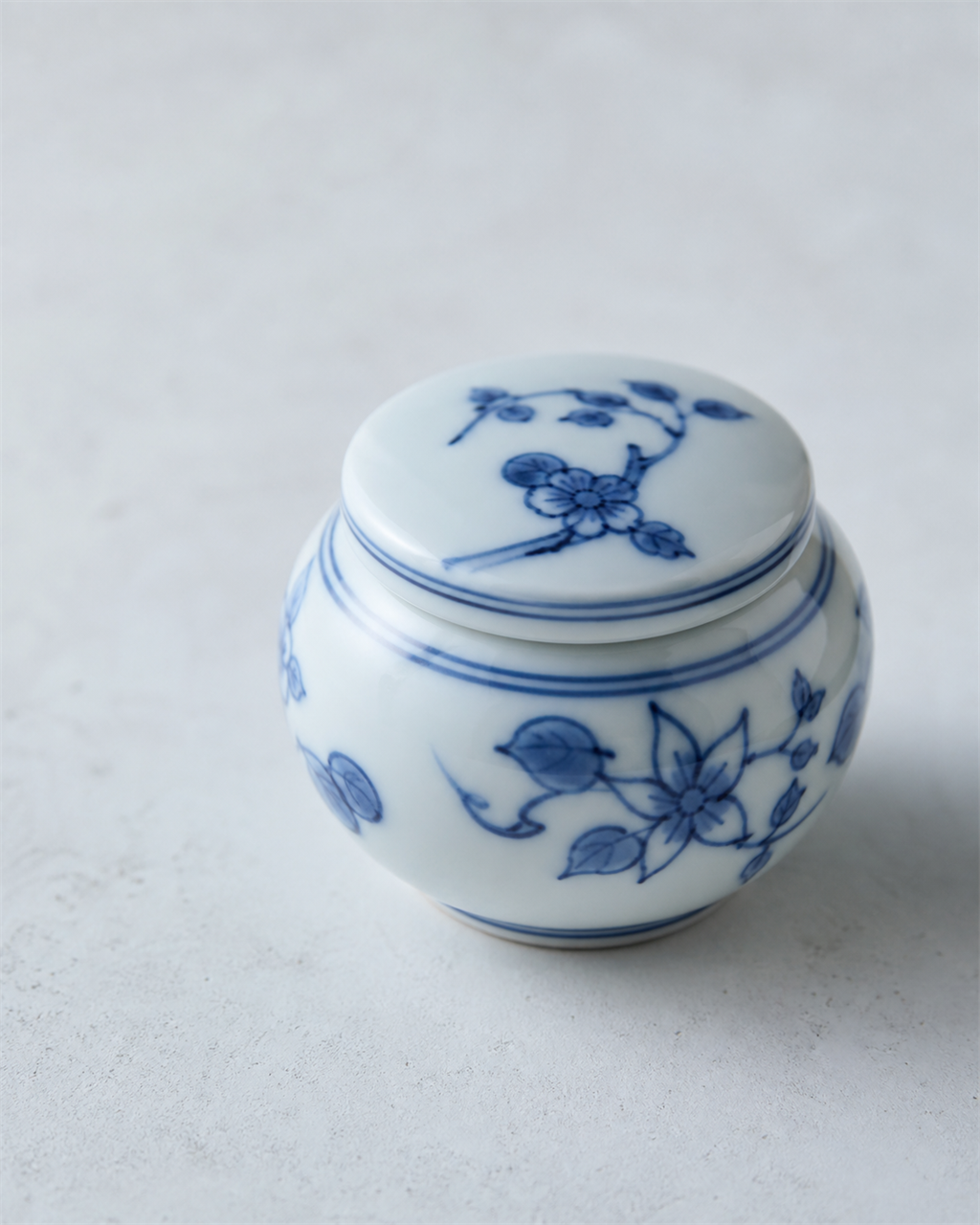
Arita porcelain is typically white with blue underglaze painting or vivid overglaze enamels. It is precise, decorative, and accomplished in ways that have little in common with the rough surfaces of the Six Ancient Kilns.
But Kyushu also produced other ceramic traditions. Hagi ware (Yamaguchi Prefecture), also shaped by Korean potters who settled there, moved in a different direction: thick, soft, slightly porous, with a pale glaze that develops a patina over years of use. Tea practitioners prize this quality. A Hagi bowl changes with handling, developing a depth that its surface did not have when new. Karatsu ware (Saga and Nagasaki Prefectures) is earthier still, often painted with simple grass or wave designs that feel immediate and unpremeditated.
All three came from the same Kyushu coast. They ended up somewhere quite different.
Unglazed Austerity and Kyoto Refinement
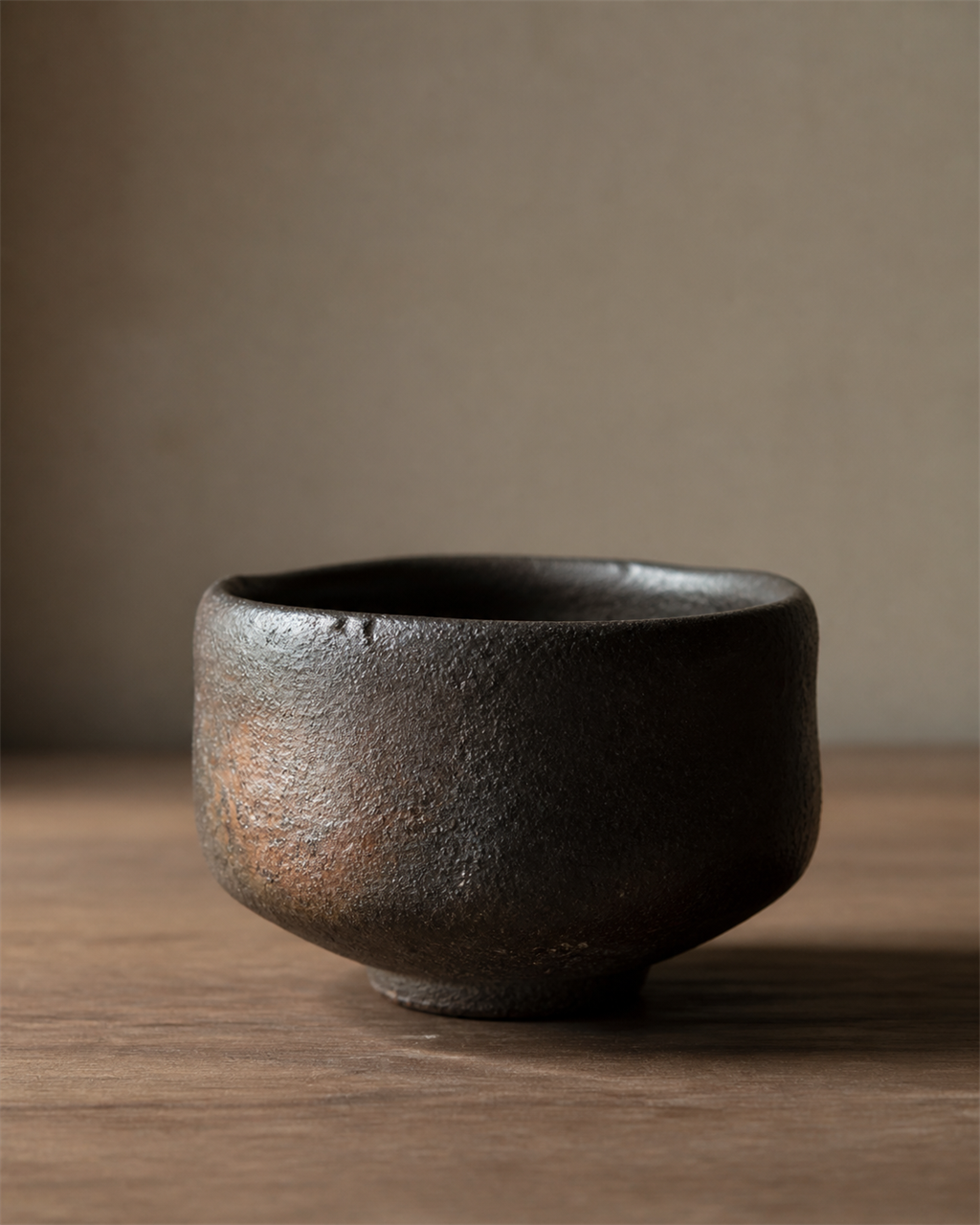
Kyoto ceramics and the ancient kiln traditions sit at opposite ends of the same aesthetic argument. Both positions are still being defended.
Bizen ware (Okayama) is fired for up to two weeks without any glaze. The clay body becomes dense, almost stone-like, and the fire leaves its marks directly: flame paths, ash deposits, scorched areas where pieces touched each other in the kiln. Nothing is applied after the clay is formed. What the fire does is what the piece becomes.
Shigaraki ware (Shiga), another of the ancient kilns, shares a similar quality: rough, warm, with an orange-brown body and occasional green flashes from natural ash. It is perhaps the clay that feels most connected to the earth it came from.
Sen no Rikyu’s preference for unglazed or simply glazed wares over ornate Chinese porcelain was not a rejection of craft skill. It was a different understanding of where beauty is found: not in decoration added, but in material revealed. Wabi in the tea context is not simply imperfection. It is an appreciation for restraint. For the marks of making and use. For objects that carry time in their surfaces. For the broader aesthetic philosophy behind this, see the aesthetics of subtraction.
Kyoto offers the other pole. Kiyomizuyaki, the collective name for ceramics produced in and around Kyoto’s Kiyomizuzaka district, tends toward refinement: painted designs, rich glazes, the influence of court culture and Buddhist patronage across centuries. Raku ware, created by the Raku family lineage since the late 16th century specifically for the tea ceremony, takes a different approach. Raku bowls are hand-formed, low-fired, black or red, shaped for the feel of the hand more than for visual effect. They are made to be experienced in use, held during the slow time of a tea gathering.
In both cases, the maker was thinking about when the object would be used, not just how it would look.
How to Encounter Japanese Pottery in Place
Reading about Japanese pottery and actually holding it are different experiences. Several kiln towns reward a slow visit.
Arita (Saga Prefecture) holds a ceramic fair each spring, typically in late April through early May, drawing a range of vendors from production-line porcelain to small studio work. Bizen (Okayama) is a small city where kilns remain active in the older residential neighborhoods. Shigaraki (Shiga) is reachable from Kyoto by train in roughly an hour, with workshops and a ceramics museum. Mashiko (Tochigi), though not one of the Six Ancient Kilns, became well-known through the work of Hamada Shoji, a Living National Treasure whose role in the mingei (民芸, folk craft) movement reshaped how craft was understood in Japan and abroad. Bernard Leach, a British studio potter, spent extended periods working at Mashiko and wrote enough about what he found there that the town became known outside Japan.
Travel dates and studio access change, and kiln towns are working places first. Arriving with patience rather than expectation tends to yield more. This is the kind of quiet travel that rewards attention over activity.
When handling Japanese pottery, it helps to notice the weight, the texture of the clay body at the unglazed foot, the sound when you tap lightly. These are not incidental qualities. They are what the potter was working with, and what much of this tradition has tried to understand and refine.
Yakimono has been part of daily life in Japan for over a thousand years. What it has generally not done is announce itself. A well-made piece tends to recede, becoming part of the occasion rather than the point of it. The small dishes made for wagashi, the sweets prepared to accompany tea, are one example of how pottery and practice develop together. For more on that relationship, see wagashi and the Japanese tea tradition. That quality of receding into use, making the occasion possible without dominating it, runs through most of this history.