There is a particular kind of road in Shikoku marked with a small red sign and a painted stone, and it leads, eventually, to a temple. Or past one, toward the next. The people walking it wear white jackets and carry wooden staffs, and they are not rushing. They may not be talking. Some have been walking for weeks. They are on a henro, a pilgrimage, and they are moving at a pace that belongs entirely to this island.
There is a particular kind of road in Shikoku marked with a small red sign and a painted stone, and it leads, eventually, to a temple. Or past one, toward the next. The people walking it wear white jackets and carry wooden staffs, and they are not rushing. They may not be talking. Some have been walking for weeks. They are on a henro, a pilgrimage, and they are moving at a pace that belongs entirely to this island.
Shikoku (四国) is Japan’s smallest main island: a compact landmass of mountains, river valleys, and coastlines, connected to Honshu by bridges but still, in feeling, distinctly apart. It has four prefectures: Tokushima, Kochi, Ehime, and Kagawa. Most international travelers pass through Japan without crossing to it. What it offers, for those who do, is a different relationship with time and distance.
—
What Is Shikoku?
The name Shikoku (四国) means “four provinces,” a reference to the island’s historic divisions, which correspond closely to its modern prefectures. It lies to the south of Honshu, separated by the Seto Inland Sea to the north and facing the Pacific Ocean to the south. The total population across all four prefectures is around 3.6 million, roughly comparable to a single mid-size Japanese city. The landscape is defined by mountains at its center, rivers running to the sea, and coastlines facing in almost every direction.
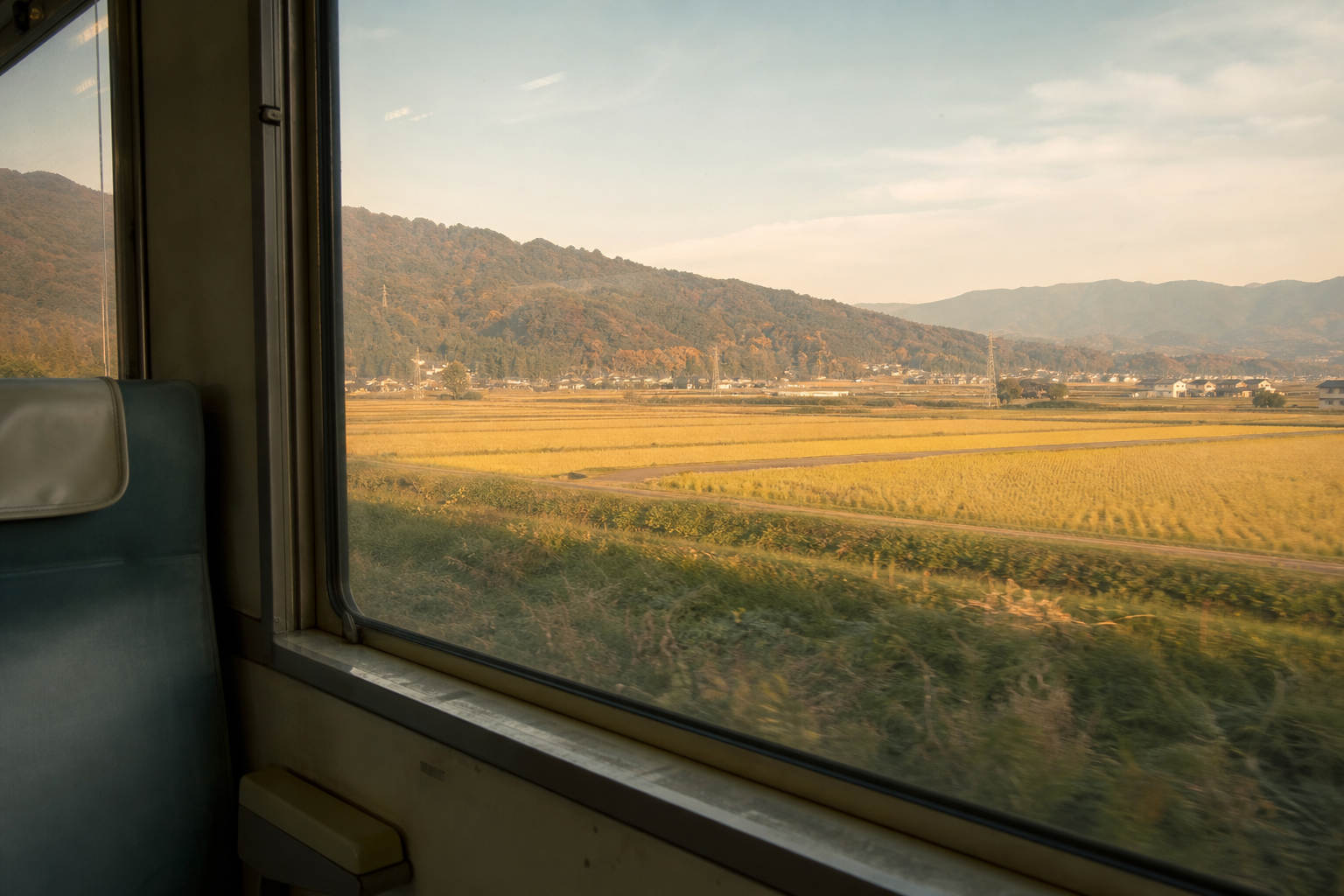
For much of Japanese history, Shikoku was not easy to reach. Even now, after the opening of the Seto Inland Sea bridges in the 1980s and 1990s, the island moves at a different pace from Japan’s main urban corridors. Trains run less frequently. The gaps between towns are longer. Accommodation tends toward small ryokan and guesthouses rather than large hotels. These are not flaws, but they do require adjusting expectations. What makes quiet travel in Shikoku work is that the island’s landscape and its central cultural practice (the 88-temple pilgrimage) both reward a slower pace from the start.
—
The Henro: Walking the 88 Temples
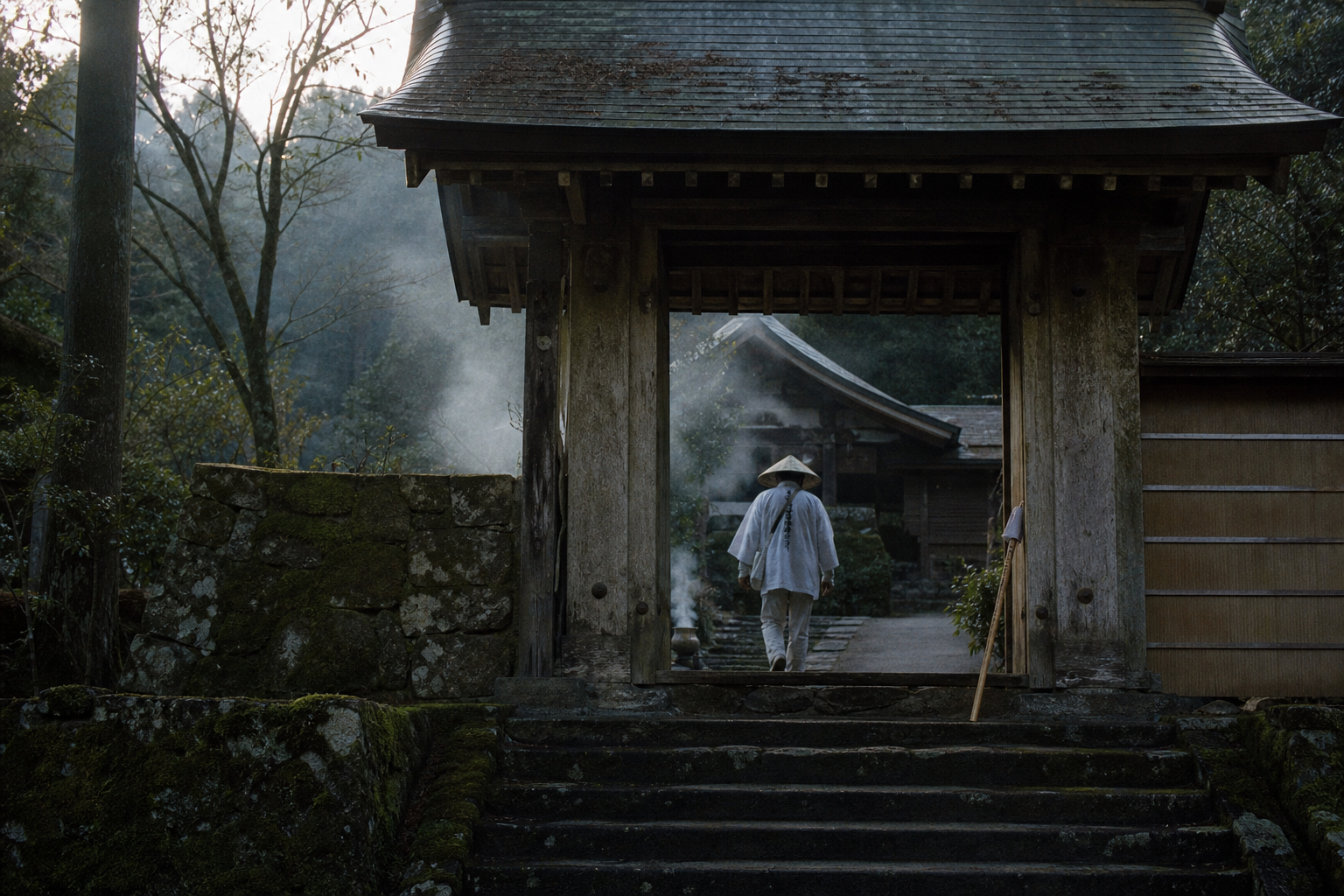
The pilgrimage that defines Shikoku begins, by tradition, in Tokushima and ends after visiting 88 Buddhist temples spread across all four prefectures. The full circuit covers roughly 1,200 kilometers. Most people who complete it on foot do so over 40 to 60 days. Others travel by bicycle, bus, or car, which takes less time but changes the experience considerably.
The pilgrimage is associated with Kukai (空海), the Buddhist monk who founded the Shingon school and is known posthumously as Kobo Daishi (弘法大師). According to tradition, he trained across Shikoku in the 8th century, and his spirit is said to accompany every pilgrim who walks the route today. This is expressed in the phrase dogyo ninin (同行二人), “two walking together.” It is why the henro’s white jacket is traditionally inscribed with those words. The pilgrim is never, in this understanding, alone.
The pilgrimage is not exclusively religious. Many modern pilgrims are not practicing Buddhists, or are Buddhist only loosely. Some walk because they are grieving, or recovering from illness, or marking a transition. Some are retired and have wanted to do this for decades. Some are younger and less certain about their reasons. What the route offers is not instruction but structure: a long road, one foot after the other, through which the days take on a different shape.
Along the way, locals practice osettai (おせったい): offering gifts to pilgrims (a mandarin, a cup of barley tea, a small amount of money). The gift is given without expectation of return. It is generally understood that a pilgrim accepts osettai graciously, as the practice is considered an act of merit for the giver, not only a kindness to the recipient. This tradition of hospitality toward strangers has persisted for centuries and shapes how Shikoku feels to a traveler who pays attention.
—
Four Prefectures, Four Kinds of Slowness
The pilgrimage begins in Tokushima, at Ryozen-ji (霊山寺), a small temple near the northern coast. But Tokushima’s character is defined not by its starting point but by what lies further south and inland: the Iya Valley (祖谷渓).
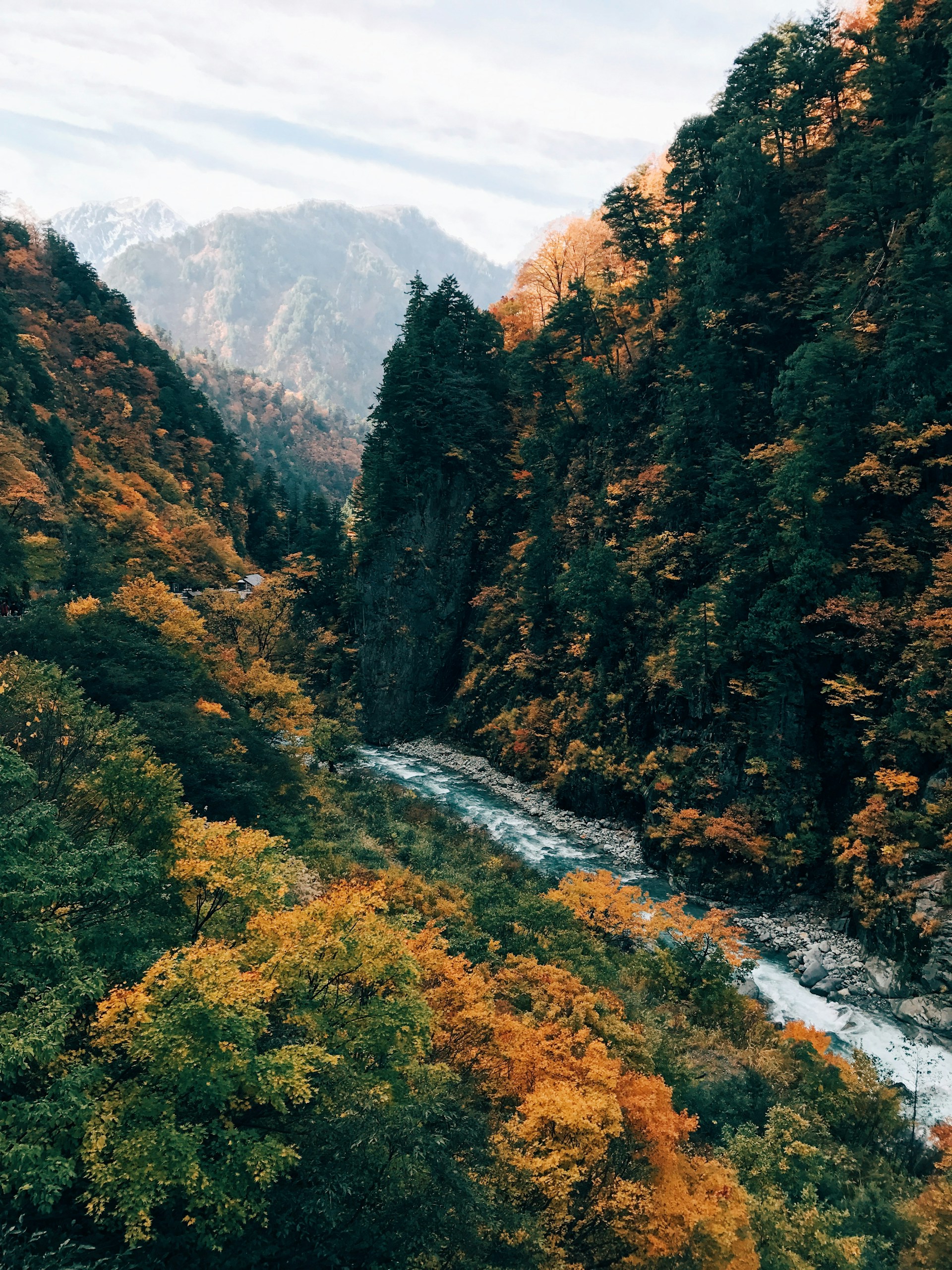
Iya is one of Japan’s three so-called hidden valleys: places that were intentionally remote, where mountain terrain provided natural isolation. The valley floor is river gorge, steep and forested, and the settlements above it were reached, historically, by narrow mountain paths. One of the most visited features is the kazurabashi (かずら橋), a suspension bridge woven from mountain vine and rebuilt periodically to the same design used for centuries. It sways when you walk it. The planks are spaced wide. Below is the Iya River.
The point is not the bridge exactly, but what the bridge suggests: that people chose to live here, cut off from easier ground, and built what they needed from what was available. Iya’s pace is the slowness of descent. You go down into the valley and the noise of the main world recedes.
Tokushima: The Slowness of Descent
Kochi: The Slowness of the Coast
Kochi faces the Pacific directly. It is the largest of the four prefectures and, in places, the most remote. The roads along the southern coast are long and the towns are small. The pilgrimage temples in this part of Shikoku are spread across difficult terrain, which means the henro road here draws walkers who are already weeks into the route and have settled into its rhythm. That shapes how the prefecture feels.
The Shimanto River (四万十川) has no large dams, which is unusual for a waterway of its size in Japan. The river is wide and slow-moving in its lower reaches, and the roads alongside it follow the same rhythm. The chinkabashi (沈下橋), the submersible bridges of the Shimanto, are built without railings and sit close to the water. They are designed to flood deliberately, allowing the river to pass over them rather than washing them away. Locals fish from them at dusk.
Kochi also has one of the twelve original surviving castles in Japan. Kochi Castle (高知城) was not destroyed and rebuilt, but survived intact. Standing inside a structure that is genuinely 300 years old has a different quality than standing in a reconstruction.
Ehime: The Slowness of Routine
Ehime is citrus country. The hills above Matsuyama are terraced with mandarin groves, and in autumn the trees bear more fruit than most visitors expect. The city itself is small, manageable, and unhurried in a way that large Japanese cities rarely are.
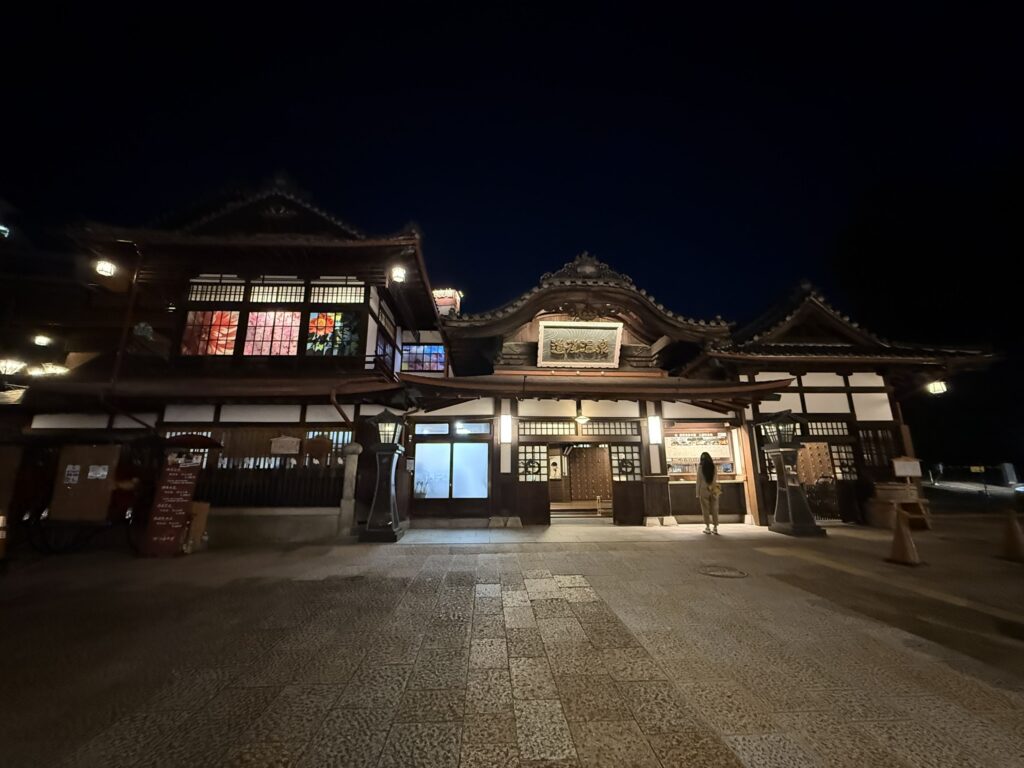
Matsuyama’s center of gravity is Dogo Onsen (道後温泉), one of Japan’s oldest hot springs. The main bathhouse, a late-Meiji wooden structure with tiered rooflines, has been in use, in some form, for well over a thousand years. Locals use it as they use any public bathhouse: early in the morning, in the evening after work, with the matter-of-fact regularity of people who have been doing this their whole lives. (The bathhouse is sometimes said to have inspired the setting in Studio Ghibli’s Spirited Away, though this connection has never been confirmed by Hayao Miyazaki.)
Above the city is Matsuyama Castle (松山城), reached by ropeway or on foot. Like Kochi’s castle, it is one of the original twelve. The town of Uchiko (内子), a short train ride to the south, preserves a stretch of Edo-period merchant townhouses built by the wax trade. The buildings are still standing, and walking the main street takes no more than twenty minutes. What draws travelers here is not scale but specificity: the form of the buildings, the quality of the plasterwork, the smell of old timber.
Kagawa: The Slowness of Looking
Kagawa is the smallest prefecture in Japan and the most accessible. The Seto Ohashi Bridge from Honshu arrives here, and many travelers begin their Shikoku journey in Kagawa before moving deeper into the island. It is also, for pilgrims traveling the 88-temple route, the final prefecture. Temple 88, Okuboji (大窪寺), sits in the mountains of eastern Kagawa, and it is here that the pilgrimage’s long circuit closes. By tradition, pilgrims then travel to Koyasan in Wakayama to report their journey’s completion to Kobo Daishi. Kagawa is both the entry point and the ending, a prefecture that holds beginning and closure.
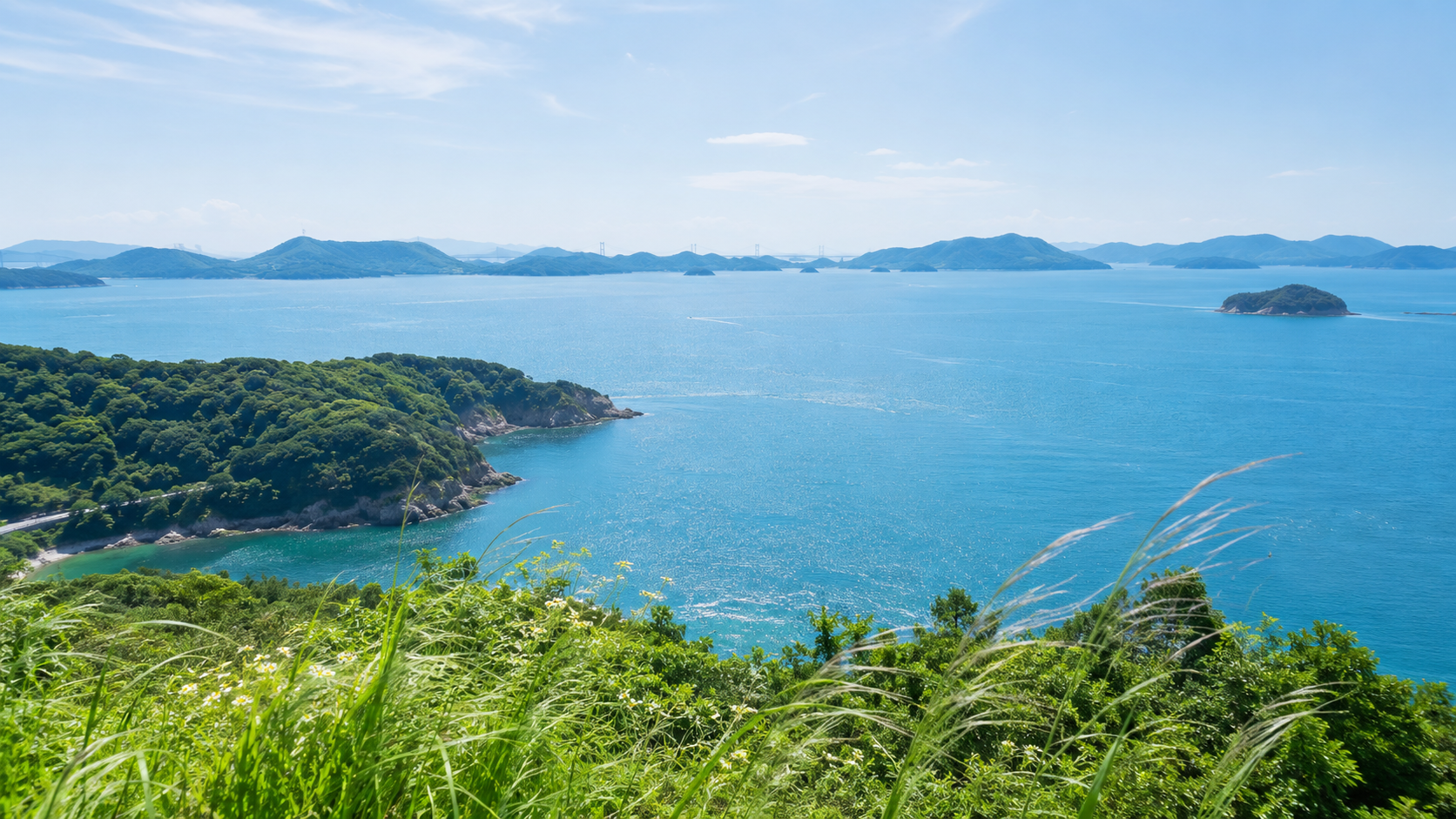
A very different kind of attention is available on Naoshima (直島), an island in the Seto Inland Sea that has been shaped, over the past three decades, by the Benesse Art Site: contemporary art museums and outdoor installations set into the landscape. The pace here is the pace of looking. You move slowly because specific work is in front of you, and the work asks you to stay with it. Naoshima is a contrast to the pilgrimage landscape, worth a separate day or two rather than a quick stop.
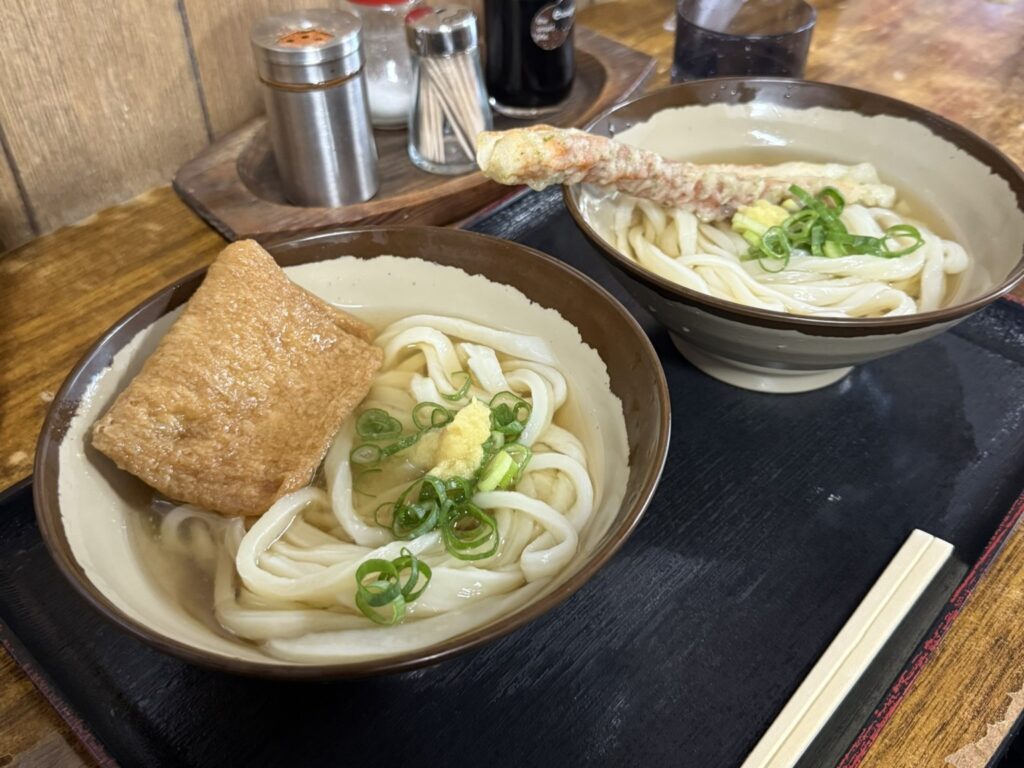
Kagawa also has a daily practice worth noting: the udon counter. The prefecture is known across Japan for Sanuki udon, a thick, chewy noodle served simply, often at counters where you eat standing or perched on a plastic stool, for a few hundred yen. The best shops open early and are often out of noodles by midmorning. There is a particular attention in that meal (to the texture of the noodle, to the quality of the dashi) that is entirely ordinary in Kagawa. Both Naoshima and the udon counter are worth a morning, but neither is the prefecture’s center of gravity. That is the pilgrimage: a road that begins and ends in Kagawa, and that has shaped this small prefecture more than anything else about it.
—
How to Travel Shikoku Slowly
Getting around. JR Shikoku offers rail passes that cover unlimited travel on the island’s train network, connecting the four prefectures along the coast and through some inland valleys. (Check current options and pricing directly with JR Shikoku, as pass details are updated periodically.) Trains run less frequently than on the main island, often once an hour on regional lines. Buses reach some areas the trains do not, but the most isolated areas (Iya Valley, parts of the Kochi coastline) require a rental car. Kagawa makes the most practical base for a first visit: well-connected, compact, and a natural entry point from Honshu.
Choosing where to focus. Shikoku’s four prefectures take a minimum of ten days to explore with any depth. Trying to cover all four in a week will produce a schedule rather than a trip. A more useful approach: choose one or two prefectures and build in one or two days walking a section of the pilgrimage route. Most of what the island offers comes from staying in a place long enough to feel it settle.
Where to stay. Along the pilgrimage route, guesthouses (zenkonyado, also called henro house) offer simple accommodation designed for walkers. They are generally inexpensive, and the people staying in them are often at various stages of the circuit. Conversations over a shared dinner or morning breakfast often become the part of the trip that stays longest. These guesthouses typically welcome travelers who are not walking the full pilgrimage. The Shikoku Pilgrimage official site lists registered zenkonyado across the island.
Seasons. Spring (late March through May) and autumn (October through November) offer the most comfortable conditions. Summer in the inland valleys is hot and humid, though the Pacific coastline catches sea breezes. Winter is mild along the southern coast but cold in the mountains of Tokushima and Ehime.
Pacing. In some areas, booking a guesthouse a day or two ahead gives enough flexibility without leaving you without a room. In Iya Valley and along the remote Kochi coast, options are limited enough that advance planning matters. The aim is not to have no plan, but to hold it lightly: a clear idea of where the night will be, and room for the day to go where it goes.
—
The Same Road, Slower
Somewhere on the circuit tonight, a pilgrim in a white jacket is settling into a guesthouse in one of Shikoku’s four prefectures. They may be in Tokushima, at the beginning of the route, still working out the weight of the pack. Or in the mountains of Kochi, three weeks in. Or approaching Kagawa, where the road will end and the next journey back to the mainland will begin.
The road does not change. The pace does.
This is, perhaps, the simplest way to describe what quiet travel in Shikoku offers: not a particular sight or a curated experience, but the opportunity to move through a place that has been shaped by centuries of deliberate walking. The four prefectures each have their own character, their own season, their own register of quiet. What they share is the road that connects them.
If you want to understand the broader practice of slow travel in Japan before planning a trip, the Space article on What Is Quiet Travel in Japan? explores that idea directly. For the cultural thinking behind why stillness carries meaning here, the Mind articles on ma (negative space) and the aesthetics of subtraction offer a different angle. And for the small, unhurried pleasures that travel in Japan can include, the Savor piece on Japan’s jun-kissa tradition (the old-style coffee shops) is a good companion to the road.