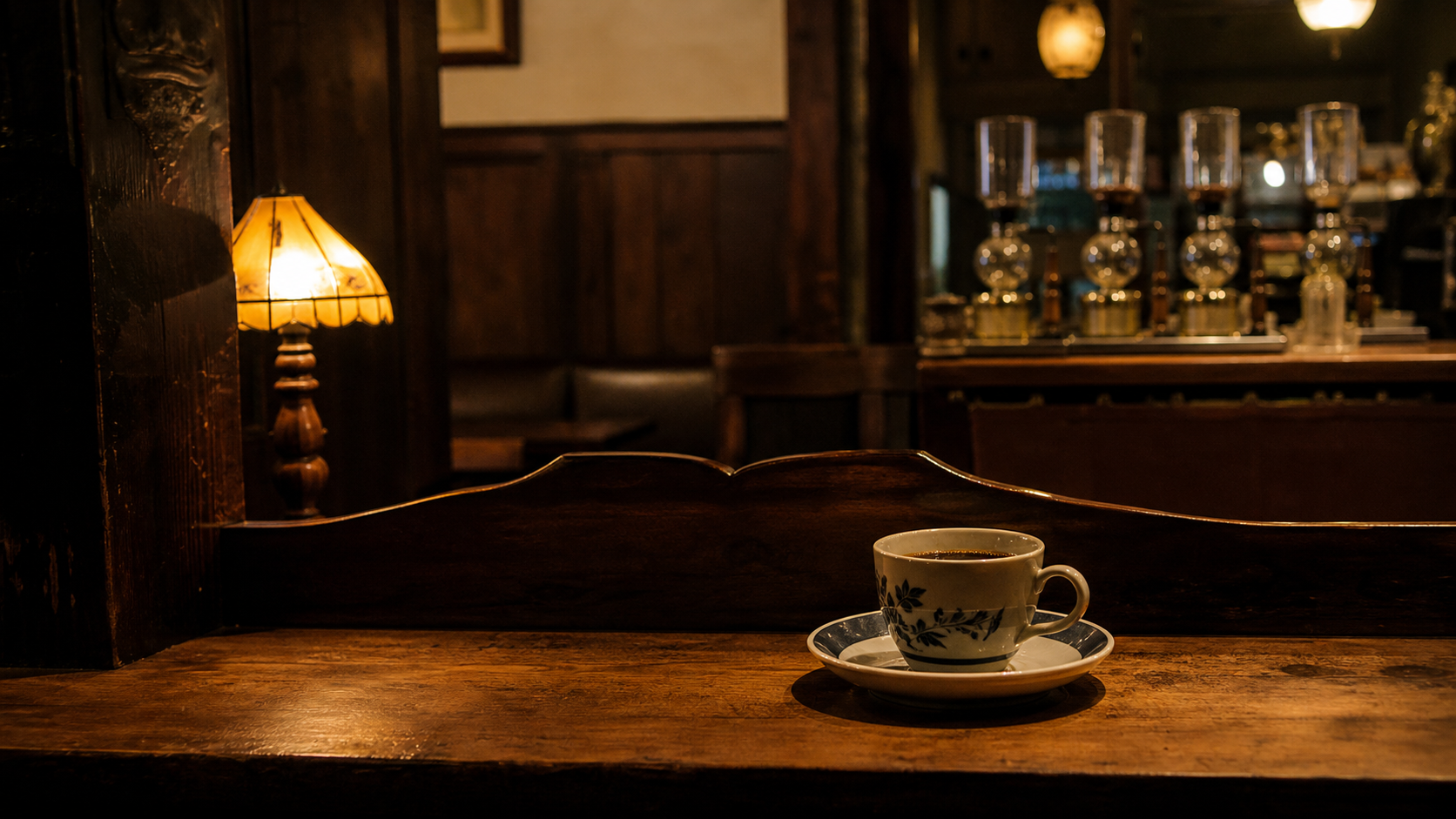
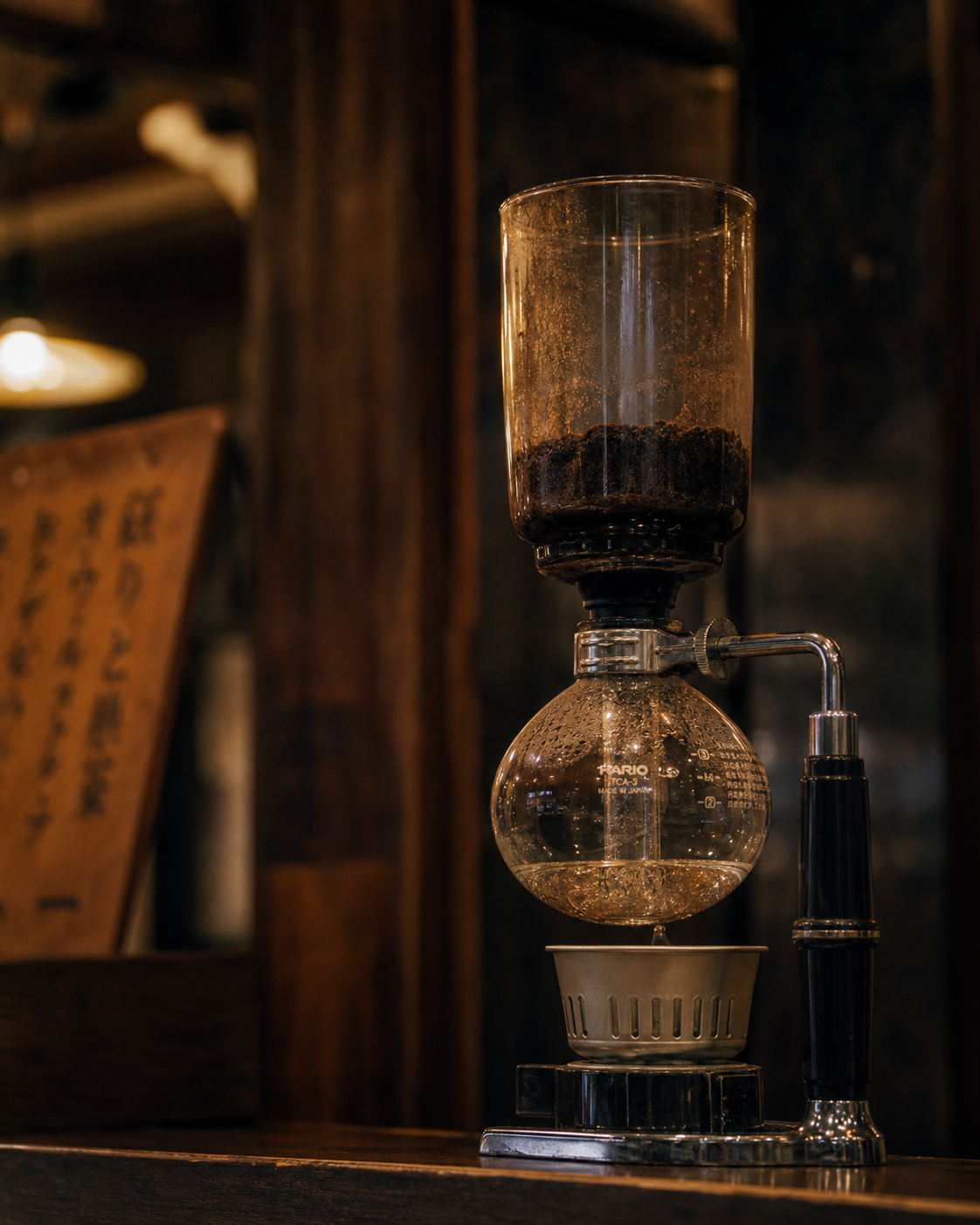
In the back streets of old Tokyo neighborhoods, behind a small noren curtain in a doorway, there are rooms that have not been renovated. Dark wood paneling. A counter with a few stools. A coffee siphon on a shelf, another on the burner. Jazz, at a volume that fills the room without demanding attention. A laminated menu card on the table. One cup of coffee arrives without hurry, and nothing else is needed. This is a jun-kissa.
In the back streets of old Tokyo neighborhoods, behind a small noren curtain in a doorway, there are rooms that have not been renovated. Dark wood paneling. A counter with a few stools. A coffee siphon on a shelf, another on the burner. Jazz, at a volume that fills the room without demanding attention. A laminated menu card on the table. One cup of coffee arrives without hurry, and nothing else is needed.
This is a jun-kissa.
—
What Is a Jun-Kissa?
Jun-kissa (純喫茶, literally “pure coffee shop”) is a type of Japanese coffee shop that emerged during the postwar Showa era, defined by what it does not offer: no alcohol, no elaborate food, no entertainment beyond music. The word jun (純) means pure — and that word carries the meaning.
Jun-kissa is distinct from the broader category of kissa (喫茶) or kissaten (喫茶店), which simply means coffee or tea shop, and from the modern café (カフェ), which tends toward brighter spaces, broader menus, and a faster atmosphere. A jun-kissa is not a specialty coffee bar with a focus on origins or methods. It is not a café that has adopted a Showa aesthetic for effect. It is the form itself: a room built around coffee as the reason for being there, not as a feature among others.
Most jun-kissa date from the 1950s through the 1980s. They appeared in postwar Japan as one of the first places where an ordinary person could sit for a fixed price and remain as long as they chose. In a period when private space was scarce, they offered something specific: unhurried time in a room that was not home and not work.
—
The Architecture of a Jun-Kissa
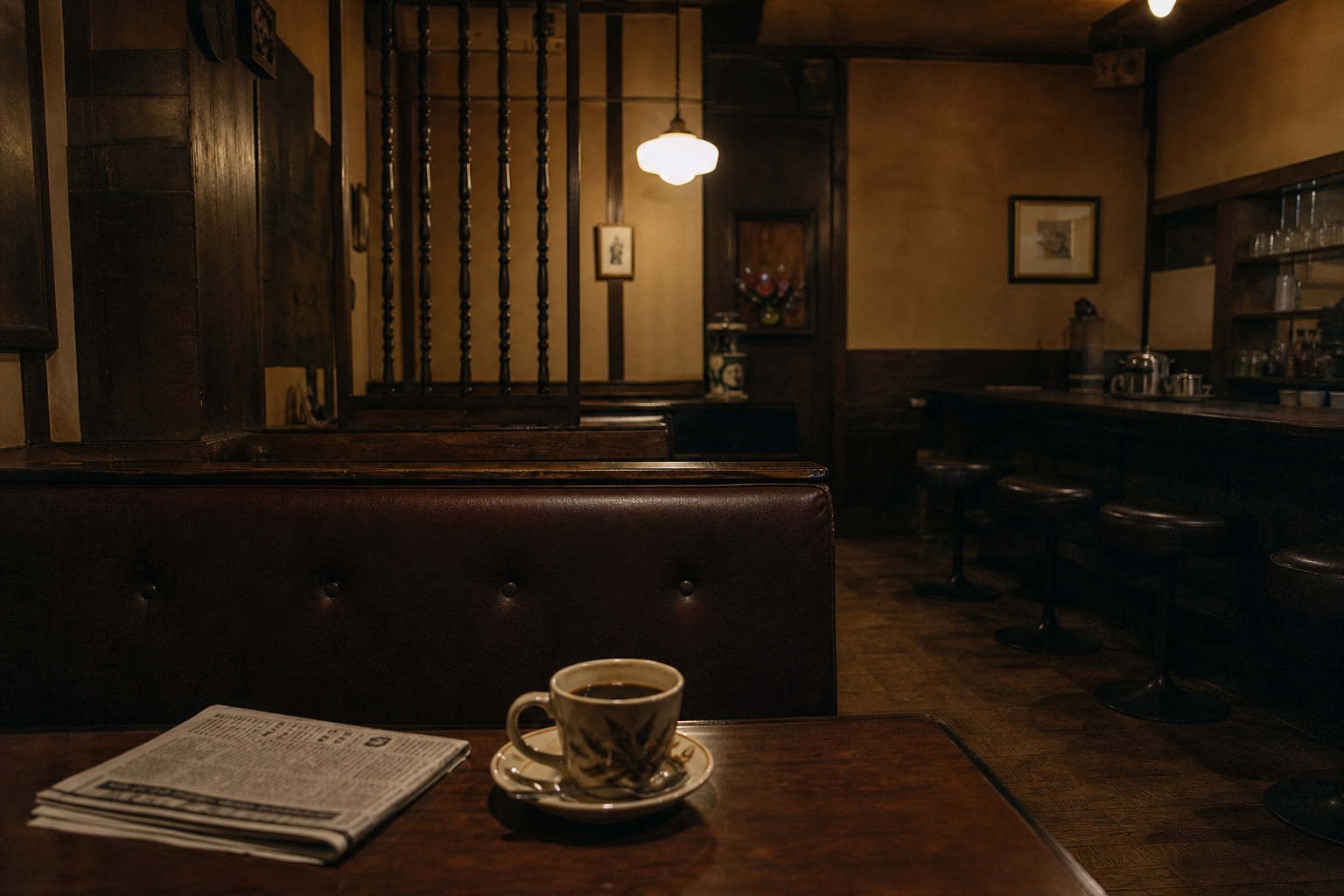
The interior of a jun-kissa is a designed environment, though it was rarely described as such.
Dark wood is common — paneling on the walls, a counter worn smooth at the elbows, booths upholstered in vinyl or velvet. The lighting is low, not from neglect but by intention, creating a separation from the street outside. A counter with stools faces the working area. Booths run along a wall. The space between seats is generous. A newspaper or a magazine may be left on the table.
Music plays. In most jun-kissa, the owner chose the genre when the shop opened and has maintained it since. Jazz is the most common. Classical occasionally. Old city pop in some places. The volume sits at a point where conversation is possible but silence is also acceptable.
Coffee is served through methods that were standard practice before the word “craft” was applied to coffee: nel drip through a flannel filter, siphon, or slow hand-pour. The cup is ceramic. So is the saucer. The spoon arrives separately, placed on the saucer.
—
The Time Inside
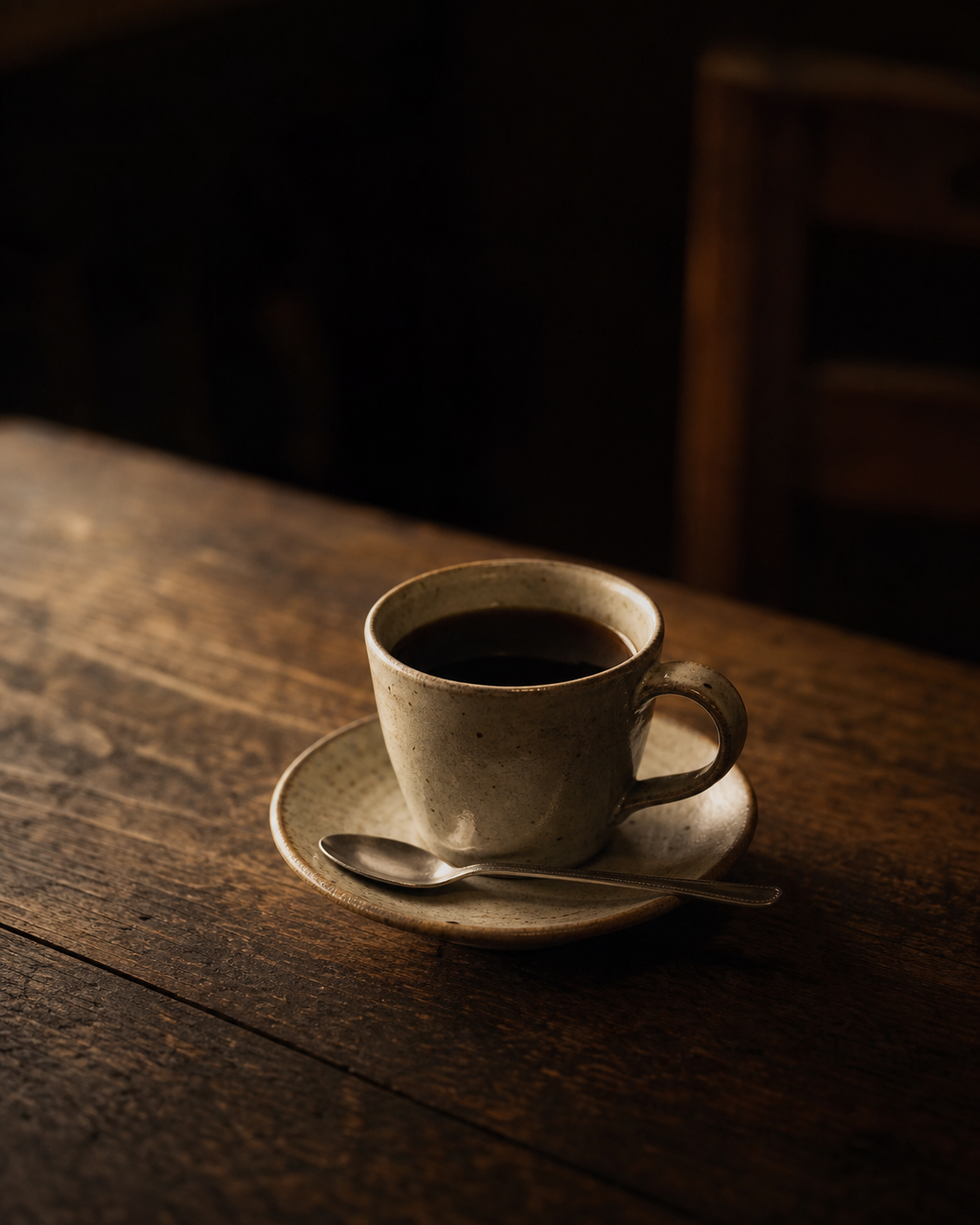
What separates a jun-kissa from a room that simply happens to contain coffee is its relationship to time.
No one comes to clear the cup as a signal. No one returns to ask if you need anything else after the coffee is served. In a city where commercial space is often managed for throughput, the jun-kissa operates on a different premise: the coffee is paid for, and the time that comes with it is not.
This produces a particular way of sitting. People read. They write in notebooks. They look at nothing in particular. They do not always talk. The morning service (モーニング) runs in many jun-kissa before 11: order coffee and toast or a boiled egg is included at no extra charge. It is most common in Nagoya, where it became almost a civic institution, and across Kansai, but the practice exists in jun-kissa throughout Japan. It is not a promotion. It is a routine, and routines are part of what a morning was for.
—
Why Jun-Kissa Still Exist
Many kissaten from the same postwar period have closed. Jun-kissa, in smaller numbers, continue.
Part of this has to do with the shops themselves. The interior of a well-maintained jun-kissa is not a backdrop — it is what the shop is. Changing the lighting, replacing the furniture, or expanding the menu would not update the business; it would change what the business is into something else. Some owners understood this and held the form.
There has also been a quiet increase in interest from younger Japanese — not as irony or nostalgia, but as recognition. The jun-kissa offers a pace and texture that is difficult to find elsewhere in daily life. An hour inside is, for some people, one of the more uncomplicated hours of the week.
Whether this interest changes the longer-term picture for jun-kissa is an open question. Some shops are being taken on by younger owners who intend to continue the form. Others will close when the time comes and leave no one to replace them. Neither outcome is announced. It is simply what happens to places.
—
Finding a Jun-Kissa
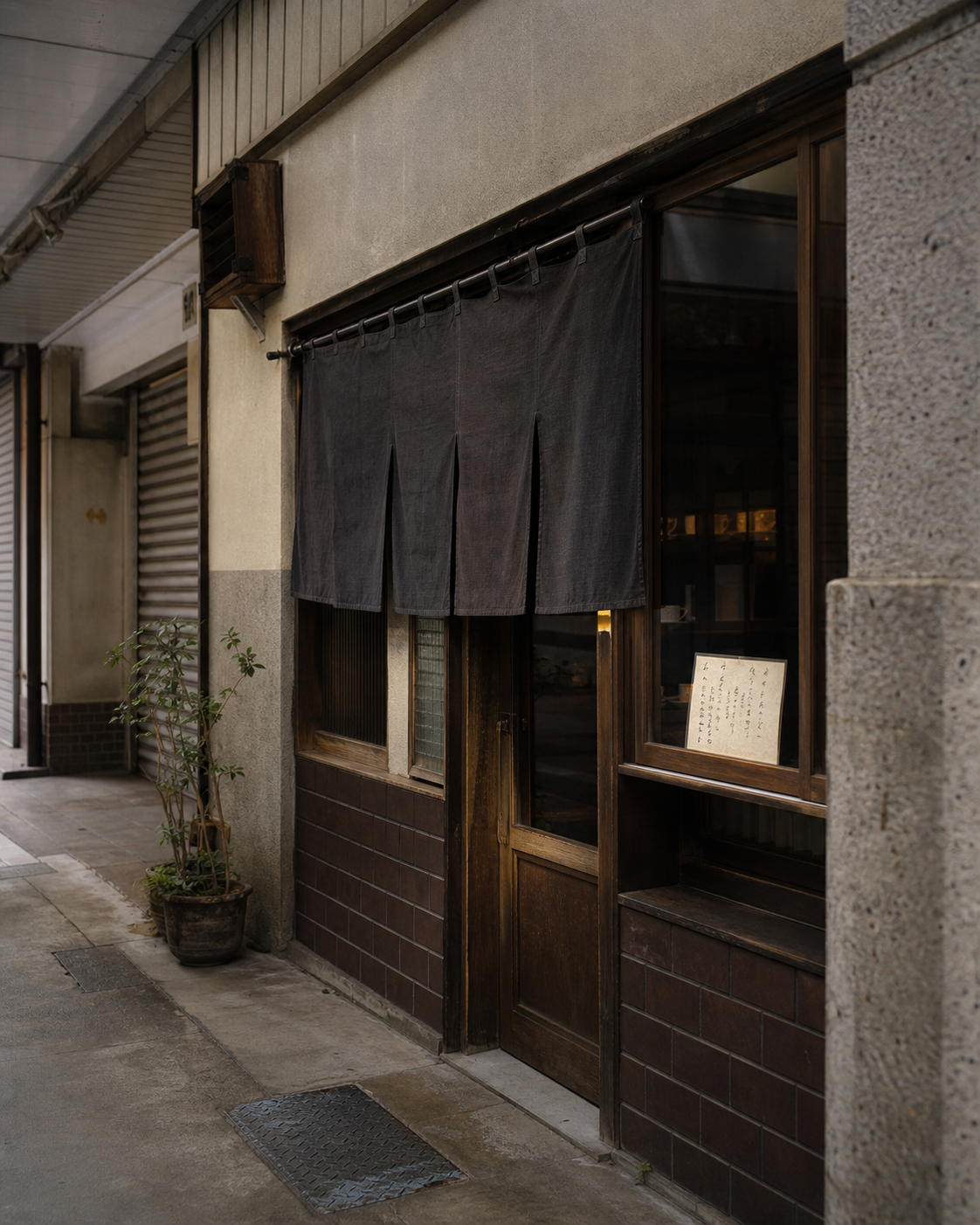
Jun-kissa are not in tourist guides and rarely appear in the main streets of city centers. They tend to exist near older train stations, along shotengai (商店街, covered shopping streets), or in residential neighborhoods that have not changed much in several decades. The exterior may be a small handwritten sign, a menu card taped in the window, or a noren across the door. Sometimes all three.
Inside: sit where you like. Order coffee — the house blend, unless you have a reason to ask otherwise. Pay when you leave, with cash. The coffee will arrive in a few minutes. There may be a small something on the saucer. There may not. The owner is working steadily somewhere in the room. The music continues.
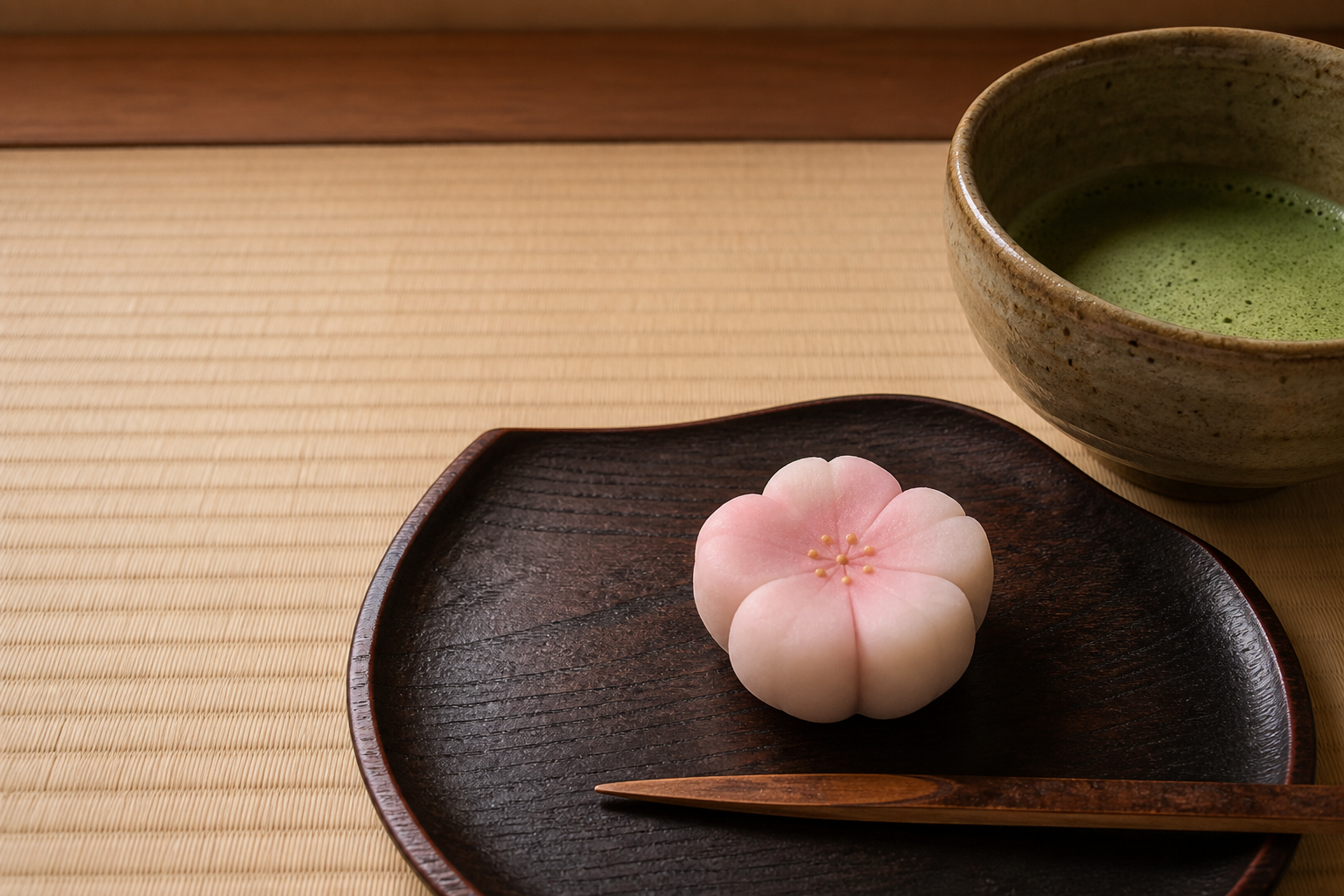
The seasonal Japanese sweets in wagashi in Japan follow a related kind of logic — small, specific, repeated by the calendar. For the quality of attention that runs through Japanese slow culture more broadly, see What is Zen in Japan.
—