Pick up a Japanese bowl and hold it for a moment. The weight is not accidental. Neither is the rough circle at the base where the glaze stops. Both come from decisions by someone who thought carefully about what the bowl would carry, and the hands that would hold it. Japanese tableware is not simply a vessel for food. The piece is part of the meal: its material, shape, weight, and seasonal fit all shape how the food is perceived.
Pick up a Japanese bowl and hold it for a moment. The weight is not accidental. Neither is the rough circle at the base where the glaze stops. Both come from decisions by someone who thought carefully about what the bowl would carry, and the hands that would hold it.
Japanese tableware is not simply a vessel for food. The piece is part of the meal: its material, shape, weight, and seasonal fit all shape how the food is perceived. Cookbooks and restaurant guides rarely address this directly, but it is one of the more consistent threads in Japanese dining culture.
What Is Utsuwa? The Japanese Concept of the Vessel
Utsuwa (器) is the Japanese word for vessel, container, or receptacle. In dining, it refers to all objects used to hold food: bowls, plates, cups, sake flasks, serving dishes, small saucers for pickles. The word carries more weight than the English “tableware” or “dishes,” which imply function without personality. Utsuwa is often discussed as something with character, presence, and a relationship to what it holds.
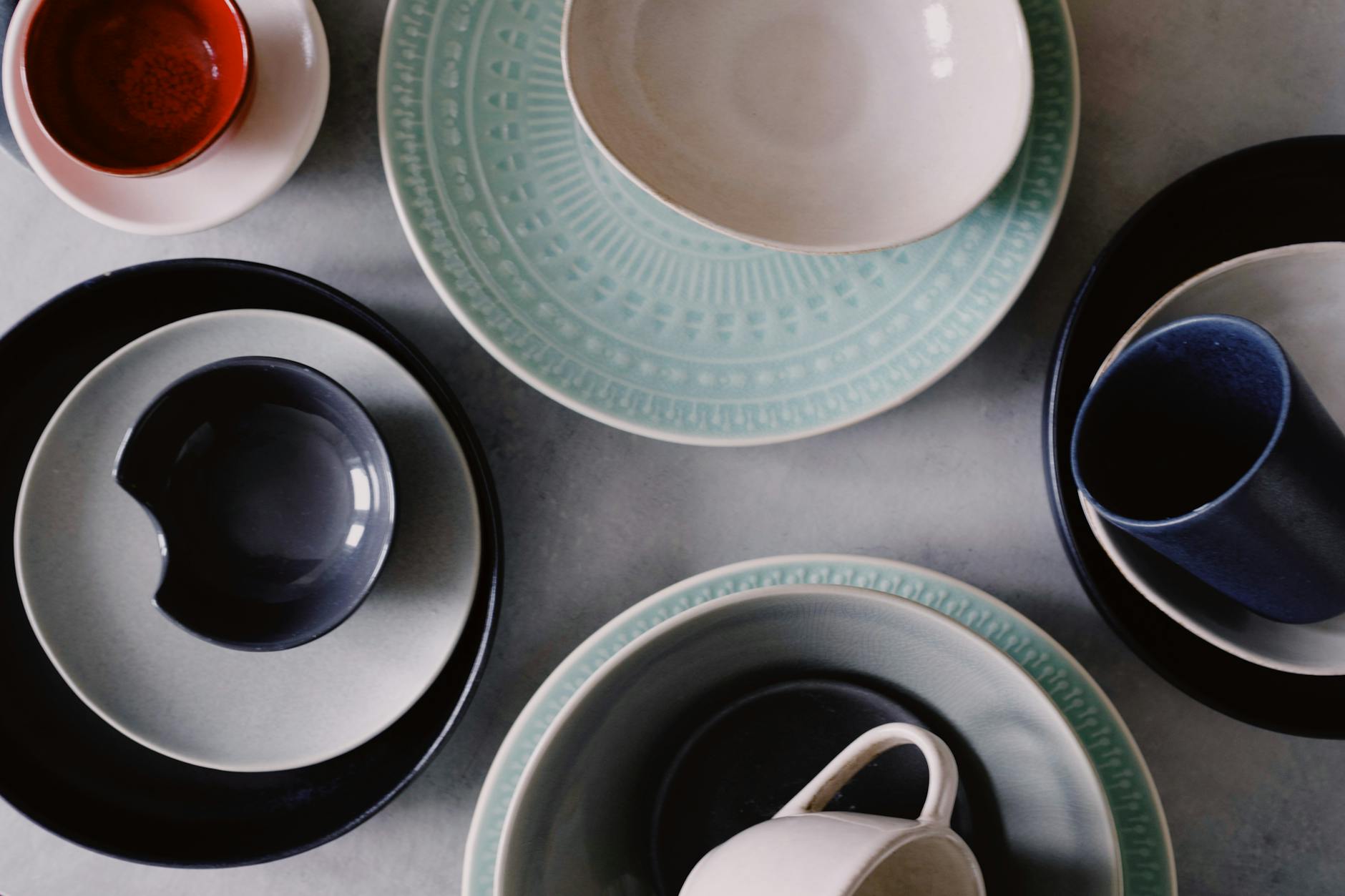
As a category, utsuwa spans an unusually wide range. Unglazed Bizen stoneware, thin-walled Arita porcelain, lacquered wooden bowls, blown glass: each feels different, reads differently across seasons, and relates differently to the food placed in it. The choice of vessel is part of the cook’s intent, not an afterthought.
The Main Materials: From Clay to Lacquer
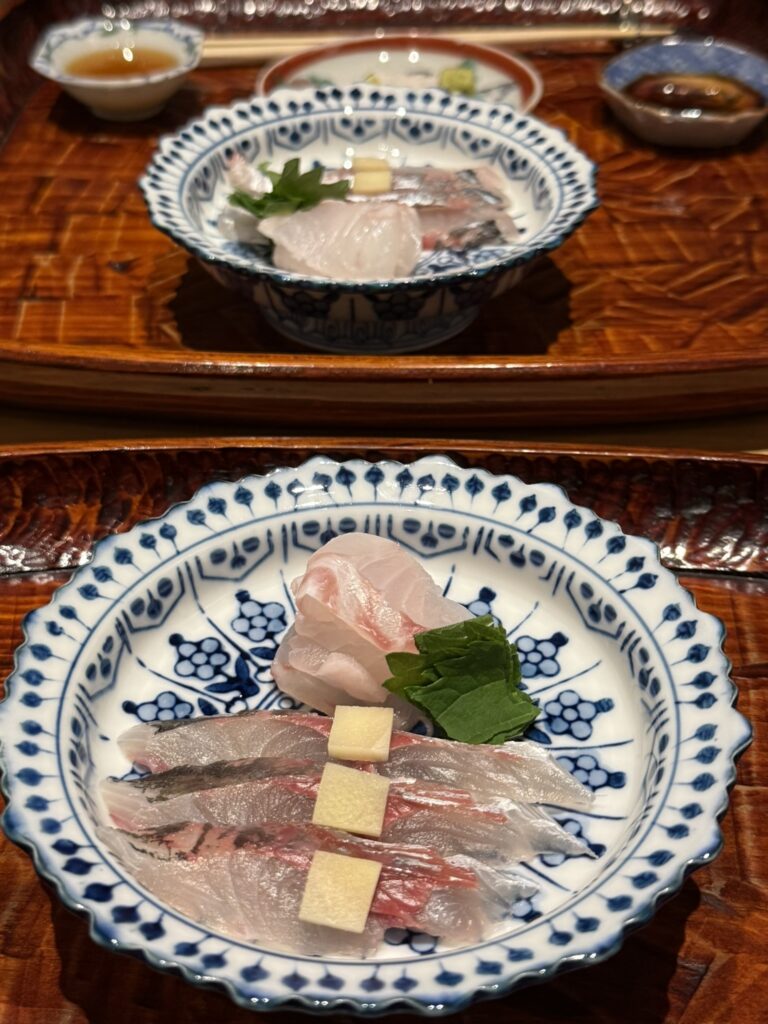
Ceramic vessels are the most common category of utsuwa. Toki (陶器) is the broad term for pottery or ceramic ware, covering both earthenware and stoneware; porcelain is separately called jiki (磁器). Toki is thicker, heavier, and variable in surface color. Shigaraki and Bizen ware are earthy, with rough surfaces that warm in the hand. Jiki is smooth, white, more precise in finish. Arita and Imari porcelain, with blue underglaze or colored enamels, are jiki. Toki belongs to autumn and winter meals. Jiki suits summer and more refined contexts.
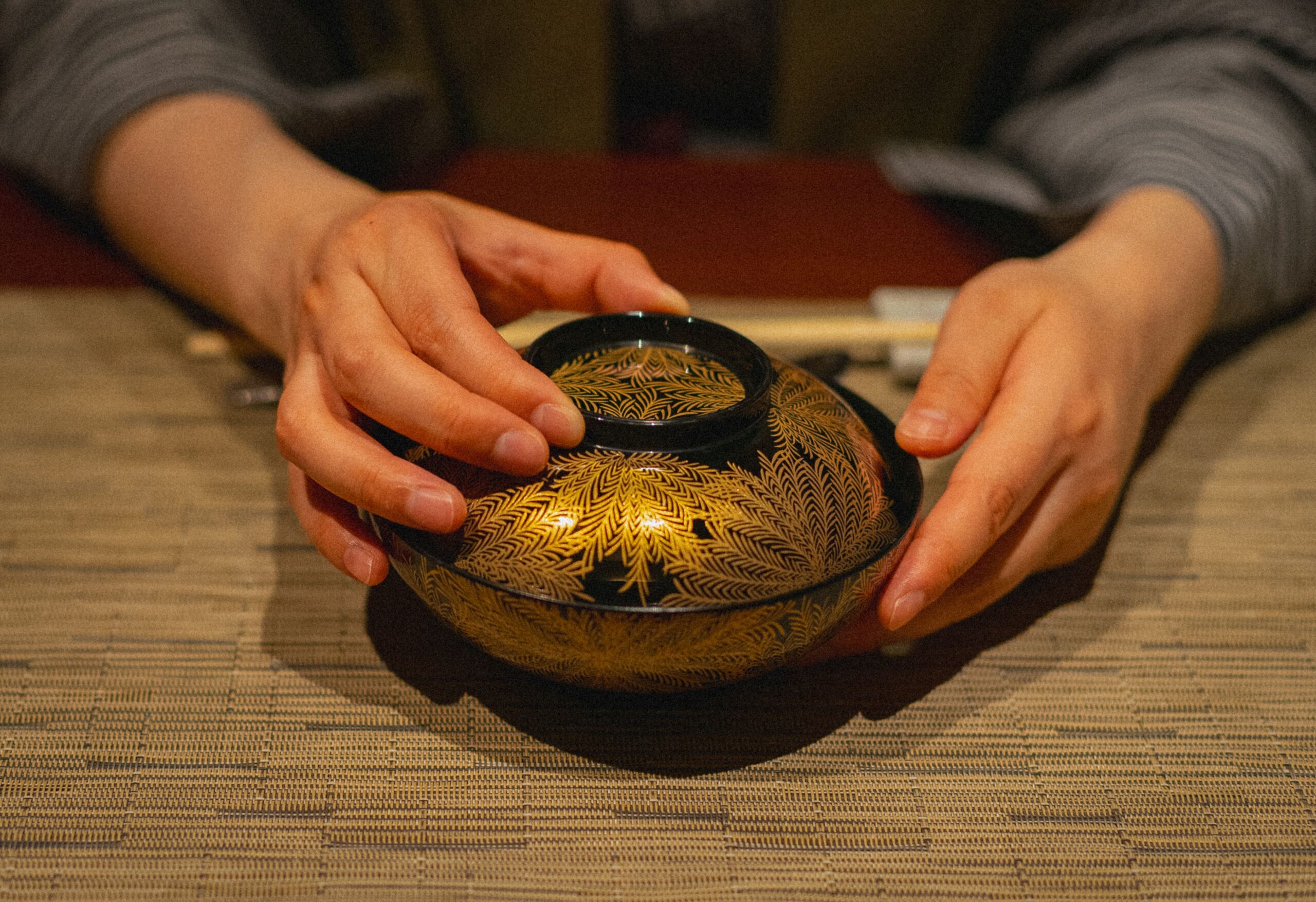
Lacquerware, known as urushi (漆器), is lacquer resin applied to a wood base. Lightweight, warm to the touch, and quiet when handled, it is well suited for soup bowls and covered serving dishes. A lacquer miso bowl holds heat longer than ceramic and does not conduct cold from the fingers. The click of a lacquer lid is a sensory quality ceramic does not replicate.
Wood, glass, and metal also appear in utsuwa. Wooden trays and sake cups have a natural warmth. Glass vessels, mainly in summer, feel cool and light. Pewter or tin sake cups appear in more formal settings.
Shape and the Logic of Scale
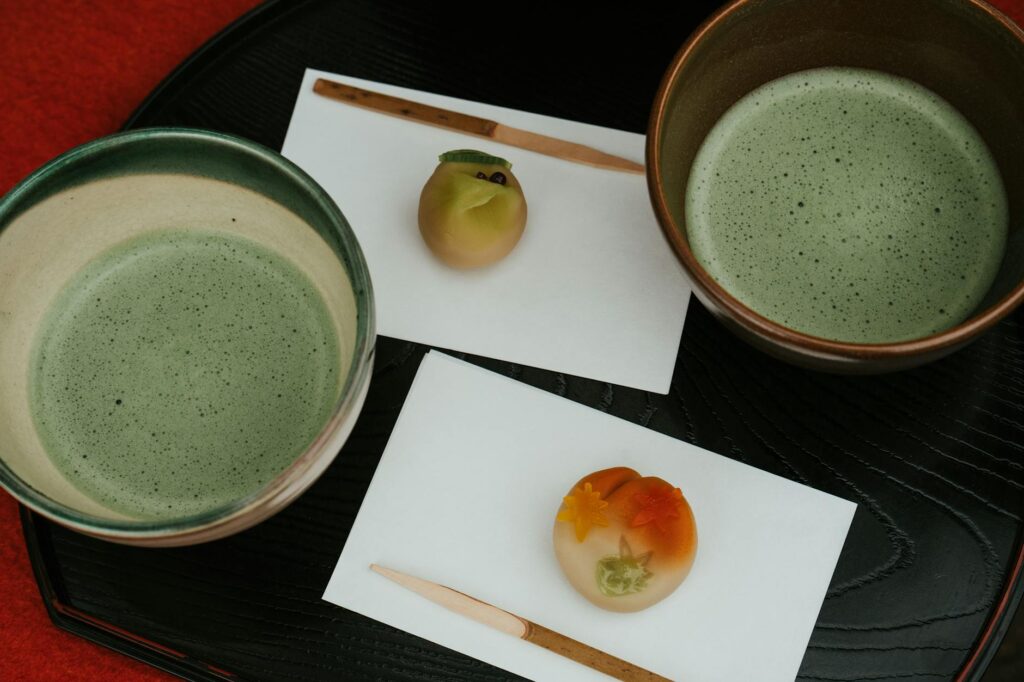
English names like “bowl” or “plate” do not quite capture the distinctions japanese tableware makes. Wan (椀) is the deep bowl for miso soup or clear soups, typically lacquer or ceramic. Hachi (鉢) is a wider, shallower bowl for salads, dressed vegetables, or small servings. Sara (皿) is a flat plate. Ko-zara (小皿) is a small plate for pickles, sauces, or a single piece of fish.
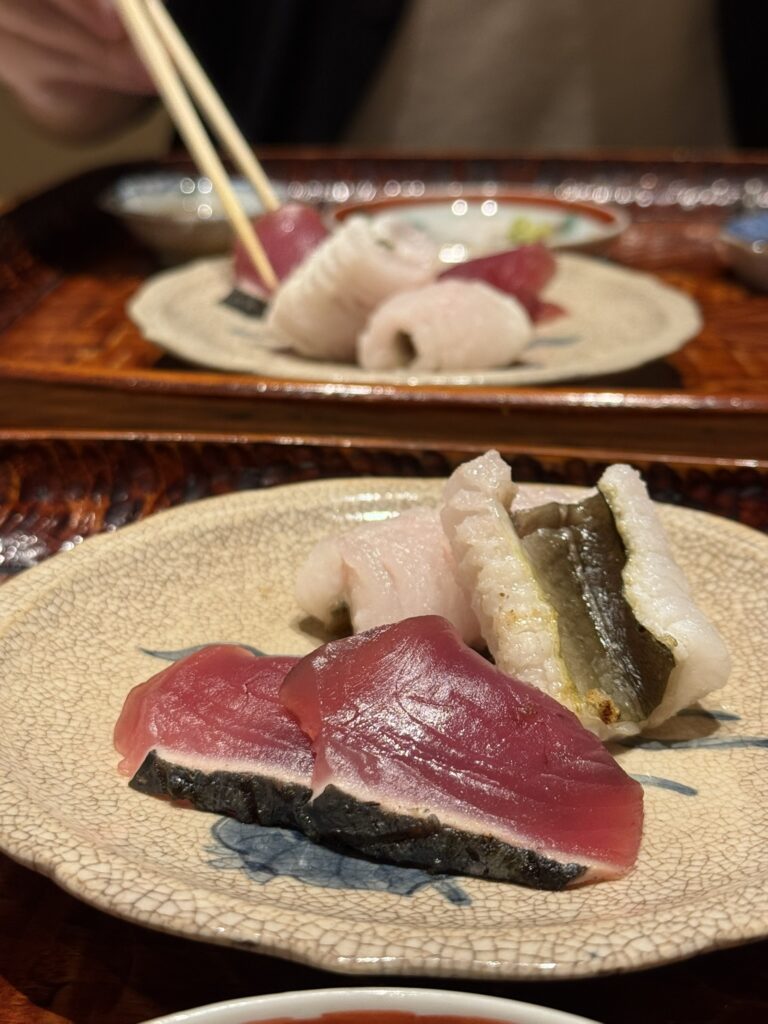
The logic behind scale: smaller vessels hold richer, more complete, or more precious foods. A single pickled vegetable gets its own small plate. A piece of sashimi rests on a flat dish with space around it, not empty surface but part of the presentation. The vessel size reflects the nature of what it holds, not the appetite of the person eating.
Irregular shapes carry this further. Handmade japanese tableware (plates and bowls with uneven rims or one edge higher than the other) gives the cook a surface where food can be arranged in relation to the vessel’s form, not simply placed in the center. The irregularities are not imperfections. They are the design.
The Seasonal Dimension
Japanese dining has long paid attention to the match between japanese tableware and season. In autumn and winter, heavier stoneware with warm tones is preferred. The weight of a Shigaraki bowl in two hands, the earthy color of Bizen clay: these belong to cold months. The vessel is part of the season.
In summer, the same household might shift to glass, pale celadon porcelain, or thin white porcelain. These feel cooler against the skin and look lighter in natural light. It is not simply an aesthetic preference. It is an adjustment of the entire sensory context of the meal.
How the Vessel Shapes the Meal
The cook arranges food in the vessel, not against a neutral background. Color contrast matters: a pale green vegetable looks different against dark Bizen stoneware than against white Arita porcelain. The negative space on a plate is deliberate. Cold somen noodles served in glass in summer, miso soup brought to the lips in winter: the vessel is part of how the food is encountered.
Restraint and empty space are consistent qualities in Japanese dining, and they show up in utsuwa as much as anywhere. Putting less on the plate is not scarcity. It is an invitation to look at what is there. A cup with roughness to the rim, a bowl that fits differently in each hand, asks for a different quality of attention than a smooth, uniform piece. For more on the aesthetic ideas behind this, see the aesthetics of subtraction.
Much of what appears in traditional Japanese dining comes from one of the regional kiln traditions: Bizen, Shigaraki, Arita, Hagi, and others. Knowing where a piece comes from adds something to what it means to eat from it. For a fuller account of those traditions, see japanese pottery history.
Where to Encounter Japanese Tableware
Reading about japanese tableware and handling it are different experiences. Department stores in Japan, particularly Takashimaya and Mitsukoshi, have ceramics floors where pieces from various kiln traditions sit alongside each other. This is a practical place to compare materials and styles, and the staff often know the regional differences.
Kiln towns offer a slower encounter. Arita in Saga Prefecture holds a ceramic fair each spring, typically in late April through early May, with work ranging from production ceramics to small studio pieces.
Seasonal pottery fairs take place across Japan throughout the year. Among the most visited are those in Arita, Toki (Gifu Prefecture), and Mashiko (Tochigi Prefecture). Mashiko, reachable from Tokyo in about two hours by rail, holds its fair twice a year, in spring and autumn, drawing studios from across the Kanto region. Work at these fairs, especially from smaller kilns and individual potters, rarely appears in city shops or online. Some pieces exist only here, at a folding table on a weekend in May. That is reason enough to go.
Shigaraki in Shiga is reachable from Kyoto by train in roughly an hour, with workshops and the Shigaraki Ceramic Cultural Park, which has a museum and exhibition space focused on ceramics from the region. More at the park’s site. Approaching these places as part of quiet travel tends to yield more than approaching them as shopping destinations.
The Japan Folk Crafts Museum (Mingeikan) in Tokyo holds a significant collection of utsuwa from the mingei, or folk craft, tradition, including works by Hamada Shoji, a central figure in the Japanese folk craft movement of the twentieth century. Details at the museum’s site.
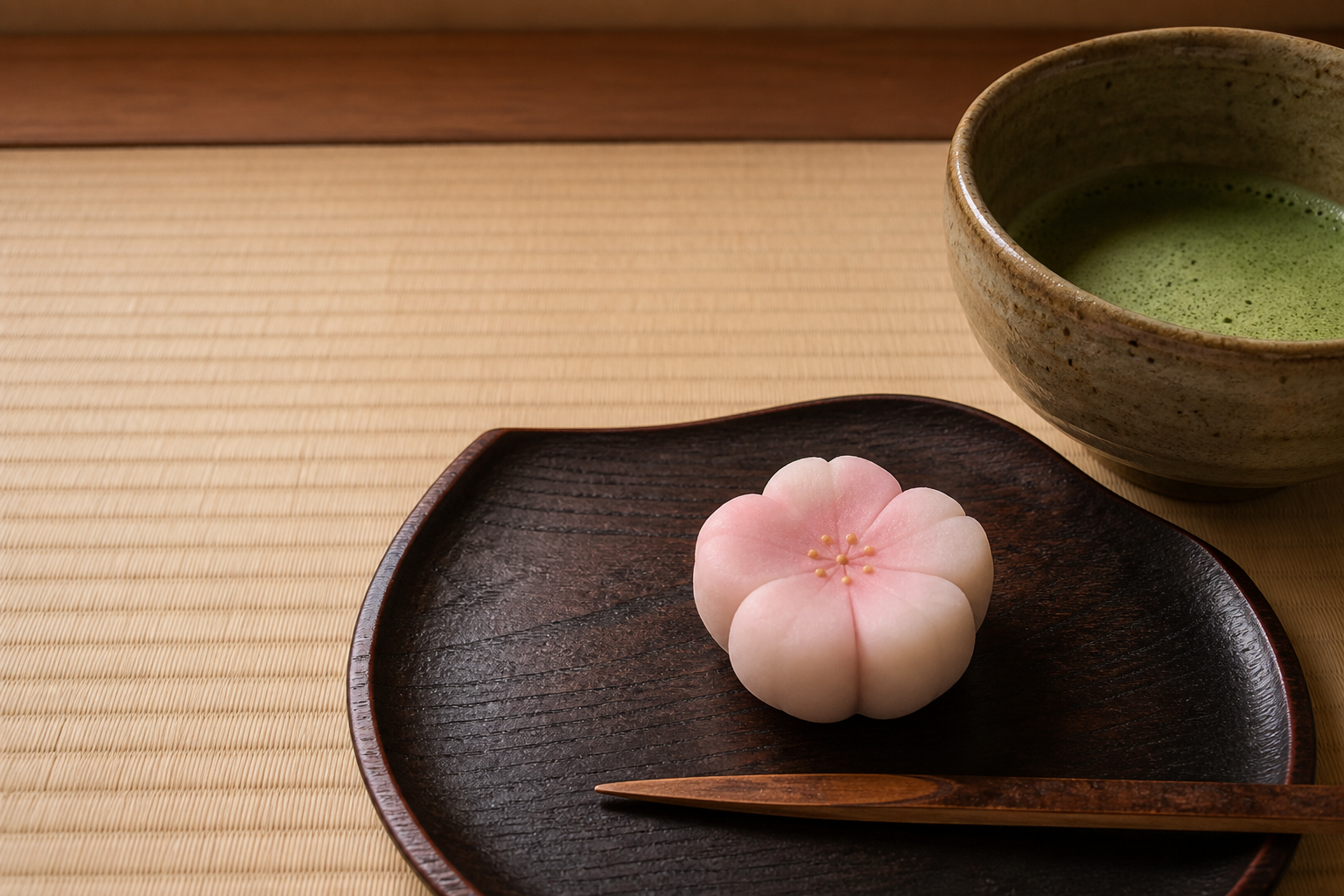
When handling a piece, pay attention to the weight, how the base sits in the palm, and the sound of a light tap. These are not incidental qualities. They are what the potter was working with. The small dishes made to hold wagashi (confections prepared for tea gatherings or offered as seasonal gifts) are one example of how japanese tableware and practice develop in relation to each other. For more on that, see wagashi and the Japanese tea tradition. The vessel does not announce itself at the meal. But it shapes the attention you bring to eating.