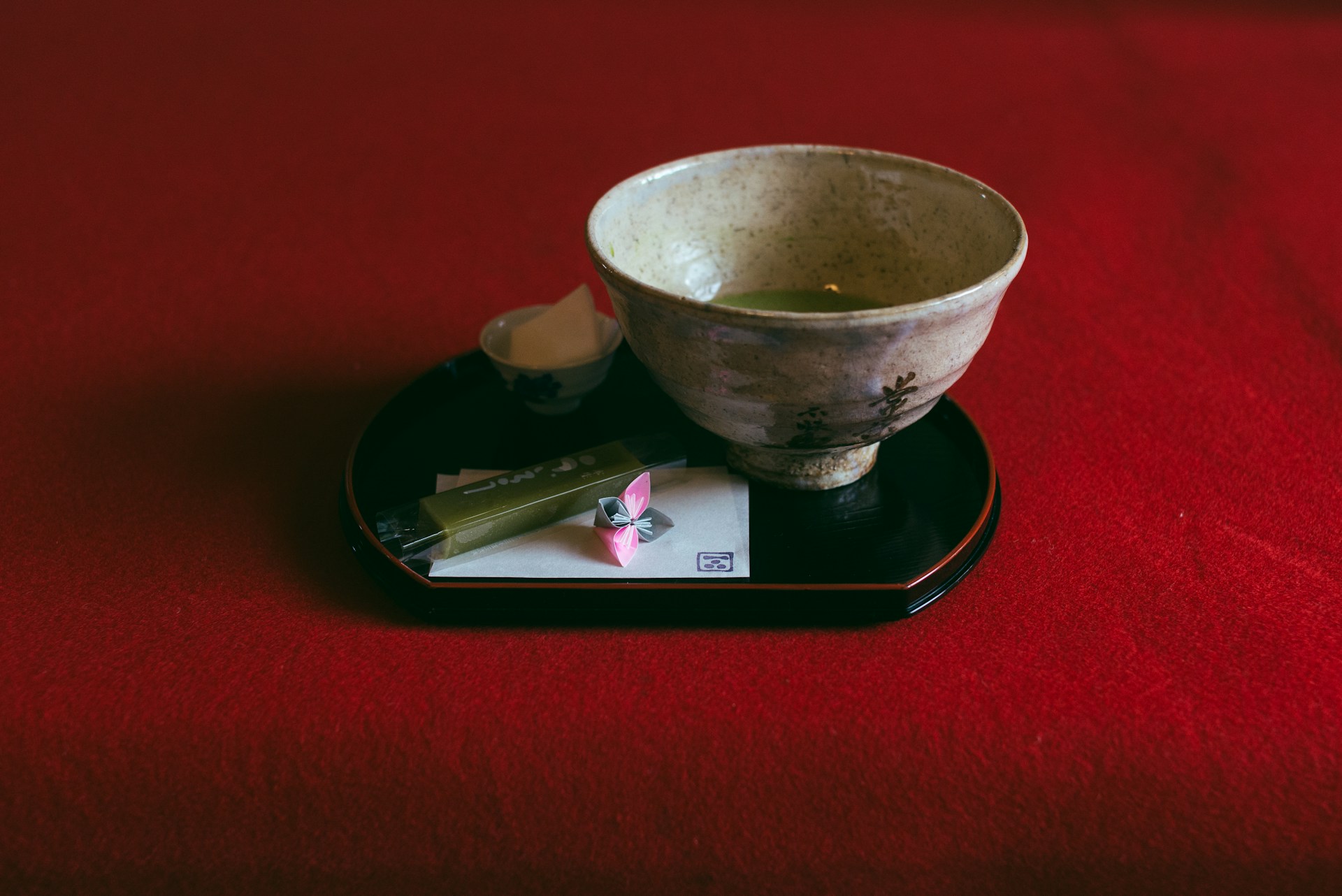
In many Japanese pottery collections, you will find bowls that seem, at first, unremarkable. Small, lopsided, the glaze pooled unevenly. They might look unfinished. But these are among the objects that tea masters have prized most, and that have been handled with the most care. The quality people find in them is not ease or perfection. It is something closer to the sense that the bowl is exactly what it is.
In many Japanese pottery collections, you will find bowls that seem, at first, unremarkable. Small, lopsided, the glaze pooled unevenly. They might look unfinished. But these are among the objects that tea masters have prized most, and that have been handled with the most care. The quality people find in them is not ease or perfection. It is something closer to the sense that the bowl is exactly what it is.
The Japanese aesthetics of subtraction refers to a thread that runs across several Japanese cultural concepts: the idea that removing something can add meaning, that emptiness can hold more than fullness, and that the incomplete can be more honest than the perfect. The phrase is recognized term in Japanese thought. Three established concepts, wabi-sabi, ma, and taru wo shiru, each contribute something to this way of seeing. Reading them together offers one way to understand a sensibility that shows up across Japanese design, cuisine, architecture, and daily life.
—
What Is the Aesthetics of Subtraction?
In Japanese design and practice, subtraction is often understood as a conscious choice: the deliberate act of taking away until only the essential remains. This is not the same as the Western minimalist movement, which arrived in design and lifestyle culture in the twentieth century. The sensibility described here is older and less ideological. It is visible in how a traditional room is arranged, how a kaiseki meal is paced, and how a conversation can carry meaning without filling every silence.
Three concepts help illuminate it: wabi-sabi, the aesthetic of the impermanent and incomplete; ma, the art of intentional space; and taru wo shiru, the practice of knowing what is enough.
—
Wabi-Sabi: The Beauty of the Incomplete
Wabi-sabi (侘び寂び) is one of the most discussed aspects of Japanese aesthetics, and also one of the most frequently reduced to a formula. It is sometimes described as “finding beauty in imperfection,” but that phrase is too tidy. Wabi-sabi is less a formula and more a quality of attention.
Wabi originally referred to a kind of austere loneliness, the spare life of someone who had withdrawn from society. Over time, it came to describe a quieter quality: the beauty found in simplicity and in the rough rather than the refined. Sabi refers to the quality that comes with age, the appearance of things that have been used and changed over time. The cracked glaze on an old tea bowl. The moss on a stone lantern. The worn threshold of a shrine that has been crossed thousands of times.
The tea master Sen no Rikyu, who helped shape the aesthetics of the tea ceremony (chado) in the sixteenth century, is often associated with elevating these qualities to an art form. He favored the irregular vessel over the perfect one, the grass-thatched tea room over the decorated hall. His preference was not poverty for its own sake, but a kind of honesty: things that show their nature and their history, rather than concealing it. That same attentiveness to season and restraint can be found in Japanese confectionery. Wagashi, the traditional sweets of Japan, reflects a closely related sensibility.
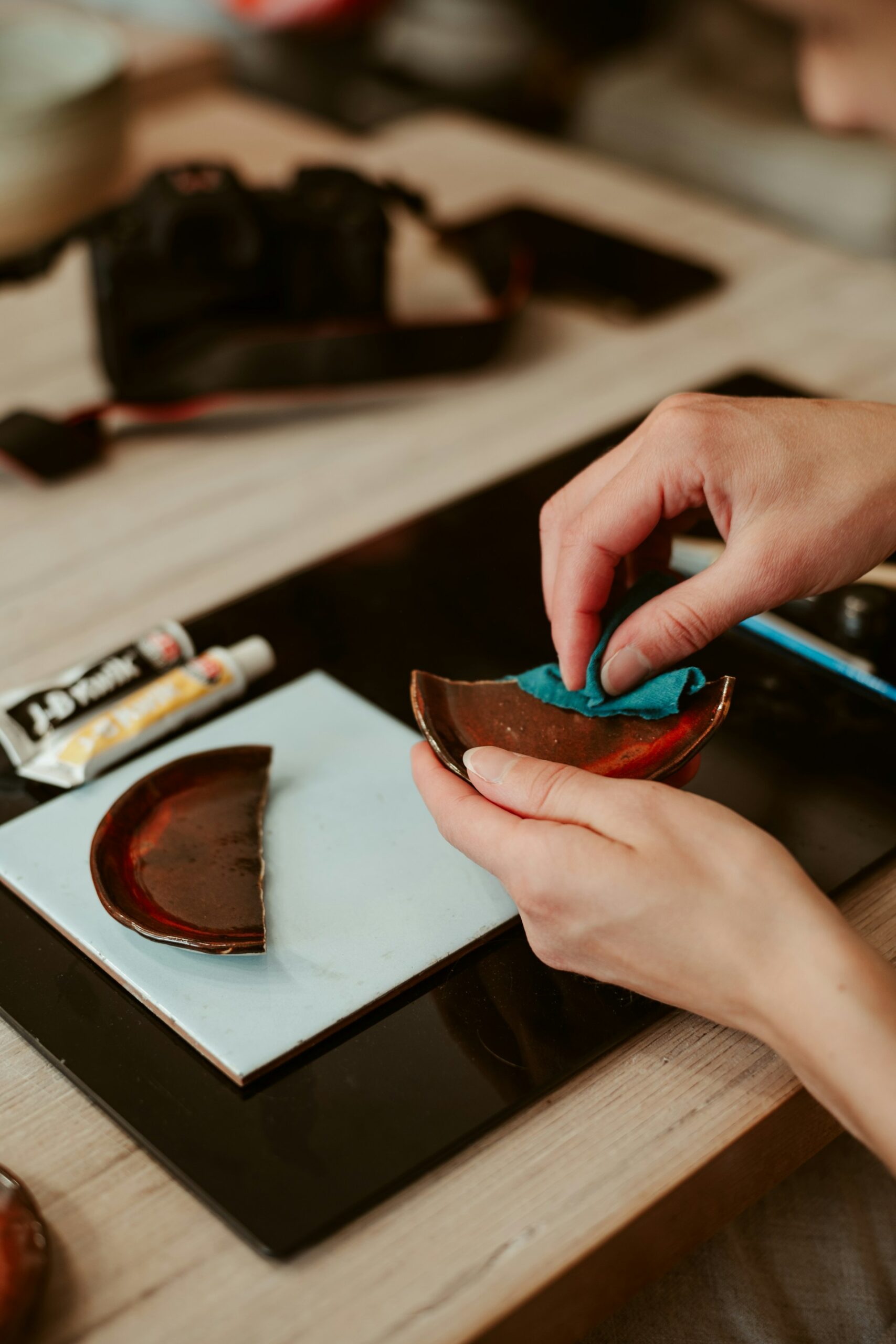
A related practice, kintsugi (金継ぎ), repairs broken ceramics with gold or silver lacquer. The repaired cracks become part of the object’s visible history rather than something to hide. The fracture is not erased; it is acknowledged. The break does not diminish the bowl. It is part of what the bowl has become.
—
Ma: The Space Between
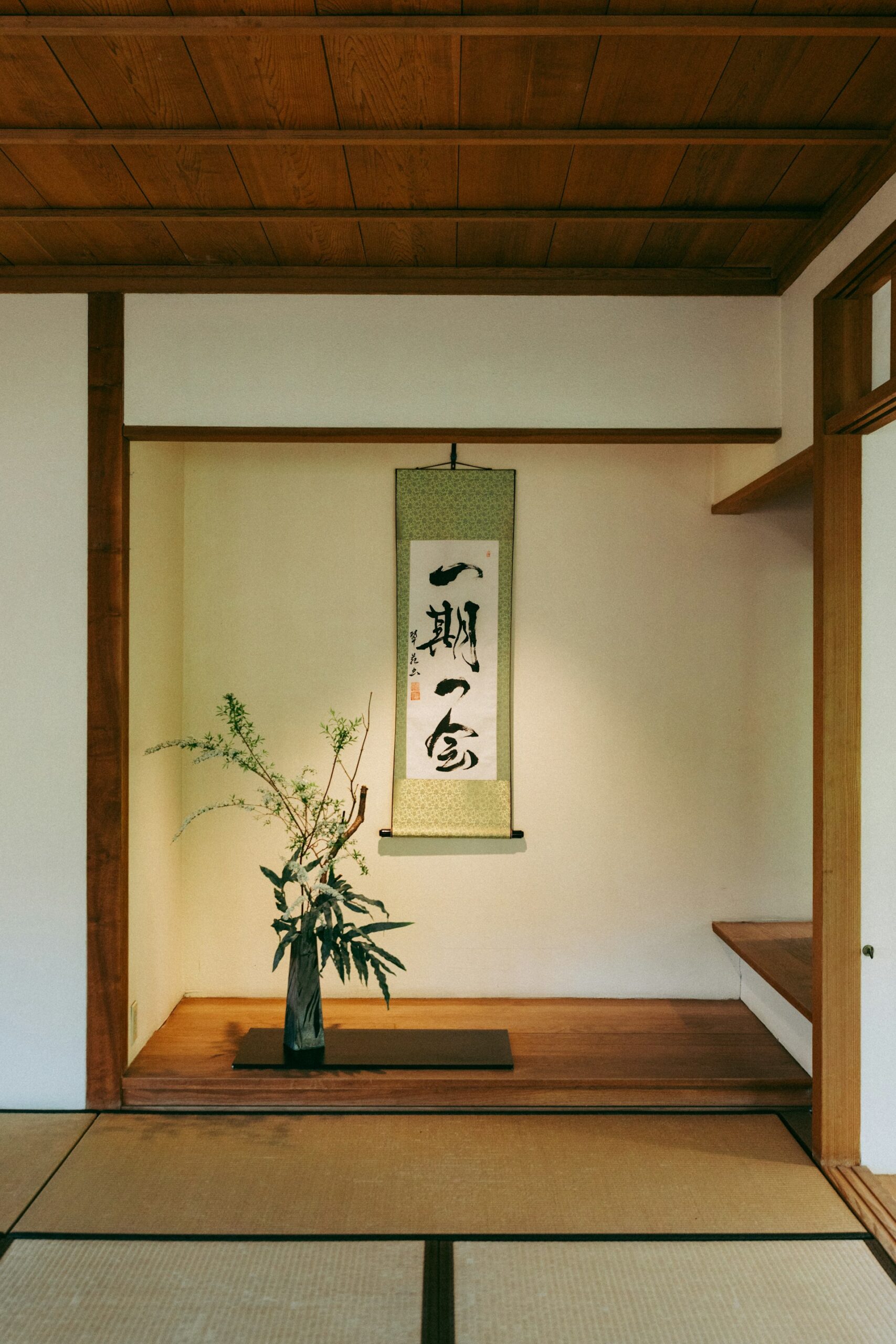
Ma (間) is a Japanese concept that resists direct translation. It refers to a gap, an interval, or a pause, with the sense that this space is meaningful rather than empty. What Is Ma? The Japanese Concept of Meaningful Space explores how it shapes architecture, conversation, and the arts in more depth.
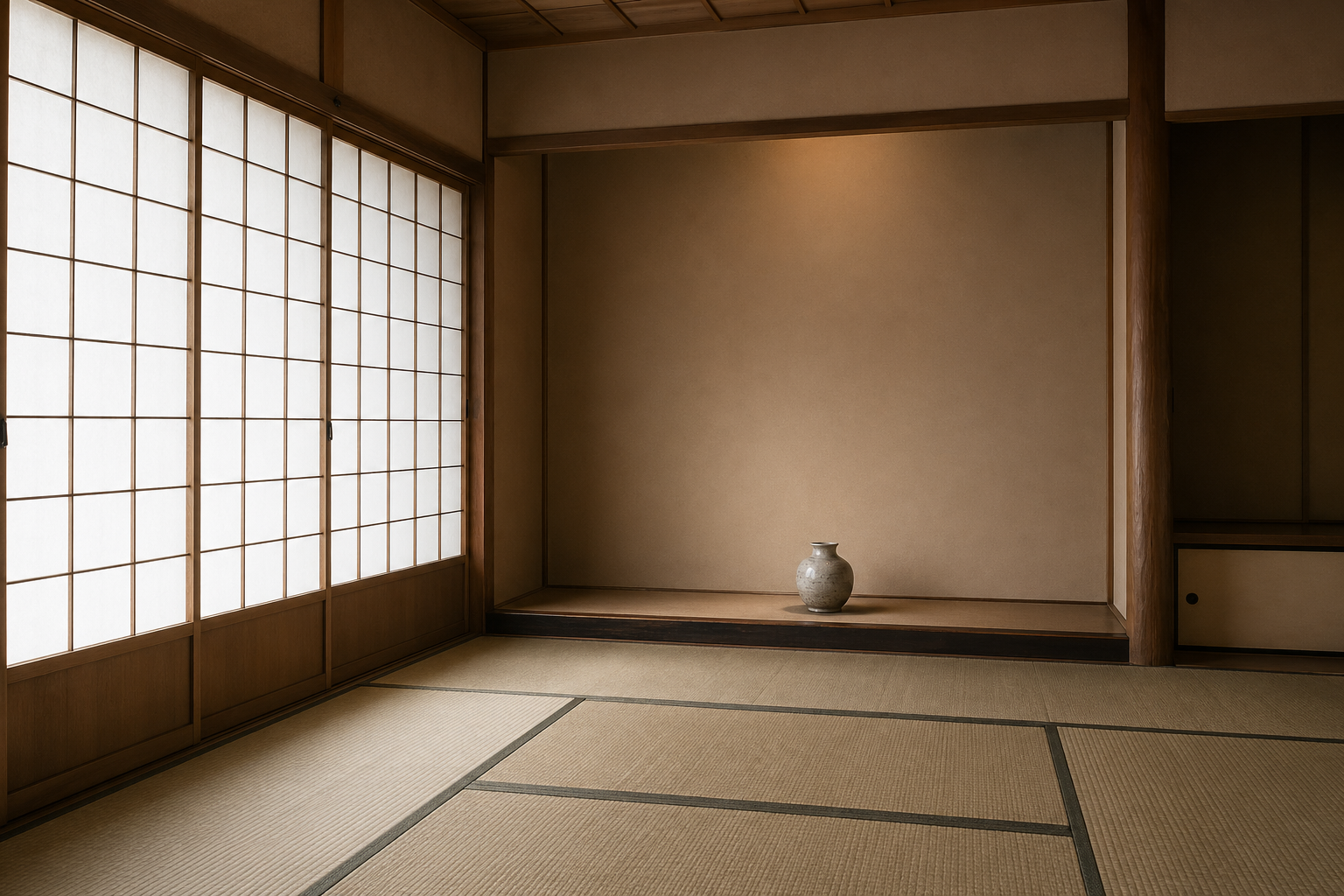
In architecture, ma can be seen in the tokonoma (床の間), the recessed alcove found in a traditional Japanese room. The tokonoma might hold a single scroll and a small ceramic vessel with one or two branches. The emptiness around these objects is not incidental. It gives the eye somewhere to rest and gives the objects their presence.
In ikebana, the art of flower arranging, a single stem placed with care can carry more visual weight than a dense bouquet. The negative space is not absence; it is structure. In music, ma is the pause between notes. A pause before a reply in conversation can signal careful thought. In some contexts in Japan, a moment of quiet between people is understood as attentive rather than uncomfortable.
Ma is not passivity. It is, in many cases, an active decision to leave space, and to trust that the open area carries meaning.
—
Taru wo Shiru: Knowing What Is Enough
The phrase taru wo shiru (足るを知る) is associated with the Tao Te Ching, the classical Chinese text attributed to Laozi. A passage in that text is often translated as “one who knows contentment is rich.” Over the centuries, this idea has been received and reinterpreted in Japan, where it is sometimes read in connection with Zen and Confucian thought. What Is Zen in Japan? offers more context on how these philosophical currents have shaped Japanese practice. The specific meanings vary across different contexts and periods.
Taru wo shiru can be translated as “knowing what is enough” or “knowing sufficiency.” In this reading, it is not a call to deprivation. It is a practice of awareness: noticing when something is adequate and stopping there, rather than always reaching for more.
Several everyday elements of Japanese culture can be read through this lens. In a traditional room, a single piece of calligraphy on the wall. One ceramic object on the shelf. Enough furniture to sit comfortably, and no more. The room does not feel sparse; it feels clear, and the few objects in it receive full attention.
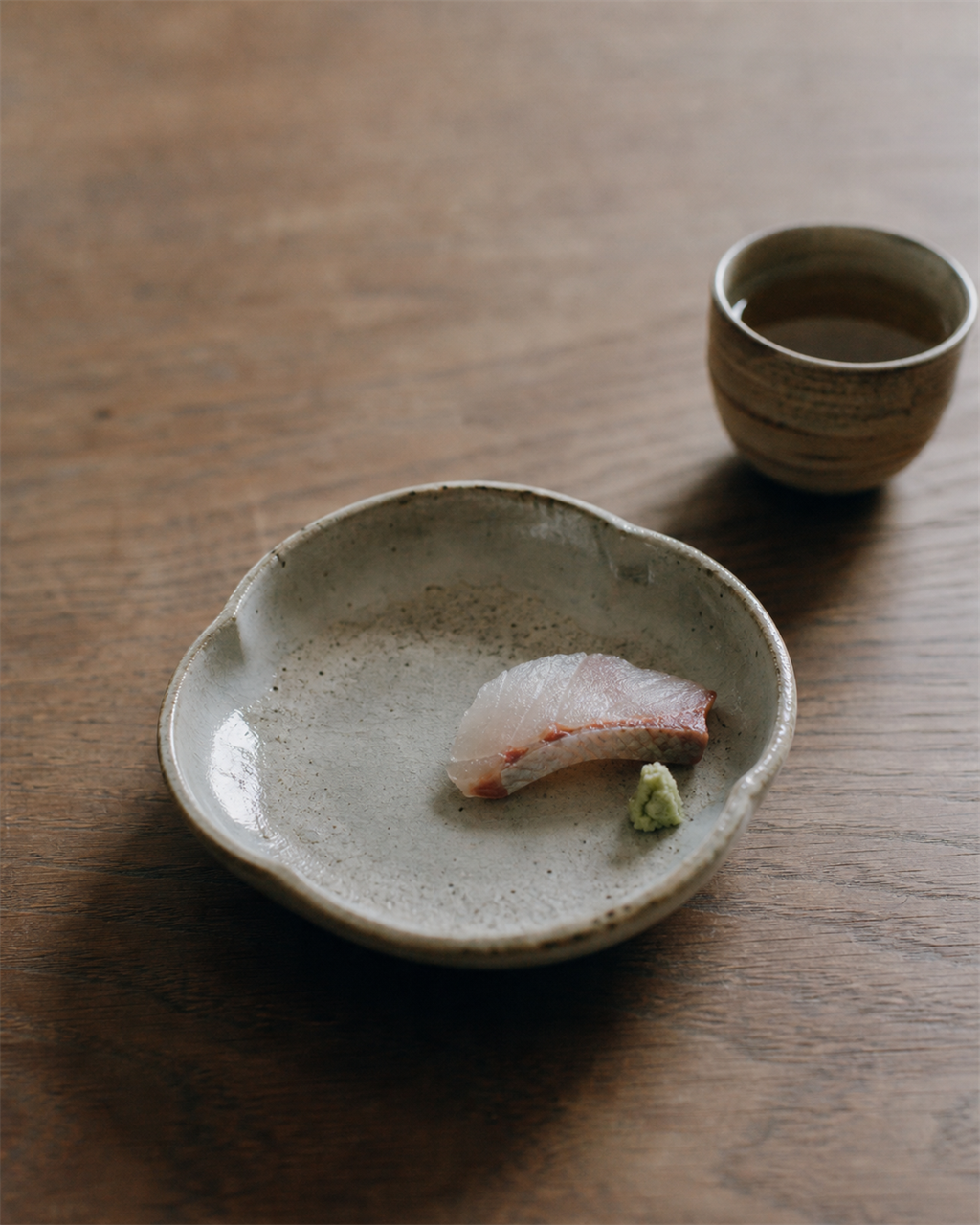
In kaiseki cuisine, each course is small, precise, and seasonal. The meal is designed to satisfy without overfilling. The quantity is considered as carefully as the quality. The size is not a constraint; it is part of the respect the meal shows for what is on the plate.
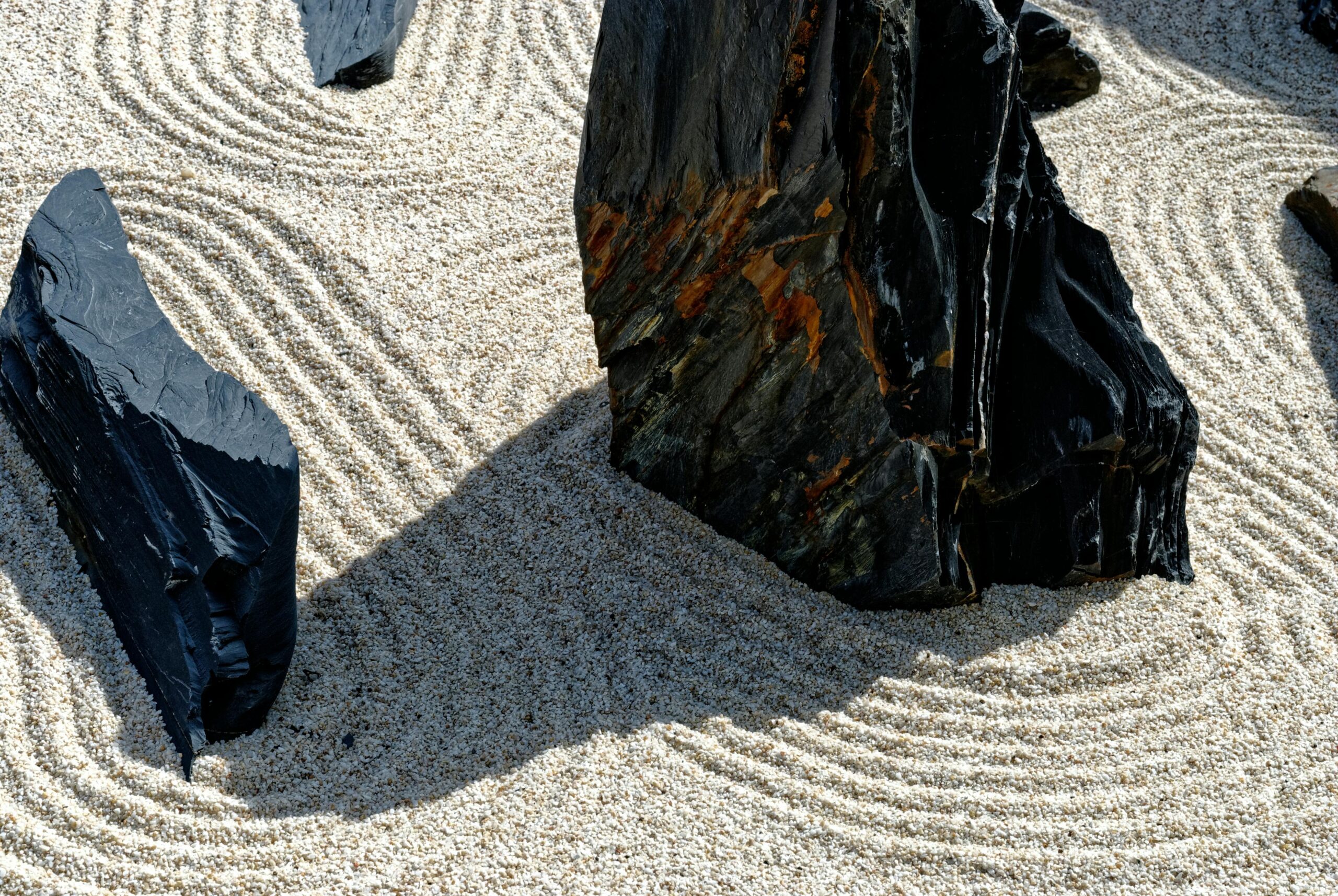
In how some Japanese gardens use open space, the same idea appears. In the rock garden at Ryoanji temple in Kyoto, fifteen stones are arranged in raked gravel. From any single point in the garden, only fourteen are visible. This detail has been interpreted in many ways. One reading is that the garden withholds something deliberately: the full picture is never given.
—
Three Concepts, One Sensibility
Wabi-sabi, ma, and taru wo shiru are distinct concepts with different histories and uses. They are not one unified philosophy.
In ikebana, a single stem placed in a ceramic vessel can carry more presence than a full arrangement. The selection, the placement, the empty space around it: each is a decision. Nothing is added for the sake of adding. The stem rests in the vessel, and around it, there is air.
When a room holds less, each object receives more attention. When a meal is smaller, each ingredient is more clearly itself. When a garden leaves open ground, the eye moves differently across the space. Removing something is not reduction. It is a form of precision, and in that precision, a form of care directed at what remains.
—
Stillness as a Kind of Abundance
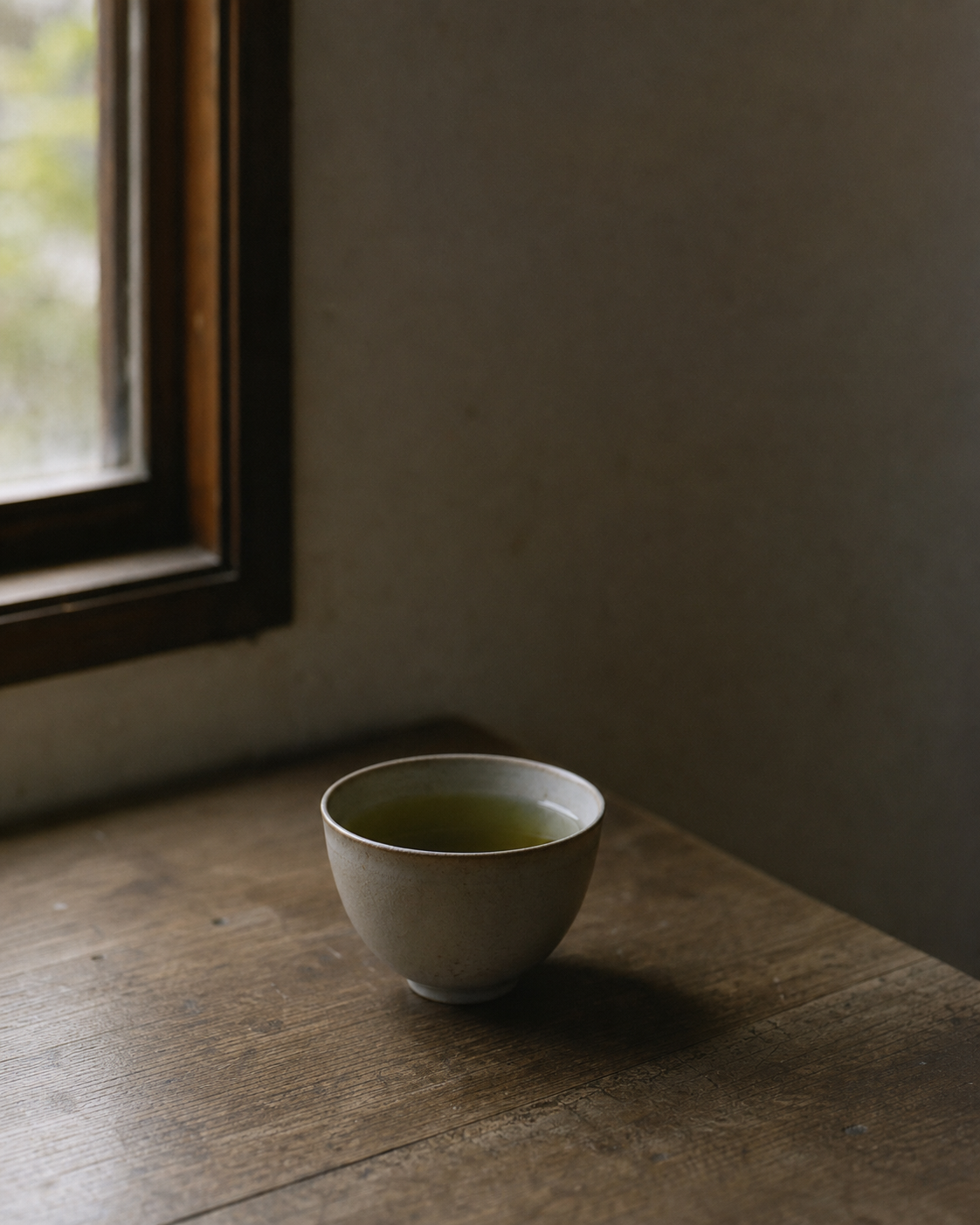
There is a quality to rooms, meals, and conversations shaped by this sensibility. They do not try to fill you. They leave room for your own attention to settle.
A cup of tea placed on a plain ceramic saucer. A window that frames one tree. The sound of water, somewhere out of sight. The experience does not announce itself. It asks only that you be present to it.
Think of that lopsided bowl again: the uneven glaze, the slight weight in the hand, the sense that it has been used many times before. It is not asking to be admired. It is simply there. This is, perhaps, what the aesthetics of subtraction offers: not a theory of beauty, but a practice of noticing. Not lack, but a different kind of fullness.
—
If you are drawn to this quality of attention, you might find it in the food that marks the season in Japanese wagashi, or in the particular stillness of quiet travel in Japan.