Yanaka is written about for its temples and cats. The bread is less covered, and better for it. Three bakeries in the neighborhood represent different answers to the same question: what does a craft baker need in order to do the work? Old buildings, lower rents, and a street that does not expect you to perform. Yanaka has all three. Think (シンク) brings French boulangerie into an 85-year-old kominka (古民家, a traditional old wooden house) at the edge of Ueno Park. Nezu no Pan (根津のパン) bakes in a former tofu shop, stone floor and lattice windows intact. — Th
Yanaka is written about for its temples and cats. The bread is less covered, and better for it. Three bakeries in the neighborhood represent different answers to the same question: what does a craft baker need in order to do the work? Old buildings, lower rents, and a street that does not expect you to perform. Yanaka has all three.
Think (シンク) brings French boulangerie into an 85-year-old kominka (古民家, a traditional old wooden house) at the edge of Ueno Park. Nezu no Pan (根津のパン) bakes in a former tofu shop, stone floor and lattice windows intact.
—
Why Yanaka Bakes Well
The conditions that draw a certain kind of baker are not mysterious. Older buildings with lower rents. A neighborhood pace that does not push turnover. A clientele that comes back. Yanaka, and the surrounding streets of Nezu and Sendagi, have had these conditions long enough for bakers, café owners, and small-scale producers to settle in and do specific work.
None of these bakeries arrived as part of a scene. Think opened in a kominka that had been standing for decades before the bakers found it. Nezu no Pan occupies a building that was a tofu shop for generations. Each Yanaka bakery Tokyo visitors tend to overlook has a physical identity that shapes the bread inside it.
The same pattern runs through the kissaten (喫茶店, traditional Japanese café) and cafés in this neighborhood. The article on the café and kakigori side of Yanaka covers that side of the same instinct.
—
Think: French Craft in a Japanese House
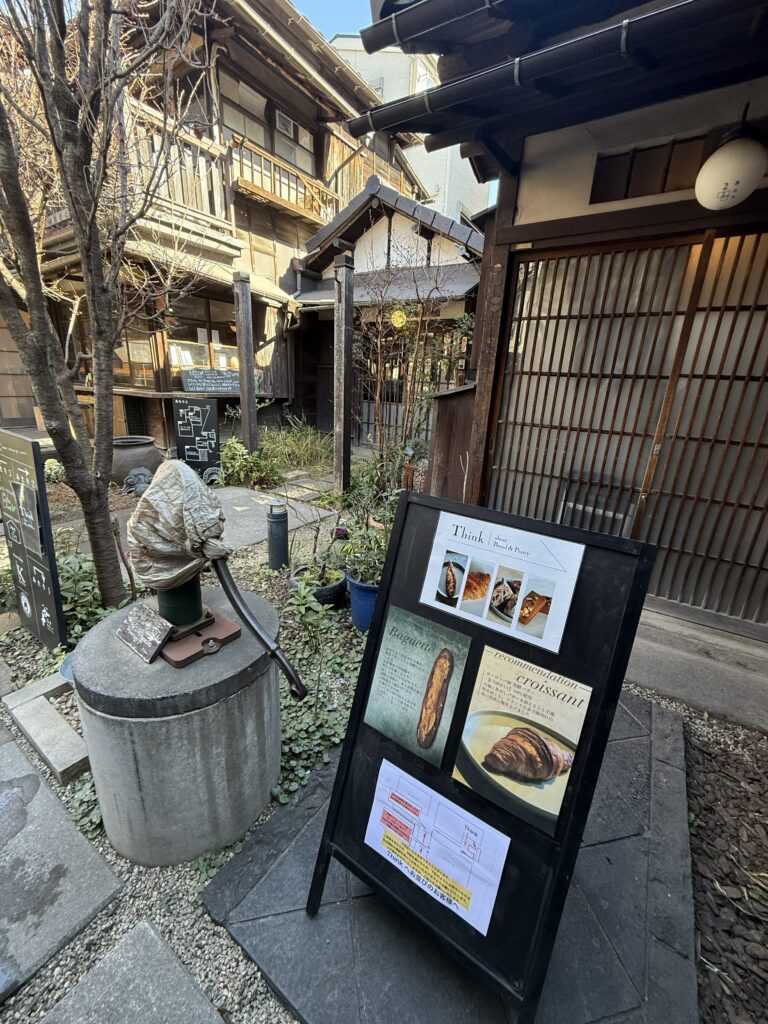
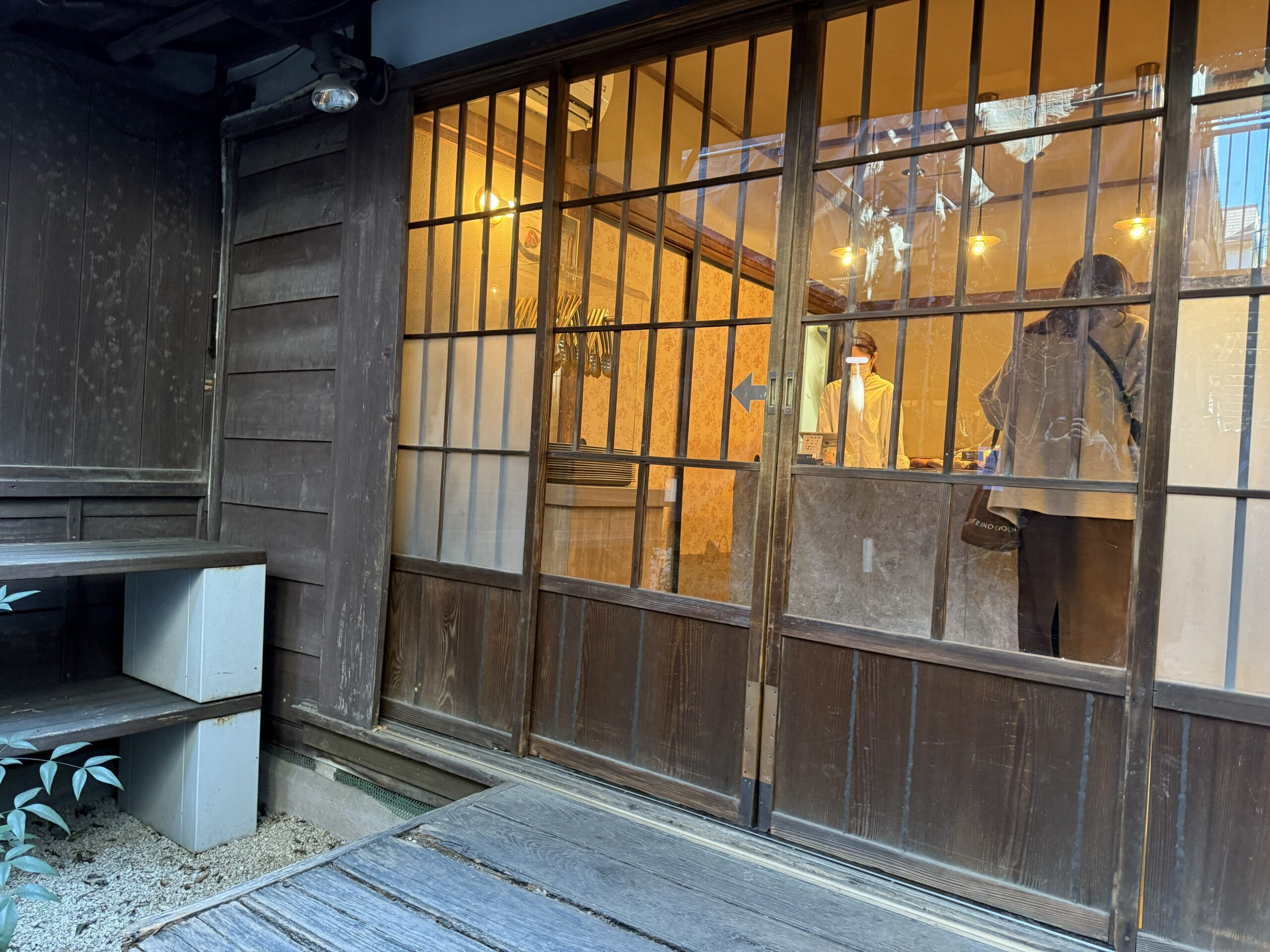
Think is inside Ueno Sakuragi Atari (上野桜木あたり), a cluster of Showa-era kominka on the edge of Ueno Park, converted into a small complex of shops: a bar, a restaurant, a gallery, and the bakery. Think is on the ground floor of Building 2. The building is 85 years old. The display shelves are made from Ashino-ishi (芦野石), a pale volcanic stone from Tochigi, cut by craftsmen and ordered specifically for the space.
Two bakers run the shop. Nakamura Kazuhiro trained as a patissier. Suzuki Takashi trained as a boulanger. They met at a French pastry school, and the shop reflects both disciplines: a bread program with boulanger training behind it (pain de campagne, croissant, brioche) and a pastry case shaped by patissier training (madeleine, canelé, tart). A shop with equal weight on both sides is uncommon in Tokyo, where most bakeries specialize in one direction.
The butter is Belgian Corman, a fermented cultured butter used in European bakeries and not widely available through retail channels in Japan. The croissant carries it clearly through the layers. The pain de campagne uses a slow-fermented levain that gives the bread a sourdough character without the sharp acidity that can dominate it. The concept is “Back to New Basic”: classical forms made with unusual precision.
The Ashino-ishi shelves, the kominka exterior, the label design: the shop’s visual choices are as considered as the bread program. The two reinforce each other.
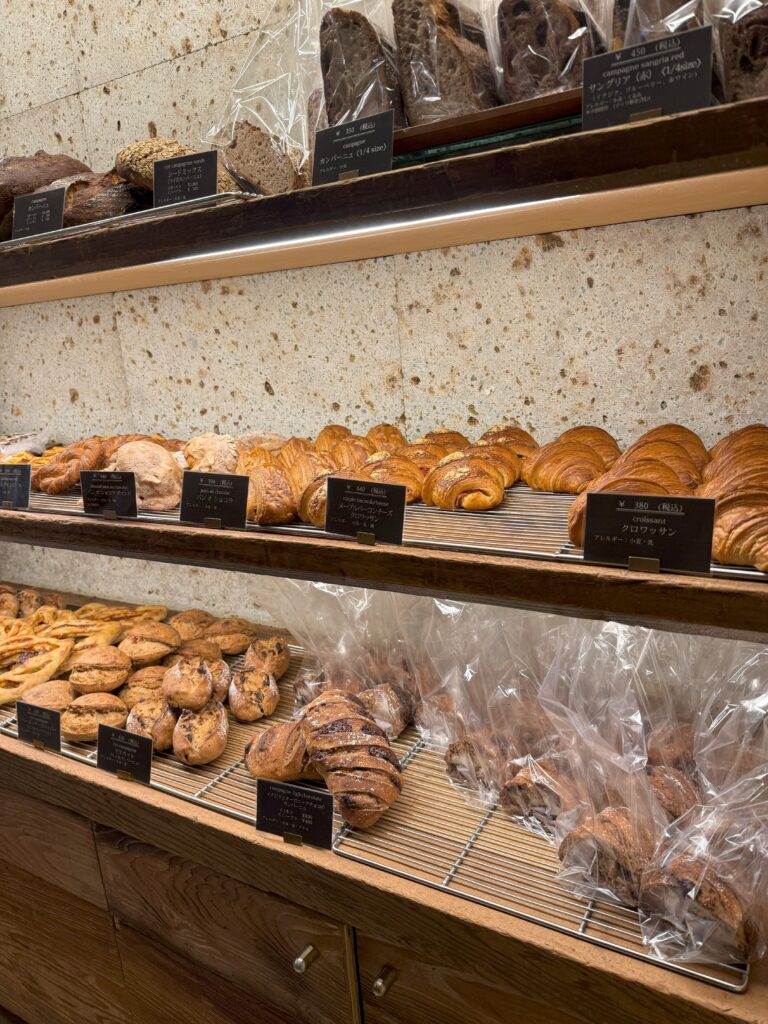
Address: 台東区上野桜木2-15-6, Ueno Sakuragi Atari Building 2, 1F. Open 10:30 to 17:00, closed Monday and Tuesday. About 7 minutes on foot from JR Uguisudani Station. Confirm current hours on Instagram before visiting.
—
What Is a Boulangerie-Patisserie?
French boulangerie and patisserie are separate traditions. A boulanger makes bread. A patissier makes pastry and confectionery. Shops that cover both are boulangeries-patisseries, run by bakers trained in both disciplines or by two specialists working together.
In Japan, most bread shops sell bread with a small pastry section added, or specialize in Japanese-style pan (パン, bread). A shop where both sides carry equal weight is less common. Think works from that model: two bakers, two disciplines, one space. The foreign form fits the 85-year-old Japanese building less by accident than by a deliberate choice to let each shape the other.
For a broader frame on what that instinct toward simplicity and precision looks like as a philosophy, the article on the Japanese aesthetic of subtraction covers the underlying logic.
—
Nezu no Pan: Bread in a Former Tofu Shop
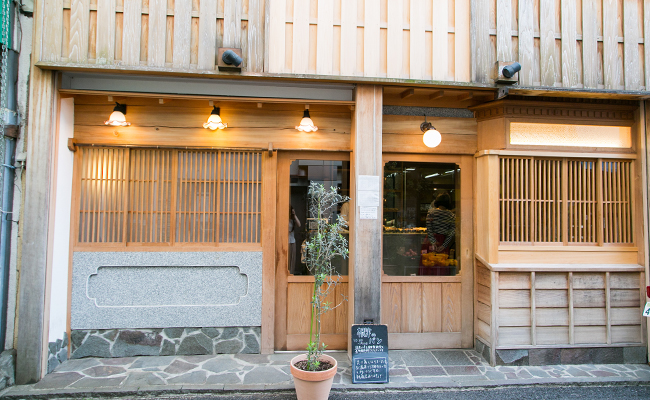
Nezu no Pan is on a quiet street in Nezu, a few minutes from Nezu Station. The building was a tofu shop. The renovation kept what was there: stone floor, lattice windows, low ceiling beams. The space feels like somewhere that has held careful work across different eras.
The baker trained at Kayaba Bakery (カヤバベーカリー), a Yanaka institution that has since closed. That lineage shapes the approach: carried forward rather than invented fresh. The bread uses domestic Japanese wheat, naturally leavened, with long cold fermentation intended to develop sweetness without sharpness.
The Japanese inflections are subtle and intentional. Shiso (大葉) in the epi. Shichimi togarashi (七味唐辛子, a Japanese seven-spice blend) on the cheese bread. These are not fusion gestures. They are local ingredients making their way into forms that have room for them.
By opening, the small round loaves are stacked to the ceiling. The pain de mie and pain paysanne are the anchors of the menu. Arriving before noon tends to give the best selection.
Address: 文京区根津2-19-11. Open 10:00 to 19:00, closed Monday and Thursday. About 5 minutes on foot from Nezu Station (Tokyo Metro Chiyoda Line). Confirm current hours before visiting.
—
A Bread Walk Through Yanaka
The three bakeries can be combined in one morning. A natural order: Think first (Ueno Sakuragi Atari, near Uguisudani), then Nezu no Pan (Nezu). The full route is roughly 1.5 kilometers, walkable in around 20 minutes without stops, though the streets give reasons to slow down. Arriving before noon tends to give the best selection at all three; Think in particular can sell through its croissants and pastries by early afternoon on weekends.
A Yanaka bakery Tokyo walk is not the same route as the shopping street or the temple approach. The walk here passes through Yanaka Cemetery, the lane leading down into Nezu. The retro cafés on the back streets of Sendagi are a short detour if the day allows.
—
Bread, Buildings, and the Back Streets
The three bakeries in this article share a condition more than a category. Each is in a building that predates it. Each operates at a scale that does not require or reward expansion. The bread in each case follows from the space and from the bakers’ specific training, not from a market survey.
Old buildings, careful craft, a neighborhood that does not perform for visitors: that combination is what brings readers back to Yanaka as a food destination rather than a sightseeing stop. The bakeries here are part of the same fabric as the retro cafés on the back streets of Sendagi and the kissaten that have been operating in these streets for decades. For a wider frame on why restraint and specificity define so much of what Yanaka and the Yanesen streets produce, the article on the Japanese aesthetic of subtraction makes the connection directly.