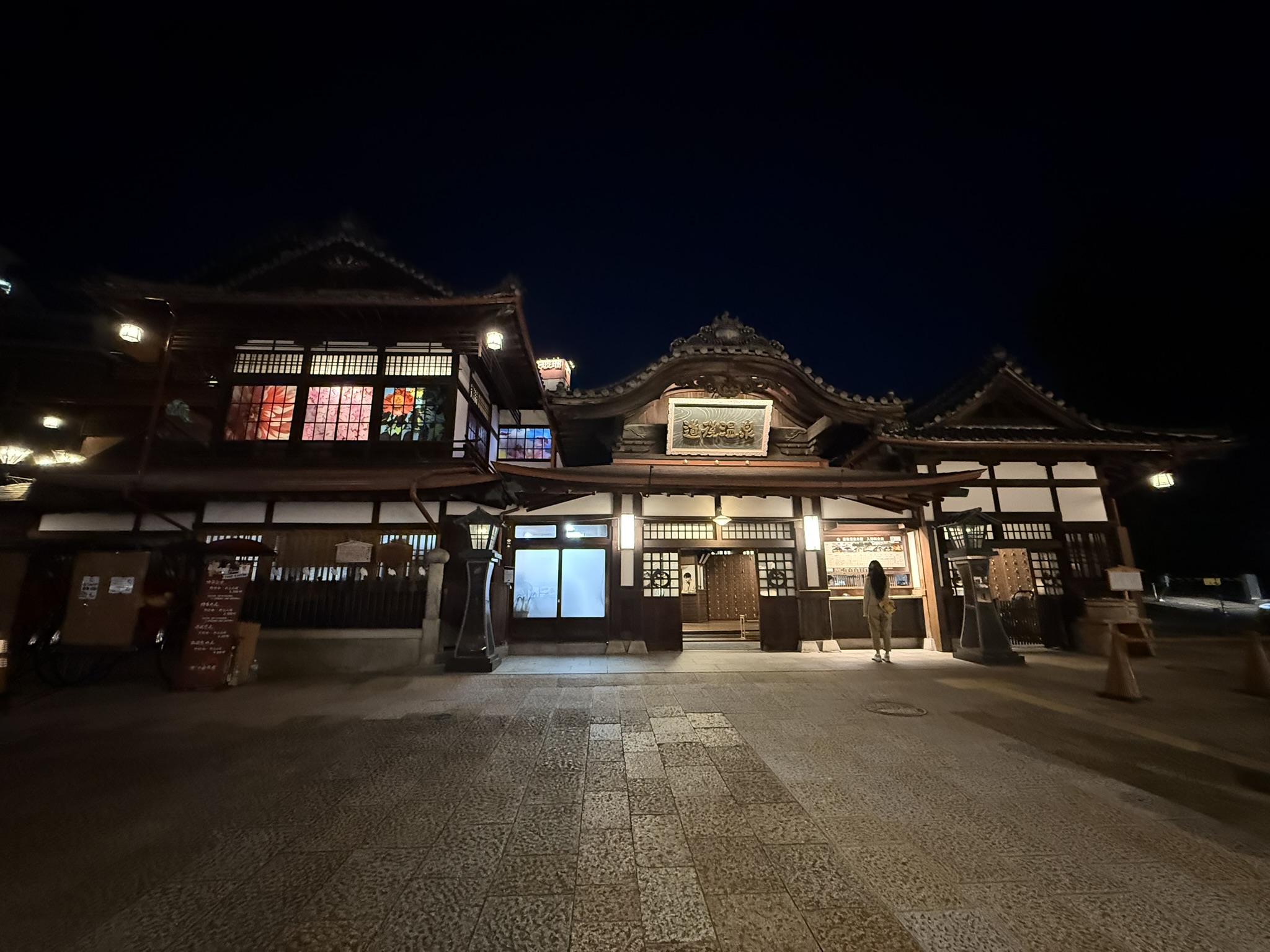
Before seven in the morning, the streets around Dogo Onsen are quiet except for the soft slap of geta (traditional wooden sandals) on flagstone. The main bathhouse, a three-story wooden structure built in the Meiji era, is already lit from inside. A man in his sixties rounds the corner with a towel under his arm. He has been coming here since before he can clearly remember. He does not pause to consider the building. He goes in.
Before seven in the morning, the streets around Dogo Onsen are quiet except for the soft slap of geta (traditional wooden sandals) on flagstone. The main bathhouse, a three-story wooden structure built in the Meiji era, is already lit from inside. A man in his sixties rounds the corner with a towel under his arm. He has been coming here since before he can clearly remember. He does not pause to consider the building. He goes in.
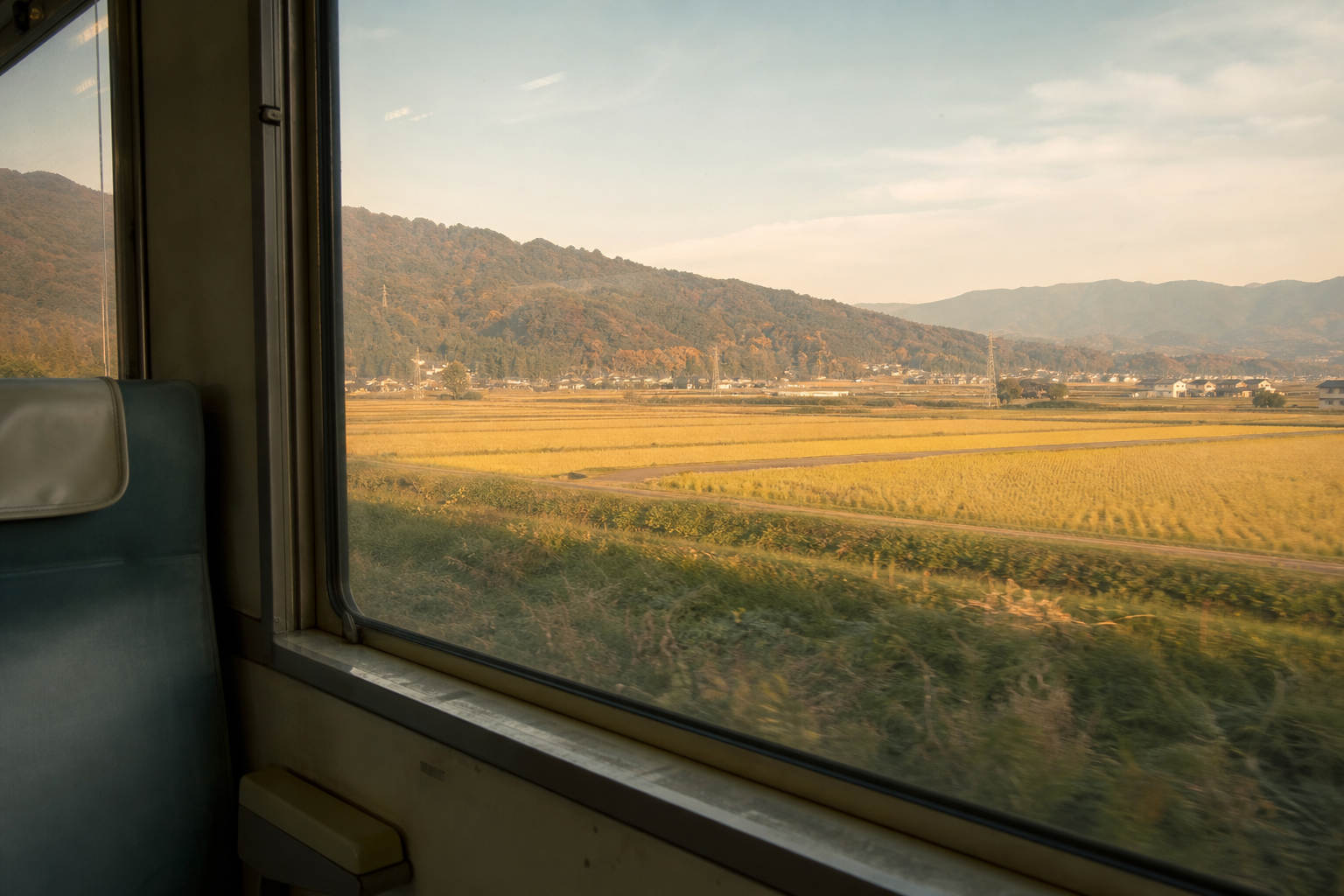
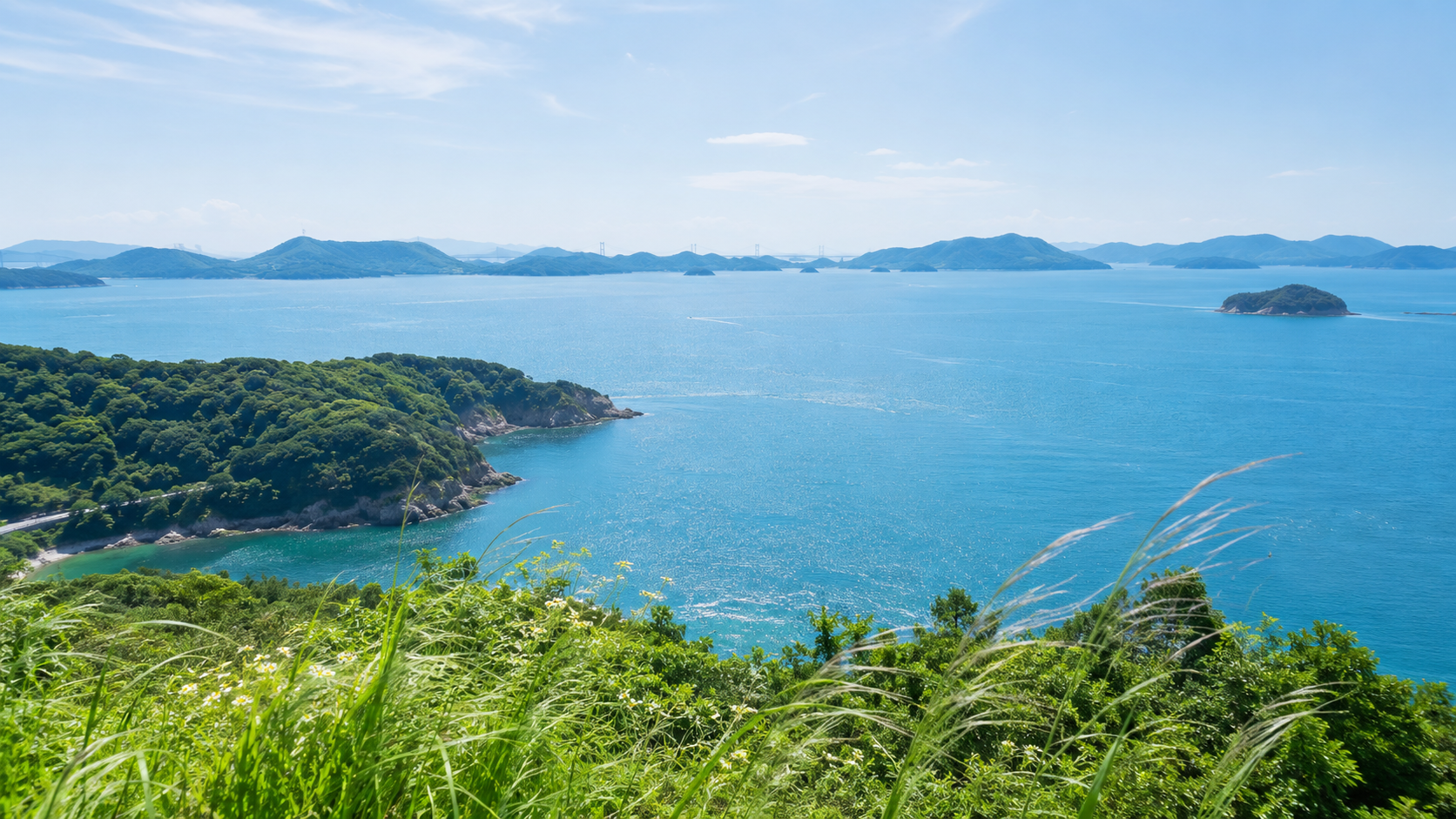
Quiet travel in Ehime means moving through routines that local life already follows: bathing, farming, cycling, ferries, and small food traditions around the Seto Inland Sea (瀬戸内海, Setouchi, the sea between Honshu and Shikoku). Ehime Prefecture (愛媛県) occupies the northwest corner of Shikoku, facing the inland sea and connected to Hiroshima on Honshu by the Shimanami Kaido bridge-and-causeway route. The old provincial name is Iyo (伊予). With a population of around 1.3 million, it is Shikoku’s largest prefecture, and Matsuyama is the island’s largest city. What Ehime offers is a kind of slow travel built not on remote difficulty but on repetition.
—
What Is Ehime?
Ehime Prefecture is the most westward-facing of Shikoku’s four prefectures, its coastline shaped by the islands and channels of the Seto Inland Sea. The interior is mountainous; the coast is broken by islands, harbors, and citrus terraces that climb the slopes above sea level. Ehime is one of Japan’s major mandarin orange-producing regions, and in autumn the mikan groves are visible from the road: the hills above Matsuyama and south of Imabari layered with small trees heavily fruited in orange.
The citrus is not only an agricultural fact. It is a sensory fact about living in Ehime. Roadside stands sell bagged mandarins at low prices throughout the season. The smell enters open windows in October and November. On Omishima and other inland sea islands, the fruit grows along the slopes facing the water, where the warmth and reflected light from the sea extend the growing season. Ehime’s mikan culture has generated local varieties including Iyokan and Setoka, each with slightly different sweetness and acidity. The fruit is not decorative; it is what people eat.
Matsuyama is a manageable city: compact, walkable, and less hurried than its status as Shikoku’s transportation hub might suggest. Matsuyama Castle (松山城), one of Japan’s twelve surviving original castle structures, sits on a hill reached by ropeway or on foot. The Tobe-yaki (砥部焼) ceramics tradition in nearby Tobe produces heavy white pottery with cobalt-blue hand-painted designs. The town of Uchiko (内子), 30 minutes south by train, preserves a street of Edo-period merchant houses built by the wax industry. These things exist in Ehime without defining it. The defining things are lower, closer to the water.
—
Dogo Onsen and the Kaishu Table
Dogo Onsen (道後温泉) is one of Japan’s oldest documented hot springs, with records of use stretching back to antiquity. The main bathhouse, Dogo Onsen Honkan (道後温泉本館, main building), is a late-Meiji wooden building with a tiered roof, completed in 1894. It has been in continuous operation since. The building is sometimes said to have influenced the bathhouse setting in Studio Ghibli’s Spirited Away, though this connection has not been confirmed by director Hayao Miyazaki.
Public bathing in Japan is a communal habit rather than a private ritual. At Dogo, the early arrivals before work and the evening visitors after it share the same thermal water in the same building with the same matter-of-fact regularity. The act of entering a public bath alongside neighborhood regulars produces a particular social texture, unhurried and unselfconscious, that is specific to this kind of place. The Dogo Onsen official site carries current hours and information on the ongoing restoration work.
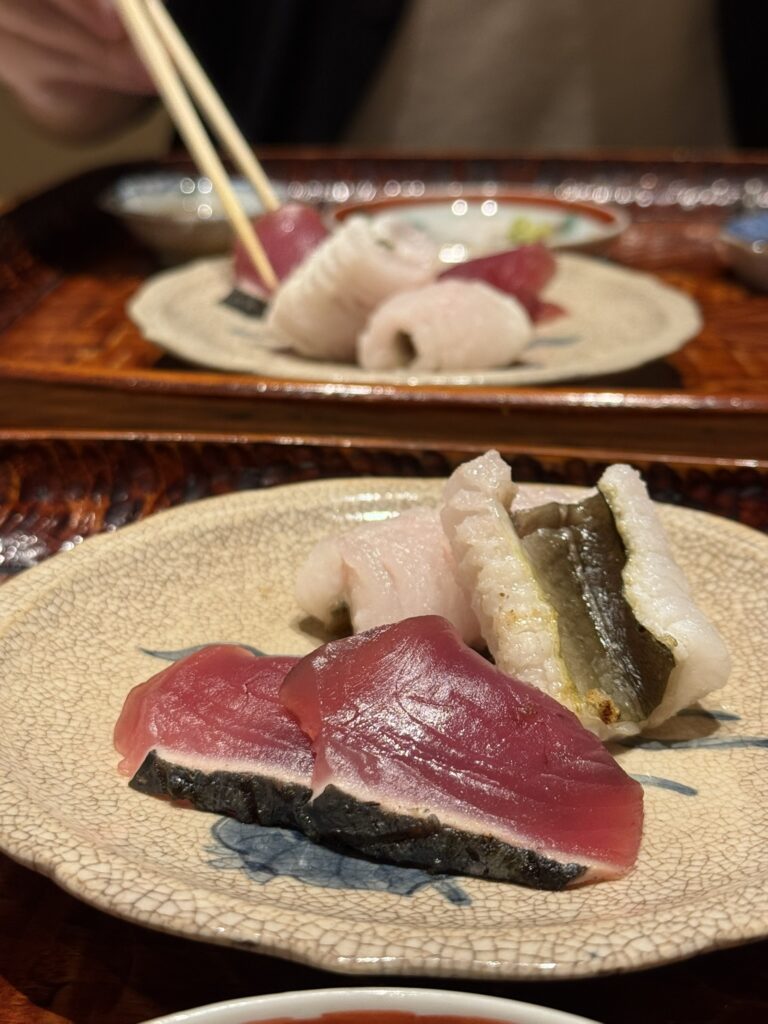
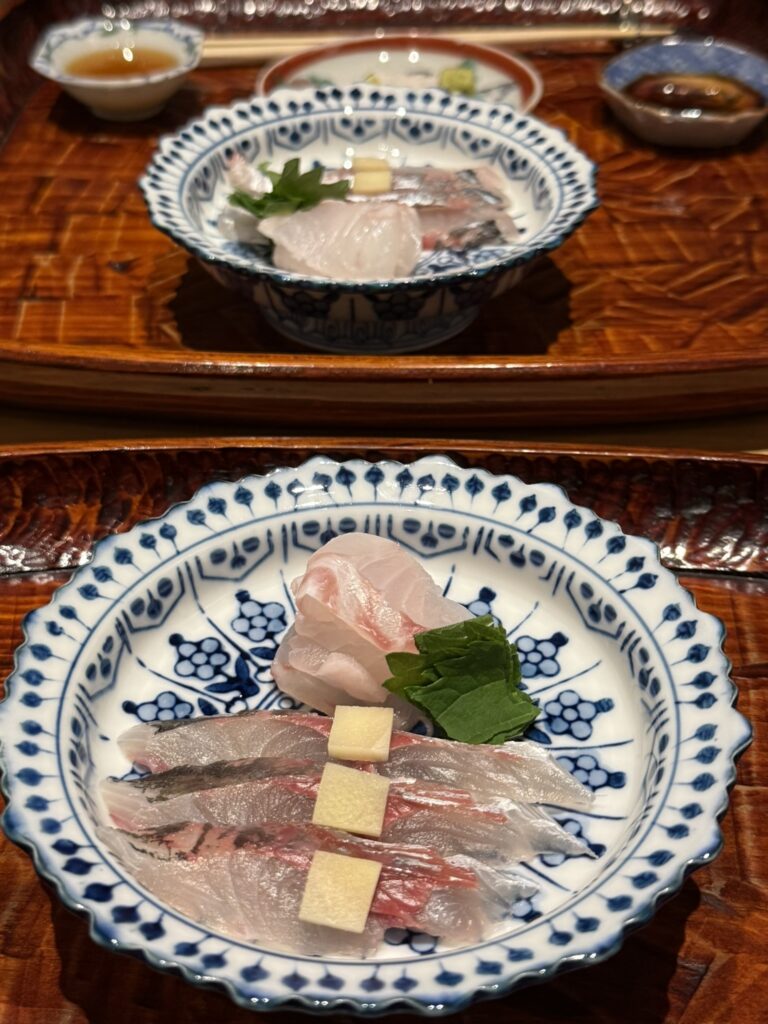
About three minutes’ walk from the main bathhouse is Kaishu (道後 海舟), a Japanese restaurant that has been serving Setouchi kaiseki (seasonal multi-course Japanese meals using local ingredients) in Matsuyama since 1983. The restaurant moved to the Dogo district and now offers course menus of 12 to 15 small dishes, composed from Ehime’s sea, mountain, and river ingredients: local fish handled with precision, seasonal vegetables, game from the surrounding mountains. For travelers interested in Ehime’s local gastronomy, Kaishu is among the prefecture’s most considered expressions of the Setouchi table: a menu built directly from what Ehime’s fisheries, farms, and mountains produce each season. Kaishu was listed among Tabelog’s 2025 Hyakumeiten (top 100 restaurants in western Japan) and operates on a reservation-only basis. The Kaishu website carries current reservation details and menu information.
Dogo Onsen and a table like Kaishu exist within the same daily pattern: water, food, rest, repeat. The bathhouse is public, accessible, and largely unchanged across generations. The kaiseki table is more expensive and requires advance planning. Both are Dogo routines, at different price points and degrees of formality. Quiet travel in Ehime, at its most attentive, includes both.
—
Shimanami Kaido and the Bakery on Omishima
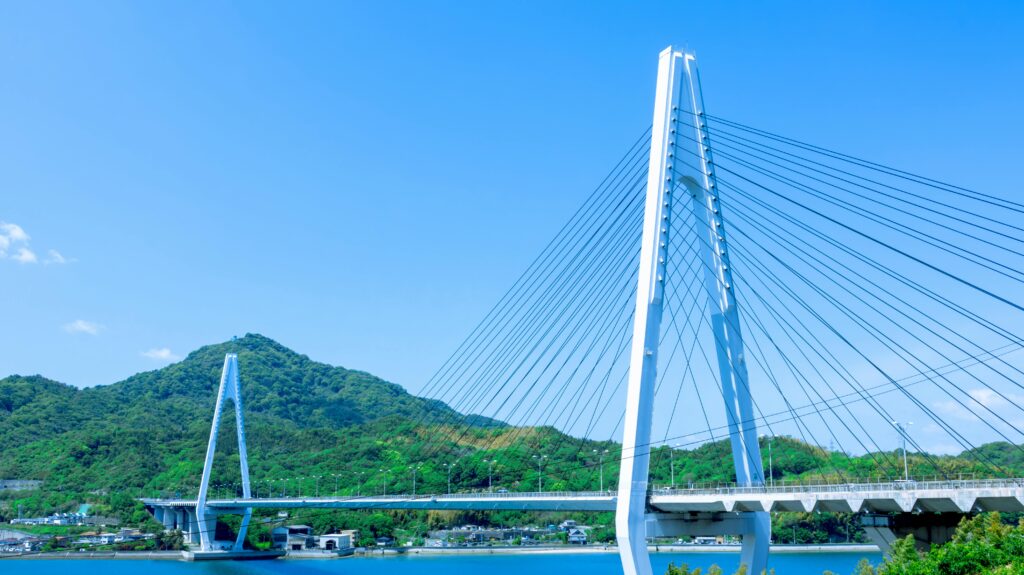
The Shimanami Kaido (しまなみ海道) is a 70-kilometer route connecting Imabari in Ehime to Onomichi in Hiroshima, crossing six islands in the Seto Inland Sea on a series of suspension bridges, each with dedicated cycling lanes. For current route details and ferry connections, the Cycling Ehime guide covers logistics and seasonal conditions in English.
The experience of crossing the inland sea at bicycle pace is among the more particular things quiet travel in Ehime offers. The islands are visible on each side, shipping lanes pass below, fishing boats move between the bridge supports. The pace is slow enough to register the change from one island to the next without rushing past it.
The largest island on the Ehime side of the route is Omishima (大三島). Oyamazumi Shrine (大山祇神社) on the island’s eastern side is dedicated to Oyamazumi no Mikoto, a mountain deity venerated in Japan since antiquity. The shrine complex is said to hold a remarkable collection of historically designated armor donated by samurai clans across many centuries: it is a serious repository of old objects in a quiet setting.
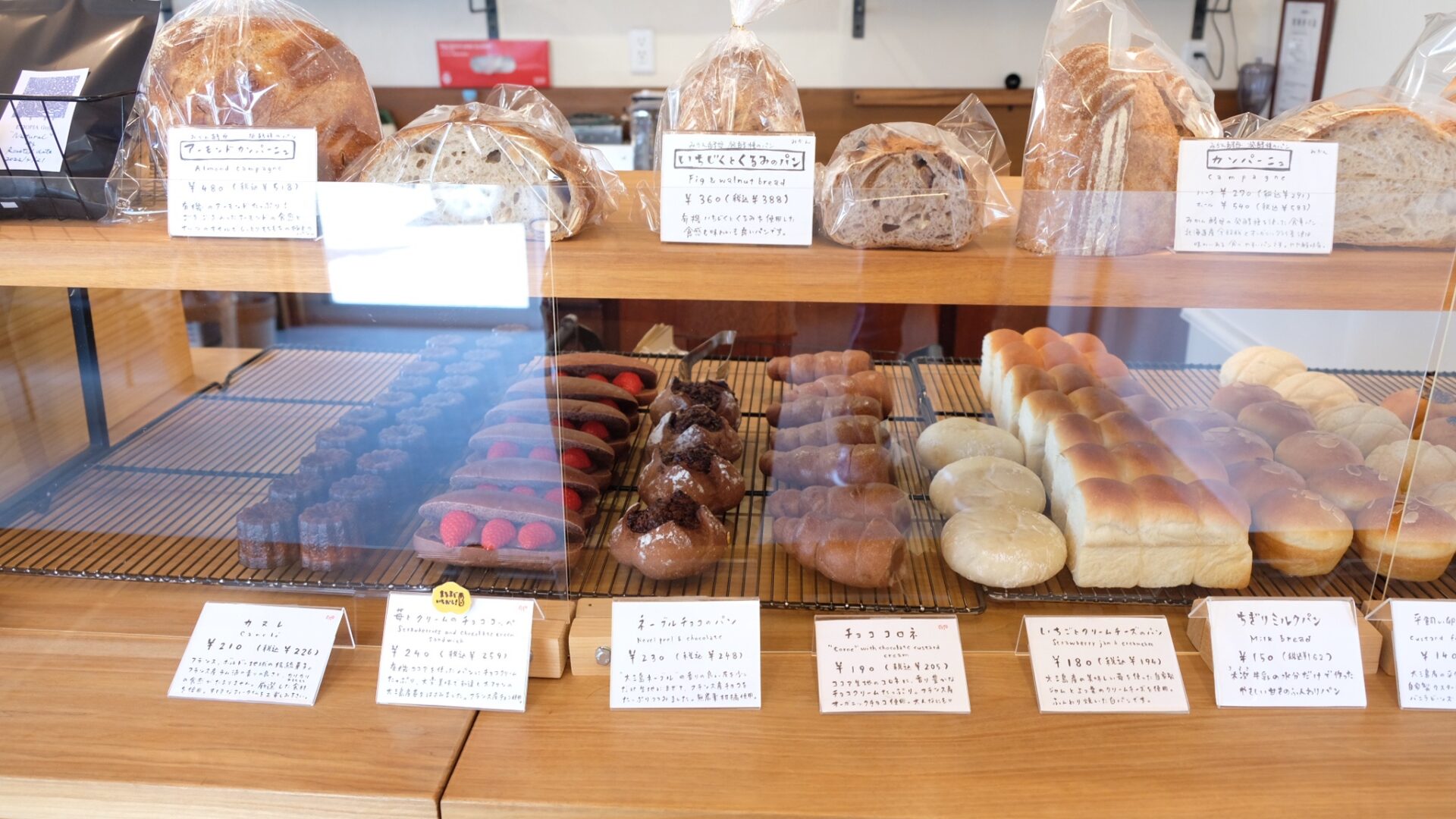
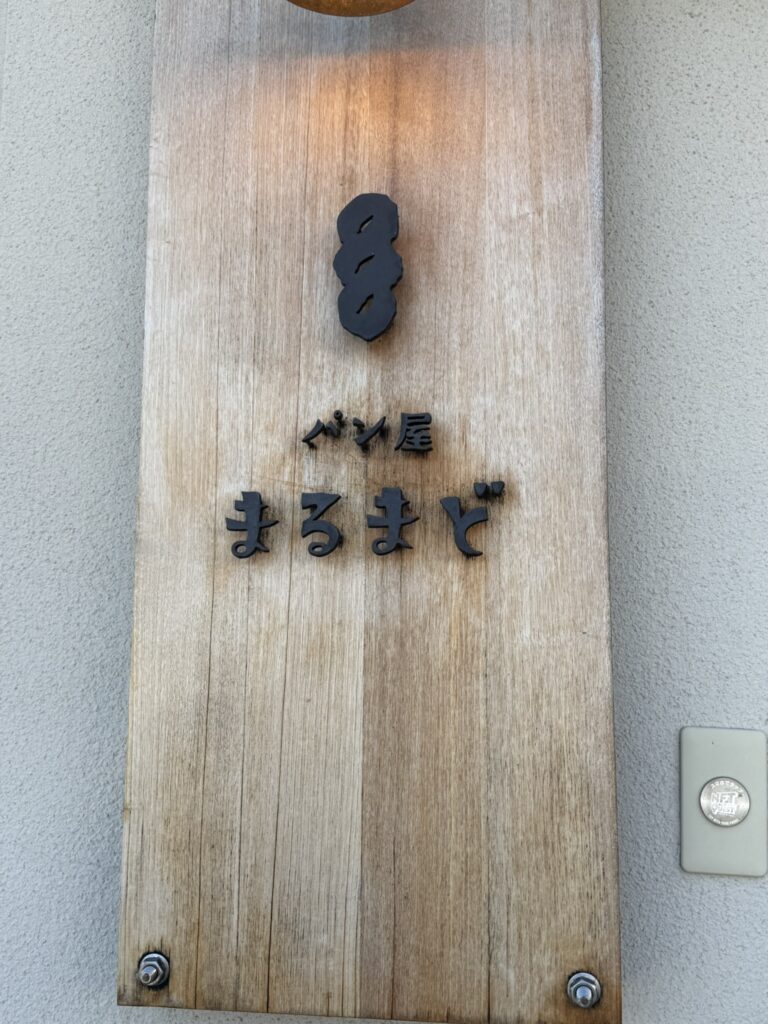
At 5792 Iguchi on Omishima’s western side is Bakery Marumado (パン屋まるまど). The bakery was started by a couple who moved to the island, and at this writing it remains the only bakery operating on Omishima. The bread uses self-cultivated yeast grown from the skins of mandarin oranges grown on the island, and seasonal preparations use produce sourced directly from Omishima farmers. The semi-hard loaves carry a faint citrus note in the crumb. The bakery is open Thursday through Saturday from 11:30 until stock runs out. For current hours, the Marumado Instagram carries updates.
The bread made by a couple who moved to the island, using yeast from fruit grown by neighbors, represents the Shimanami at its quieter scale: the particular life that has organized itself on the islands the bridges connect. Cycling through mandarin groves and stopping at a bakery that uses the same fruit in its dough is the kind of ordinary itinerary that slow travel in Japan tends to produce when the pace is right.
—
The Seto Inland Sea at Pace
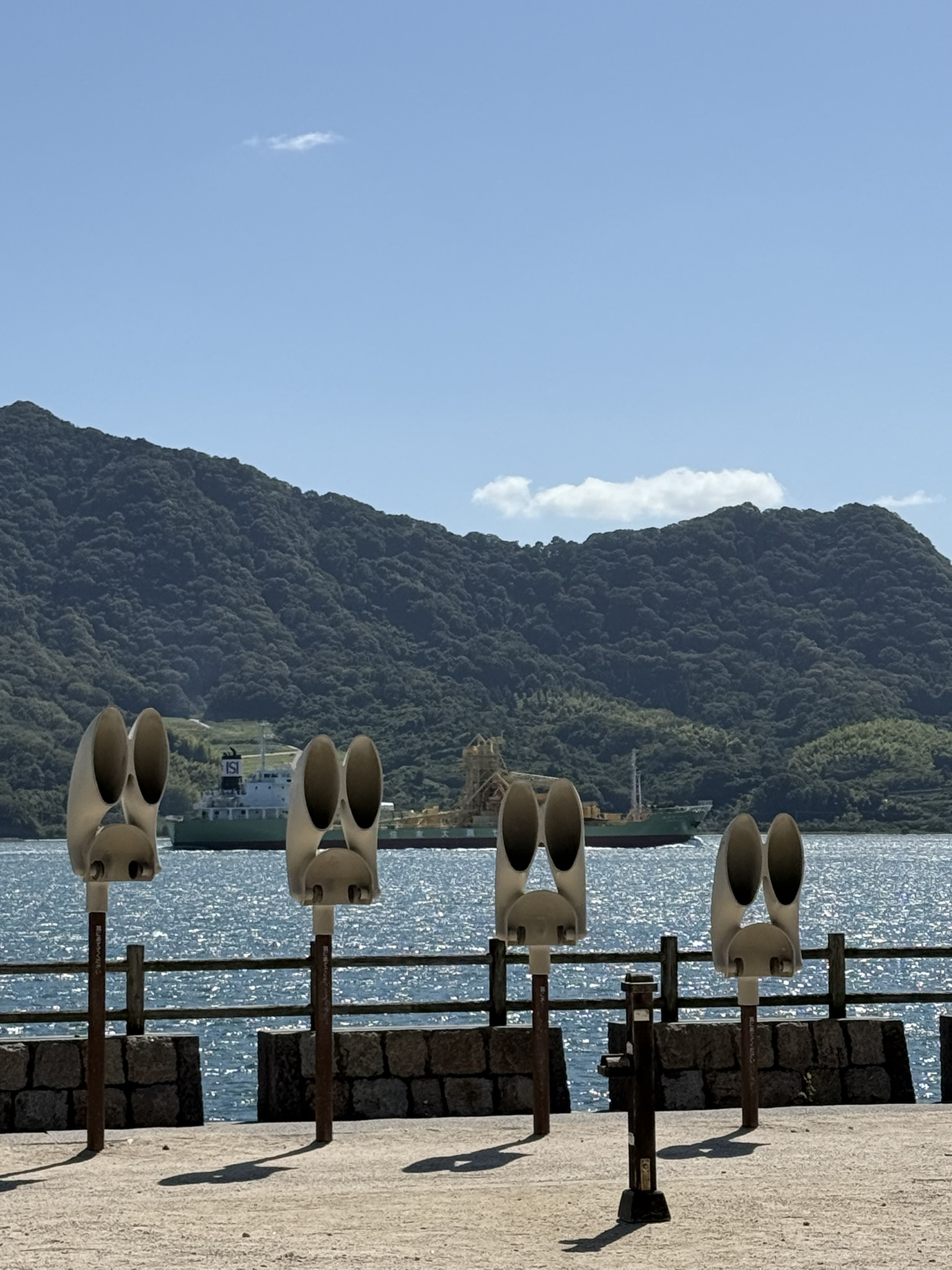
Between the islands of the Shimanami route, the Seto Inland Sea is calm most of the time, sheltered from Pacific swells by Shikoku’s mass. The water is a greenish blue in good weather. Small ferries and fishing boats move through the channels on their own schedules.
On Hakata Island (伯方島), also on the Shimanami route, Hakata-no-Shio (伯方の塩) is a well-known Japanese sea salt brand, produced from seawater using traditional methods and widely available in Japanese grocery stores. Imabari City, at the Ehime end of the Shimanami, is one of Japan’s major towel-producing areas: the Imabari Towel (今治タオル) certification identifies towels made to a specific quality standard for absorbency and softness, and the town’s mills and showrooms are accessible from the cycling route.
Traveling the inland sea by ferry changes what you notice. Ferries connect Matsuyama and Hiroshima and link various island ports on their own timetables. Sitting on an open deck watching island silhouettes pass, with Ehime behind and the next port not yet visible, is a different kind of crossing than the same distance by road.
For the cultural thinking behind why this kind of attention, to a ferry schedule or a citrus note in bread, carries meaning in Japan, the Mind piece on the aesthetics of subtraction approaches that question from a different direction. And for the experience of unhurried sitting time in Japanese old-style coffee shops, which exist in Matsuyama as they do across the country, the Jun-Kissa tradition is a natural companion to a day spent near Dogo.
For the context of how Ehime fits within the broader Shikoku slow travel experience, the Space overview of quiet travel in Shikoku covers all four prefectures.
—
The Logic of Ordinary Days
Ehime does not ask to be treated as extraordinary. The bathhouse has been there for well over a century and the locals who use it treat it accordingly. The citrus has been on the same hillsides for generations. The cycling road over the bridges is newer, but the island life it passes through is not.
The man with the towel will return to Dogo Onsen tomorrow morning. The mandarin on the roadside stand has been there since October. The bakery on Omishima opens on Thursday. These are not events. They are how the days in Ehime are made.