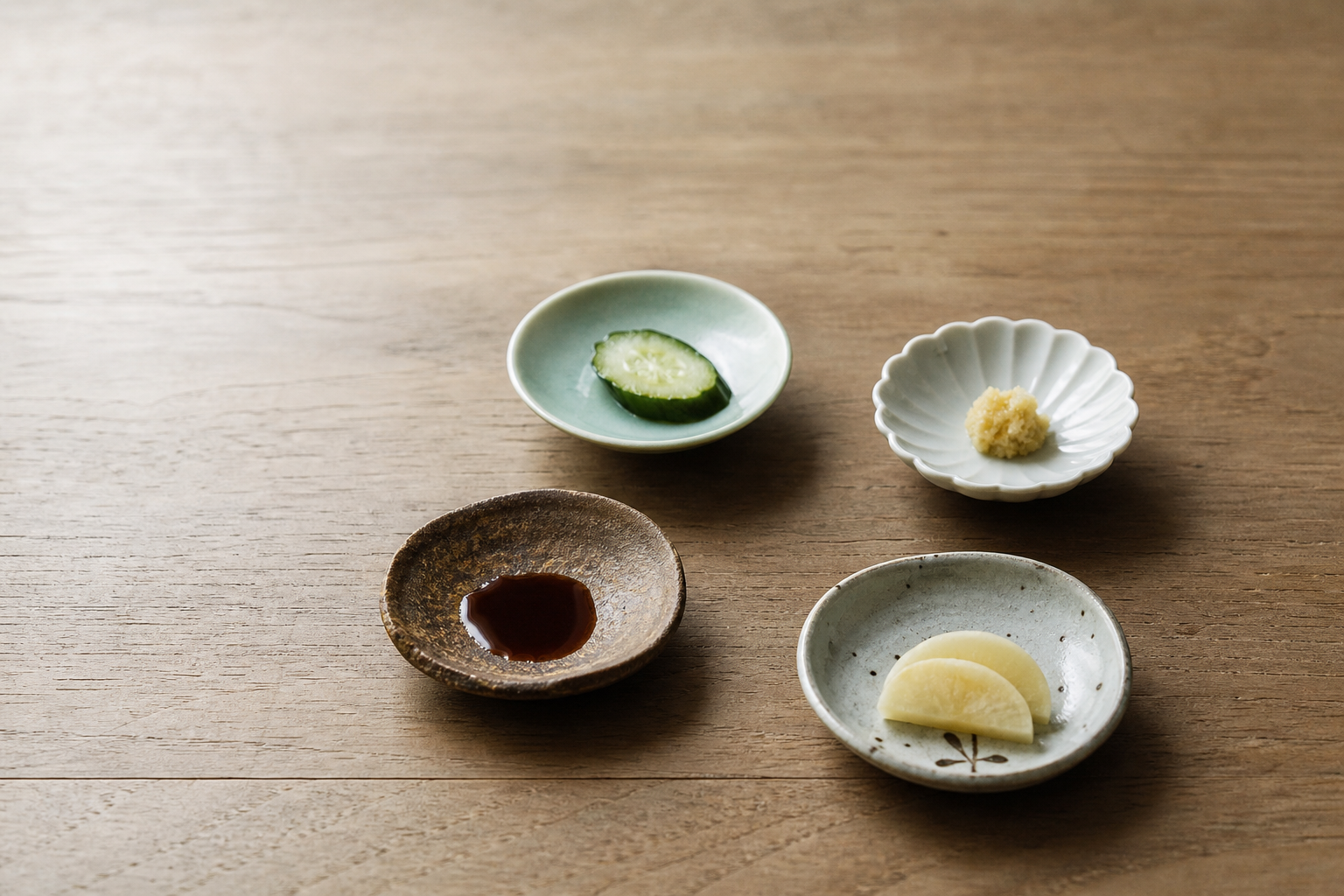
A typical izakaya table in Japan might hold, alongside the beer and the yakitori, a small dish of pickled cucumber, a tiny plate of grated ginger beside the sashimi, another with a few drops of ponzu. The plates for these things are sometimes 7 or 8 cm across, small enough to hold in two fingers. That is a mamezara. What is mamezara? Mamezara (豆皿) are very small Japanese plates, typically around 7 to 10 cm across, used for condiments, pickles, sauces, small sweets, or one carefully portioned bite. The
A typical izakaya table in Japan might hold, alongside the beer and the yakitori, a small dish of pickled cucumber, a tiny plate of grated ginger beside the sashimi, another with a few drops of ponzu. The plates for these things are sometimes 7 or 8 cm across, small enough to hold in two fingers. That is a mamezara.
What is mamezara? Mamezara (豆皿) are very small Japanese plates, typically around 7 to 10 cm across, used for condiments, pickles, sauces, small sweets, or one carefully portioned bite. The name breaks down simply: mame (豆) means bean, and sara (皿) means plate. A bean plate.
What Is Mamezara? Japan’s Smallest Plate
Mamezara sit at the smallest end of Japanese tableware vocabulary. In the broader system of utsuwa (器, vessels), the range runs from deep bowls for soup down through wider bowls for dressed vegetables, flat plates for sashimi, smaller plates for side dishes, and then mamezara at the furthest end. A ko-zara (小皿) is a small plate, roughly palm-sized. A mamezara is smaller still, intended not for a side dish but for a single element: a condiment, a pinch of salt, a bite of something that belongs on the table but doesn’t need much space.
The distinction between mamezara and ko-zara is practical rather than strictly defined. In general use, mamezara refers to the plates that hold the smallest amounts: the grated daikon beside a piece of grilled fish, the tare for dipping, a sliver of pickled plum, a small wagashi at a tea gathering. Mamezara can be functional, decorative, or both, depending on the meal context. For more on how Japanese tableware shapes the meal as a whole, see japanese tableware.
One Thing on the Plate
Japanese meals, particularly in restaurants, izakaya, and more formal settings, tend to give individual foods their own vessel. A dipping sauce shares a table with the food it accompanies but does not share a plate. A small amount of tsukemono (漬物, pickled vegetables) gets its own dish rather than being placed on the edge of a larger one. This is not a universal rule in every Japanese household, but it is a common approach in many dining contexts, and mamezara are part of how it works.
A related habit of thinking about meals is ichiju-sansai (一汁三菜): one soup, three sides. It is a long-standing way of composing a meal as separate elements, each with its own place. Mamezara serve the smallest of those elements.
What goes on a mamezara: wasabi beside sashimi. Grated ginger for grilled mackerel. A single piece of tsukemono. A few drops of tare. A pinch of salt for dipping tempura. A small wagashi beside a bowl of matcha. In some cases, a mamezara holds something decorative, a small ornament or seasonal motif, as much as something edible. The plate is small enough that its own shape and glaze are as much a part of the table as what it carries.
The Vessel and the Ingredient
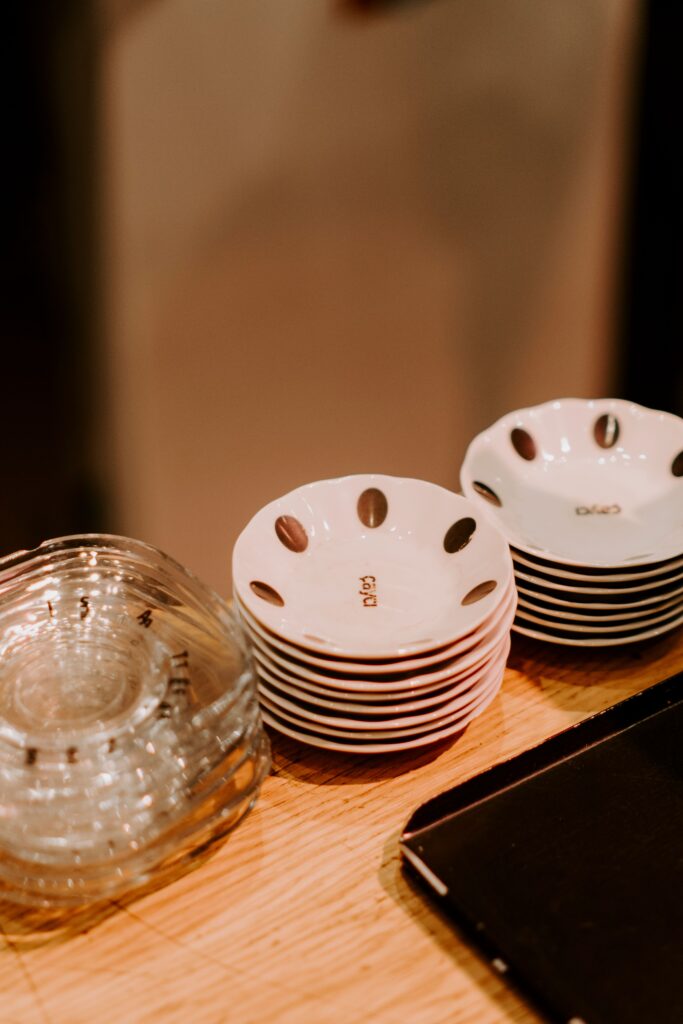
A single piece of pickled ginger placed on a mamezara reads differently than the same thing piled onto the corner of a larger plate. The plate gives it space. The color of the ginger against the ceramic, the small amount of liquid pooling around it, these details become visible at this scale in a way they would not be on a crowded surface.
This is where mamezara connect to the broader aesthetics explored in the aesthetics of subtraction. Negative space, ma (間), the idea that emptiness is not waste but a way of giving shape to what is present. A 7 cm plate holding a drop of tare is mostly empty. The liquid in the center is what matters, and the empty space around it makes that clear.
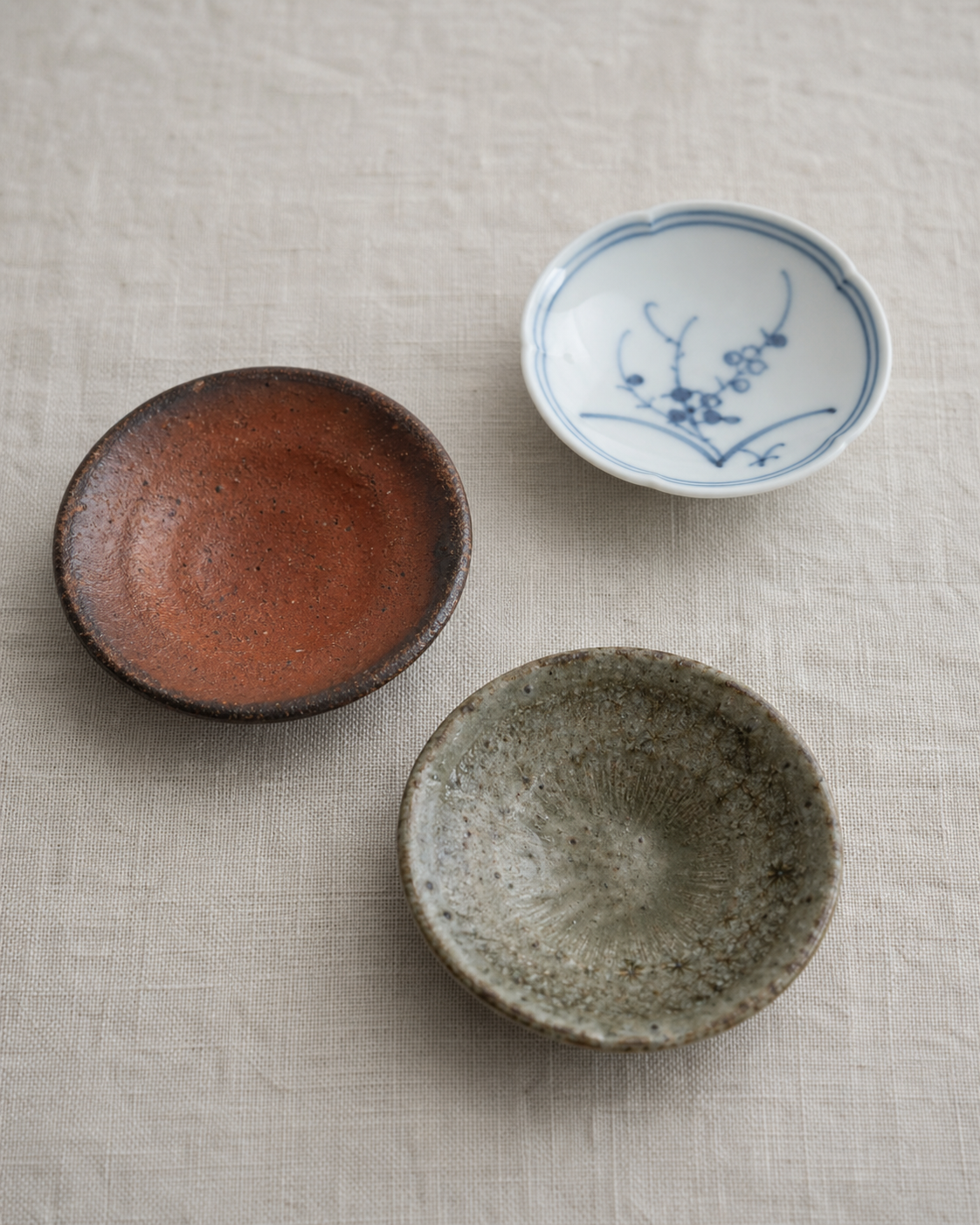
Color and texture matter at this scale. A pale green glaze on a small Hagi ware mamezara, a rust-brown Bizen piece, a white Arita plate with blue underglaze. Each changes how the food on it appears. The craft attention that goes into a 7 to 10 cm plate is considerable, precisely because nothing is hidden at that size.
Material and Seasonal Choices
Mamezara are made in most of the ceramic traditions found in Japan: Arita porcelain from Saga Prefecture, Hasami ware from Nagasaki Prefecture, Mino ware from Gifu, Mashiko stoneware from Tochigi, Bizen ware from Okayama. At this small scale, regional differences in clay, glaze, and form are easy to compare side by side. A Bizen mamezara is dense and dark. An Arita piece may be thin and white, with precise painted motifs. A Mashiko plate might show the rougher texture of folk-craft stoneware.
In kaiseki and restaurant settings, as well as among tableware enthusiasts, mamezara often follow seasonal logic. Heavier, earthy ceramics tend to appear in autumn and winter. Thin porcelain, pale celadon, or glass mamezara are more common in summer, when the lighter surface and cooler feel in the fingers suit the season. This kind of seasonal switching is most visible in formal contexts and among people who collect tableware deliberately. For more on the kiln traditions behind these pieces, see japanese pottery history.
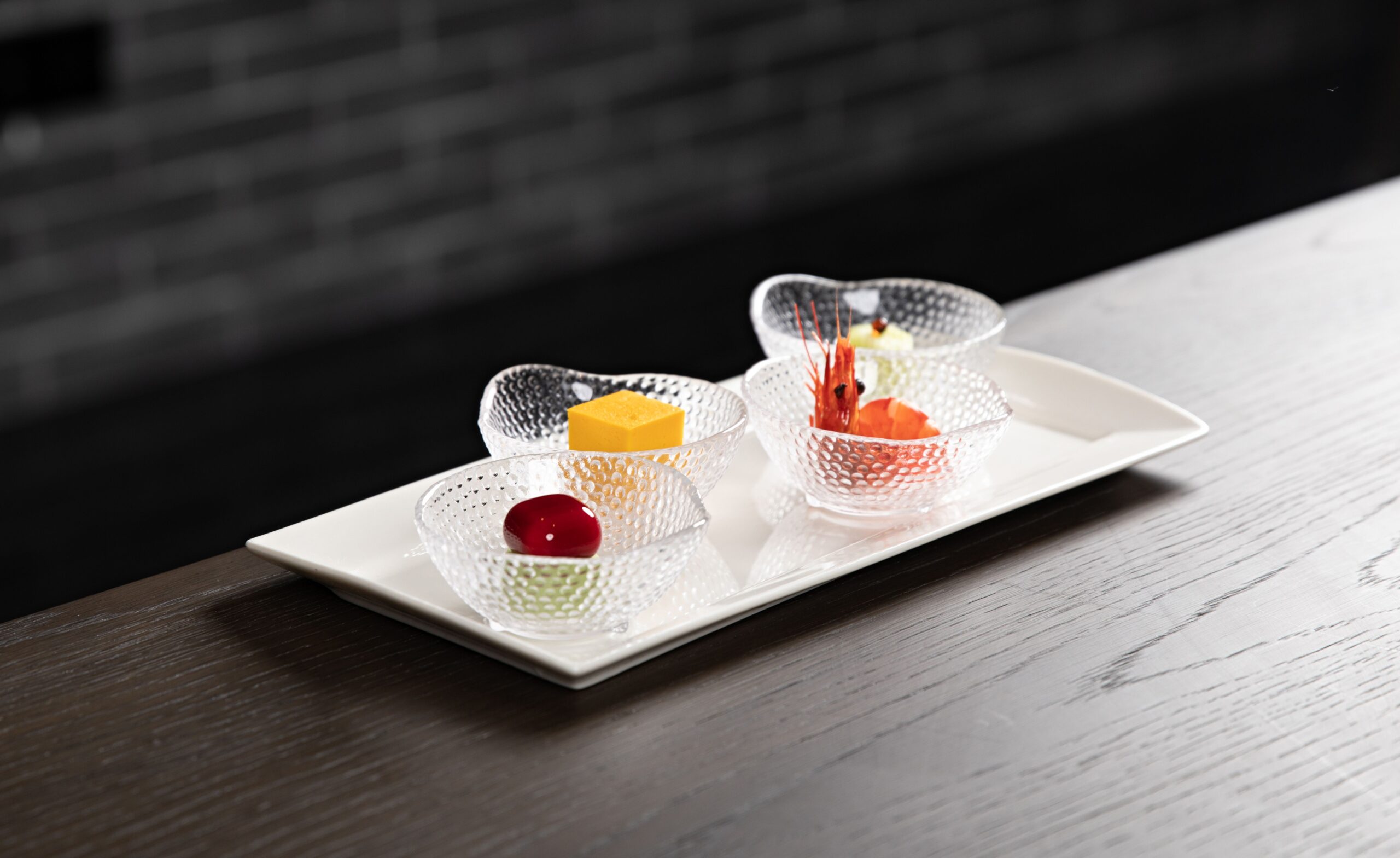
Lacquer mamezara also exist, often used in more formal settings or at New Year. Glass mamezara appear in summer, particularly for desserts or chilled condiments. Each material brings a different texture and weight to the table.
Mamezara at the Table: Izakaya and Kaiseki
The same small plate operates very differently across contexts.
In an izakaya, mamezara tend to be informal and often mismatched. A small dish for tare, another for ginger, a third for pickles, none of them from the same kiln, different glazes and shapes sitting together on a wooden counter. This is common and reflects an aesthetic that values individual character over coordination. A customer might notice that the tiny dish for their ponzu is a handmade Mashiko piece and ask about it. That kind of discovery is part of what izakaya tableware offers.
Kaiseki, the formal multi-course meal with historical roots in the tea ceremony, uses mamezara with greater precision. Each small plate is chosen to match the season, the ingredient, and the composition of the course. A mamezara for a single piece of grilled shellfish in summer kaiseki might be a thin blue-and-white porcelain with a motif of waves. The coordination is present but not uniform. A kaiseki table rarely uses identical dishes for every course, and the smallest plate receives the same attention as any other.
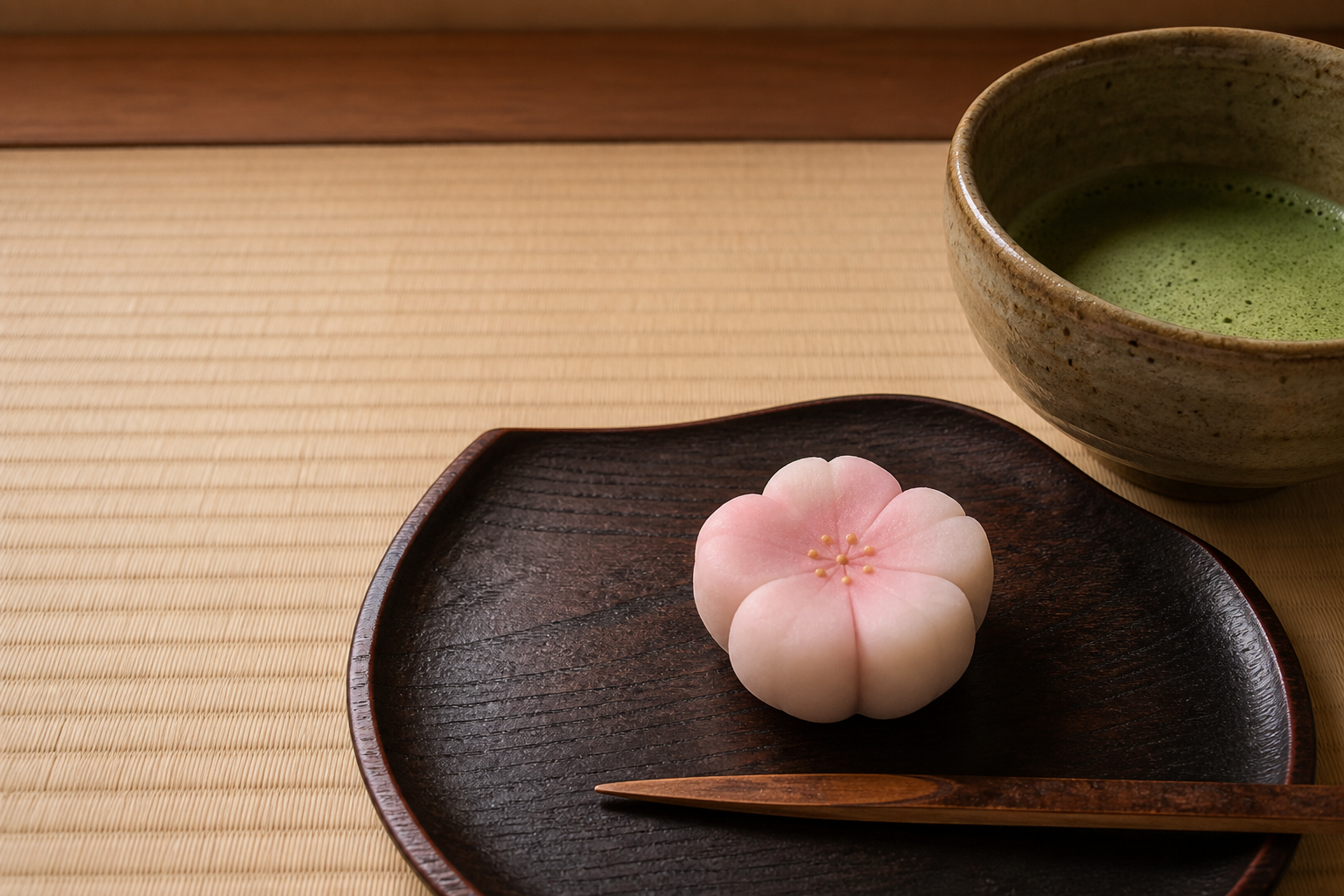
Small wagashi served during a tea gathering often arrive on mamezara chosen to suit the sweet and the season. The dish is part of the presentation. For more on that context, see wagashi and the Japanese tea tradition.
Collecting Mamezara
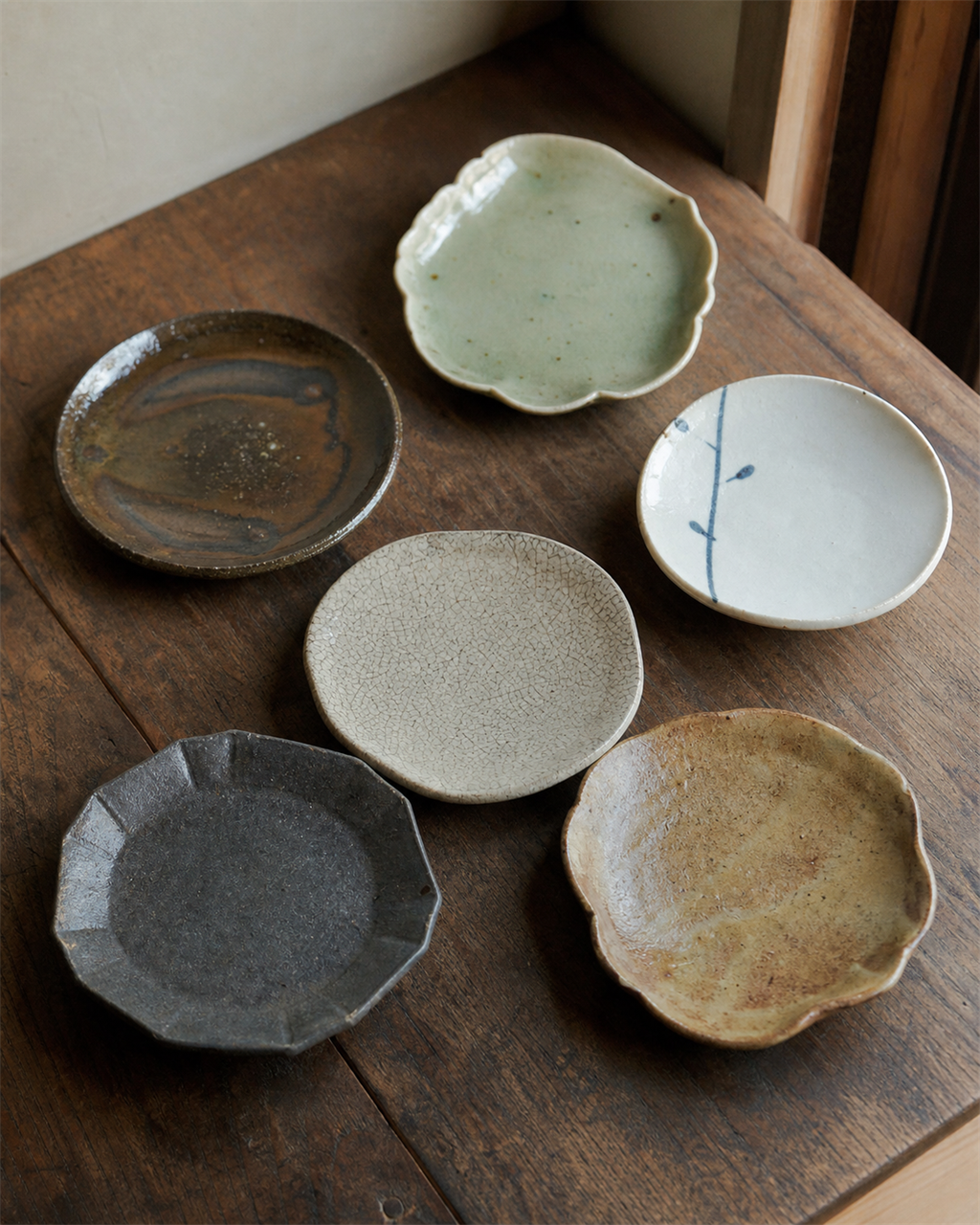
Because mamezara are small, they are an accessible entry point into Japanese ceramics. A single piece can cost less than a larger plate from the same kiln. A collection of mismatched mamezara built over years, one from an Arita fair, one from a Mashiko weekend market, one from a craft shop in Kyoto, takes up very little space but holds a record of specific encounters.
The appeal is not uniformity. A set of mamezara that clearly don’t match, each with a slightly different size and glaze, tends to feel more alive at the table than a coordinated commercial set. Each one has a different weight when picked up, a different surface under the finger. That variation is the point.
Pottery fairs are where this kind of collecting happens most naturally. Arita in Saga Prefecture and Mashiko in Tochigi Prefecture both hold seasonal fairs where individual potters and small kilns show work alongside production ceramics. Toki in Gifu Prefecture hosts a pottery festival with a similarly wide range of Mino ware ceramics. Fair dates and access information for Mashiko are listed at mashiko-kankou.org.
Department stores with ceramics floors, particularly Takashimaya and Mitsukoshi, offer a different kind of encounter: multiple kiln traditions alongside each other, with staff who can explain regional differences. The Japan Folk Crafts Museum (Mingeikan) in Tokyo holds a substantial collection of mingei ceramics, including small dishes from the folk craft tradition. Details at the museum’s site.
What is mamezara, at its simplest? A plate sized to hold exactly one thing. The drop of tare, the sliver of ginger, the small sweet. Each gets the plate to itself, and the plate gives it space to be what it is.