There is a moment on the ferry from Tadanoumi when Okunoshima rabbit island comes into view: pine trees, a glimpse of weathered concrete, the particular gray-green that suggests something man-made absorbed back into vegetation. From the water, it looks like most of the smaller islands in the Seto Inland Sea. What you cannot see yet is the rabbits, or the ruins behind the treeline.
There is a moment on the ferry from Tadanoumi when Okunoshima rabbit island comes into view: pine trees, a glimpse of weathered concrete, the particular gray-green that suggests something man-made absorbed back into vegetation. From the water, it looks like most of the smaller islands in the Seto Inland Sea. What you cannot see yet is the rabbits, or the ruins behind the treeline.
Okunoshima rabbit island (大久野島, known in Japanese as Usagi-jima, literally “rabbit island”) is a small island in Hiroshima Prefecture’s Seto Inland Sea, located in present-day Takehara City. It is home to several hundred free-roaming rabbits and the ruins of a secret wartime chemical weapons factory that operated here from 1929 to 1945. The island was removed from official Japanese maps during that period and is now accessible by a short ferry from Tadanoumi Port.
Erased from the Map
From 1929 until Japan’s surrender in 1945, Okunoshima did not appear on Japanese maps. The island was chosen for its isolation: small enough to control, remote enough to conceal, and close enough to the mainland to function as a working factory. The Imperial Japanese Army needed it to be invisible, and so it was made so.
The factory produced chemical weapons. Mustard gas (yperite), lewisite, sneezing agents, and cyanide compounds were manufactured here in quantities sufficient for active military use. The work was classified. Workers traveled to the island under strict secrecy and were prohibited from disclosing the nature of their employment even to immediate family members. This is documented in testimony collected by the Okunoshima Poison Gas Museum.
Japan had signed the 1925 Geneva Protocol, which prohibited the use of chemical weapons in war, but the legal and political context did not prevent secret production. The island’s removal from official cartography was part of maintaining that secrecy. This history, suppressed during and long after the war, is now the first thing the Poison Gas Museum asks visitors to understand.
What the Ruins Hold
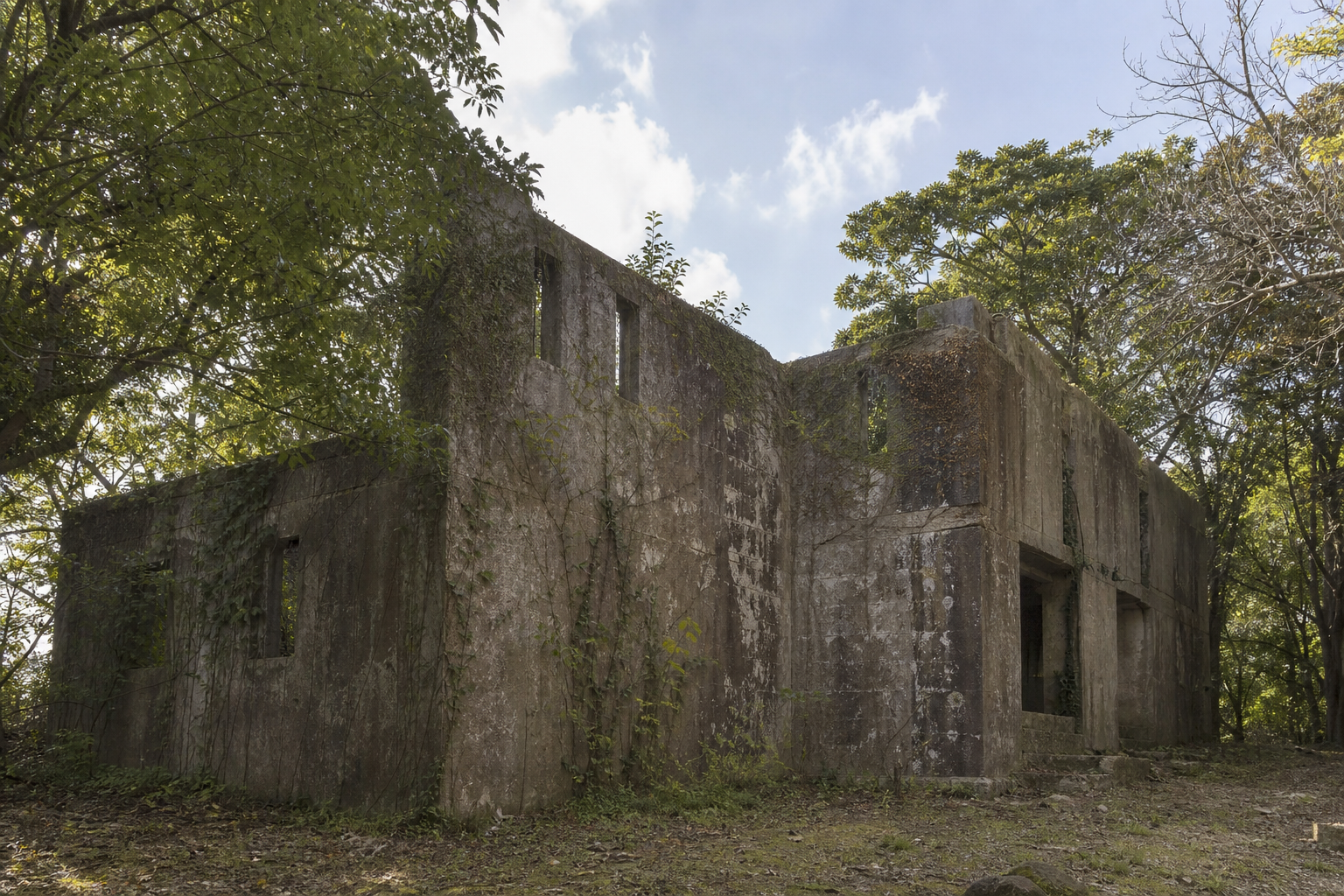
The factory was demolished after 1945. Chemical materials were sealed and disposed of in the Pacific Ocean, off the coast of what is now Kochi Prefecture. Records were destroyed or suppressed. But physical demolition is not the same as erasure.
What remains on the island is substantial. The power plant ruins stand near the second ferry pier: a large concrete structure partially overtaken by moss and vine, open to the sky, fenced for safety. The storage tank ruins, where six tanks once held approximately 100 tons of liquid chemical agent each, still show walls discolored and cracked from post-war flamethrower decontamination. At the northern battery site, arsenic contamination from lewisite storage was discovered in 1996 and remediated in 1999, according to Takehara City records. The middle battery dates to the Meiji-era Geiyo Fortress (1902) and points to the island’s longer history of military use before the chemical weapons period.
The Okunoshima Poison Gas Museum, opened in 1988 and operated by Takehara City, collects photographs, gas masks, protective clothing, and written testimony from former workers and victims. The admission is nominal (verify current fees at Takehara City’s official page before visiting). The exhibits are not theatrical. They present the facts in a matter-of-fact register that, given the scale of what is being described, becomes its own kind of weight. The museum helps visitors see what was long concealed.
Visitors sometimes move through the ruins quickly, distracted by a rabbit that has appeared from behind a concrete pillar. This is understandable. The rabbits are easier to look at.
How the Rabbits Came
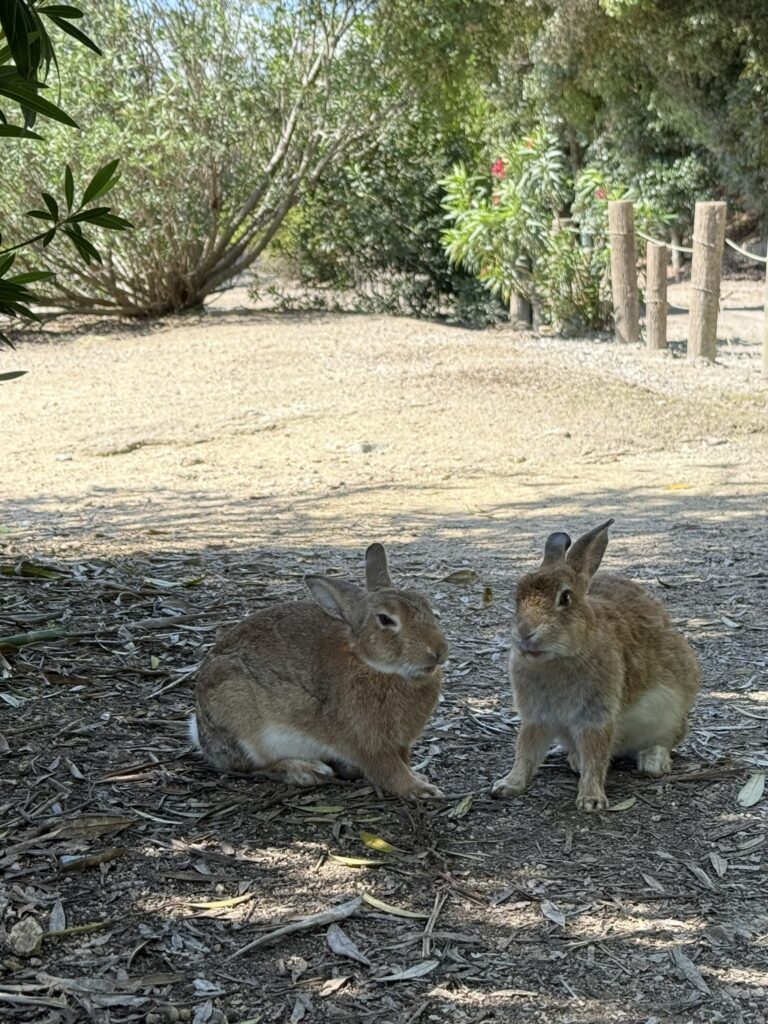
One explanation for the rabbits circulates widely: that they are descended from animals used in wartime chemical trials on the island. This account is almost certainly not accurate. Animals used in factory testing were euthanized when production ended in 1945.
The more documented account, reported by Hiroshima tourism sources and the island’s official information, is this: in 1971, eight rabbits were released on the island by a group of schoolchildren during a class excursion. The island had no natural predators. Cats and dogs are still prohibited from Okunoshima today. The rabbits reproduced, and continued reproducing over the following decades. By the time Okunoshima rabbit island became widely known internationally around 2014, the population was estimated at between 300 and 500 animals.
The rabbits are not wild in the usual sense. They have lived alongside visitors long enough to approach without hesitation, especially when food is present. Rabbit pellets and suitable vegetables can be purchased at shops near Tadanoumi Port before boarding the ferry. No rabbit food is sold on the island.
As the island has grown more popular, some rabbits have developed skin conditions and other ailments from repeated handling. Please do not touch or pick up the rabbits, and place food on the ground rather than offering it by hand. These guidelines help protect the health of the remaining population.
There is no official explanation for what the rabbits mean in relation to the island’s history. The contrast is noticed by most visitors and resolved by none with any satisfaction. It is the kind of thing that resists a lesson.
The Particular Quiet of Okunoshima
The ferry crossing from Tadanoumi takes approximately fifteen minutes. No cars are permitted on Okunoshima; the only vehicle traffic is the resort hotel’s shuttle and service operations. When you step off the ferry, the absence of engines is immediate.
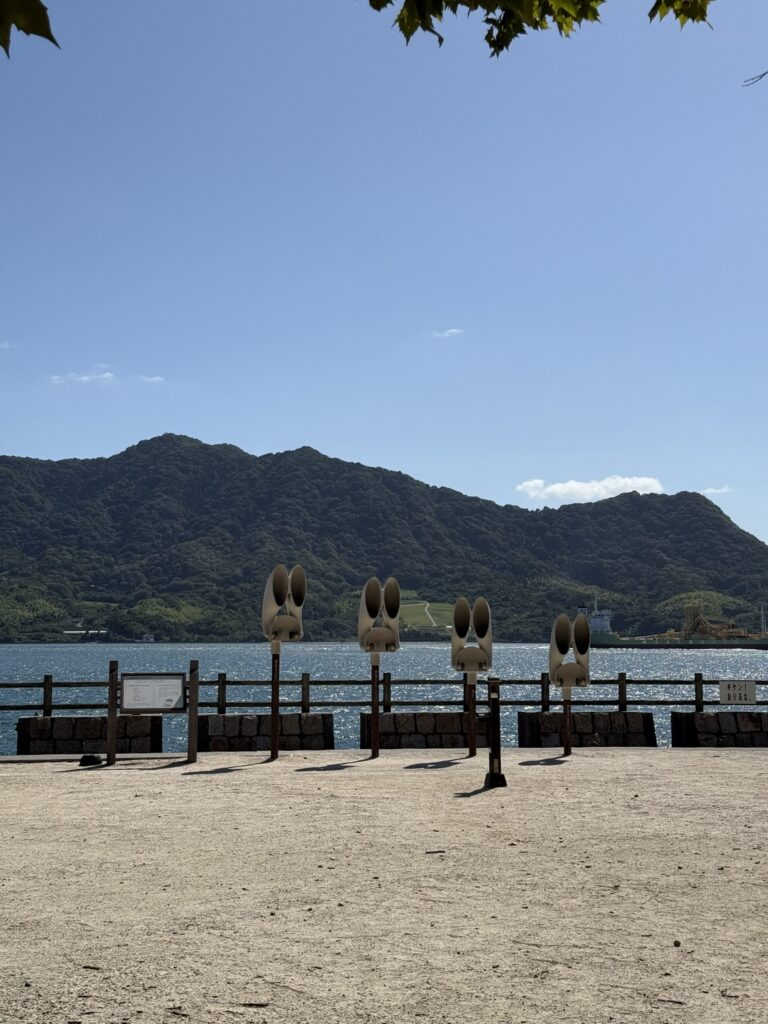
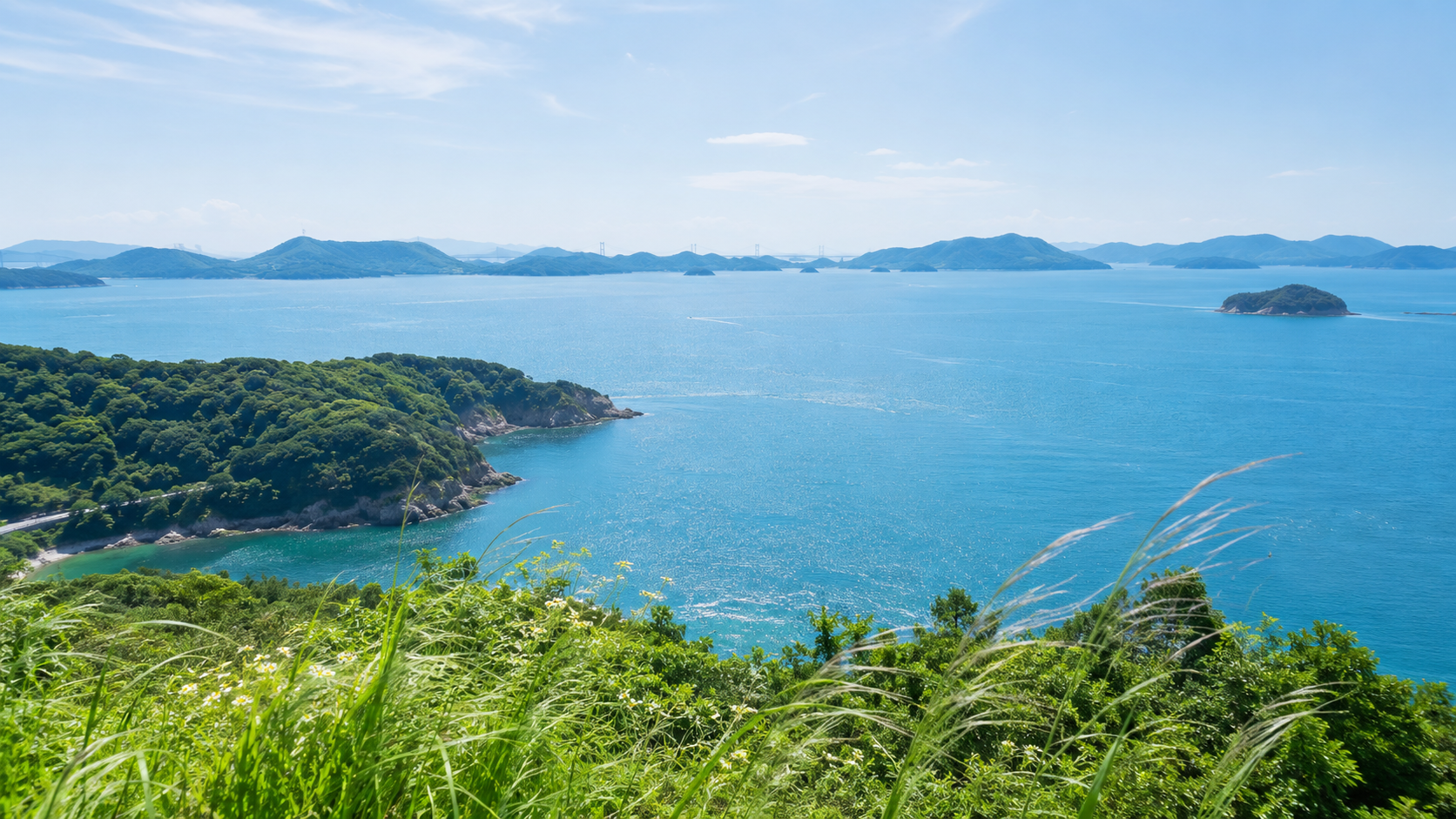
The island’s circumference is roughly four kilometers. Walking it takes about an hour and a half, on paved and gravel paths. Bicycle rental is available at the Kyukamura Okunoshima resort, which is also the island’s only accommodation. Paths sometimes end at moss-covered walls, at battery ruins, or at viewpoints over the Seto Inland Sea. On clear days the water is a bright, particular blue, and a steady sea breeze comes off the strait between the islands. Against the concrete ruins visible through the treeline behind you, the contrast is immediate and hard to ignore.
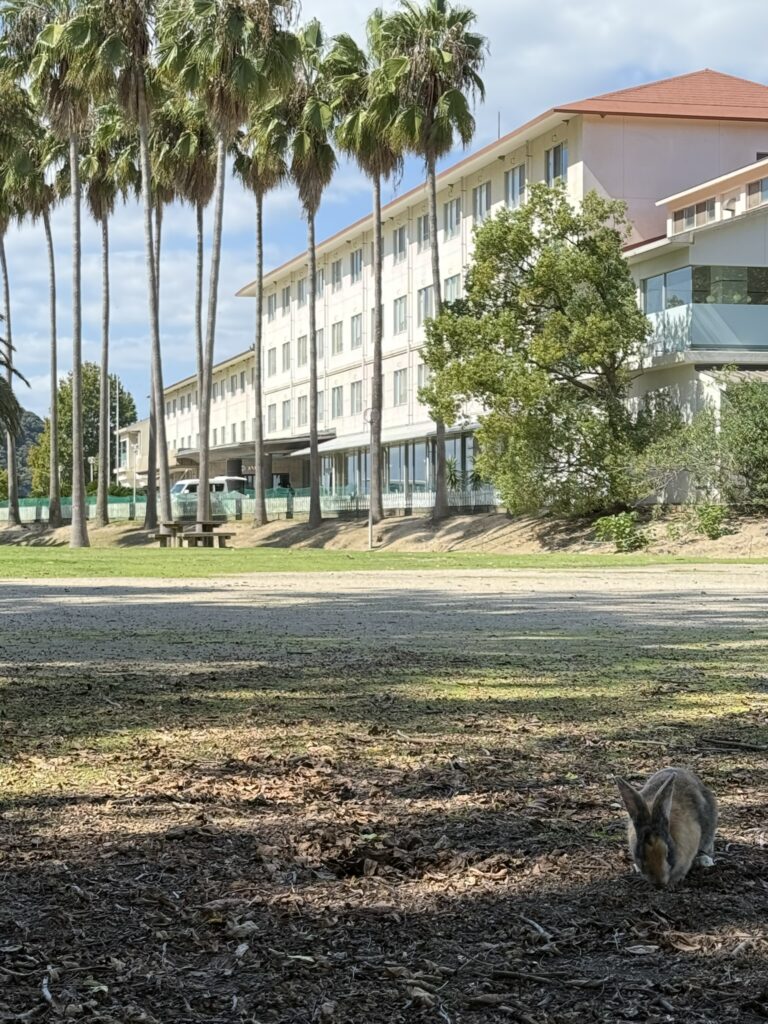
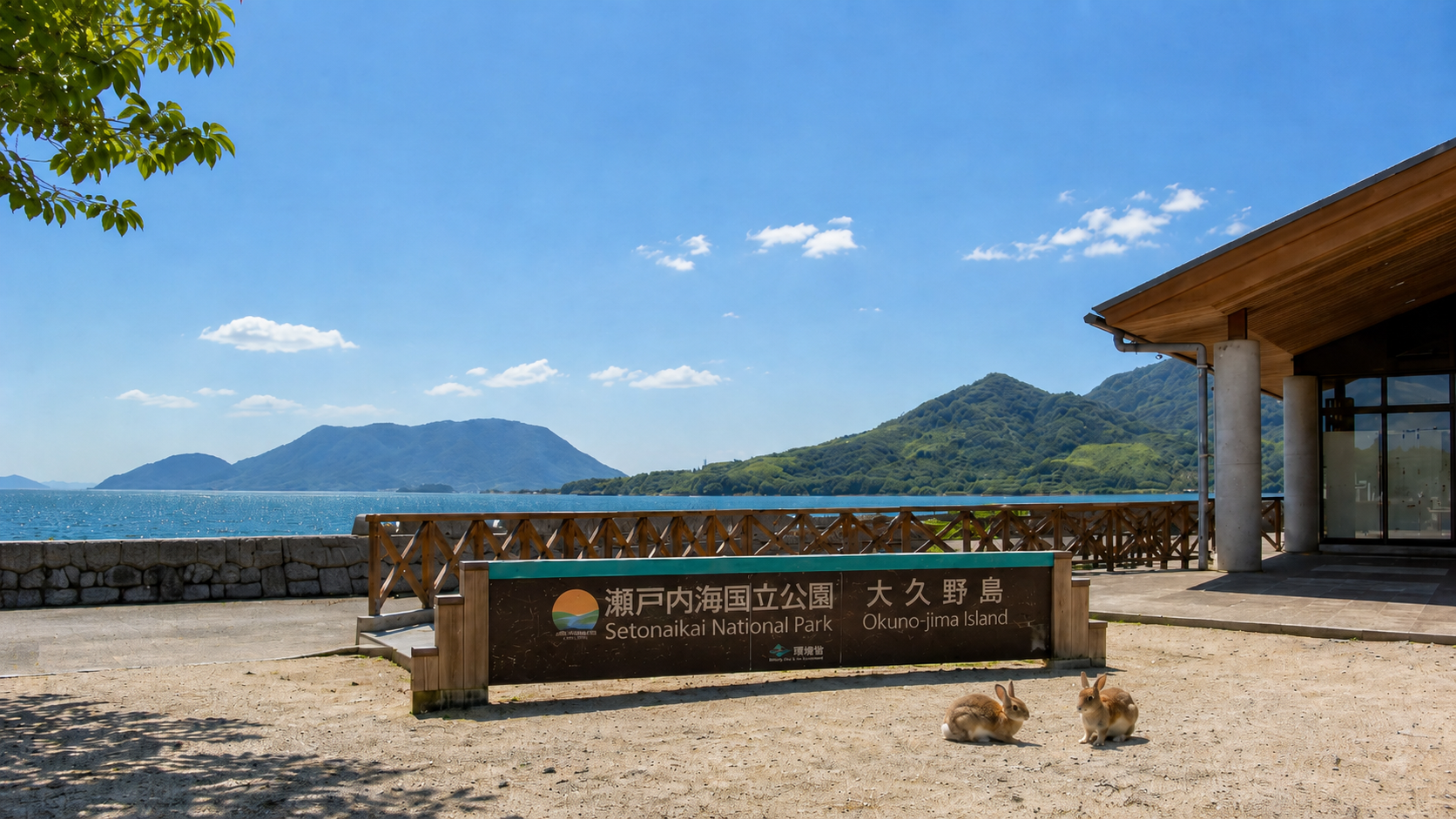
The rabbits appear in clusters near the ferry piers and at places where visitors gather. They also appear farther in, at the edges of ruins, under tree roots, between sections of collapsed concrete. In the quieter parts of the island, away from the photographed areas, the encounter feels different. The animal and the ruin are simply in proximity, neither explaining the other.
What Okunoshima rabbit island offers is not resolution. The island’s history is not redeemed by the presence of rabbits, and the rabbits are not diminished by the history. They occupy the same space. That is the island’s actual condition. Visitors who arrive prepared only for the rabbits often leave with the ruins in mind. Those who arrive prepared only for the ruins often find themselves sitting down to watch a rabbit eating clover from a crack in the concrete.
Coming and Going
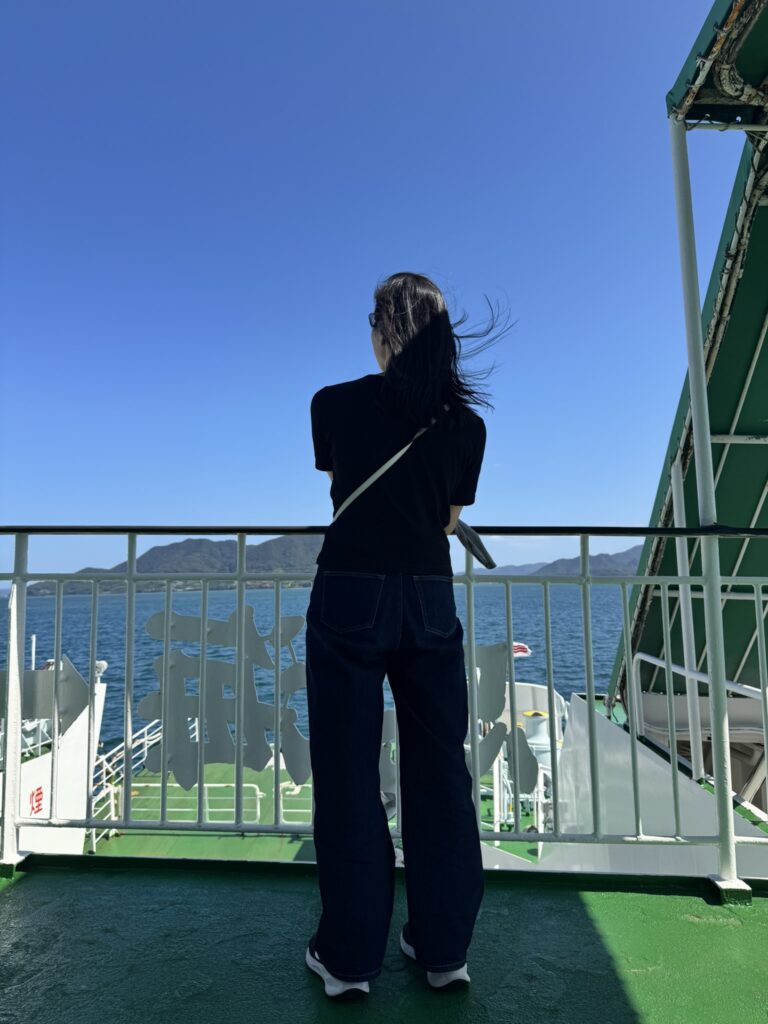
Okunoshima is reached by ferry from Tadanoumi Port in Takehara City, Hiroshima Prefecture. The crossing takes approximately fifteen minutes. Ferries run roughly every 30 to 60 minutes; check the current timetable on Hiroshima’s official tourism page before arriving, particularly in winter.
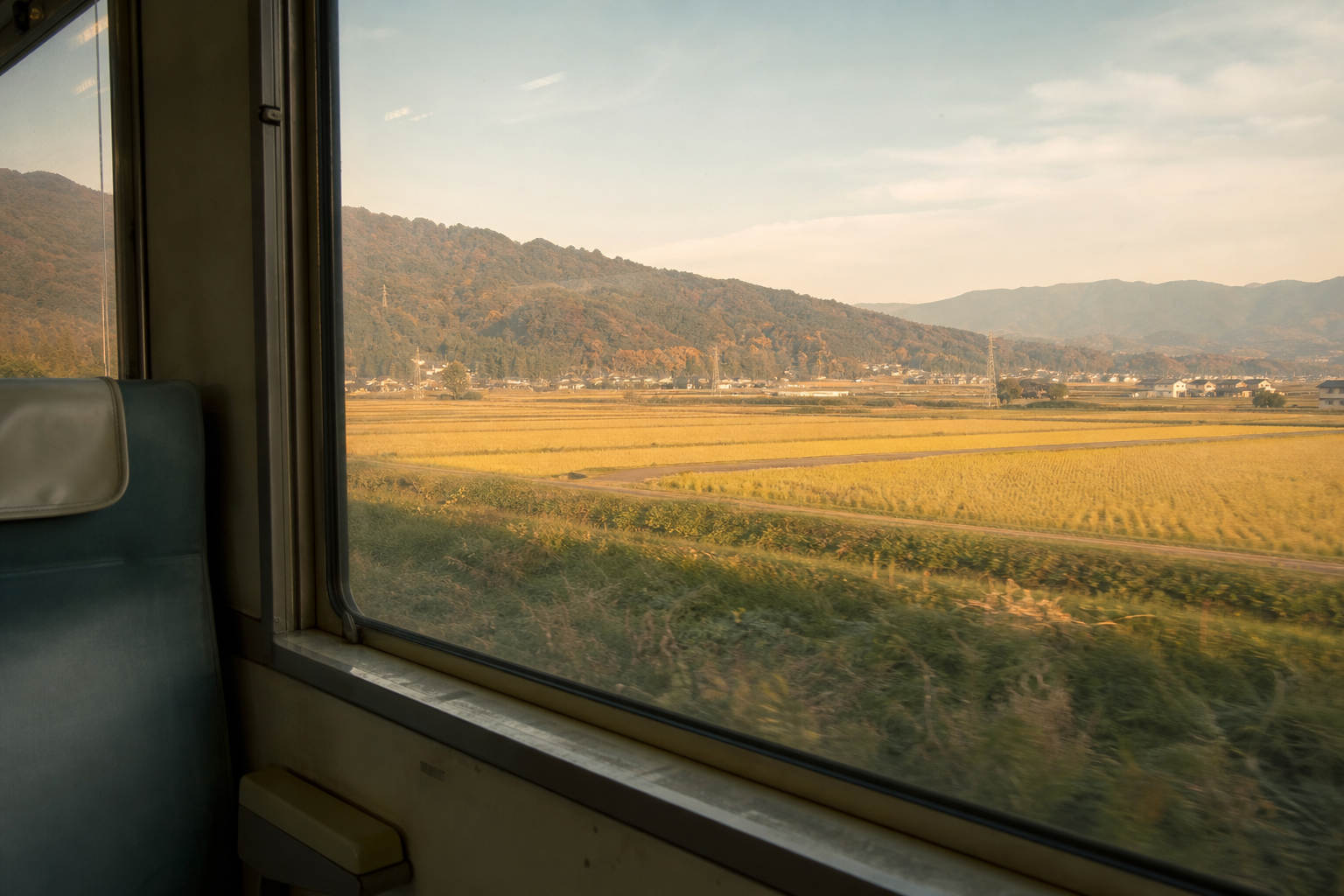
From Hiroshima Station: take the Shinkansen to Mihara Station (approximately 25 minutes), then transfer to the JR Kure Line to Tadanoumi Station (approximately 20 to 25 minutes). Tadanoumi Port is a short walk from the station.
No cars operate on Okunoshima. Bicycle rental is available at the Kyukamura Okunoshima hotel, the island’s only accommodation. The hotel offers Japanese and Western rooms, a buffet that draws on local Seto Inland Sea seafood, and a natural radium hot spring. Reservations are advisable on weekends and during peak seasons.
Most visitors spend three to five hours on the island. An overnight stay gives access after day-trip ferries stop running; in the evening and early morning, the atmosphere changes.
There are no trash receptacles on Okunoshima. Everything must be carried out.
Autumn (October to November) and spring (March to May) are generally the most comfortable seasons for visiting. In summer, rabbits tend to shelter in shade during midday.
—
The ferry back to Tadanoumi runs on schedule. If you have stayed into the late afternoon, the light on the water will be different from the morning crossing. On the pier, a rabbit sits near the bollard and does not move when the ferry horn sounds. The ruins are a short walk back through the treeline. Okunoshima rabbit island is the kind of place where these things are simply present together, and where that is enough.
For readers drawn to the particular quality of stillness this kind of travel offers, quiet travel in Japan traces how this mode of travel connects to something older in how Japanese culture relates to place. The art islands of the Seto Inland Sea, the passage of time, and what place holds are explored in quiet travel in Kagawa. On the Japanese concept of the interval and what absence holds, What is Ma? offers a different entry point.
—
FAQ
What is Okunoshima rabbit island? Okunoshima is a small island in the Seto Inland Sea in Hiroshima Prefecture, Japan. Known as Usagi-jima (rabbit island), it is home to several hundred wild rabbits that live freely across the island. It is also the site of a former Imperial Japanese Army chemical weapons factory, the ruins of which remain visible, along with the Okunoshima Poison Gas Museum operated by Takehara City.
Why was Okunoshima removed from Japanese maps? From 1929 to 1945, Okunoshima housed a secret chemical weapons facility. The Japanese government suppressed information about the island’s existence and purpose, including its removal from official cartography. Japan had signed the 1925 Geneva Protocol, which prohibited the use of chemical weapons in war, but production continued in secret regardless. Workers were prohibited from disclosing their work.
How did rabbits come to live on Okunoshima? The most credible account, as reported by Hiroshima tourism sources, is that eight rabbits were released on the island by schoolchildren in 1971. With no natural predators and a prohibition on cats and dogs, the population grew to several hundred over the following decades. The wartime test animals were euthanized at the end of the war and are not related to the current population.
Can you visit the Poison Gas Museum on Okunoshima? Yes. The Okunoshima Poison Gas Museum is open to visitors. It documents the wartime history through photographs, artifacts, and worker testimony. It is operated by Takehara City. Visiting the museum before walking the ruins provides useful context. Check current hours and admission fees at Takehara City’s official war heritage page before visiting.
How do you get to Okunoshima from Hiroshima? From Hiroshima Station, take the Shinkansen to Mihara Station (approximately 25 minutes), then transfer to the JR Kure Line to Tadanoumi Station (approximately 20 to 25 minutes). Walk to Tadanoumi Port and board the ferry. The crossing takes approximately 15 minutes. Ferries depart roughly every 30 to 60 minutes; verify current schedules before traveling.
Is Okunoshima a good destination for quiet travel? On weekdays, particularly in the morning or late afternoon, the island is genuinely quiet. An overnight stay at Kyukamura Okunoshima gives access after the last day-trip ferries depart, when the number of visitors drops significantly. The absence of cars and the island’s small size make it easier to find stillness than at most Seto Inland Sea destinations.