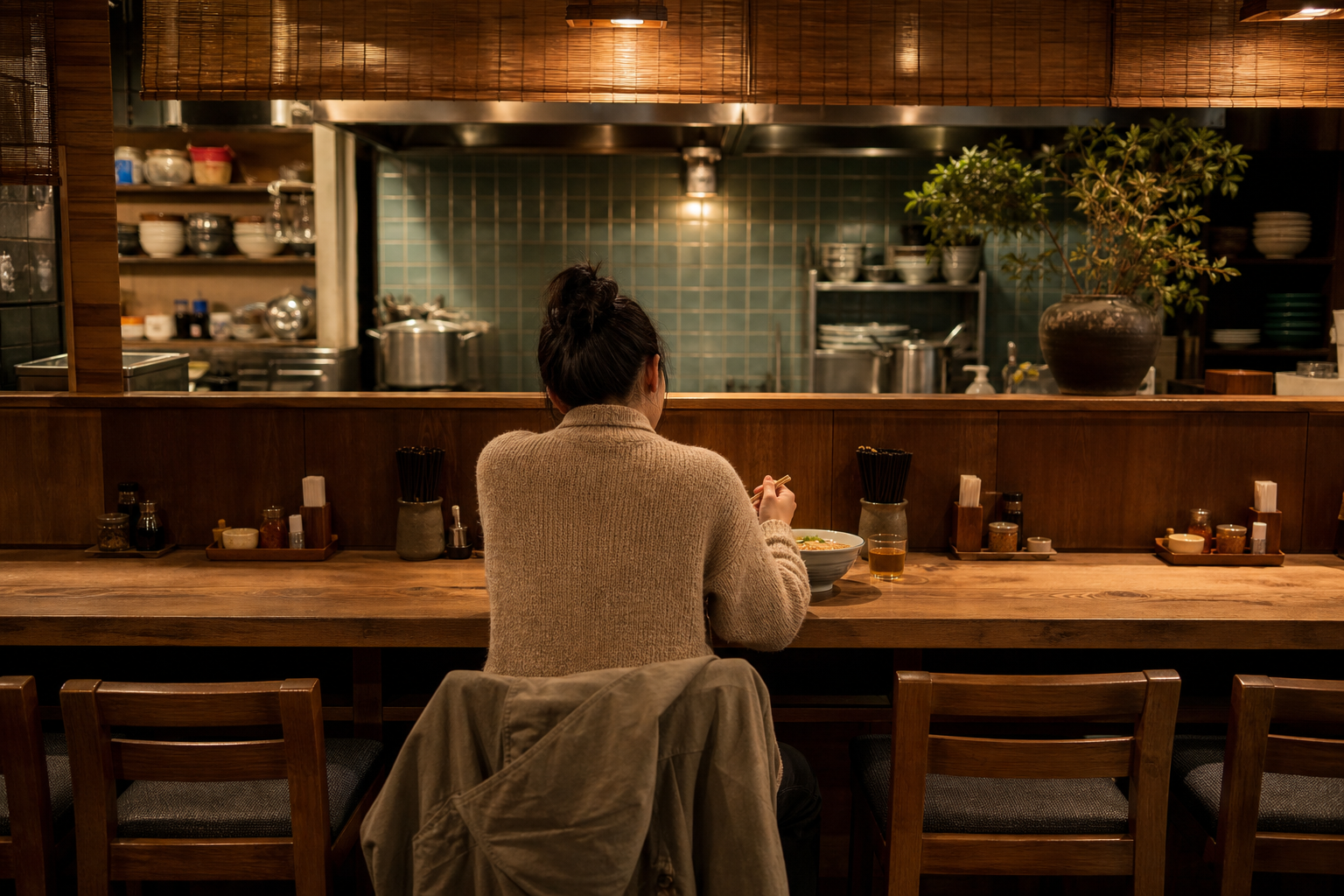
The first time I sat at a ramen counter alone, I wondered, briefly, whether I would be noticed. Not because I was alone. In Japan, that part was never the question. It was something simpler — the specific awareness that comes with being a woman walking into a room full of people already settled. The solo part was fine. The entrance was the moment. The bowl arrived. I ate it. I left. Nobody looked up. That is the thing about eating alone in Japan that takes the longest to explain to someone who has not done it here. T
The first time I sat at a ramen counter alone, I wondered, briefly, whether I would be noticed.
Not because I was alone. In Japan, that part was never the question. It was something simpler — the specific awareness that comes with being a woman walking into a room full of people already settled. The solo part was fine. The entrance was the moment.
The bowl arrived. I ate it. I left. Nobody looked up.
That is the thing about eating alone in Japan that takes the longest to explain to someone who has not done it here. The solo part genuinely is not the question. You arrive, you eat, you leave. The social overhead is close to zero.
—
Japan Has a Word for It
Hitorimeshi (一人飯) means, literally, one-person meal. It describes eating alone in public: at a counter, at a ramen bar, on a bench with an onigiri in your hand, at a convenience store eat-in corner before the train.
The word is not clinical. It is not a euphemism. It is just what the thing is called.
Languages tend to name what they take seriously. The fact that Japanese has a specific, widely used, non-stigmatized word for eating alone in public is not a small thing. It is structural evidence of how the culture has arranged itself around this particular kind of solitude.
I grew up eating lunch by myself sometimes — at my desk, at a counter near the station, at a convenience store before getting back on the train. It was never a category. It was a Tuesday.
It became a category the first time someone outside Japan asked me to explain it. And I could not, for a moment, understand what needed explaining.
—
Ohitorisama: The Word You Use Yourself
There is a companion term worth clarifying: ohitorisama (お一人様).
This is often described as what restaurant staff say when a solo diner arrives. In practice, it does not quite work that way. When you walk into a restaurant alone, the host typically asks “何名様ですか?” — how many people? You say one. They seat you.
Ohitorisama is less a phrase directed at you from the outside and more a word you might use about yourself. “I’m coming alone” — ohitorisama de ikimasu. It has a slightly formal register, with the honorific o- and the respectful -sama, which gives it a gentle, self-aware quality. Not self-deprecating. Just precise.
The distinction matters because it changes what the word is doing. It is not how the restaurant categorizes you. It is how you choose to describe your own situation. A subtle thing, but it shifts the word from institutional to personal.
—
Why This Question Does Not Come Up Elsewhere
I find it genuinely difficult to understand why eating alone is treated as a social problem in many other countries. It took me some time to see what is actually going on.
It is not, as is sometimes assumed, that people in other countries always share dishes or eat in larger groups. In Italy, a pizza arrives for one person. In France, you order your own steak. Individual portions are the norm in most places. The mechanics of ordering are not so different from Japan.
What is different is what the meal means socially.
In much of Western food culture — particularly in the United States and Europe — a meal carries the weight of an occasion. The table is where relationships are maintained, where conversations happen, where the day is processed with someone else. Eating is not just eating. It is a context for being together.
In that framework, eating alone in public reads as the absence of that context. A table for one implies, by default, that the social occasion did not materialize. The empty chair is not neutral. It signals something.
Research on solo dining in Western contexts consistently finds that people avoid it not because they dislike eating alone but because of how they fear being perceived. The phone consulted too often. The slight performance of looking busy rather than looking lonely. The fear is not solitude itself. It is being read as someone who could not find a companion.
Restaurant economics reinforce this. A two-person table given to one diner is a seat left empty — revenue foregone. Many Western restaurants quietly discourage solo reservations, or seat solo diners toward the back. The room communicates, accurately, that it was not designed with them as the primary case.
Japan arrived at a different answer. And the difference is not in the portion size.
—
How Japan Built Around the Solo Diner
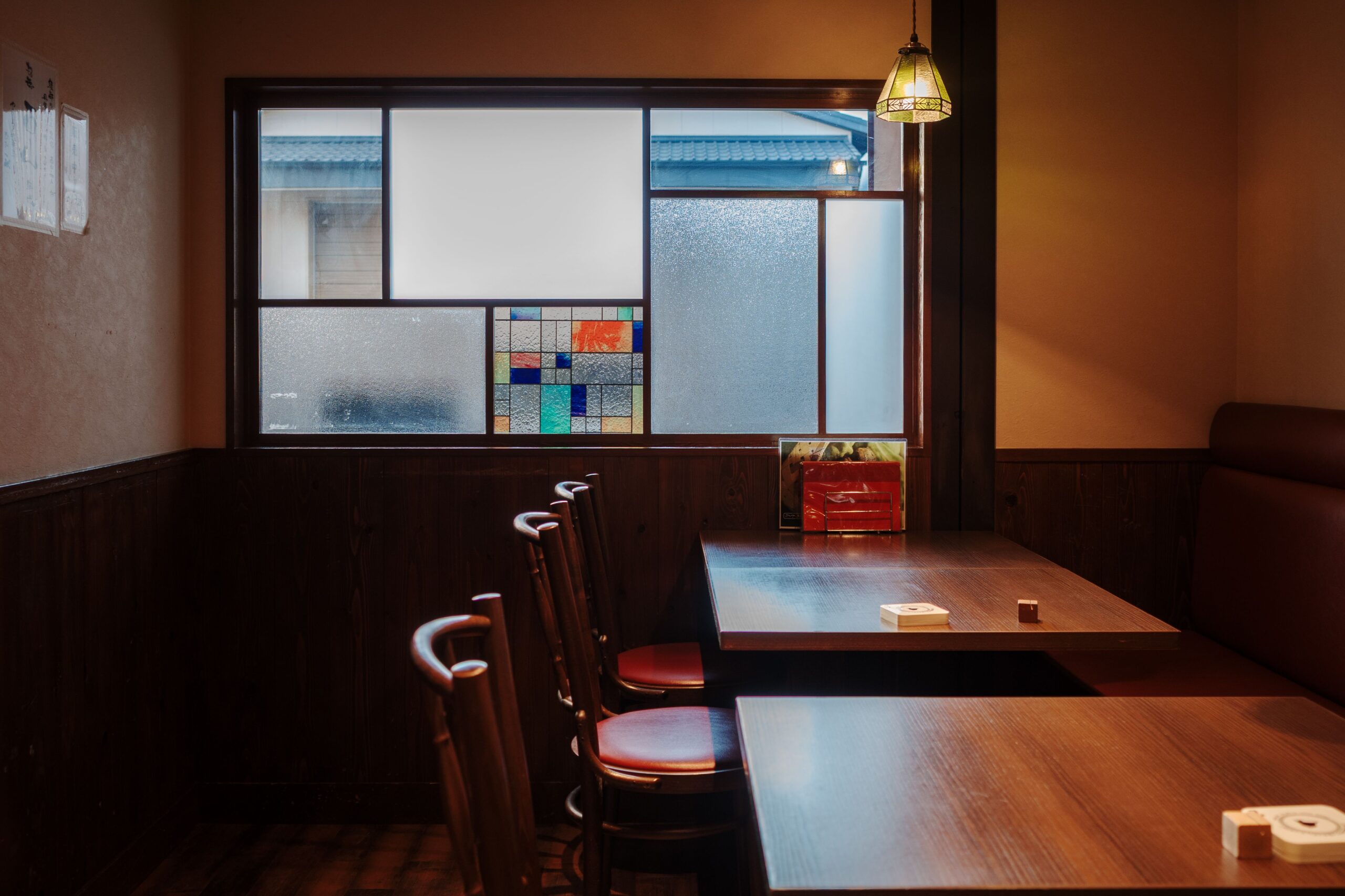
The counter seat came first.
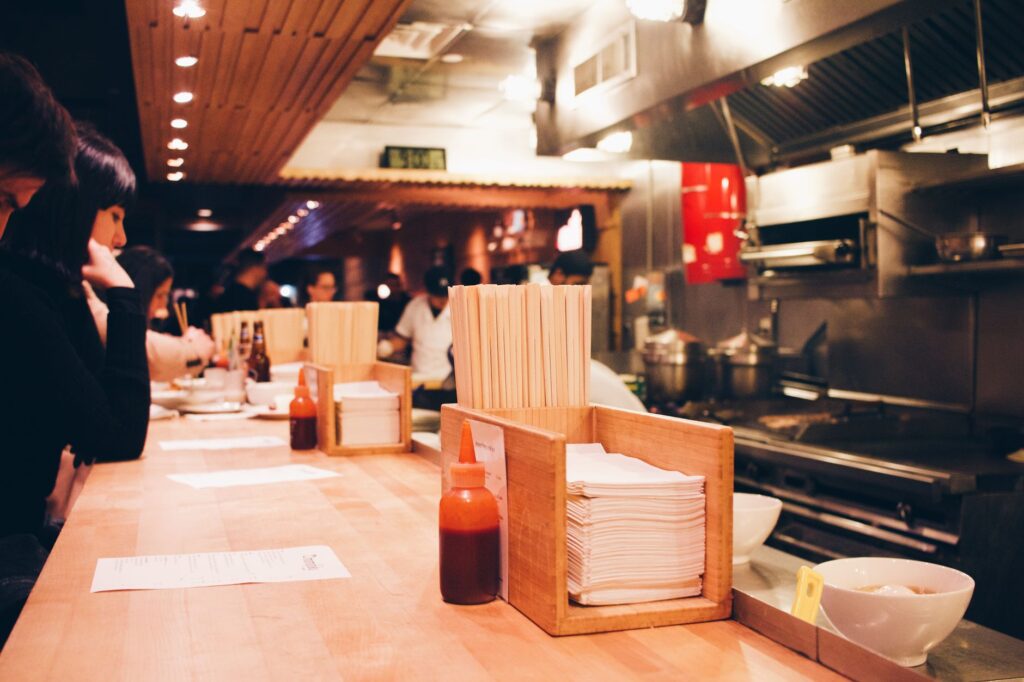
Ramen shops, soba restaurants, and early kissaten built around the counter as a primary format, not as overflow seating. The person who came alone and wanted a quick, good meal without social ceremony was the original customer. Counter seating was not the accommodation. It was the room.
The salaryman culture of the postwar decades accelerated this. Workers eating late, eating quickly, eating without planning ahead — this was a large and consistent market. Japanese food service adapted to it, built for it, optimized for it. By the time solo dining became a visible cultural conversation in other countries, Japan had already been running the infrastructure for decades.
Ichiran Ramen made the logic explicit. Each seat is a private booth, separated from adjacent diners by partitions. A curtain lowers in front of the counter where the bowl arrives. You order on a paper form. No interaction required. The premise — that a meal deserves full attention, and full attention is easier without social noise — was not radical in Japan. It was already the direction the culture was moving.
Bocchi seki (ぼっち席), a term for designated single seating in various public spaces, reflects how far this has gone. Not just restaurants: cinemas, karaoke rooms, and even some workspaces have developed formats specifically for the person who came alone and would like to stay that way.
The traditional kissaten is a quieter version of the same logic: a counter, a cup of coffee, an hour that belongs to you. No explanation required or requested.
—
Why a Woman Can Do This
Something that people from outside Japan sometimes underestimate: a large part of what makes eating alone comfortable here, particularly for women, is that Japan is simply very safe.
Violent crime rates in Japan are among the lowest in the world. Walking alone at night, entering an unfamiliar restaurant, sitting at a counter surrounded by strangers — these carry a different baseline risk level than they do in many other urban environments. The presence of kōban (交番), small neighborhood police boxes distributed throughout cities and towns, creates a visible, localized security presence that most countries do not replicate.
This matters because eating alone is not just a social act. It is also a physical one. For a woman to eat alone in public, she needs the space to actually feel safe doing it — not just socially accepted, but physically unbothered. In Japan, that condition is more reliably met than in most places.
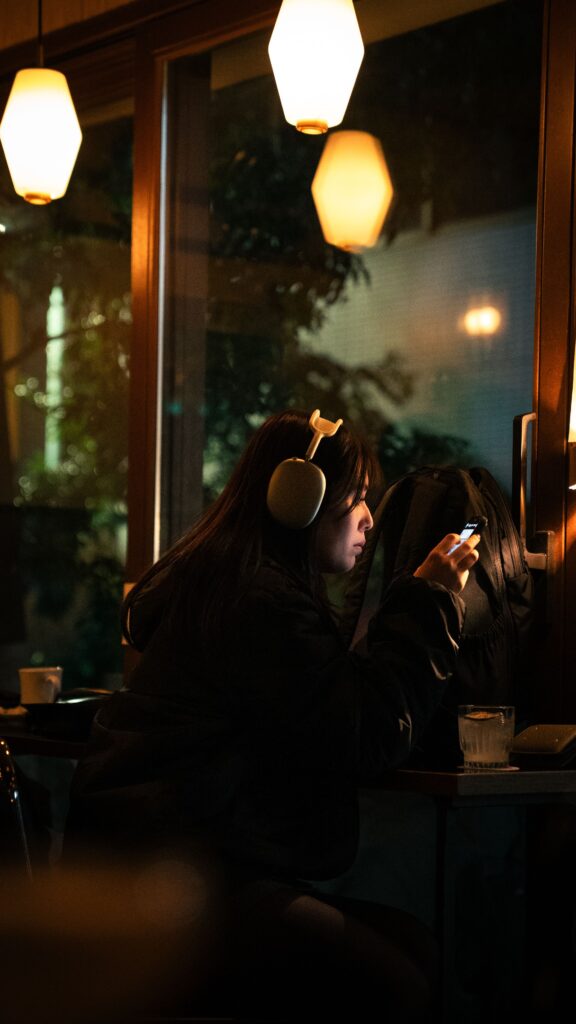
It is worth saying plainly: the acceptance of solo dining in Japan is partly cultural, partly infrastructural, and partly a function of a country where the baseline safety makes solitude in public genuinely accessible to more people, including women eating alone at a counter at 11 p.m.
—
What Ma Has to Do with It
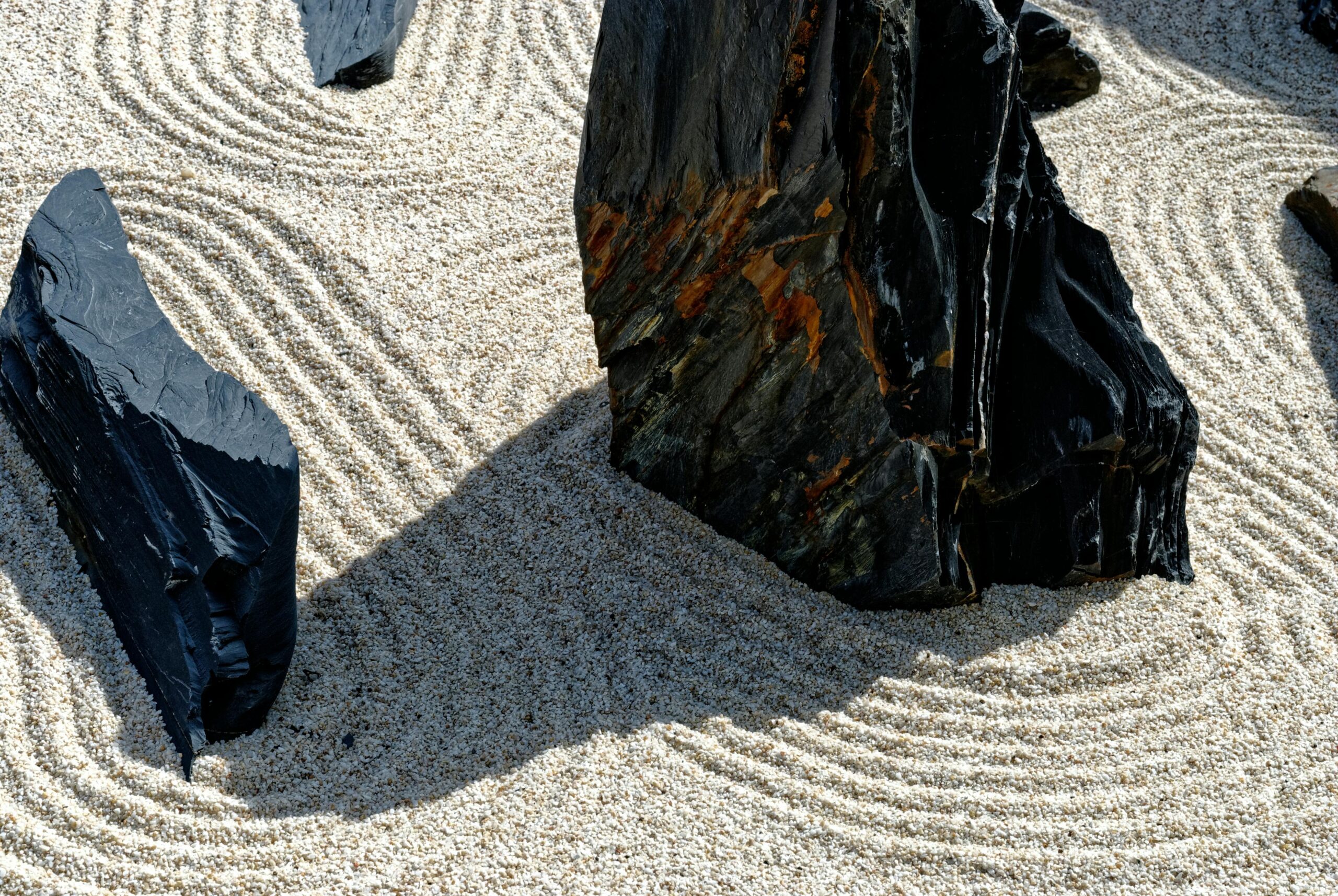
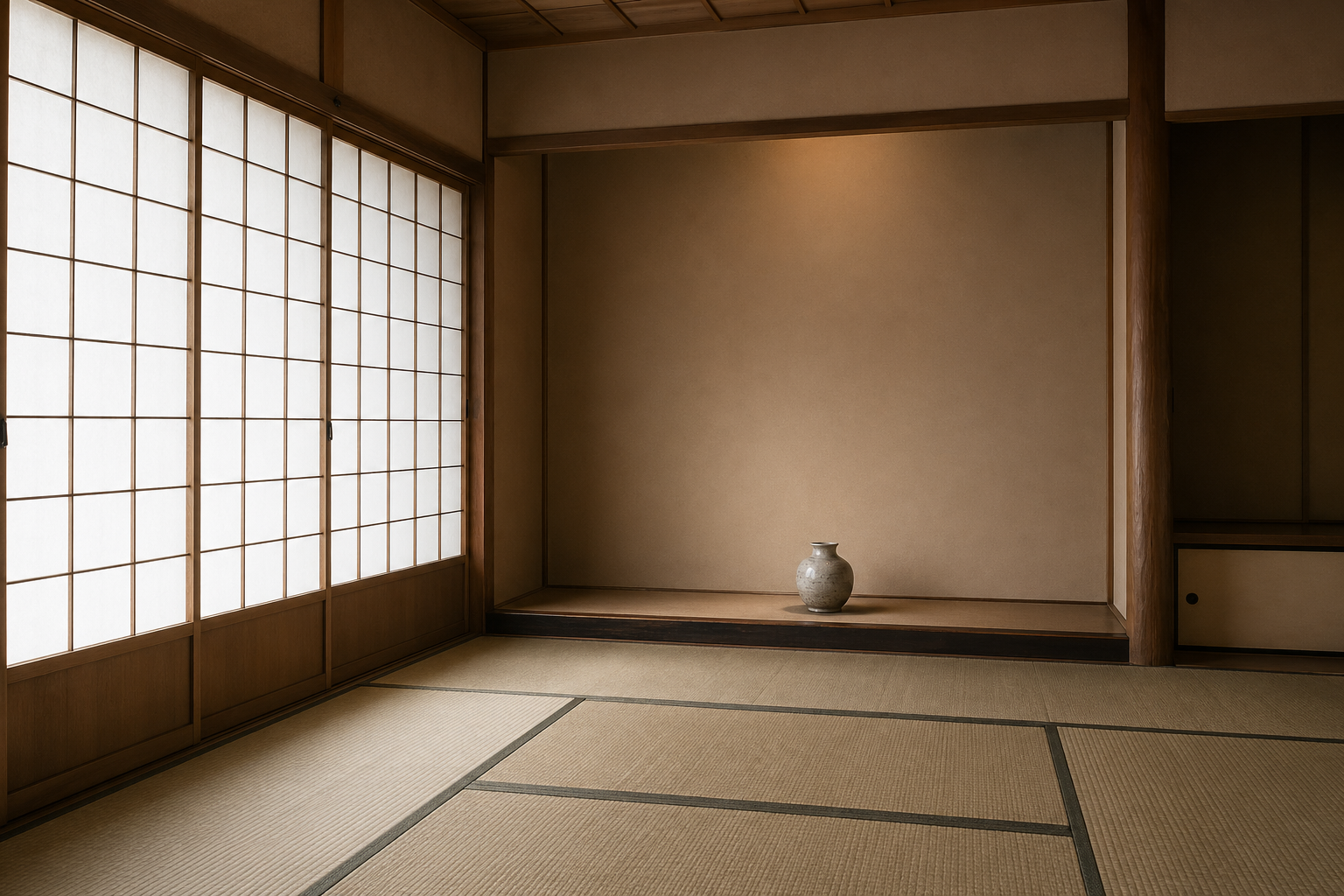
There is a concept in Japanese aesthetics called ma (間): the space between things. The pause, the gap, the emptiness that makes the surrounding form possible.
Ma is discussed most often in relation to architecture, music, garden design. But it operates in social space as well.
In many social environments, a person sitting alone at a table signals absence — the gap where someone else should be. In Japan, the person sitting alone at a counter is not a gap in a social arrangement. They are a complete arrangement. The seat is designed for one. The meal is for one. Nothing is missing.
I want to be careful not to overstate this. Loneliness exists in Japan. People feel isolated here. The country has, in recent years, appointed a minister for loneliness, which is not something a society without the problem would do.
What the infrastructure reflects is not an absence of loneliness but a choice about what to default to assuming. The counter seat does not assume the solo diner wishes they were not alone. It assumes they are there to eat, and builds around that.
—
The Onigiri at 7:15
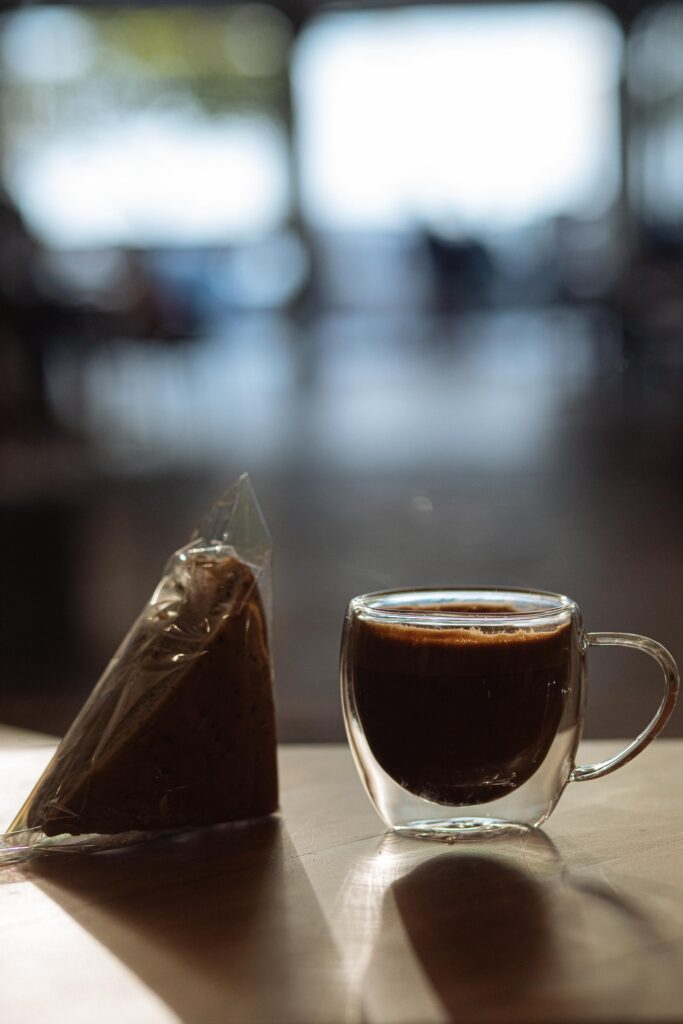
The clearest picture of eating alone in Japan, to me, is not a ramen booth or a designed solo experience.
It is someone at a convenience store counter at 7:15 in the morning with an onigiri and a can of coffee. They chose the onigiri by name without seeing inside. They are not performing anything. They are not managing anything socially. They have four minutes before the train.
The onigiri they are holding carries its own logic — the history, the filling, the particular rice blend that someone spent years developing. And the person eating there carries theirs: a morning, a meal, a few minutes of being entirely on their own.
Nobody arranged this for their social comfort. Nobody is carefully not-looking at them. The space simply does not ask them to account for themselves.
And in that not-asking, something becomes visible about what Japan has quietly decided: that the person eating alone is not a problem to be managed. They are just someone eating.
—
FAQ
What is hitorimeshi? Hitorimeshi (一人飯) means “one-person meal” in Japanese. It describes eating alone in public — at a restaurant counter, a ramen bar, a convenience store, or anywhere else. The word is in common everyday use and carries no negative connotation.
What does ohitorisama mean? Ohitorisama (お一人様) is a phrase used to describe being alone, often applied to oneself. It carries a polite, slightly formal register. In restaurants, staff typically ask “nan-mei-sama desu ka?” (how many people?) rather than using ohitorisama directly — the phrase is more often used by the solo person themselves to describe their situation.
Is eating alone acceptable in Japan? Yes, and has been for a long time. Counter seating, solo restaurant formats, and convenience store eat-in corners treat solo diners as the primary use case. The vocabulary around hitorimeshi and ohitorisama reflects how thoroughly the culture has built around the person who came alone.
Why is eating alone less accepted in many Western countries? It is not about portion size or sharing dishes — individual portions are standard in most Western countries too. The difference is in what a meal socially means. In much of Western culture, a meal carries the weight of an occasion: a context for being with someone. Eating alone in public reads, by default, as that occasion not having happened. Restaurant economics reinforce this further: a solo diner at a two-person table is a seat left empty. Neither assumption is universal, but both are persistent.
Is it safe to eat alone in Japan, particularly for women? Japan has some of the lowest violent crime rates in the world, and the presence of neighborhood police boxes (kōban) throughout cities creates a reliable local safety infrastructure. This physical safety is part of what makes solo dining — and solo activity in general — genuinely accessible to more people here, including women eating alone late at night.