The part of Yanaka that is most written about is the shotengai, the temples, the cats. That version of the neighborhood is real. There is another version, slightly behind it: the back streets of Sendagi and the lanes that connect Yanaka to Nezu, where the buildings are older and the cafés do not compete for visibility. Two retro cafés in Tokyo's Yanaka area hold their own in this version of the neighborhood. K
The part of Yanaka that is most written about is the shotengai, the temples, the cats. That version of the neighborhood is real. There is another version, slightly behind it: the back streets of Sendagi and the lanes that connect Yanaka to Nezu, where the buildings are older and the cafés do not compete for visibility.
Two retro cafés in Tokyo’s Yanaka area hold their own in this version of the neighborhood. Kissa Nito (喫茶二ト) is the retro café Tokyo writers tend to miss: recognizably Showa in its aesthetic (blue tiles, orange-lit interior, rum caramel pudding) without performing Showa for an audience. Amane Saryo (雨音茶寮) nearby occupies a converted nagaya (長屋) that is seventy years old, where the operating concept is simple: keep your voice down. Neither shop is designed to be photographed. Both have been photographed at length.
—
The Back Streets of Yanaka: Cafés Without Signage
Yanaka’s well-photographed spots and the places locals actually sit are often in different corners of the same neighborhood. The cafés covered in the café and kakigori side of Yanaka, Hagiso and Himitsudo, are known, named, and easy to find. Kissa Nito and Amane Saryo are a short walk from that axis but outside its orbit. Neither has prominent signage. Both have small interiors that fill quickly.
The lack of visibility is not incidental. These are retro cafés in Tokyo in the most literal sense: the aesthetic and the pace are not recent additions, and the spaces do not invite strangers who are only passing through. Arriving requires intention. That limited visibility is part of what retro café Tokyo means here, at least in Sendagi.
—
Kissa Nito: A Room That Hasn’t Changed Its Mind
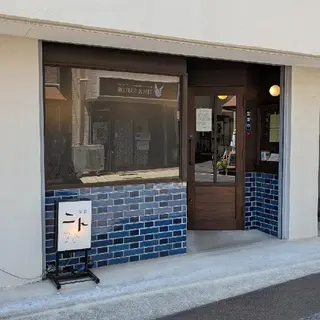
The exterior of Kissa Nito stops you before you read the name. Blue tiles on the lower half of the building, a wooden door, a warm orange glow coming through the window. The sign uses a rabbit motif: the name “Nito” (二ト) is a play on 二兎, two rabbits. The rabbits are in the window seat.
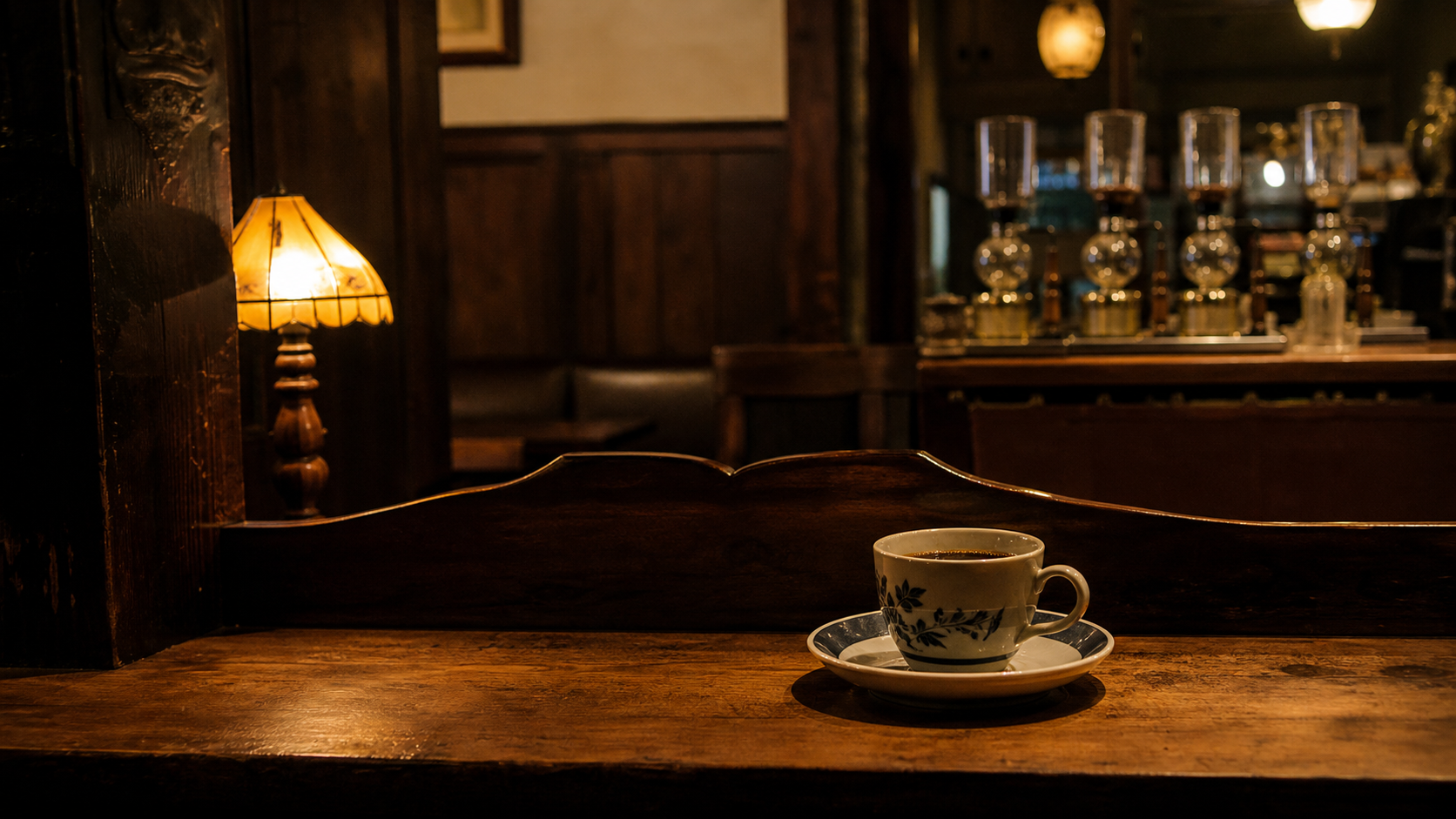
Inside, the room holds around ten seats. The lighting is warm and low. The furniture is antique in style without being antique in age. Soft jazz plays. There is no sense that the room was assembled to look a certain way. It looks the way it does because someone made considered decisions in 2018 and hasn’t reconsidered them.
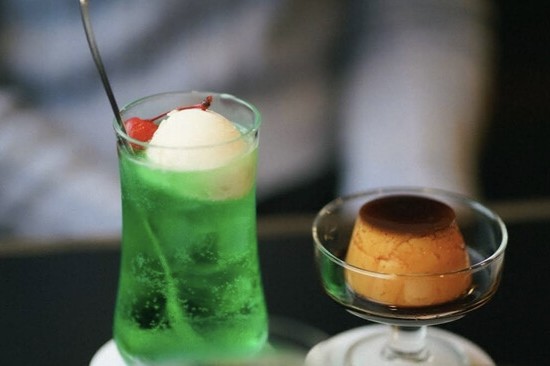
The owner makes hand-drip coffee using Horiguchi Coffee beans, including a French Roast. The firm pudding (固めプリン) is the signature item: a rum-scented custard with bitter caramel, served simply. The flavor is adult and slightly dry. Cream melon soda and a coffee jelly (available weekends only) round out a menu that is short on purpose.
One detail in visitor accounts reappears consistently: when a customer coughed, the owner quietly brought water without being asked. This kind of hospitality is not a policy. It is the owner’s sense of what a room should do.
Kissa Nito does not take reservations and is cash only. Hours are 11:00 to 18:00, with last entry at 17:00. Closed days are irregular; check Instagram (@kissa.nito) before visiting. Address: 3-42-13 Sendagi, Bunkyo-ku, Tokyo. About 5 minutes on foot from Sendagi Station (Tokyo Metro Chiyoda Line).
—
What Is Kissaten Culture?
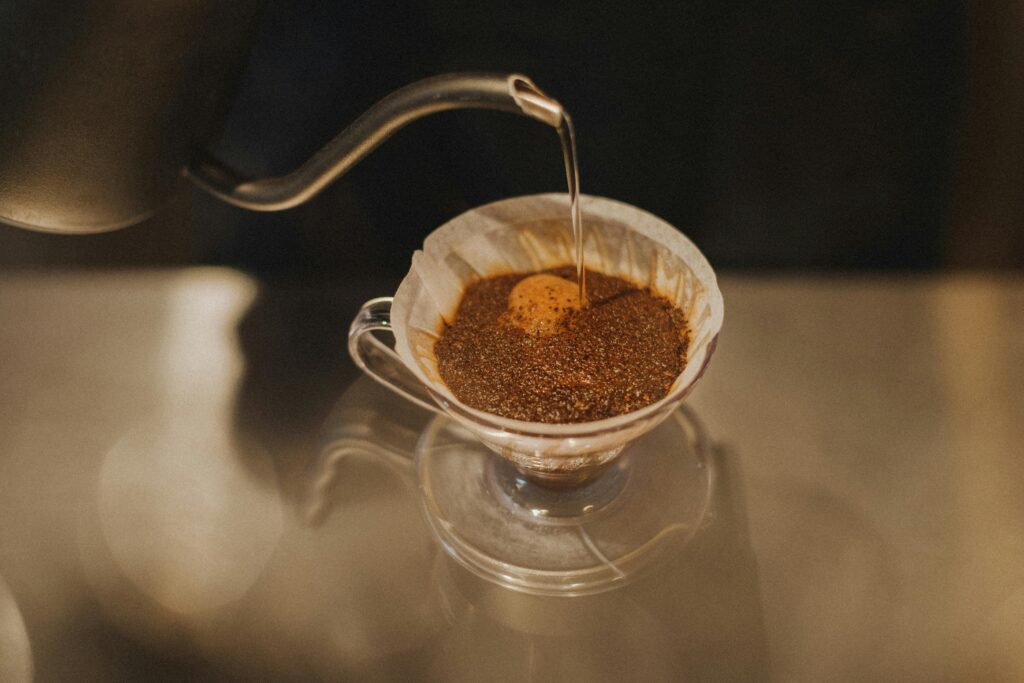
Kissaten (喫茶店) is the Japanese café tradition that predates the arrival of coffee shop chains in Japan. It developed its own conventions: hand-drip coffee, owner-operated spaces, longer stays as the default, and a separation between being a customer and being a tourist. For more on that tradition, the article on Japan’s kissa culture covers the history in depth.
What survives in Yanaka specifically is not nostalgia for the format but the conditions that made it possible: buildings old enough to have low rents, a neighborhood pace that does not push turnover, and a clientele that knows what it is looking for. Kissa Nito and Amane Saryo are retro café Tokyo in this specific sense. They are not imitating an older model. They are operating from it.
—
Amane Saryo: The House That Whispers
Amane Saryo occupies a nagaya, a traditional row house form in which small rooms share walls along a single corridor. This one is approximately seventy years old. The renovation kept the structure and changed the purpose.
The first floor is what the owner describes as a Paris-influenced Japanese café space. The second floor is attic-like: low ceiling, tatami and table seating, corners that feel private. Eighteen seats across both floors. The natural light on the upper floor, through small windows in a slanted ceiling, is the kind of light that slows reading down.
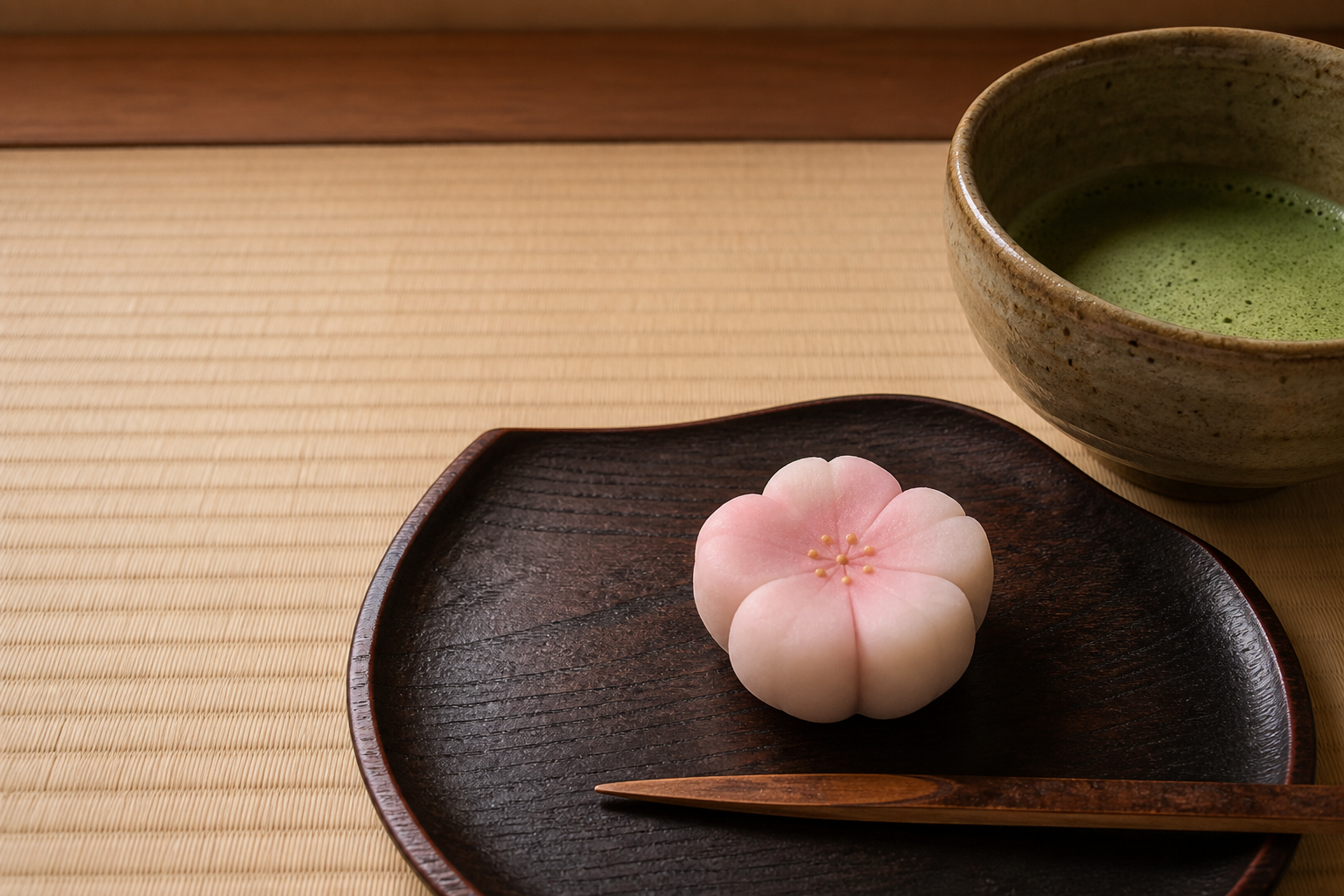
The operating concept is stated on the official website: keep conversations to a whisper. It is enforced gently and consistently. Solo visitors are not an exception here; they are the norm. The menu is built around tea sourced from the Shizuoka Satoyama region, seasonal wagashi, and a small lunch set (Amane gohan: four seasonal side dishes, dashi broth, rice). The tea selection is careful and rotates.
Amane Saryo is open Monday, Thursday, and Friday from 11:00 to 18:00 (last order 17:00), and on Saturday, Sunday, and holidays from 11:00 to 20:00 (last order 19:00). Closed Tuesday and Wednesday. Reservations are accepted on weekdays only; weekends are walk-in. Check the official website or Instagram for current availability. Address: 2-44-19 Sendagi, Bunkyo-ku, Tokyo. About 5 minutes from Sendagi Station, about 8 minutes from Nezu Station.
—
Two Ways of Sitting Still
Kissa Nito and Amane Saryo are different spaces. One is warm-toned and Showa in its references; the other is older in its materials and quieter in its rules. What they share is the refusal to be optimized.
Neither café has a loyalty stamp, a branded to-go cup, or a social media strategy built on their interior. Both have been photographed extensively, not because they courted it but because spaces people actually return to get documented eventually. That documentation does not change the spaces. You still have to arrive, sit down, and behave accordingly.
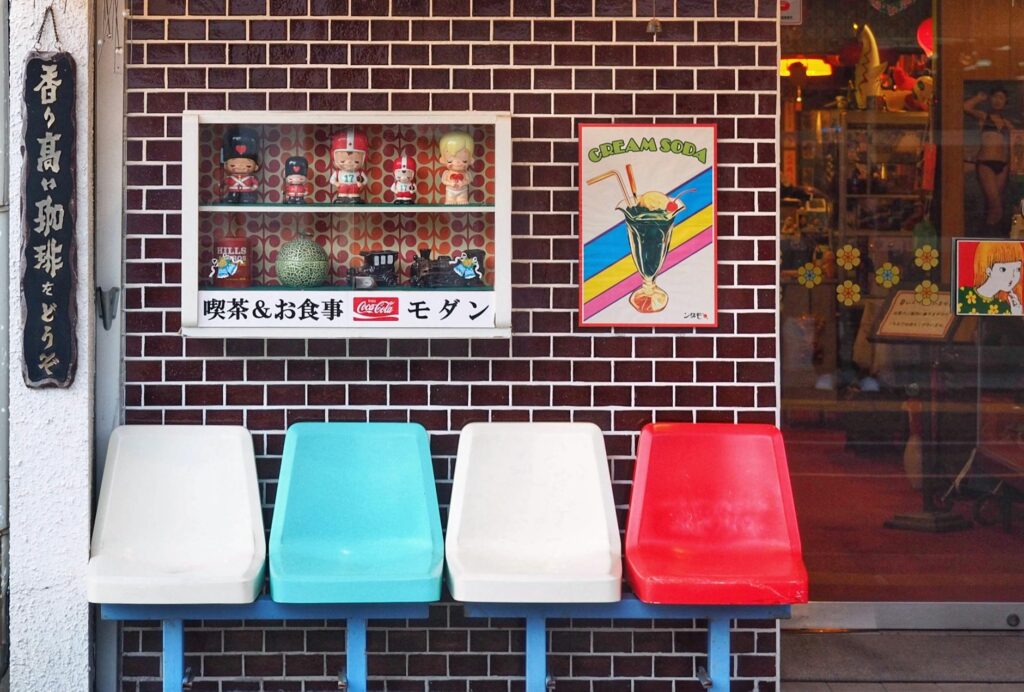
This is the thing about retro café Tokyo that is worth visiting: the form is not the point. The pudding at Kissa Nito earns its place because the owner made it that way. The tea at Amane Saryo is what it is because the owner chose it from a region she knows. The room in each case was built or chosen to hold a certain kind of time. For a broader frame on what that instinct looks like as an aesthetic principle, the article on the Japanese aesthetic of subtraction covers the practice directly.
Both cafés are in Sendagi, a few minutes from each other. The walk between them passes through the kind of streets that Yanaka is actually made of, which is reason enough to go slowly.
—
FAQ
Is Kissa Nito crowded? It can be, especially on weekends. The room holds around ten people. Arriving at or shortly after opening is the most reliable way to get a seat. Solo visitors are common and welcome.
Can I visit Amane Saryo alone? Yes. The café is designed for quiet individual visits as much as for pairs or small groups. Solo visitors make up a significant part of the clientele.
How far apart are Kissa Nito and Amane Saryo? About 5 minutes on foot. Both are in the Sendagi area. The walk between them passes through the back streets of the neighborhood.
Do I need Japanese to order at either café? Basic menu reading or pointing is enough. Both menus are short and the items are straightforward. English is not required.
Can I reserve a table at Amane Saryo? Reservations are accepted on weekdays only. Weekend and holiday visits are walk-in only. Check the official website (amanesaryo.com) for current information.
Is Kissa Nito open every day? No fixed closed day, but closures are irregular. Check Instagram (@kissa.nito) before visiting. Hours are 11:00 to 18:00, last entry 17:00.
Does Kissa Nito take cards? Cash only. No credit cards, IC cards, or QR payment accepted.