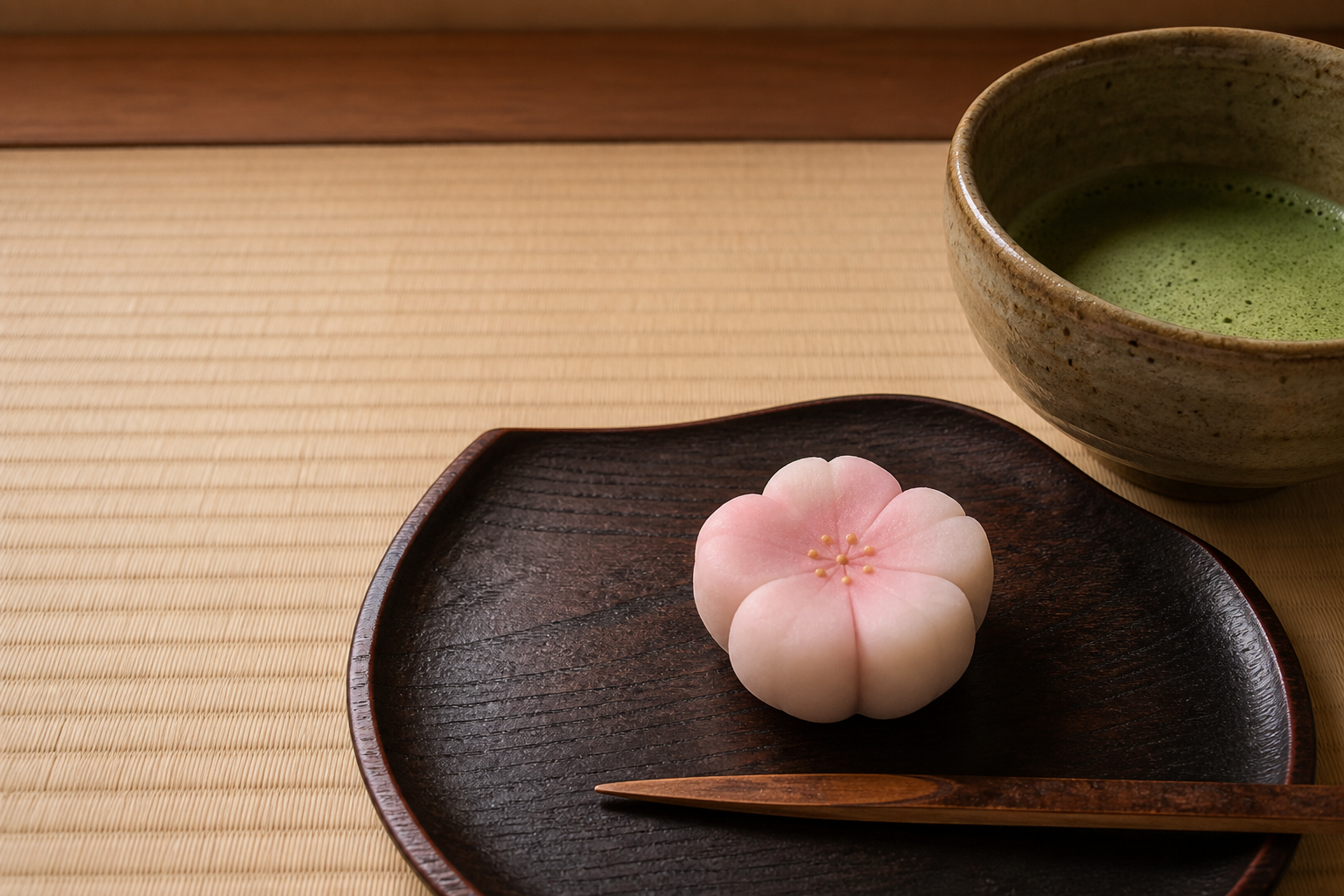
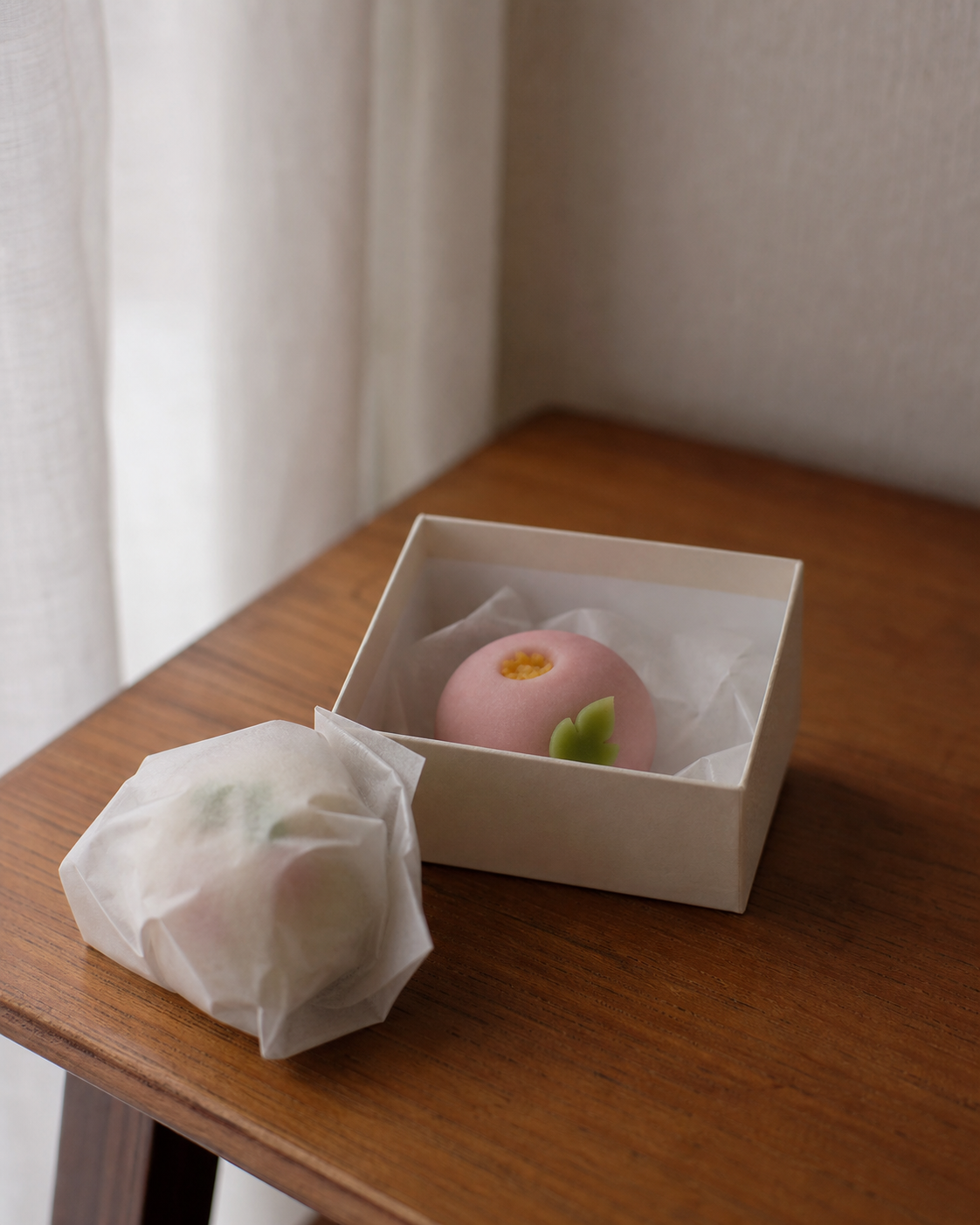
In early February, before the cherry blossoms, confectionery shops in Japan begin selling a small sweet shaped like a plum blossom. It is white with a pale pink center, its petals pressed into the soft dough by hand. The blossom has not yet appeared outside. But here it is, edible, already announcing the season to come. This is wagashi in Japan: a form of traditional confectionery that follows the calendar.
In early February, before the cherry blossoms, confectionery shops in Japan begin selling a small sweet shaped like a plum blossom. It is white with a pale pink center, its petals pressed into the soft dough by hand. The blossom has not yet appeared outside. But here it is, edible, already announcing the season to come.
This is wagashi in Japan: a form of traditional confectionery that follows the calendar.
—
What Is Wagashi?
Wagashi (和菓子) is the collective name for Japanese traditional sweets made primarily from plant-based ingredients: rice, azuki beans, sweet potato, and agar. The term distinguishes these confections from yogashi (洋菓子), Western-style pastries, which arrived during the Meiji period.
The history of wagashi in Japan stretches back over a thousand years. Early forms arrived from China and the Korean peninsula as ceremonial offerings. By the Edo period (1603 to 1868), confectionery had become a refined craft, with Kyoto’s artisans widely considered among the most influential in shaping the aesthetic standards that many practitioners still follow today. Kyoto-style wagashi, known as kyogashi, is often cited in discussions of the form’s development, though regional traditions across Japan each carry their own history.
What distinguishes wagashi from most other confectionery is not its sweetness but its intention. Each piece is designed to express something: a season, a scene, a feeling, conveyed through shape, color, and name. Eating wagashi is, in a small way, reading.
—
The Language of the Seasons
In Japanese, there is a word, kisetsukan (季節感), that refers to sensitivity to the season. It is the quality of noticing where the year is. Wagashi is one of the clearest expressions of this awareness.
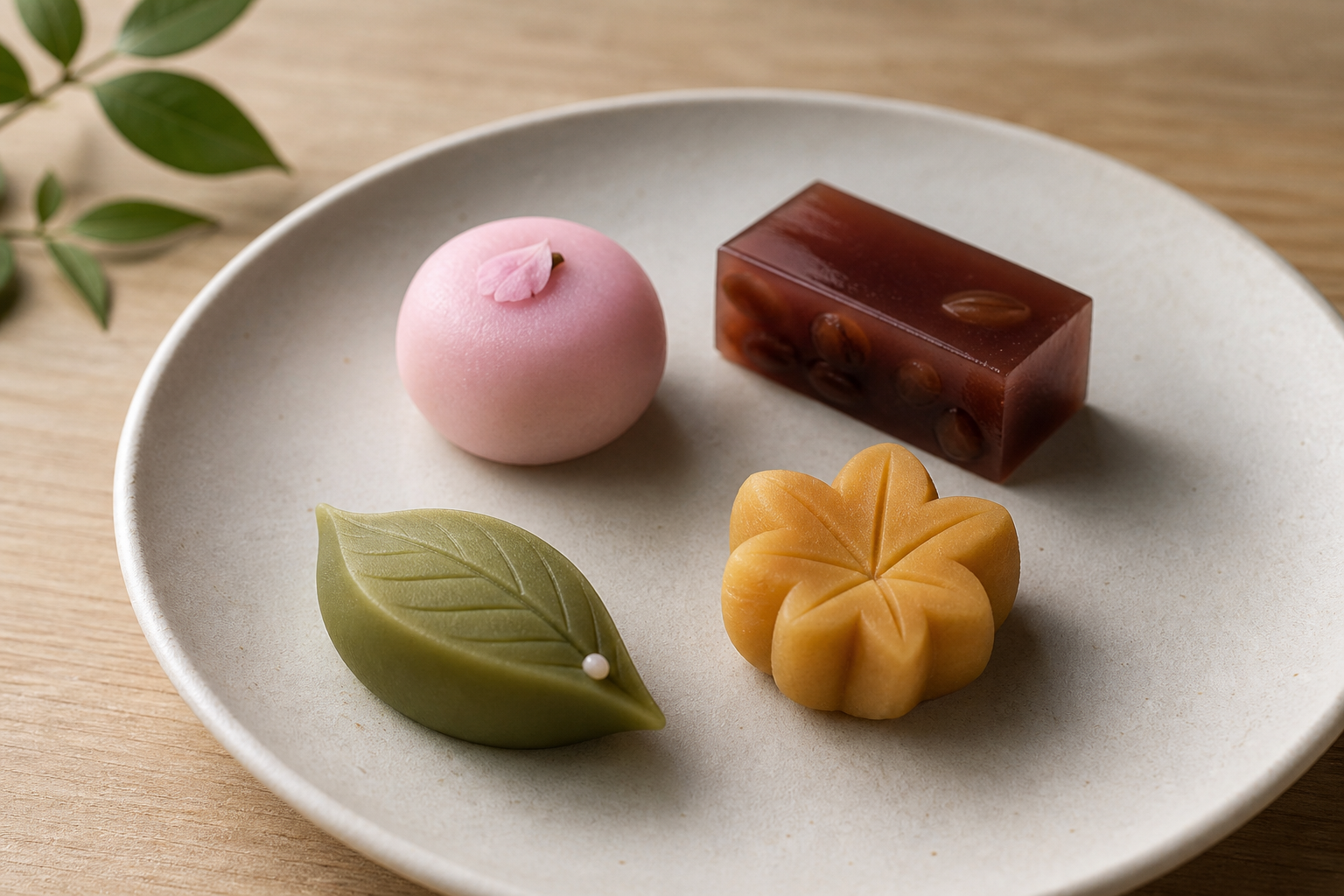
Every confection has a season. In spring, shops display sakura mochi: a pale pink rice cake filled with sweet red bean paste and wrapped in a salted cherry leaf. Nearby might sit hanami dango, three pastel-colored dumplings on a skewer representing snow, cherry blossoms, and new leaves.
Summer brings mizu yokan, a smooth, cool slab of red bean jelly. The name contains the word for water (mizu), and the translucent texture is meant to suggest coolness on a hot afternoon. Ajisai kanten, pressed into the shape of hydrangea clusters, appears during the rainy season. The pale blue-purple color is not decoration; it is the point.
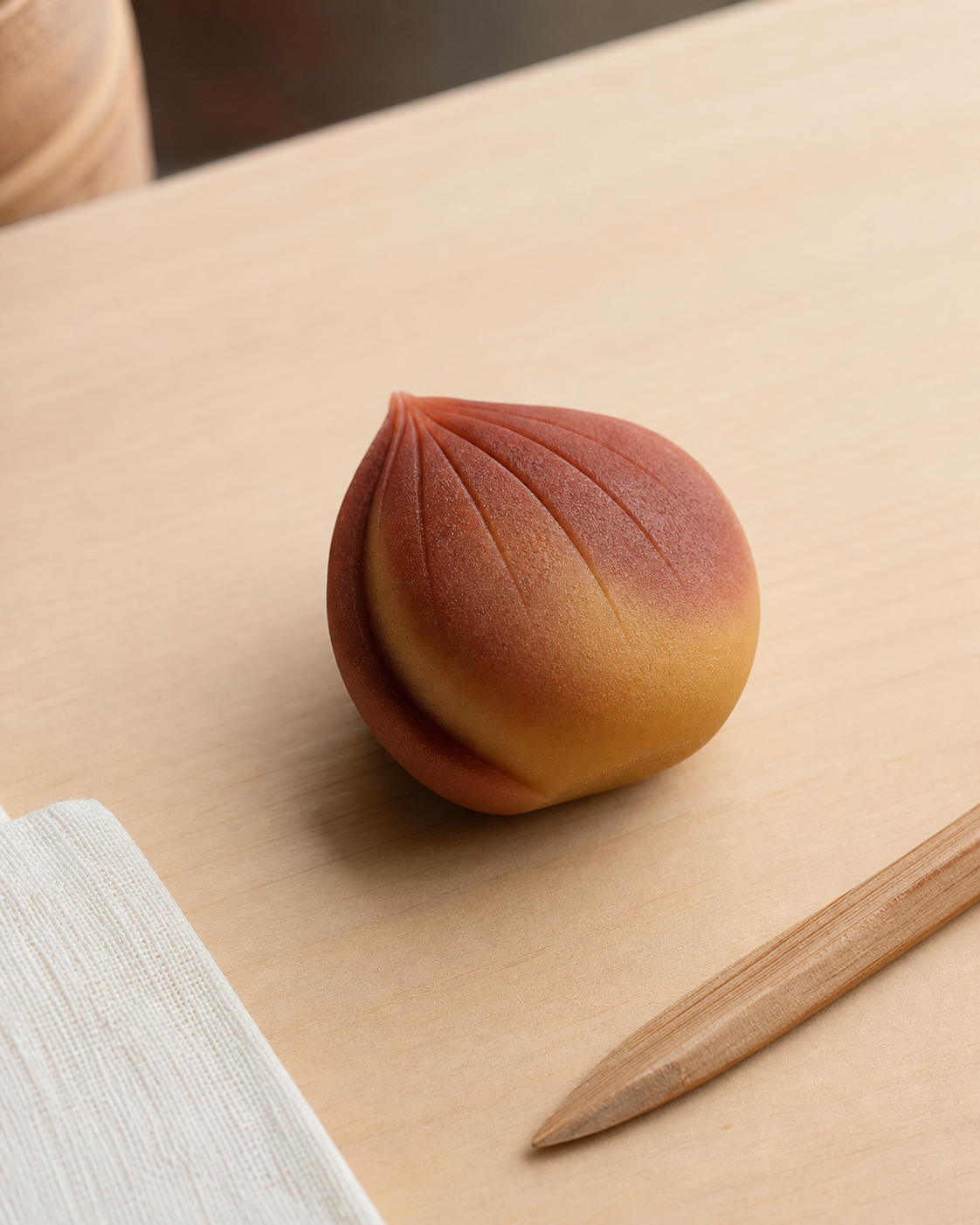
In autumn, momiji manju take the form of maple leaves. Amber-toned nerikiri may be sculpted into chestnuts or persimmons. The names of these pieces are part of the experience too. A sweet called kohaku (amber) in November communicates a specific color and season in one word, before the shape even registers.
Winter brings hanabira mochi, a flat white confection shaped into a diamond and filled with sweetened miso and candied burdock root. It is an old sweet with a court history, served at the New Year.
This rotation is not nostalgia. The limited availability of seasonal wagashi is part of the practice. The plum blossom sweet disappears when plum season ends. You cannot have spring in autumn.
—
Wagashi and the Tea Ceremony
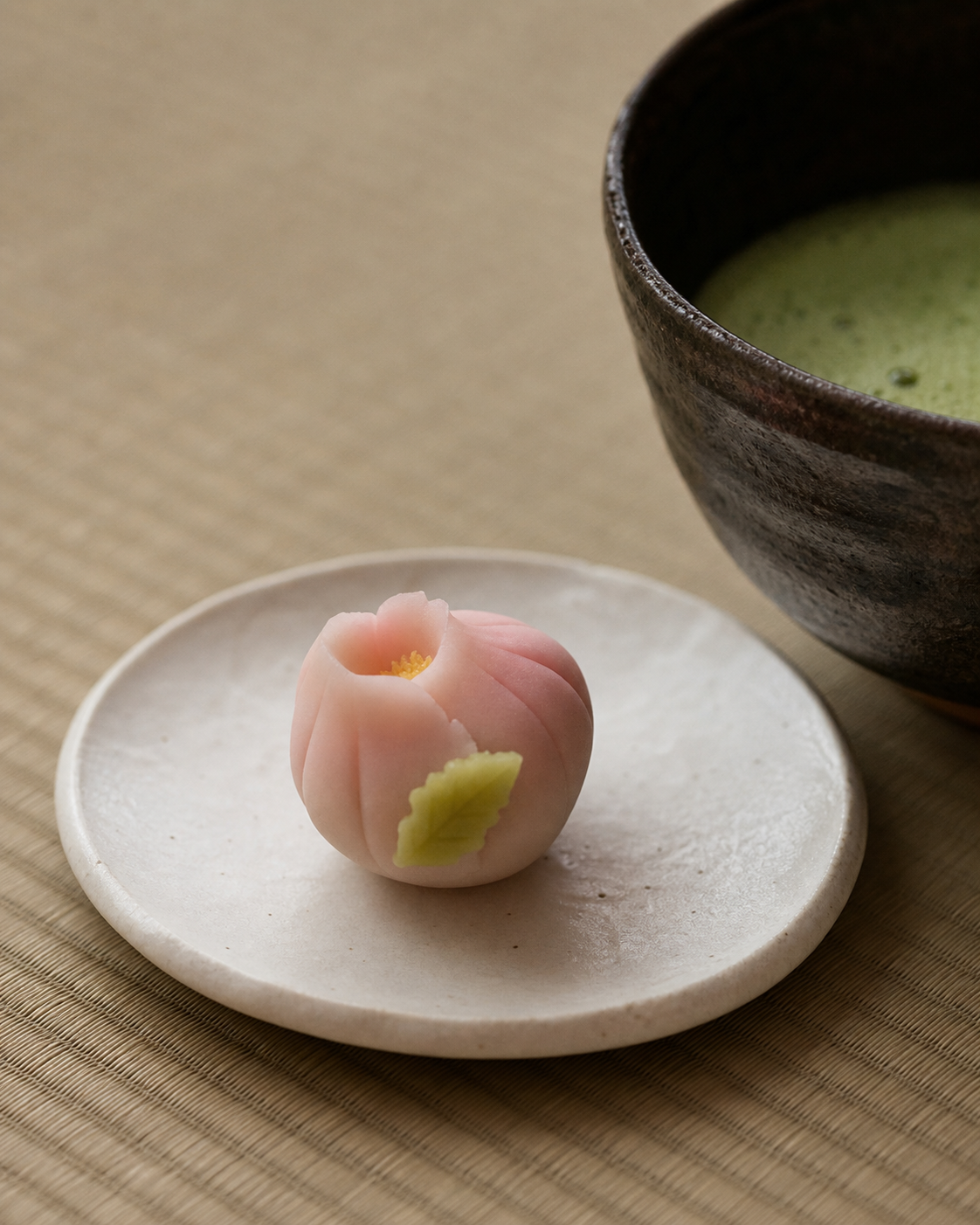
Wagashi is most closely associated with the Japanese tea ceremony (chado, 茶道). Before a bowl of matcha is served, a small wagashi is placed before the guest. This is not decoration. It prepares the palate.
Matcha is bitter. The sweetness of wagashi, restrained rather than heavy, softens the mouth before that bitterness arrives. The pairing is often understood as a study in contrast: two opposing flavors arranged in sequence. The wagashi is eaten first and completely before the tea is touched.
There are two main categories. Namagashi (生菓子) are fresh sweets with high moisture content, soft and perishable: these are the sculpted, seasonal pieces described above. Higashi (干菓子) are dry sweets, pressed sugar or rice flour in small geometric molds, drier and longer-lasting. Both appear in the tea ceremony, depending on the formality of the occasion.
The tea ceremony connection is said to have shaped wagashi in lasting ways. It is one reason why the best pieces are small, why sweetness is restrained, and why visual presentation matters so much. A wagashi is meant to be looked at before it is eaten.
For the broader culture of quiet hospitality and slow time that surrounds the tea tradition, the article on Japanese kissa culture explores how this sensibility extends into Japan’s café and coffee shop world.
—
The Craft Behind Wagashi
Nerikiri is among the most demanding wagashi forms. It is made from shiroan (white bean paste) mixed with rice flour, then shaped by hand using a cloth, a thin wooden tool, and a curved press. A single autumn chestnut, convincing in texture and color, may take years of practice to replicate consistently.
The apprenticeship behind wagashi tends to be long. In traditional workshops, junior craftspeople spend years learning technique before they are trusted to shape their own seasonal pieces. The seasonal calendar itself is something to be studied: which colors belong to which month, which flowers precede which fruits, what a customer in late November expects to find in the case.
Kyoto and Tokyo represent two of the most recognized wagashi traditions. Kyoto wagashi (kyogashi) tends toward formality and restraint: smaller pieces, finer detail, a preference for white bean paste. Tokyo wagashi (edogashi) often uses red bean paste as its base and can run slightly sweeter. These are broad characterizations, and individual shops introduce further variation, but the distinction is real enough that attentive eaters will notice it.
—
Wagashi in Contemporary Life
Wagashi has not become museum culture. It remains part of everyday life in Japan, though the context has shifted.
The depachika (デパ地下), the basement food halls of Japanese department stores, are where most people encounter wagashi today. Established shops maintain counters there, seasonal pieces displayed in glass cases by the week. A neighborhood wagashi shop, if one is still nearby, follows the same seasonal rhythm but on a smaller scale: a few pieces in the window, replaced when the season turns. Buying wagashi here does not require knowledge of the tea ceremony. It requires knowing what season it is and what you would like to bring as a gift.
Wagashi is deeply connected to gift-giving. Returning from a trip, attending a ceremony, visiting a colleague: these occasions call for omiyage (土産), a word for food-based souvenir gifts. Seasonal wagashi, with its short shelf life and regional specificity, is a natural fit.
The limited season is, again, part of the experience. The first sakura mochi of the year arrives before the blossoms; buying it is a small act of anticipating spring. When a seasonal piece sells out and does not return until next year, that absence is noticed.
The same quiet attention to seasons that shapes wagashi also runs through the world of the Japanese café and kissa. The article on Japanese kissa culture explores how slow time and seasonal awareness extend into café life. For the broader concept of attentiveness in Japanese aesthetics, see What is Zen in Japan.
In February, the plum blossom sweet sits in the case while the tree outside is still bare. Someone buys it, wraps it carefully, and takes it home. The season has been tasted before it has arrived.
—
FAQ
What is wagashi made of? Wagashi is made primarily from plant-based ingredients: azuki beans cooked into paste (red or white), rice or glutinous rice, agar for jellies, and sugar. Most traditional wagashi contains no dairy or eggs.
Is wagashi vegan? Most wagashi is vegan by default, since the traditional ingredients are plant-based. Some recipes use gelatin from animal sources rather than agar. Shops can usually clarify if asked.
What is the difference between wagashi and mochi? Mochi is one specific form of wagashi, made from pounded glutinous rice. Wagashi is the broader category that includes mochi, nerikiri, yokan, higashi, and many others. All mochi is wagashi, but not all wagashi is mochi.
Why do wagashi have seasonal names? The name of a wagashi is part of what it communicates. A piece called shigure (a word for autumn rain) in October tells you something about the season before you taste it. The name, shape, and color work together to place the sweet in time.
When is the best time to eat wagashi in Japan? Each season has its own pieces. Visit a specialty shop or department store food hall in any season and ask what is currently available. The answer will tell you something about where the year is.