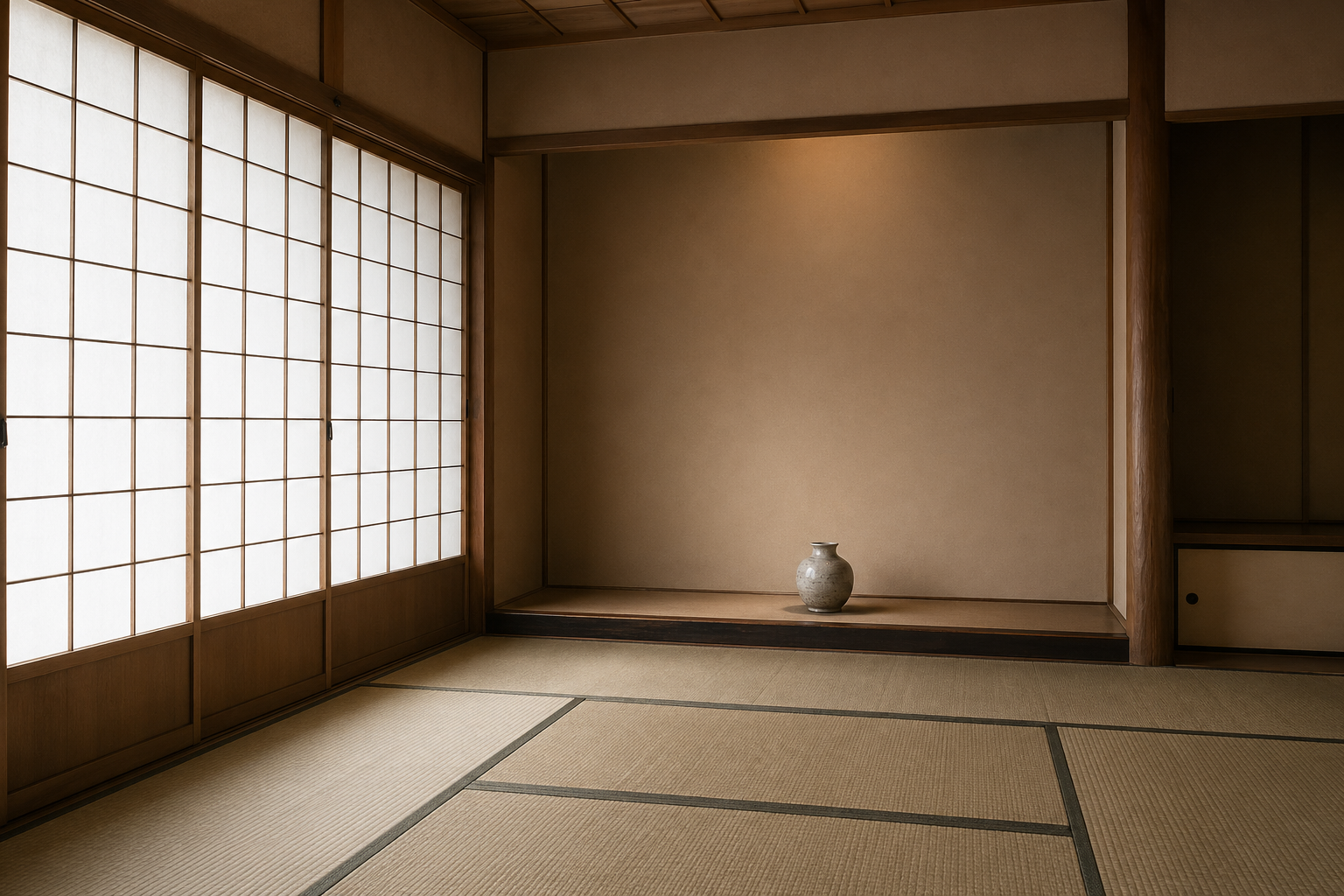
You step into a tatami room. There is a low table, a small lamp, and very little else. One wall is set back from the room's main surface — a shallow alcove, perhaps with a single hanging scroll and a ceramic vase. You are not sure what the vase is doing there. Nothing about the room demands attention. But you feel, almost immediately, that the room has been thought about carefully. That feeling has a name. In Japanese, it is called ma. Ma (間) is a Japanese concept that refers to the meaningful space, pause, or interval between things. The
You step into a tatami room. There is a low table, a small lamp, and very little else. One wall is set back from the room’s main surface — a shallow alcove, perhaps with a single hanging scroll and a ceramic vase. You are not sure what the vase is doing there. Nothing about the room demands attention. But you feel, almost immediately, that the room has been thought about carefully.
That feeling has a name. In Japanese, it is called ma.
What Does Ma Mean?
Ma (間) is a Japanese concept that refers to the meaningful space, pause, or interval between things.
The character itself is made of two elements: gate (門) and sun or moon (日). Light coming through a gate. The space inside a frame. This visual root helps explain what ma is not: it is not mere emptiness, but space that is held, shaped, and given meaning by what surrounds it.
Ma can describe the physical gap between two objects in a room. It can describe the silence between sentences in a conversation. It can describe the pause between gestures in a tea gathering, or the gap between two stones in a garden path. In music, it can describe the beat that is not played. In architecture, it can describe the room that exists as much for its openness as for its walls.
What these uses share is this: ma is not nothing. It is an interval that is felt.
Ma Is Not Just Empty Space
Western design often speaks of “negative space” — the background that makes the foreground visible. This is a useful idea, and it partly describes ma. But it is incomplete.
Negative space is typically a visual concept. It is about what the eye sees and how objects are arranged within a frame. Ma is something closer to a lived sense — a feeling of spacing, timing, rhythm, and relationship that is both spatial and temporal.
A photograph of a Japanese garden might show negative space. But to understand ma, you would need to sit in that garden, hear the gravel under your feet, feel the direction of a path, notice where your eyes naturally rest, and sense the relationship between stone, moss, and open ground as it changes with the light.
Ma is also not the same as minimalism. Minimalism as a design philosophy is often about reduction — removing elements until only what is essential remains. Ma is less prescriptive. A room can have many objects and still carry ma. The question is not how many things are present, but whether the intervals between them are felt.
Ma is not a principle of subtraction. It is closer to a principle of attention to relationship.
Ma in Japanese Rooms and Architecture
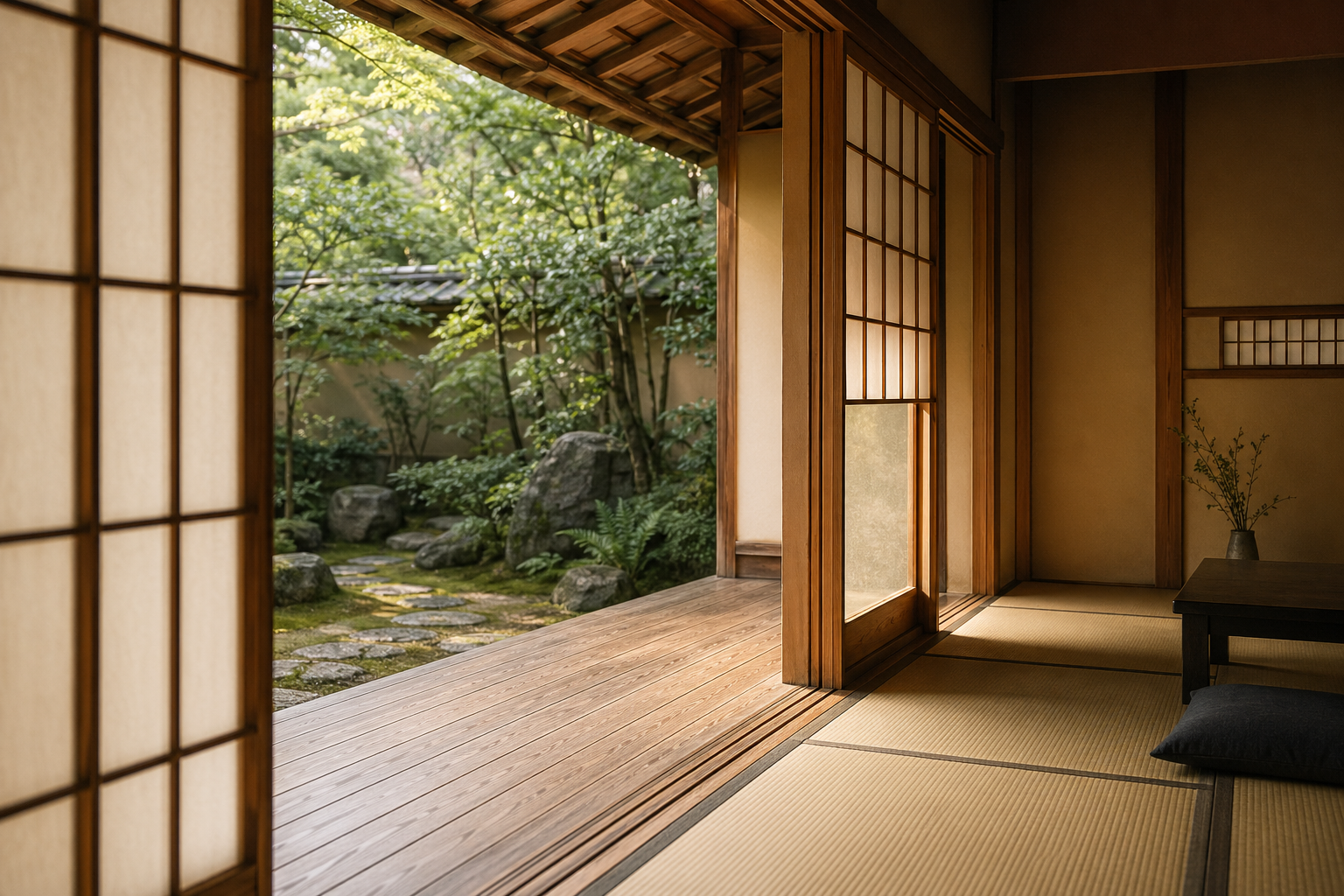
The clearest place to begin understanding ma in architecture is the tatami room.
A traditional tatami room is measured not in square meters but in tatami mats — a standard unit that shaped the proportions of Japanese domestic life for centuries. The room is low: the furniture, if present, is close to the floor. The walls may be plain. Sliding paper screens (shoji) divide rooms from corridors and let light pass through without revealing what is beyond.
In this kind of room, space is not treated as background. It is part of the composition. The low ceiling makes the horizontal plane feel generous. The shoji panels, when slid open, create a continuous visual relationship between interior and garden. When closed, they hold a soft, diffuse light that seems to float.
The tokonoma — the shallow alcove mentioned at the beginning of this article — is one of the most deliberate expressions of ma in Japanese domestic architecture. It is a space set apart from the room’s main floor level, used to display a single hanging scroll, a single flower arrangement, or a single ceramic object. Nothing competes. The object is given interval, and that interval gives the object weight.
The tokonoma is often left partly empty. A full alcove, stuffed with decorations, loses its ma. The open space is part of what makes the displayed object meaningful.
This principle extends into Japanese architecture more broadly — in the placement of corridors and engawa (transitional verandas), in the proportions of garden gates, and in the way interior spaces open to exterior ones through careful intervals rather than sharp boundaries.
Ma in Gardens
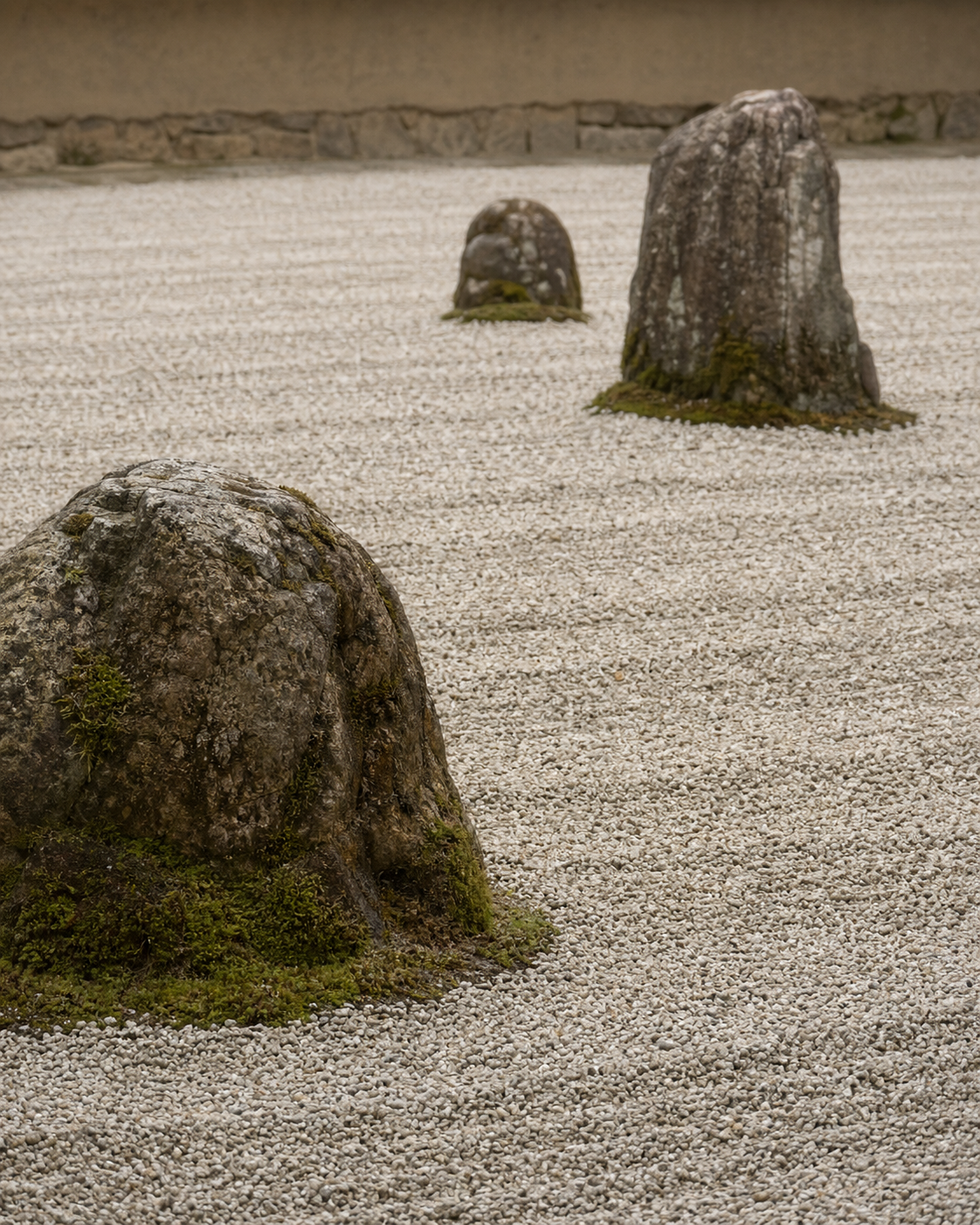
A Japanese garden is not simply a collection of plants and stones. It is a composed experience of movement, pause, and interval.
In a stroll garden, the path is designed to unfold gradually. You do not see the whole garden at once. Instead, you move through it — a grove of bamboo, then an opening, then a pond, then a stone lantern half-hidden by moss. Each element is placed in relationship to what came before and what comes next. The intervals between features are as considered as the features themselves.
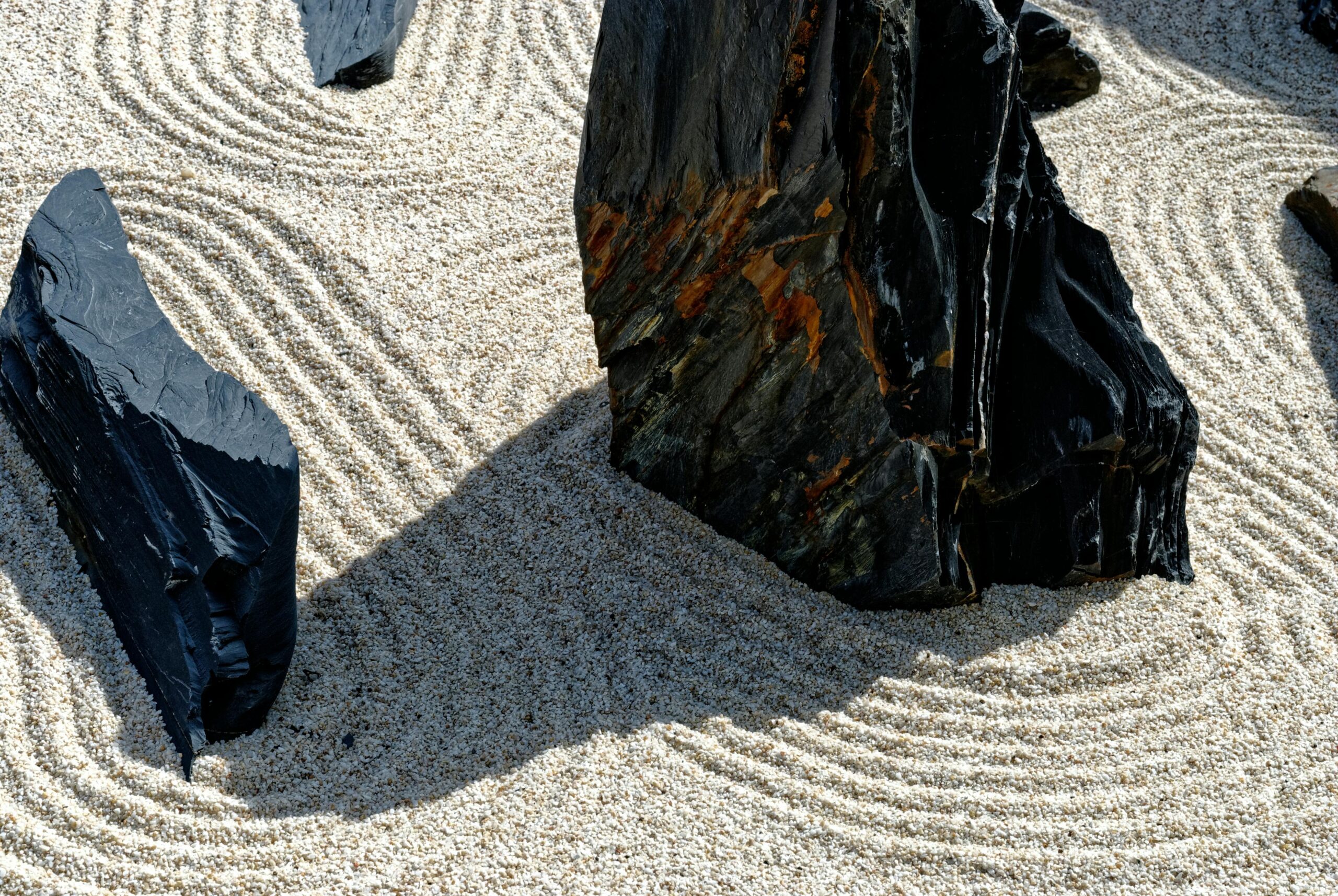
In a dry garden — karesansui — this becomes even more apparent. There are no trees to walk among, no water to follow. The garden is a composition of stone and raked gravel, viewed from a seated position. What you see is stone, and space, and the lines drawn into the gravel’s surface. The space between stones is not accidental. It is held and shaped by the placement of the stones themselves.
It would be wrong to say that all Japanese gardens express ma in the same way, or that all Japanese gardens are Zen gardens. Japanese garden traditions are varied and long-developed. A coastal landscape garden and a dry Kyoto temple garden are very different places. But the sense of ma — of space that is felt, not merely seen — appears across many of these traditions.
In practical terms, this means that walking through a Japanese garden can be understood not as sightseeing but as spatial reading. The garden has intervals. You are moving through them.
Ma in Tea and Everyday Gestures
A tea gathering is made of pauses.
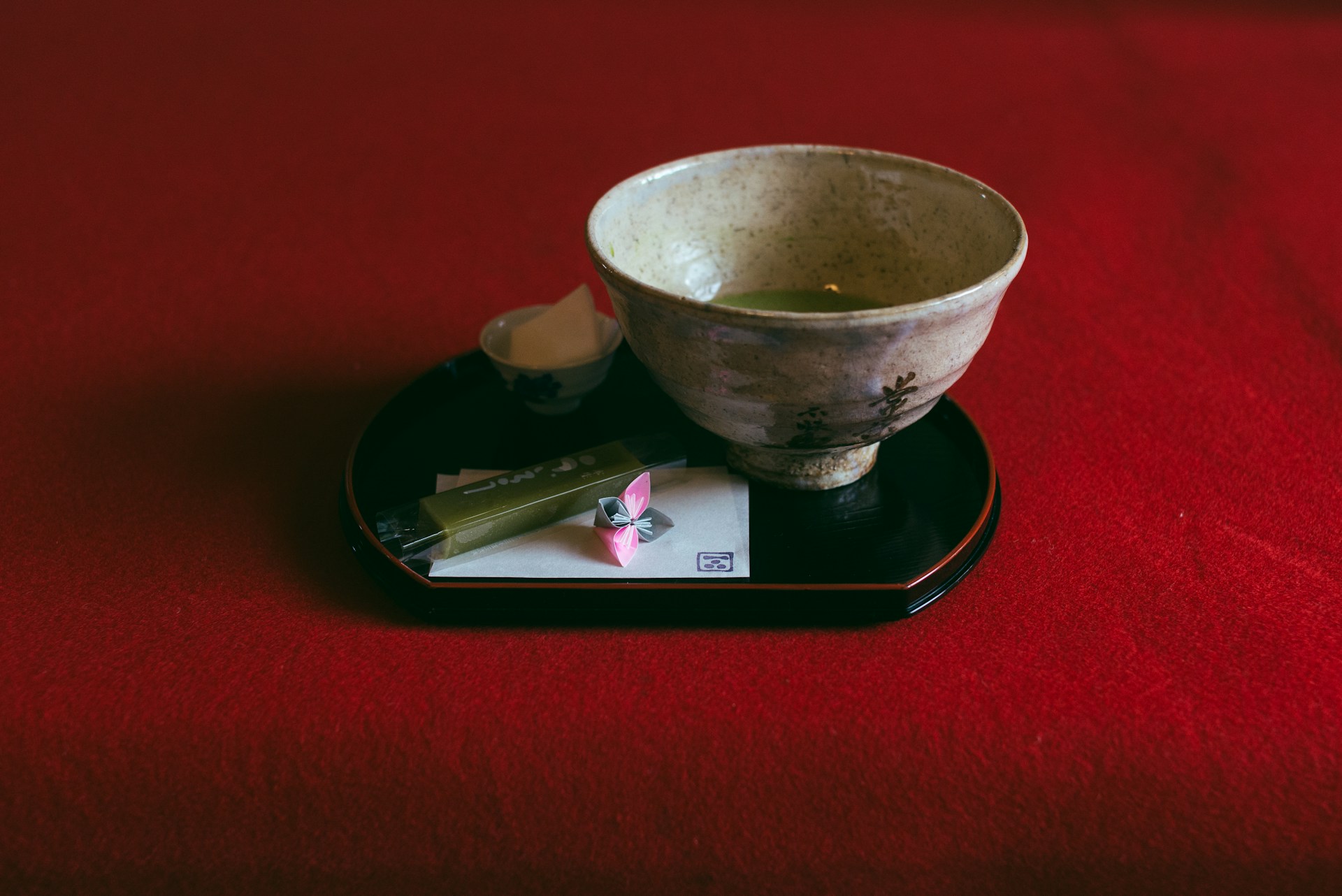
The host moves slowly. Utensils are placed and lifted with attention to where each belongs in the sequence. Water is ladled. A bowl is rotated. A guest receives the bowl with both hands, pauses, and looks at it before drinking.
These pauses are not hesitations. They are part of the form. They give each gesture room to complete itself before the next one begins. They make the atmosphere of the gathering.
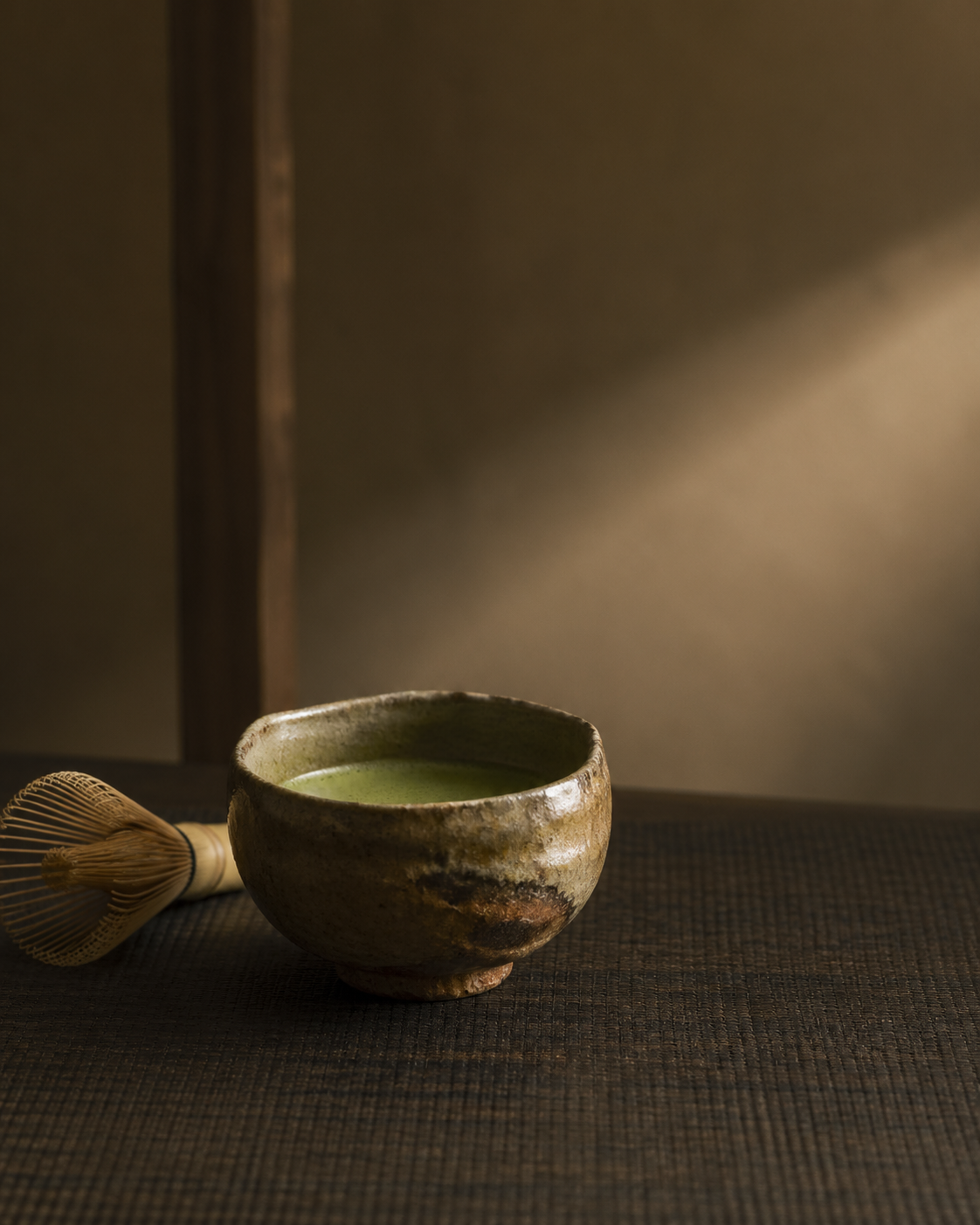
It is worth noting that chado, the way of tea, is not the same as Zen. Tea ceremony developed from multiple influences, including aesthetic traditions, warrior culture, and the cultivation of attention between host and guest. Its connection to Zen is real and historical, but tea is its own practice.
A shared experience can be shaped by the pauses within it as much as by the actions. The silence between a guest bowing and a host responding is not dead air. It is part of the form.
This principle extends into everyday Japanese social gestures as well — the pause before answering a question, the slight moment of stillness before handing something to someone, the care in how a shopkeeper wraps a small purchase. These are not grand rituals. But they carry a residue of the same sensibility: that the interval between actions has meaning.
Ma in Conversation and Daily Life
One area where ma appears most subtly — and where it is most easily misread by outside observers — is in conversation.
In many social contexts in Japan, silence is not necessarily uncomfortable. A pause in conversation does not automatically signal confusion, disagreement, or the need to fill the gap. It can be a form of consideration. It can indicate that the other person is being listened to carefully, or that a response is being prepared slowly.
This is different from saying that Japanese people are silent, or that silence is universally valued across all contexts in Japanese life. That would be an overgeneralization. Japanese conversation can be warm, energetic, and overlapping. Context shapes everything.
But there is a cultural comfort with pause that reflects something of ma — the sense that silence is not absence, but a kind of presence. That leaving space for the other person, rather than rushing to fill the gap, can be a form of attention.
This can be felt in many small, daily situations: the moment before a meal when someone pauses to look at the dishes, the brief stillness before entering a shop, the unhurried rhythm of a long coffee at a counter when no one is in a rush to leave.
Ma in the Kissa and Slow Café Time
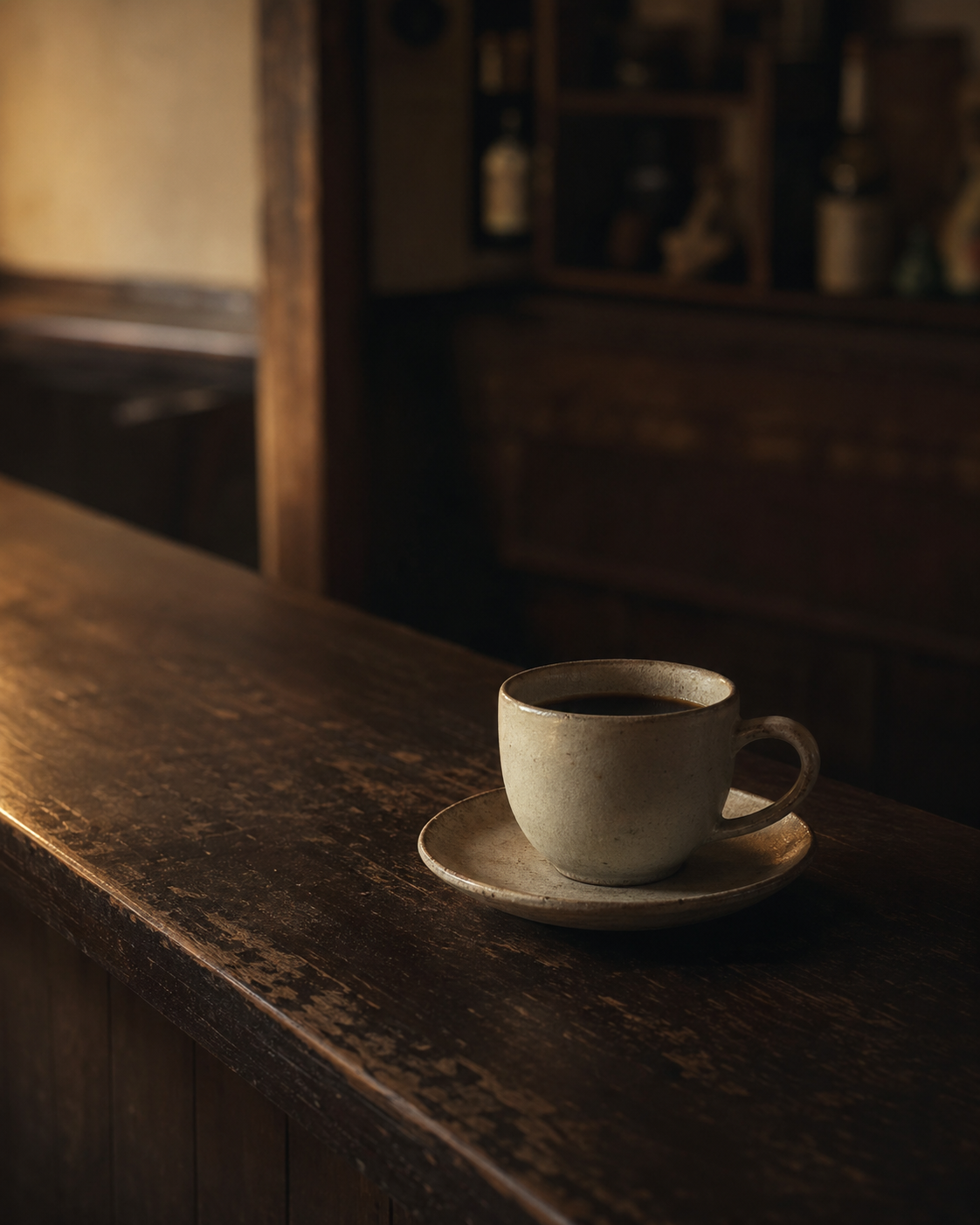
One of the clearest places to feel ma in everyday Japanese life is the traditional kissaten — the Japanese coffee shop, sometimes called kissa.
A kissaten is usually small, often independently owned: a narrow counter with a handful of stools, low lighting, and music — jazz or classical — playing at a volume that stays in the background. The owner may be behind the counter for hours, measuring, pouring, moving without hurry.
When you order, the coffee takes a few minutes. It arrives in a ceramic cup, placed on a small saucer directly in front of you. You wrap your hands around it. No one suggests you finish soon.
The space between customers at the counter is comfortable rather than awkward. The owner’s few words and the quiet between them do not need filling. The interval between sips is just the time it takes. The coffee cools slightly, and you let it.
A kissaten carries this kind of interval not as something announced, but as something built into how the space moves — by habit, by preference, by long practice.
How Travelers Can Notice Ma in Japan
Ma is not something to look for directly. But once you have the word, certain moments begin to read differently.
In a tatami room, you may notice it before you notice anything else — the proportions, the alcove with its single object, the light coming through the shoji panels. Sitting on the floor rather than in a chair changes how the room feels. Nothing is asking for attention, but the space has clearly been considered.
In a garden, it is often in the path itself: a stepping stone placed a little farther from the next, so your step slows before you realize it. The garden unfolds in stages. The space between what is visible now and what comes next is part of how it works.
On a quieter street in an older part of a city — not the main shopping road, but the one behind it — the gaps between buildings, a slight curve that keeps the end of the street just out of view, can give a place a particular quality of contained space.
None of this requires deliberate effort. It is closer to noticing the pace at which a place moves, and letting your own pace adjust.
Ma, Zen, and Japanese Aesthetics
Ma is not the same as Zen. They come from different sources, and they describe different things.
Zen is a Buddhist tradition of practice. Ma is a cultural and spatial concept — one that appears in everyday Japanese life regardless of any religious context.
But they can overlap. Zen-influenced spaces often embody ma deliberately. A dry temple garden, a tea room, a Zen kitchen — these are places where interval is shaped carefully, where space is not treated as leftover but as part of the design.
In the previous Mind article on Zen, ma appears as one of the ideas that Zen-influenced culture brought into Japanese aesthetics — the sense that a garden is made as much of space as of stone, that a room’s openness can be its strongest feature.
Reading Zen and ma together, what you begin to see is a broader Japanese sensitivity to the edges of things: the moment before, the space between, the silence that holds. This is not a universal rule of Japanese culture, but it is a recurring sensibility that appears across many of its forms.
Closing
There is a moment that sometimes happens in a traditional tatami room, or at the counter of a kissaten, or near the edge of a garden path.
You realize you have stopped planning what you will do next.
The interval has caught you. The space around you is doing something — not pulling at your attention, but releasing it. You are simply in the room, in the garden, at the counter.
In Japanese, there is a word for that feeling. You already know it.