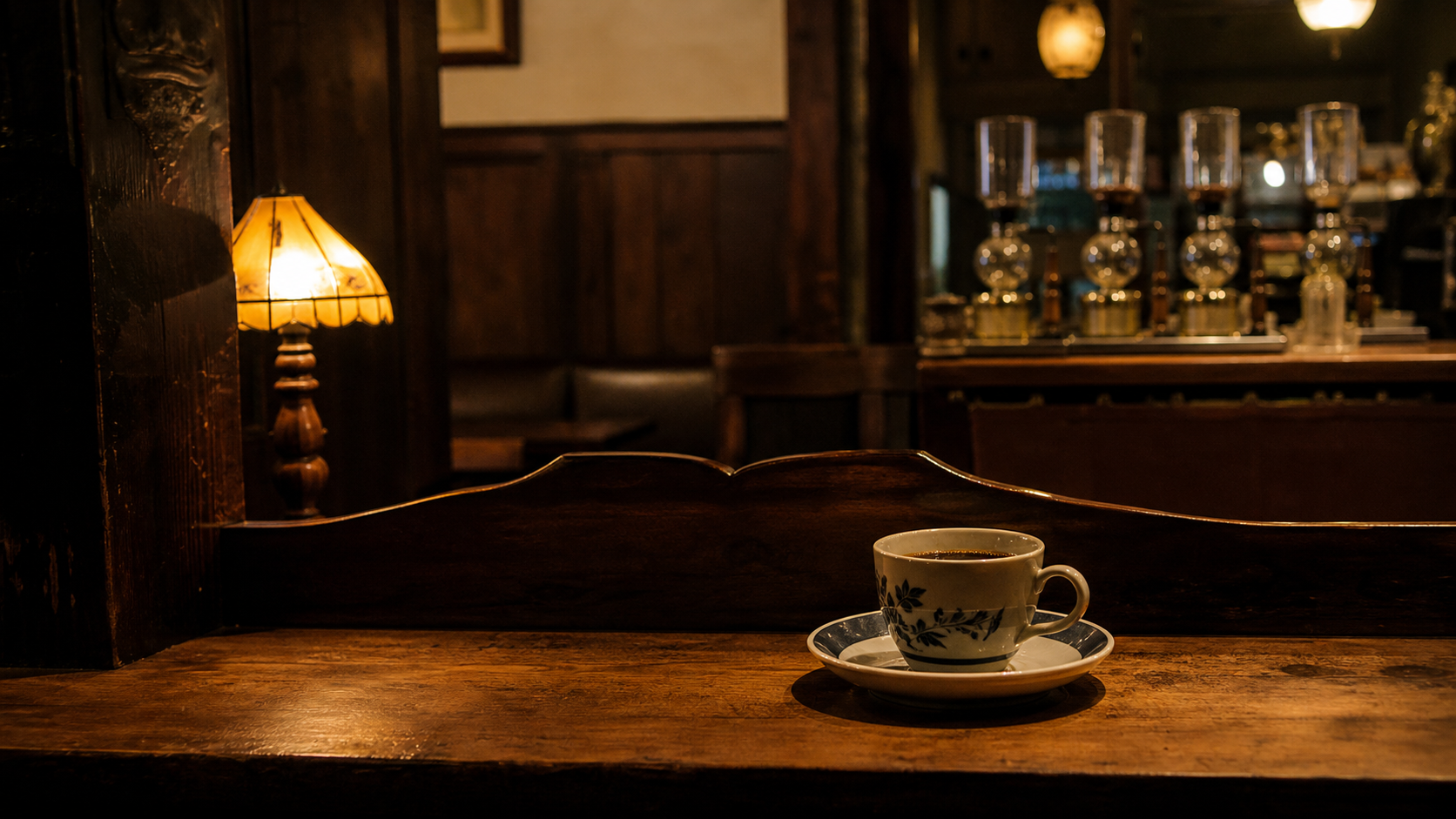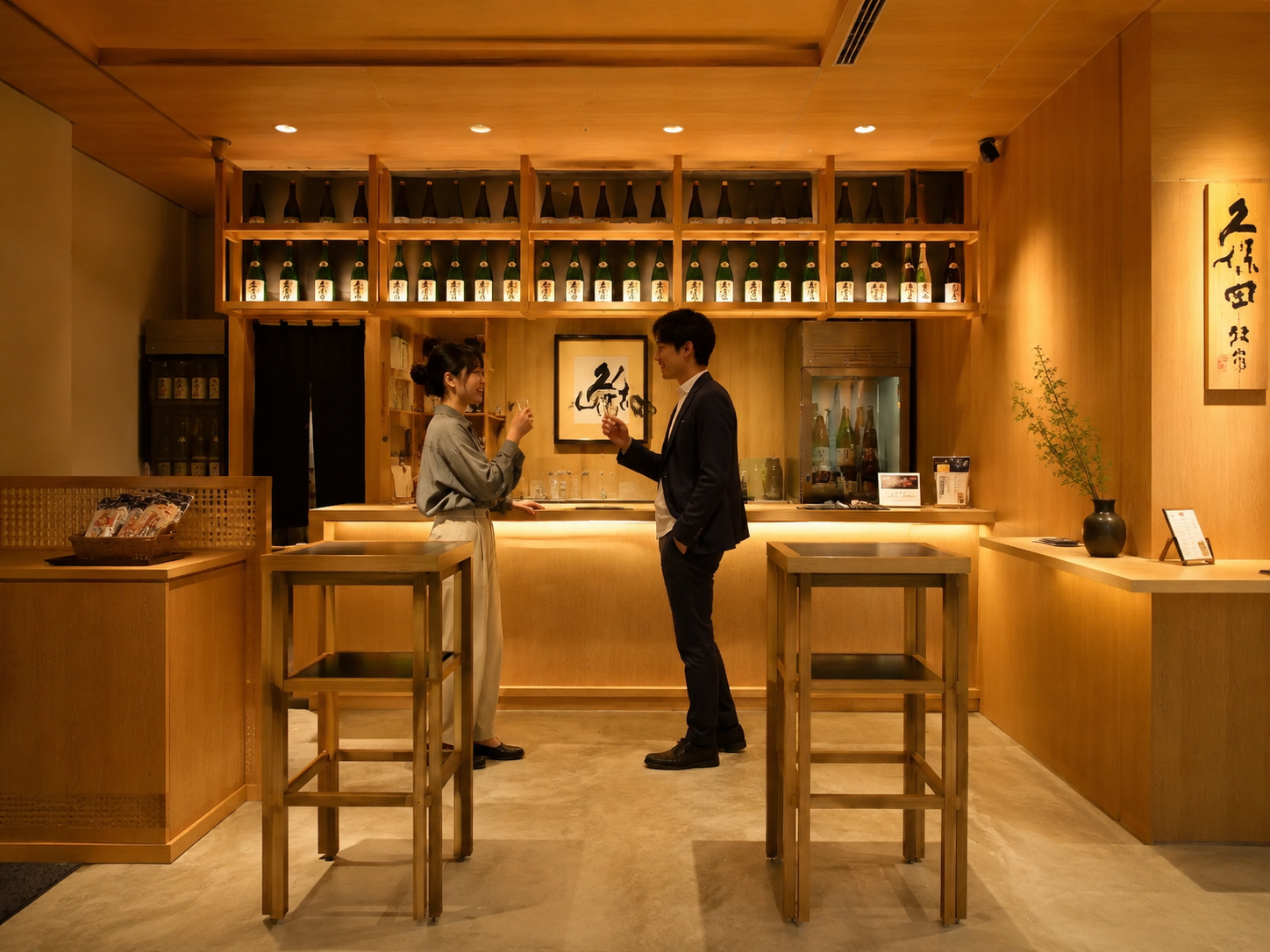
The shop is easy to miss. There is no sign advertising drinks. No menu in the window. Just a small liquor shop: dusty sake bottles stacked near the register, a few shelves of shochu, some beer in a cooler by the door. In older neighborhoods of Tokyo, you still find them on quiet streets, between the tofu shop and the bicycle repair place. If you look closer, there is sometimes a narrow counter along one wall. A few mismatched cups. An open bottle. One or two people standing with drinks in hand, saying very little. That is kakuuchi.
The shop is easy to miss.
There is no sign advertising drinks. No menu in the window. Just a small liquor shop: dusty sake bottles stacked near the register, a few shelves of shochu, some beer in a cooler by the door. In older neighborhoods of Tokyo, you still find them on quiet streets, between the tofu shop and the bicycle repair place.
If you look closer, there is sometimes a narrow counter along one wall. A few mismatched cups. An open bottle. One or two people standing with drinks in hand, saying very little.
That is kakuuchi.
—
What Is Kakuuchi?
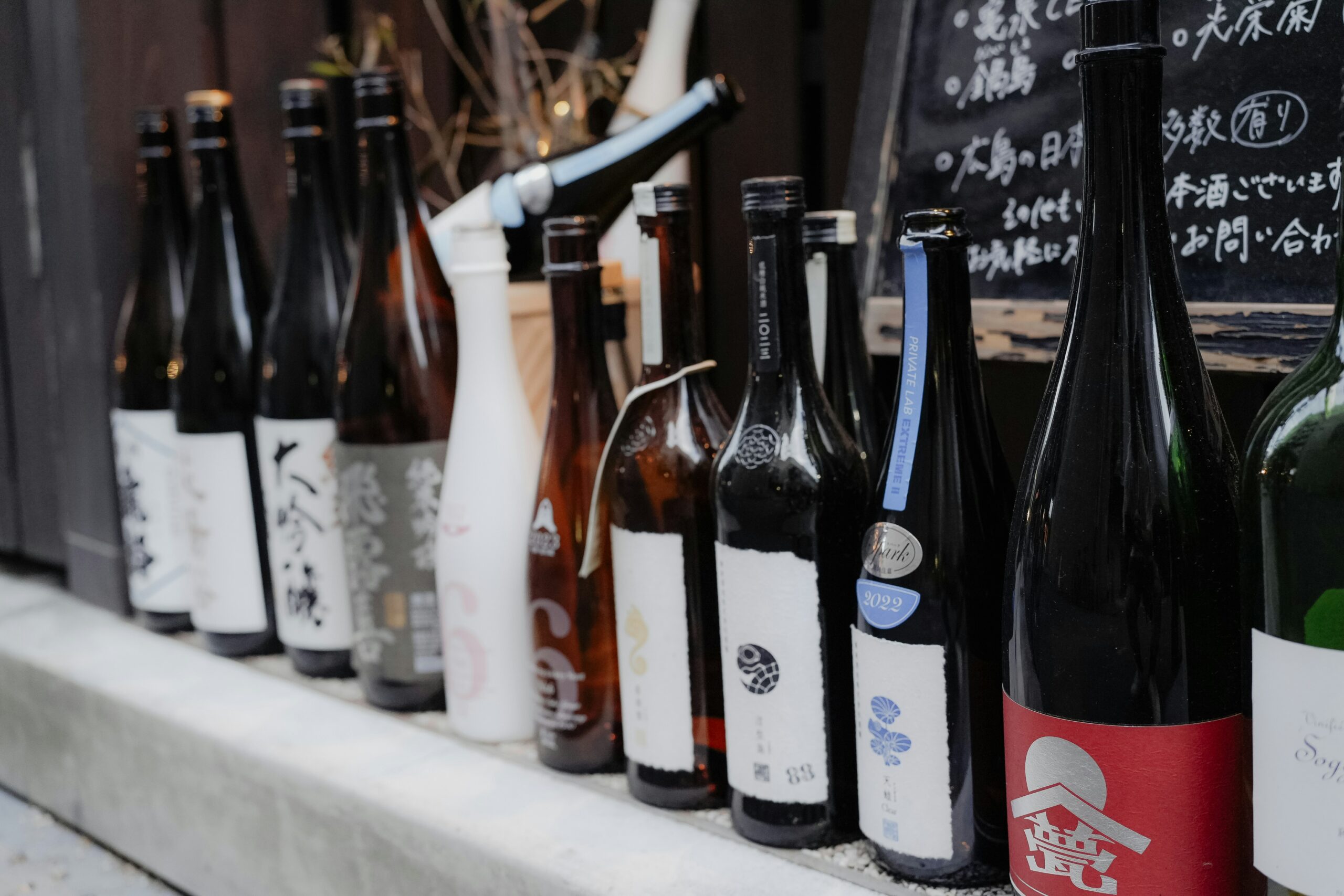
Kakuuchi (角打ち) is the practice of buying alcohol at a liquor shop and drinking it at the shop’s own counter, while standing. You do not sit. There is no menu. You buy whatever the shop has open that day (usually sake or shochu, a distilled spirit commonly made from sweet potato or barley, sometimes beer or plum wine) and you drink it there.
The word itself has more than one explanation. One common account connects kaku (角) to the square masu cup, and uchi (打つ) to the act of striking or placing it on the counter. Another reading suggests it refers simply to the corner counter of the shop. The exact origin is debated, and it is not the kind of thing the shops themselves tend to explain.
What makes kakuuchi distinct from other Japanese drinking experiences is the venue. This is not a tachinomi bar (立ち飲み, a standing bar designed specifically for drinking without seats). This is not a convenience store standing area. Kakuuchi sake in Japan happens specifically at the liquor shop itself. The retail shop itself becomes the place to drink, and the owner serves what he has, between handling deliveries and stacking boxes.
—
Where It Comes From
Kakuuchi developed as a neighborhood practice, separate from the full-service izakaya (居酒屋, a Japanese pub serving food and drinks) experience. The kind of people who drank this way historically were workers, laborers, tradespeople stopping on the way home. People who wanted a single cup of sake without ceremony or extended time.
The relationship between liquor shops and their drinking custom has a long history in Japan. Historically, some liquor retailers allowed customers to consume purchases on-site, which helped establish this counter-drinking practice alongside the retail function. This was different from running a bar: you were still a shop, and your customers were still customers buying their sake, just choosing to drink it before they left.
What survives today is closely tied to shitamachi (下町), the older working-class neighborhoods of Tokyo: Yanaka, Monzen-Nakacho, Koenji, and parts of Shinbashi and Tsukiji. These are the kinds of places where quiet travel in Japan tends to find older shopfronts and side streets that have not been replaced. The sake shop model here has not completely disappeared, and the shop owner often knows the regulars by sight. Kakuuchi sake in Japan survives most reliably in these pockets.
—
What It Looks Like Today
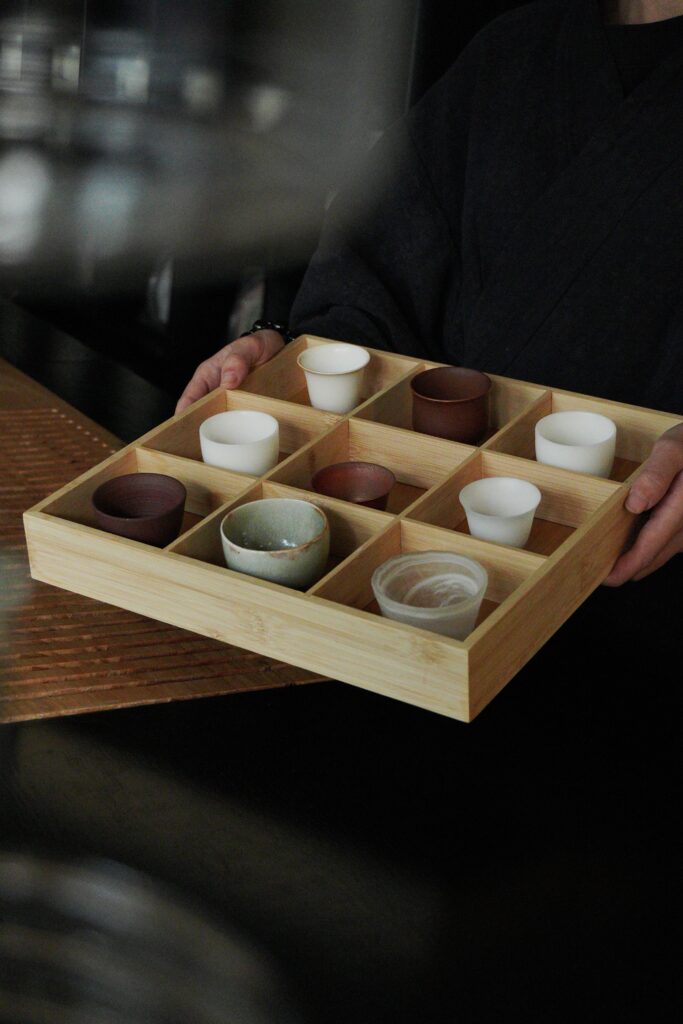
Walk into a kakuuchi shop and the counter is usually near the register. Sometimes it is just a strip of wood along a wall, barely wide enough for a cup and a small dish. Sometimes there are a few plastic stools, though sitting is not the point.
You ask what is open. The owner names one or two options. You choose. The cup is usually a small ochoko (お猪口, a small ceramic sake cup) or a basic glass, and it may cost only a few hundred yen, depending on the shop: roughly the price of a vending machine coffee.
The interaction is brief. The owner does not make conversation unless you begin it. There is no playlist. The sounds from the street come in through the open door. If the owner has a radio, it is turned down low.
Other people who are drinking may nod. They may say nothing. They are not being unfriendly. This is simply what kakuuchi is: a very quiet, very practical pause in the middle of an ordinary afternoon or evening.
I have been the only non-regular at a counter like this. The experience is not unwelcoming, exactly, but it is not designed to welcome strangers either. It is designed for regulars, built on the kind of unspoken familiarity that comes from years of the same people stopping at the same counter on the same route home. Showing up as an outsider is fine. It just takes a moment to find your place in something that was not made for you.
—
The Feeling Kakuuchi Gives You
The quality that separates kakuuchi sake Japan from many more formal drinking experiences is the absence of theater.
At an izakaya, there is ceremony: the server who takes your order, the menu to consider, the ritual of ordering food and drinks together, the small performance of settling in. At a sake bar, there is curation: the list of labels, the knowledgeable staff, the expectation of attention.
Kakuuchi has none of this. The restraint of the experience, the same quality that can be read alongside the Japanese concept of ma (間) (the meaningful space between things), is not imposed from the outside. It is simply what the situation produces. A counter, a drink, yourself, and however long the drink takes.
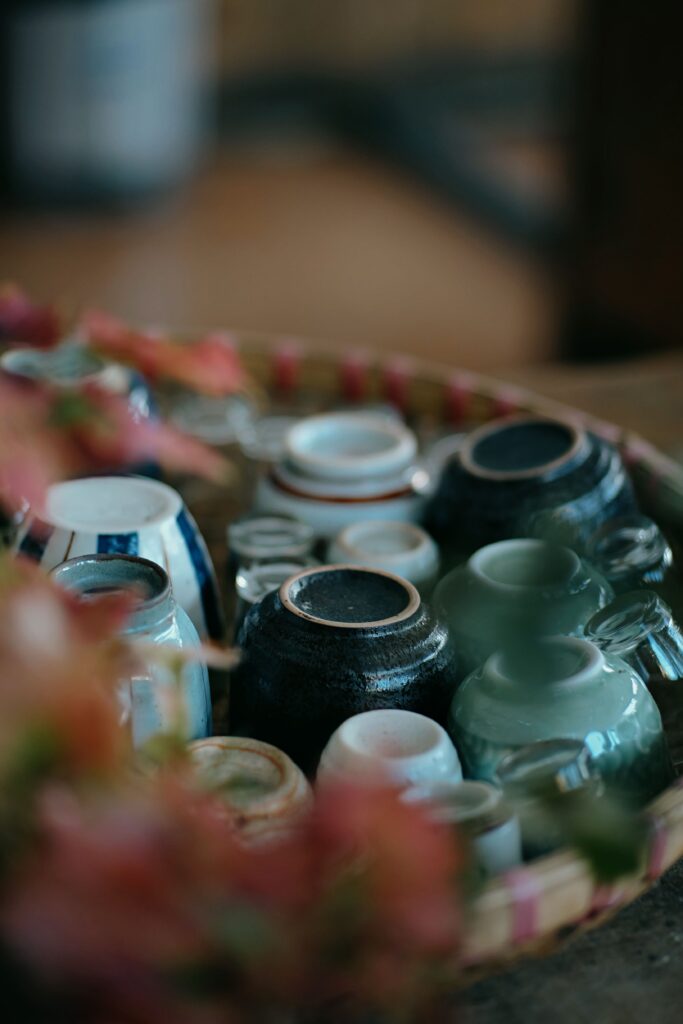
This is also why kakuuchi sake Japan has been disappearing from many neighborhoods. The old liquor shop model, with its loyal neighborhood base and its counter in the corner, does not compete easily with convenience stores and chain izakaya. Many shops have closed. Some have reinvented themselves as specialty sake shops for a younger audience. The counter is sometimes still there, but the regulars who made it what it was are fewer every year.
—
How to Find and Enter One
If you are in Tokyo and want to try kakuuchi, look for small independent liquor shops in older neighborhoods. One accessible entry point is Isego Honten (伊勢五本店) in Nakameguro, a sake shop that has operated for generations and still offers kakuuchi at its counter. Unlike a traditional kakuuchi where the counter offers nothing but sake, Isego Honten also serves light snacks, which makes the experience slightly more welcoming for those who are new to this format or do not speak much Japanese. The sake is reasonably priced and the counter is unpretentious — a useful starting point before seeking out quieter, plainer versions of the same practice. Nakasei (なかせい), also in Nakameguro, offers another kind of standing counter experience in the same neighborhood.
The shop that does kakuuchi tends to be identifiable: a door open during the day, a small counter near the register with cups on it, open bottles visible, sometimes a handwritten sign or posted price. If you are not sure, ask.
You can ask directly: “kakuuchi dekimasu ka?” (literally “can you do kakuuchi here?”) Most owners who offer it will understand immediately. If they do not, they will let you know and you can buy something to take away instead.
What to drink: sake is the obvious choice, and whatever is open will be appropriate. Cold sake pairs with the experience in summer in the same way cold sake in Japan pairs with any warm evening: it is about cutting through the heat simply, without fuss.
What to do: drink, pay, leave when you are finished. Keep your voice low. Do not photograph people or the shop interior without asking. Do not overstay. The shop has a counter, not a lounge. Kakuuchi sake in Japan works on the same logic as the counter itself: simple, unpretentious, and built around not taking more than you need.
—
A Note on What Kakuuchi Is Not
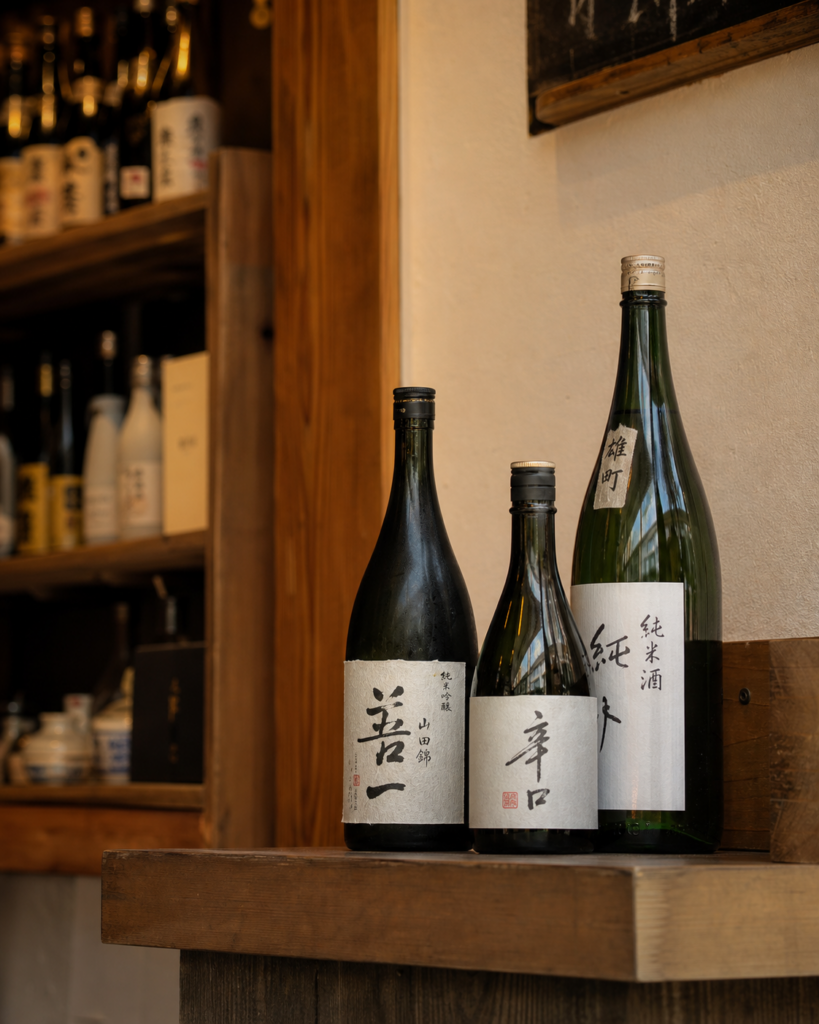
Kakuuchi is sometimes described in tourist contexts as “charming” or “rustic,” which is not wrong, exactly, but misses the point. The people who drink there are not performing nostalgia. They are stopping for a drink on the way home. The shop is not quaint. It is practical.
The dignity of kakuuchi is in that practicality. No one is trying to transport you to old Tokyo. The shop owner is not a character in your itinerary. He is running a business and offering, as a side function of that business, a place to stand and drink.
That is a very specific and honest kind of hospitality. It does not dress itself up. And in the current moment, when many visible food and drink experiences in Tokyo are being packaged for photos and platforms, the counter that offers you a cup of sake for a few hundred yen and expects nothing in return is unusual enough to be worth finding.
—
FAQ
What is kakuuchi? Kakuuchi (角打ち) is the Japanese practice of buying alcohol at a liquor shop and drinking it at the shop’s own counter while standing. The word may refer to the square masu cup placed on a corner counter, though the exact etymology is debated. It is distinct from a tachinomi bar because the venue is a working retail shop, not a bar.
Where can I find kakuuchi in Tokyo? Kakuuchi sake in Japan is most reliably found in older shitamachi neighborhoods: Yanaka, Monzen-Nakacho, Koenji, and parts of Shinbashi and Tsukiji. Look for small independent liquor shops with a counter near the register, open bottles, and cups visible. You can ask: “kakuuchi dekimasu ka?”
Is kakuuchi disappearing? Many kakuuchi-style liquor shops have closed as convenience stores and chain izakaya expand into older neighborhoods. The practice continues in pockets where independent sake shops have maintained their neighborhood customer base, but it is harder to find than a generation ago.
What should I drink at kakuuchi? Whatever the shop has open is the appropriate choice. Sake is most common. Shochu is also typical. Cold sake pairs particularly well in warmer months. The selection is not the point. The counter is.