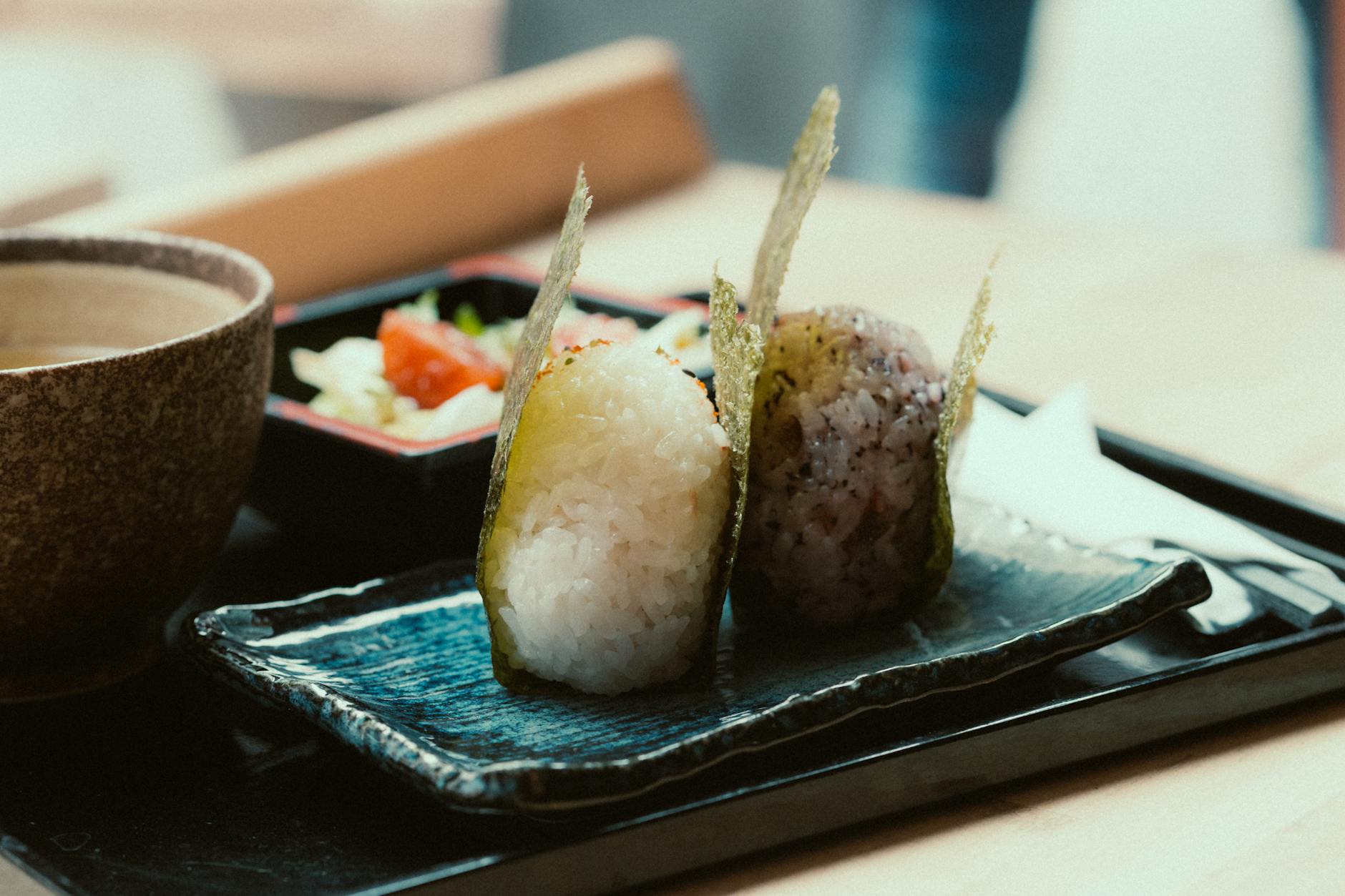
My mother's onigiri and a convenience store onigiri are not the same thing. I do not mean that one is better. I mean they are different foods that happen to share a shape. My mother pressed the rice with her hands. She wrapped them in aluminum foil when they were still warm. Something about that — the foil, the warmth, the slight compression from hands rather than a machine — changes the texture in a way that is difficult to describe but immediately obvious when you eat it. If you grew up in Japan, you probably know exactly what I mean. If
My mother’s onigiri and a convenience store onigiri are not the same thing.
I do not mean that one is better. I mean they are different foods that happen to share a shape. My mother pressed the rice with her hands. She wrapped them in aluminum foil when they were still warm. Something about that — the foil, the warmth, the slight compression from hands rather than a machine — changes the texture in a way that is difficult to describe but immediately obvious when you eat it. If you grew up in Japan, you probably know exactly what I mean. If you did not, this is one of those things that requires you to try both.
That sensitivity to small differences is, I think, the right starting point for understanding onigiri fillings. Because the filling is not the main event. The rice is. The filling is what makes you choose.
—
What You Are Actually Choosing
Stand in front of a convenience store refrigerator in Japan, and you will find somewhere between thirty and fifty onigiri depending on the store, the season, and the time of day. They are all triangles. They are all in white plastic. You cannot see inside any of them.
What you can see is the label. And what you choose from that label is never only about flavor. It is about what you need from that particular meal, at that particular moment, from a food you have probably eaten hundreds of times before.
Each filling carries something beyond taste. A season. A region. A reason someone originally decided this ingredient belonged in the center of a rice ball. The oldest fillings carry practical logic that goes back centuries. The newest ones carry the logic of 1980s product development. Both kinds are worth knowing.
—
Tuna Mayo: The One You Buy Because You Would Not Make It at Home
Let me start here, because tuna mayo is the filling that most visitors to Japan encounter first, and its logic is more interesting than it appears.
Tuna mayo does not travel well. The oil from the tuna separates. The mayonnaise loosens. An onigiri filled with tuna mayo that has been sitting in a bag for two hours is noticeably different from one eaten immediately. This is why, in most Japanese households, tuna mayo onigiri is rarely made at home. It is not practical to prepare and carry. The timing does not work.
This is exactly why people buy it at a convenience store.
The store refrigerator solves the problem. The onigiri is made fresh, kept cold, and consumed within a short window. The conditions that make it impractical to prepare at home are handled entirely by the logistics of the konbini system. The result is a filling that exists, in its ideal form, almost exclusively in the convenience store context.
The other reason people reach for tuna mayo is simpler: the flavor is mild. Not exciting, not challenging, not surprising. Mild. The Kewpie mayonnaise used in Japan is made from egg yolks rather than whole eggs, which gives it a rounder, creamier character than Western mayonnaises. Combined with canned tuna, it produces something that is easy on the palate at any hour, especially early in the morning when you do not want your food to ask too much of you.
Seven-Eleven Japan introduced tuna mayo in 1983. It became the top-selling filling within a few years and has remained near the top ever since. The engineering was good, and the timing matched what convenience store culture needed.
—
Salted Salmon: The One That Makes the Rice Make Sense
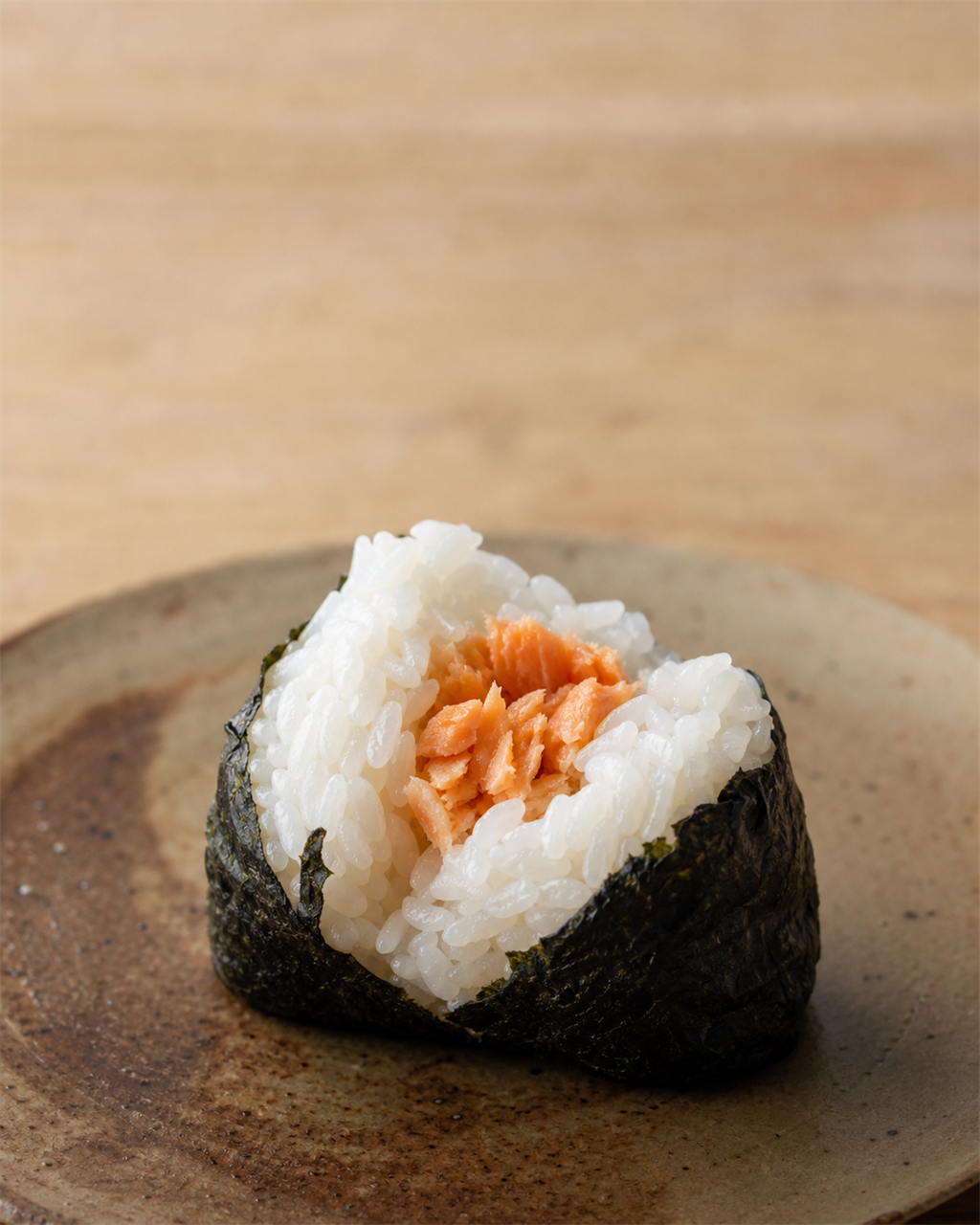
Around 40 percent of Japanese people name salted salmon as their favorite onigiri filling. I understand this completely.
Salted salmon has a level of salt that does something specific to plain white rice. It does not overpower it. It activates it. The rice becomes more present, more itself, when eaten alongside something with that particular kind of salt content. In Akita Prefecture in northern Japan, there is a local specialty called bodakko — heavily salted salmon that is far saltier than what you find at most restaurants. The bento prepared with it is famous for exactly this reason: the salt is high enough that the rice disappears fast. People who try it for the first time are surprised by how much rice they can eat.
That ratio, high-salt filling against plain rice, is part of what makes salted salmon work. You are not eating two separate things. You are eating one thing where the rice and the filling are in conversation.
Salted salmon has been part of Japanese food for centuries, particularly in Hokkaido and the Tohoku region where salmon were abundant and salt was the primary preservation method. The modern convenience store version is a direct descendant of that logic. It tastes the way it does for practical reasons that predate the refrigerator by several hundred years.
If you are uncertain what to choose at the convenience store, pick salted salmon. You will understand why it is number one.
—
Umeboshi: The Honest One
I should be honest about umeboshi. Many people do not like it.
The flavor is intensely sour and intensely salty, with a soft texture that delivers both at once. It is unlike most preserved foods in Western food culture, and the first encounter often produces a reaction that ranges from surprise to genuine discomfort. It is not a filling that wins everyone over immediately.
And yet it is one of the oldest fillings in the category, with records of preserved ume appearing in Japanese food documentation over a thousand years ago. The original logic was practical: the high acidity of umeboshi slows bacterial growth in rice, which made it an effective preservation tool for travelers and soldiers carrying food over long distances. A sour plum was not a delicacy. It was engineering.
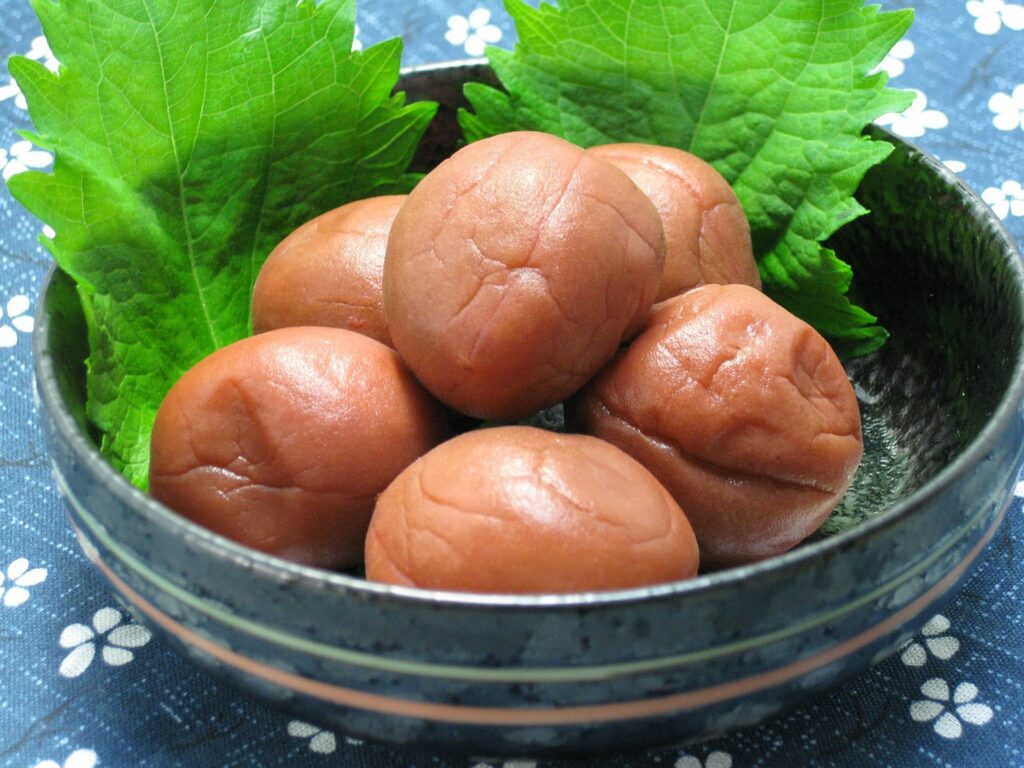
That function is still present in the flavor. When you eat umeboshi, you are eating something that tastes the way it does because someone, a very long time ago, needed rice to last longer without refrigeration.
If you try it and do not like it, that is a reasonable response. If you try it and find something in it — a sharpness that cuts through fatigue, a sourness that makes the rice sweeter by contrast — you are probably someone who will spend the rest of your life reaching for it automatically.
—
Kombu and Takuan: The Ones That Reward Patience
Seasoned kelp and pickled daikon do not announce themselves. They are quieter fillings, and they tend to be appreciated more over time than on first encounter.
Kombu is braised in soy and mirin, cut into strips or small pieces, and placed at the center of the rice. The flavor is deep umami without being sharp, savory without salt that cuts. It has a strong association with western Japan, particularly Kyoto and Osaka, where dashi made from kelp forms the base of much of the regional cuisine. If you grew up in that part of the country, seasoned kombu onigiri is often the one that tastes most like home.
Takuan, the pickled yellow daikon, adds crunch and a gentle acidity that is very different from the intensity of umeboshi. It is mild enough that it does not dominate the rice, which for some people is exactly the point.
Both fillings are the kind that visitors sometimes overlook in favor of the more dramatic options, and then return to on a second or third visit when they are paying closer attention.
—
The Difference Between Convenience Stores
Not all convenience store onigiri taste the same, and not all convenience stores stock the same fillings.
Each major chain — Seven-Eleven, Lawson, FamilyMart — develops its own rice blend, seasoning ratios, and supplier relationships. The salted salmon at one chain has a different salt level and texture from the one at another. The tuna mayo at one store has a slightly different ratio of mayonnaise to tuna. These differences are real and noticeable if you are paying attention.
Regional variations exist as well. Hokkaido locations carry ikura more reliably than chains in central Japan. In Kyoto, kombu-based fillings occupy a larger share of the shelf. Coastal cities have seafood varieties that do not appear inland.
If you have the opportunity, buy the same filling from two or three different chains on the same morning and compare them side by side. It is a small experiment that teaches you more about how much care goes into the category than any description can.
—
The Rice Underneath All of It
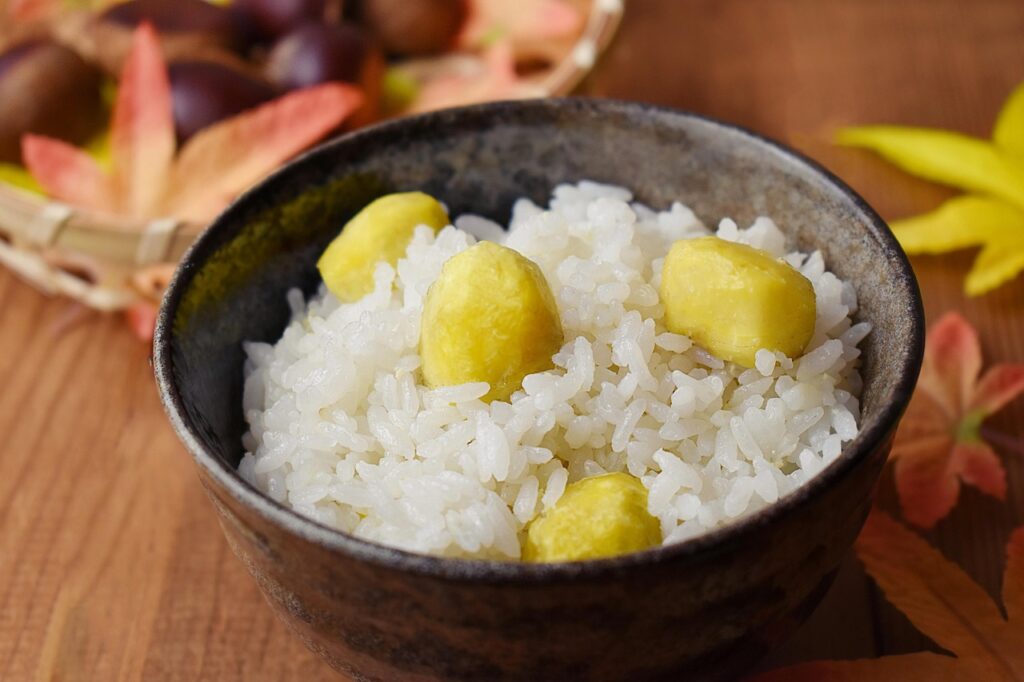
Everything I have described so far depends on the rice.
White rice is not a simple thing in Japan. For most of Japanese history, polished white rice was expensive enough that it was eaten primarily by the wealthy. The idea of plain white rice as an everyday food, available to everyone at every meal, is relatively recent. The agricultural stability and milling technology required to make it ordinary took generations to develop.
There are now varieties of rice developed specifically for use in onigiri. They are bred for moisture retention, for the way the grains hold together when pressed, for how the flavor holds up after refrigeration. The white rice in a convenience store onigiri is not generic. It is the product of decades of agricultural development aimed at a very specific outcome.
Climate change is beginning to affect Japanese rice harvests in ways that are not yet fully understood. The conditions that produce the specific flavor and texture of Japanese short-grain rice are sensitive to heat and rainfall patterns. There are researchers and farmers who are already working on heat-resistant varieties. But the rice that fills the onigiri you eat in Japan today is the product of a very particular environment, and that environment is changing.
I mention this not to be alarming, but because it changes how I think about eating onigiri. The taste is not permanent. It is a product of specific conditions that exist now. That seems worth knowing.
—
One Thing Worth Doing
If you have the chance, do a rice comparison while you are in Japan.
Buy onigiri from two or three different stores. Buy the same filling if you want a controlled comparison, or try different ones if you are curious about the range. Eat them at the same temperature, without anything else. Pay attention to the rice as much as the filling.
The differences between a well-made onigiri and a mediocre one are subtle, but they are there. The same is true for the rice varieties used across different chains and different products. Once you start noticing, it is difficult to stop.
That particular kind of attention is, I think, something Japan is good at teaching.
The packaging system and the shelf logic that make this comparison possible are covered in convenience store onigiri in Japan.
—
FAQ
What are the most common onigiri fillings in Japan? The most consistently available fillings at Japanese convenience stores are tuna mayo, salted salmon, umeboshi, and seasoned kelp. Mentaiko is also widely stocked. Salted salmon leads in sales volume and in preference surveys. Each major convenience store chain develops its own version of each filling, and the differences are real.
What does umeboshi taste like? Intensely sour and salty, with a soft texture. It is unlike most preserved foods in Western food culture. Many people find it difficult on first encounter. Others find it immediately clarifying. It is one of those flavors that tends to produce a strong reaction in either direction.
Why is tuna mayo onigiri so popular? Partly because the flavor is mild and approachable at any hour. Partly because tuna mayo onigiri does not travel well when made at home — the oil separates and the mayonnaise loosens — which makes the convenience store version genuinely difficult to replicate. The store solves a practical problem that home preparation cannot easily solve.
Are there vegetarian onigiri fillings in Japan? Yes. Seasoned kelp, umeboshi, pickled daikon, and mushroom varieties are vegetarian. Some chains carry vegetable-based seasonal fillings. Be aware that rice seasoned with dashi may contain fish stock. Vegan options are more limited but available at some chains and specialty onigiri shops.