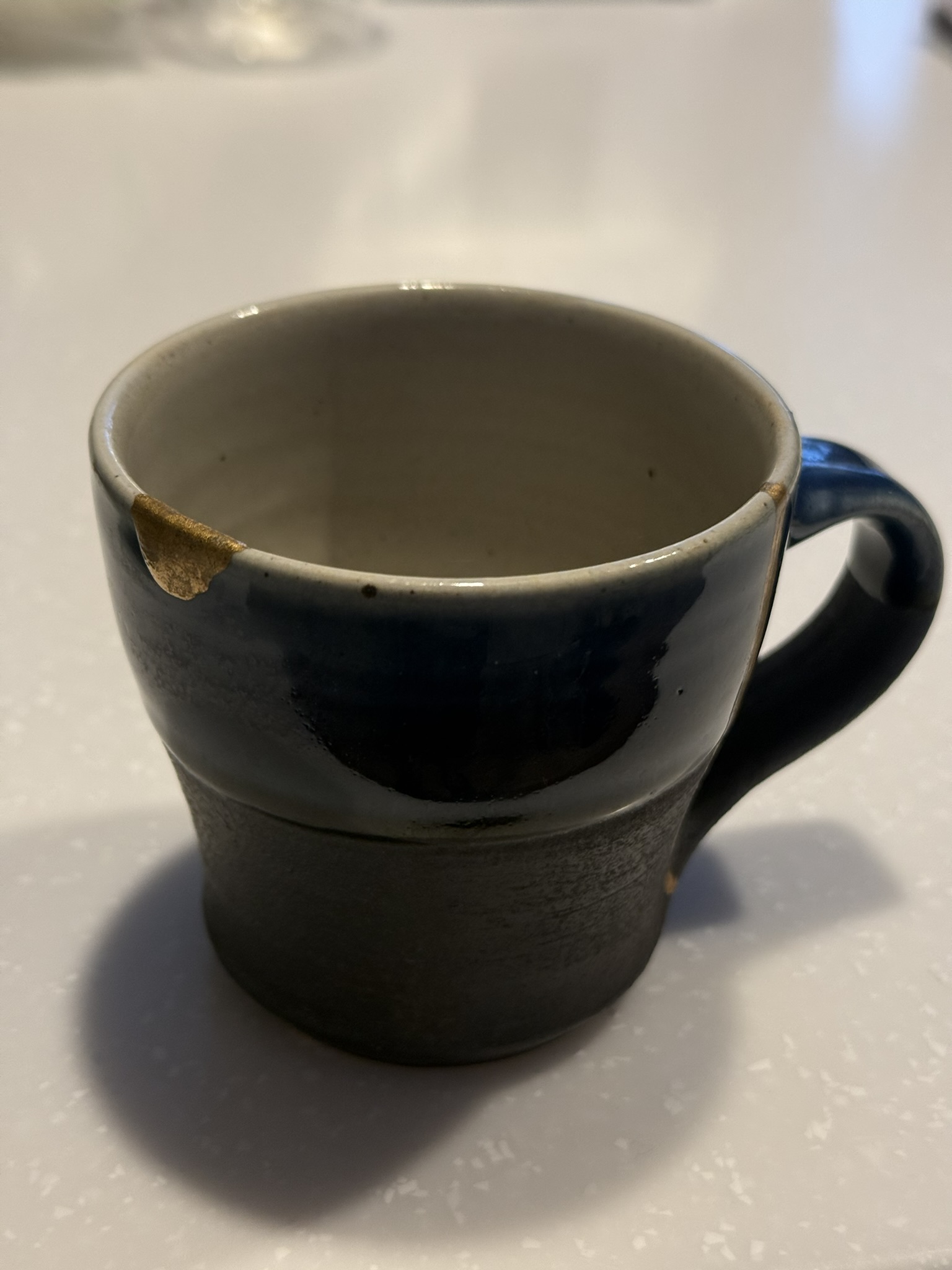
A ceramic tea bowl that has been dropped and broken might be repaired in any number of ways. Kintsugi is one particular approach: the break is filled with urushi lacquer, and once the lacquer has cured, gold powder is applied along the line of the repair. The crack does not disappear. It becomes a gold line running across the surface of the bowl, visible from across a room. What is kintsugi? Kintsugi (金継ぎ) is the Japanese practice of repairing broken ceramics with urushi lacquer mixed with gold powder. The r
A ceramic tea bowl that has been dropped and broken might be repaired in any number of ways. Kintsugi is one particular approach: the break is filled with urushi lacquer, and once the lacquer has cured, gold powder is applied along the line of the repair. The crack does not disappear. It becomes a gold line running across the surface of the bowl, visible from across a room.
What is kintsugi? Kintsugi (金継ぎ) is the Japanese practice of repairing broken ceramics with urushi lacquer mixed with gold powder. The repair makes the break visible rather than concealing it. The name breaks down as kin (金, gold) and tsugi (継ぎ, joining). Gold joining.
What Is Kintsugi? Gold That Joins
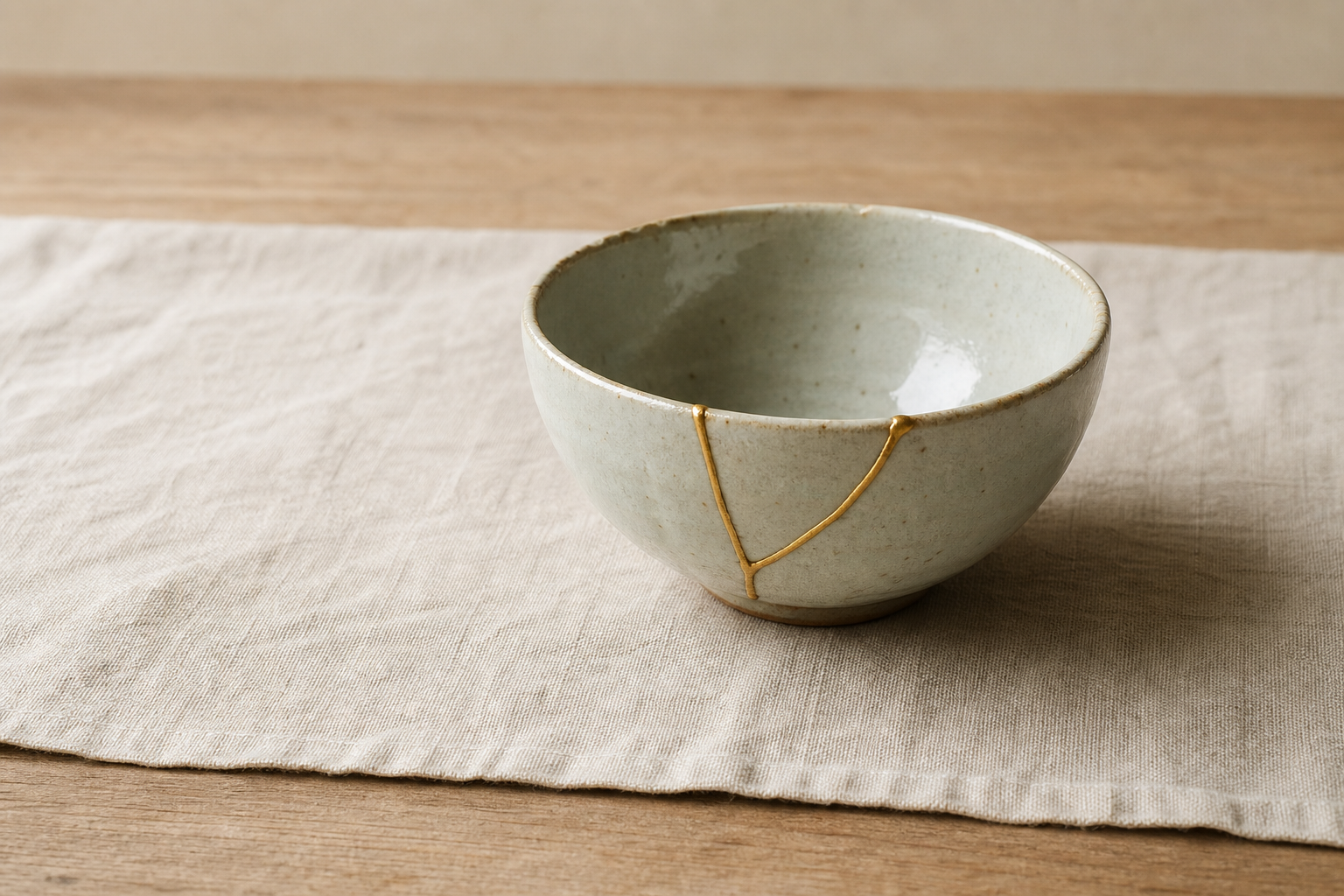
Kintsugi is a repair technique, not primarily a philosophy. It works by using urushi, the lacquer sap drawn from the Toxicodendron vernicifluum tree (the urushi tree), as both adhesive and base coat for the repair. Urushi is a traditional Japanese lacquer used in lacquerware (shikki) for centuries. In kintsugi, the lacquer holds the broken pieces together and builds up along the crack. Gold powder is then applied over the still-curing surface. The result is a ceramic piece that is whole again, with a gold line marking exactly where it broke.
The practice appears most frequently in the context of tea ceramics, particularly chawan (tea bowls). It is part of a broader tradition of urushi lacquerwork that includes the decorated lacquerware of Wajima in Ishikawa Prefecture, the trays and vessels of Aizu lacquerware in Fukushima, and other regional craft traditions. Kintsugi is the specific application of that tradition to the repair of broken ceramics.
In English, kintsugi is frequently described as a life philosophy about embracing imperfection or resilience in the face of damage. That reading exists, but it is a later layer added onto a craft practice. The practice itself is about repair.
How Kintsugi Works
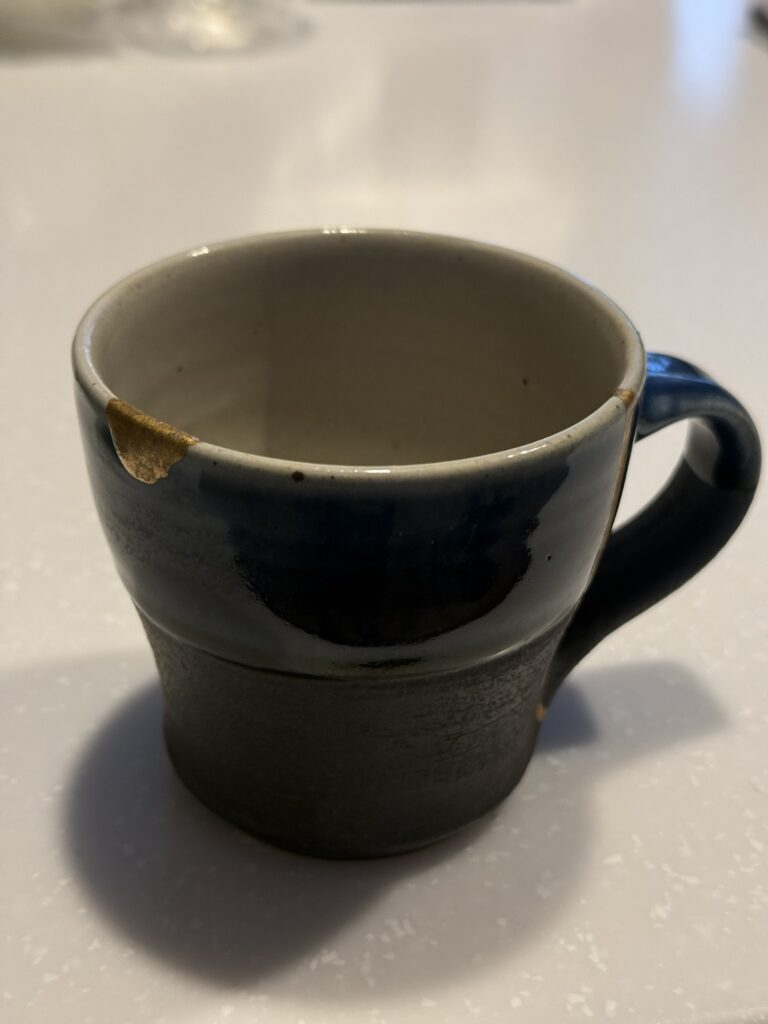
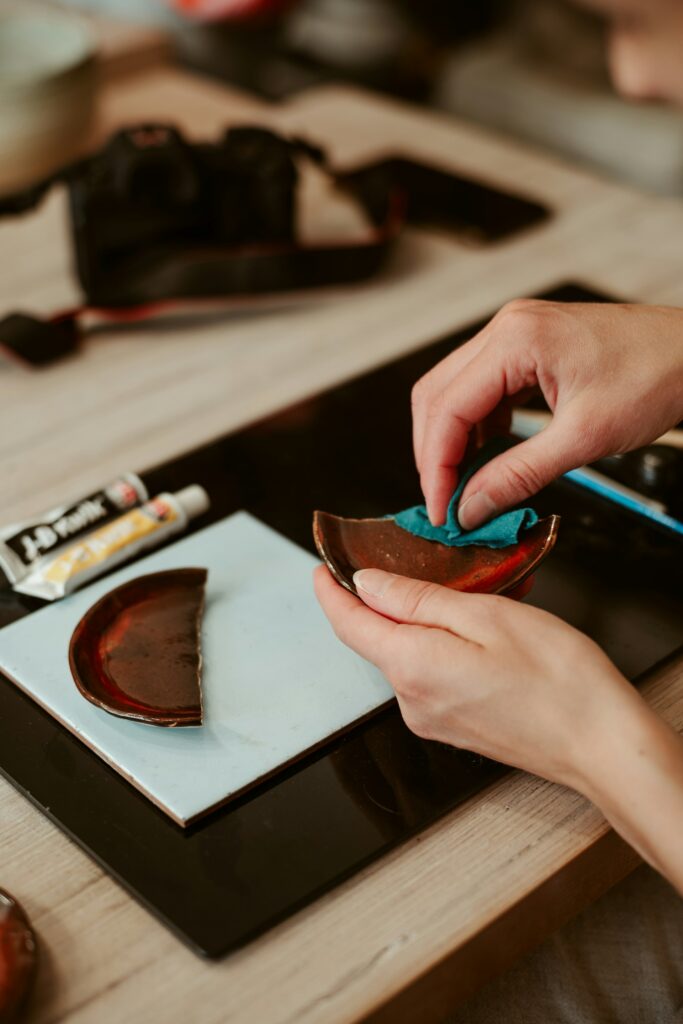
The repair process for traditional kintsugi using urushi is slow. Urushi cures through a chemical reaction that requires humidity, not heat, and proceeds over days and weeks rather than hours. A full repair typically involves multiple stages: cleaning the break surfaces, applying urushi as adhesive, allowing it to cure, building up additional layers, refining the surface, and finishing with gold powder. From start to usable piece, a repair can take several weeks to several months.
The gold finish is traditional but not the only option. Silver and plain urushi finishes (without metallic powder) are also used. The term kintsugi refers specifically to the gold version; the broader practice of urushi ceramic repair is called kintsukuroi (金繕い) or urushi tsugi.
Outside Japan, kintsugi kits are widely available. Most of these use epoxy resin rather than urushi. The visual result, gold lines along a ceramic break, is similar. The material and process are different. Epoxy cures quickly and does not require the workshop conditions or the extended timeline of urushi. Traditional urushi kintsugi takes years to learn well; it is a specialized skill within the lacquerwork tradition. The kits offer an accessible version of the visual effect.
The Aesthetic Logic
Kintsugi belongs to the same aesthetic territory as wabi-sabi, but it is worth being precise about what that connection is rather than leaving it as a general feeling.
Wabi-sabi is often summarized as “finding beauty in imperfection.” That summary is not wrong, but it leaves out what the concept actually attends to: the way objects change over time through use, wear, age, and accident. A tea bowl that has been used hundreds of times carries that use in its surface. A repaired bowl carries the break. Neither of these is a flaw that has been aesthetically elevated. They are the history of the object, and that history is part of what the object is.
Kintsugi makes that history visible. The gold line does not restore the bowl to its original state. It restores it to a different state, one that includes the break as part of the surface. The bowl is whole again. And changed.
Mottainai (もったいない) sits alongside this. It is a Japanese concept that attaches a sense of waste or regret to discarding something that still has use or value. Mottainai is why rice is eaten to the last grain, why fabric scraps are remade into other things, why a broken bowl is repaired rather than thrown away. Kintsugi fits within this orientation toward objects and their material life.
Kintsugi and the Tea Tradition
Kintsugi’s clearest association is with chado (茶道), the Japanese tea ceremony, and with the aesthetic sensibility that developed around it in the 16th century. Sen no Rikyu (1522 to 1591), the tea master most associated with what became known as wabi-cha, developed an approach to tea that valued rough, unpolished, and irregular objects over refined and symmetrical ones. In the tea culture associated with Rikyu, Korean tea bowls with uneven glaze came to be valued alongside, and sometimes above, more polished imported wares.
In that context, a repaired bowl was not a damaged object that had been made acceptable again. It was an object that had acquired something through its life, including the break and the repair. There are accounts of tea masters commissioning repairs specifically so that a valued bowl could continue to be used. In some tea contexts, a repaired chawan could be valued as highly as an unbroken one, though this was not a universal practice.
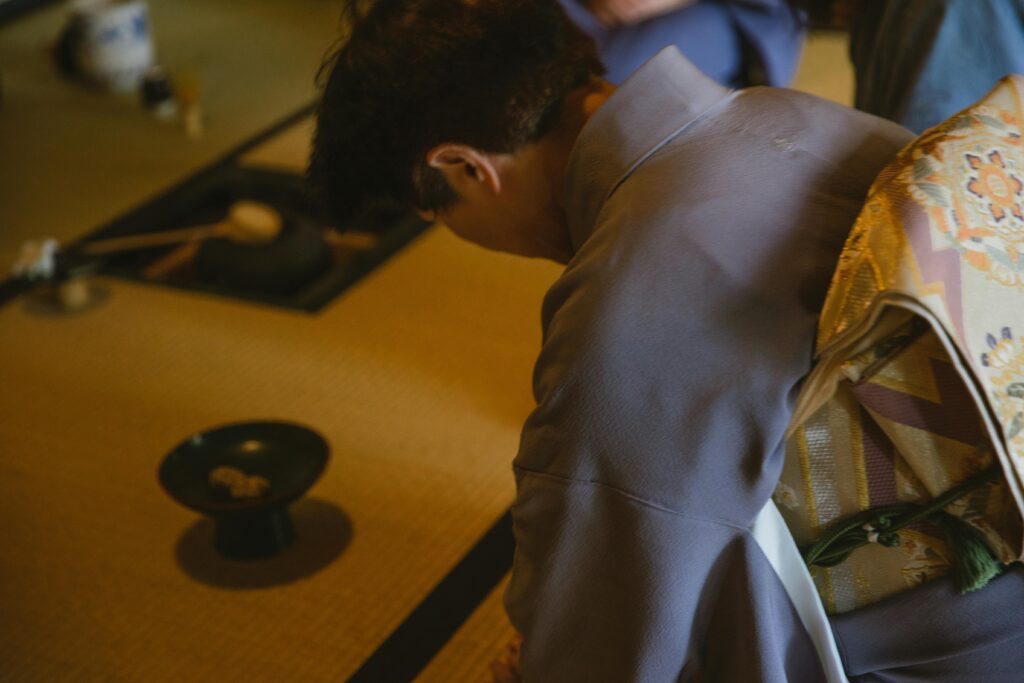
Whether kintsugi as a practice developed directly from this context or from practical repair needs that happened to align with this aesthetic is not fully settled. The association with tea culture and wabi-cha is widely recognized; the precise origins of the technique are less clear.
For more on the wagashi and objects used in the tea setting, see wagashi and the Japanese tea tradition. For the broader cultural logic of restraint and imperfection in Japanese aesthetics, see the aesthetics of subtraction.
Kintsugi Today
What is kintsugi in contemporary practice? It exists at two different scales. Traditional urushi kintsugi is practiced by specialist restorers (nushi-shi, 塗師, lacquerwork craftspeople) who train for years in the material and its properties. Urushi requires careful handling: it causes contact dermatitis in many people before long-term exposure builds tolerance, and it demands specific temperature and humidity conditions at each stage of curing. The craft is taught in lacquerwork schools and through apprenticeship, and it takes years to develop reliable skill.
In Japan, workshops offering introductions to kintsugi have become more common in cities including Tokyo and Kyoto. These often use modified materials, including urushi mixed with other compounds, or simplified processes that give participants a result within a few hours. They are entry points into the practice rather than training in the full traditional method.
The spread of simplified kintsugi kits in recent years has brought the visual language of gold-repaired ceramics into wide circulation outside Japan. The gold line on a broken cup has become recognizable well beyond Japanese material culture. A resilience metaphor has largely followed this spread, and the life-philosophy framing is now a significant part of how many people outside Japan first encounter the word.
The Japan Traditional Crafts organization maintains an overview of urushi and lacquerwork traditions at kougeihin.jp. The Japan Folk Crafts Museum (Mingeikan) in Tokyo holds lacquerware and ceramic collections that include repaired pieces. Details at the museum’s site.
What the Crack Shows
For the ceramic traditions that sit behind kintsugi, see japanese pottery history. For a broader account of how vessels are used and understood in Japanese dining, see japanese tableware.
A bowl repaired with kintsugi has a gold line running through it. The line is not a decoration added to a whole bowl. It is the place where the bowl broke, filled and made visible.
What is kintsugi, at its simplest? A repair in which the break is not hidden. The bowl works again. The break is still there, visible in gold, the most prominent part of the surface. Whether that is a lesson or just a description of what the technique does is something the object itself does not resolve.