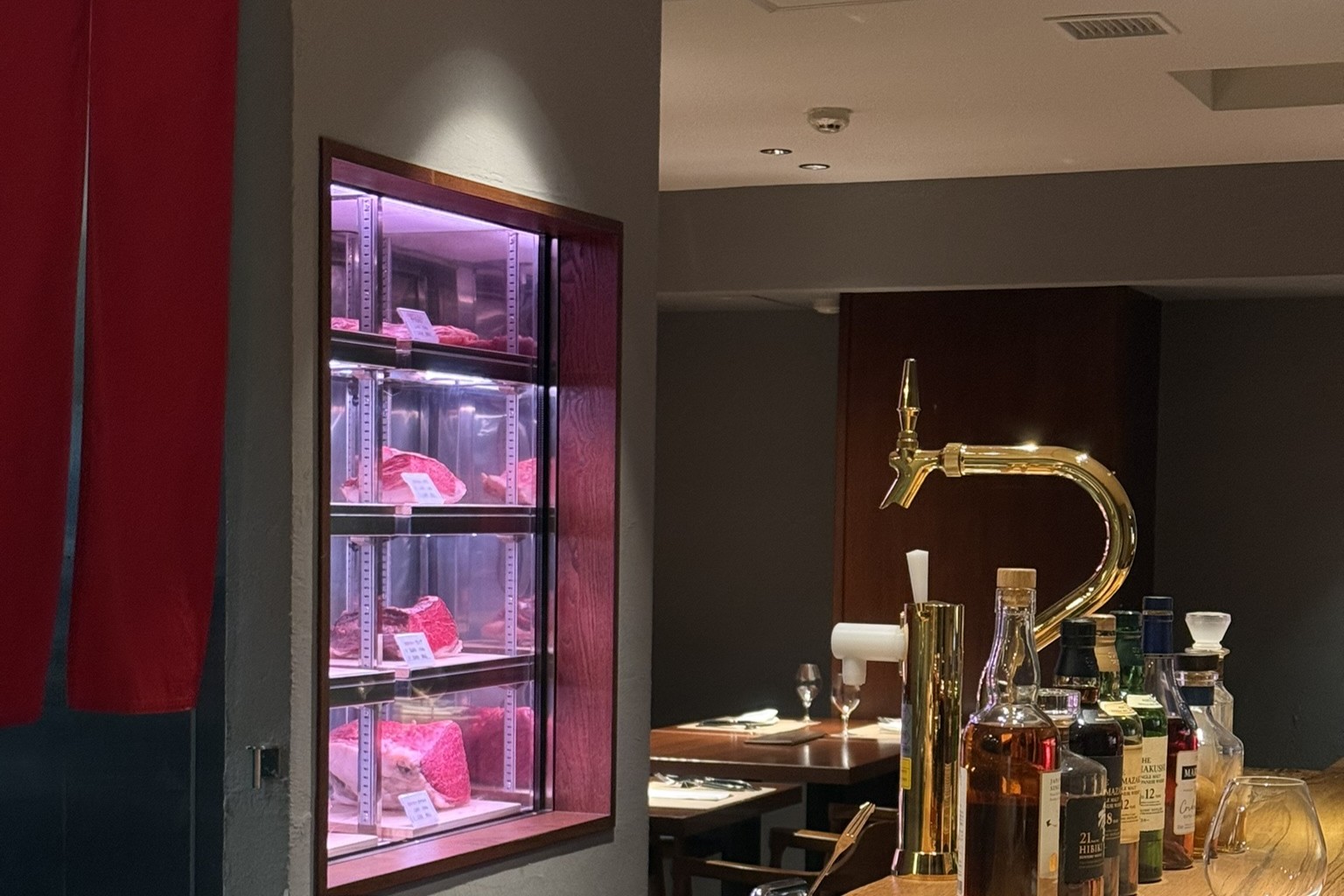
Nakameguro Nakasei is a restaurant concealed behind a butcher shop. You enter from the back, and the first thing you see is a glass showcase filled with aged wagyu: deep red lean sections, cream-edged marbled cuts, each piece labeled with its part of the animal. When you are ready to order, a staff member brings you back to this showcase to choose your cut. The meal is decided here, in front of the meat, before you return to your seat.
Nakameguro Nakasei is a restaurant concealed behind a butcher shop. You enter from the back, and the first thing you see is a glass showcase filled with aged wagyu: deep red lean sections, cream-edged marbled cuts, each piece labeled with its part of the animal. When you are ready to order, a staff member brings you back to this showcase to choose your cut. The meal is decided here, in front of the meat, before you return to your seat.
The restaurant opened along the Meguro River in March 2025, but the lineage behind it goes back over a decade to Nakasei’s original butcher shop in Denenchofu, and then to the Koshikawa Nakasei restaurant in Bunkyo, which held a Michelin star for seven consecutive years. The Nakameguro branch is less formal than Koshikawa, designed for the lunch and dinner visitors who walk the river path. But what it does with the beef is the same.
—
What Karashi Aging Is and Why Nakasei Does It Differently
Dry-aged beef has become familiar enough in Western restaurants that the term has lost some precision. In most contexts, it means individual cuts hung or rested in a controlled environment for two to four weeks. Nakasei’s method differs in degree and structure.
The Japanese term is karashi (枯らし), which describes a process of drying or withering, the kind of patient reduction that removes what is unnecessary and concentrates what remains. At Nakasei, the beef is aged as whole carcass (枝肉), meaning the animal is hung on the bone rather than broken into cuts first. The aging room is kept still: no wind circulation, which is Nakasei’s own condition. Temperature, humidity, and the presence of beneficial mold are monitored throughout. The process runs for four to eight weeks.
Nakasei selects roughly forty cattle per year for this. The selection is careful. Beef that is to undergo long-term aging needs specific qualities in fat structure and muscle density to improve rather than deteriorate, and the evaluation happens before the aging begins. A significant portion of the selection work is deciding what will not be used.
What the process produces is a change in the beef that is easier to taste than to describe. The umami becomes denser and more forward. The aroma takes on qualities that are sometimes described as nutty or milky. The texture becomes softer through enzymatic breakdown while remaining cohesive. The beef selected for this process is already good. The aging pushes it further.
This patience is not incidental to the restaurant’s identity. The craft behind aging meat for two months at a time, in a space maintained by someone who monitors it daily, is a form of discipline that appears in other parts of Japanese food culture. The article on what do means in Japanese culture explores this structure: the understanding that the daily attention given to a practice is the practice, not preparation for something else.
—
The Bloodline Certificate at the Table
With the premium course, or on request, Nakasei shows the tōkisho (登記書), the animal’s bloodline registration document. The document lists the individual cow’s identification number, date of birth, farm of origin, and a genealogical record going back through several generations: father, mother, maternal grandfather, and further.
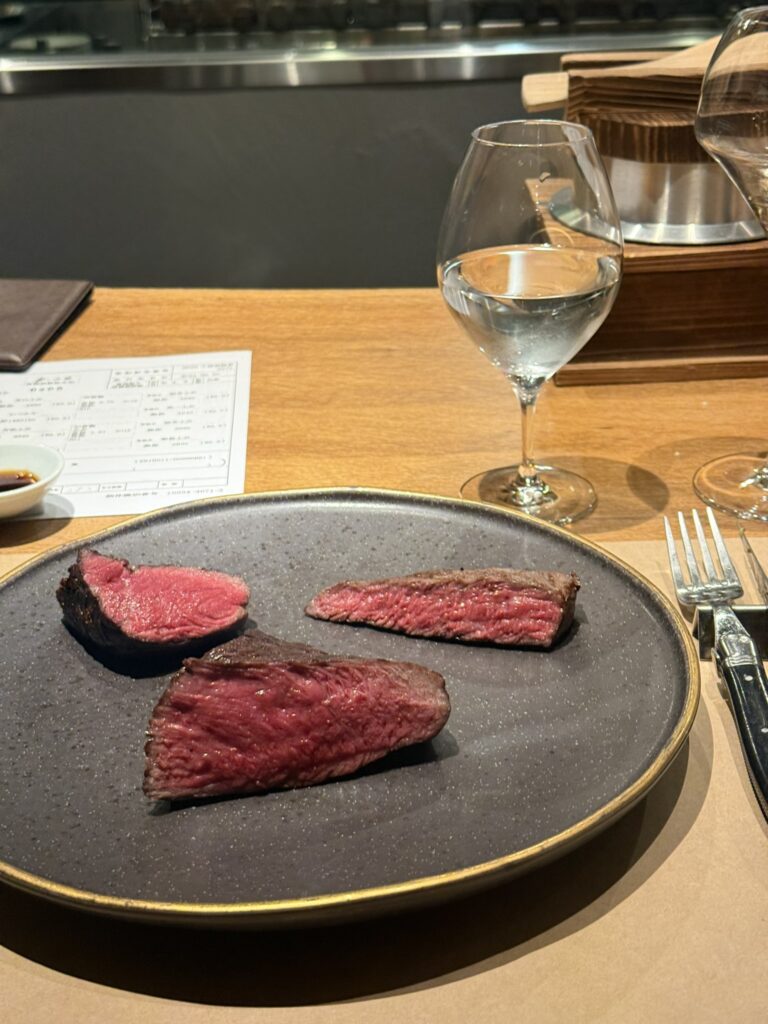
This is a standard document in the Japanese wagyu system, not something created for restaurants. Japan began maintaining formal cattle registration records in the Meiji era, and the database has continued since then. It exists for breeders, producers, and veterinarians to track lineage, health records, and the quality history of specific bloodlines across generations.
Within that system, the beef served at Nakasei often carries ancestry from Tajima cattle (但馬牛), the foundational stock of Kobe beef, bred for generations in the mountains of Hyogo Prefecture. Among Tajima cattle, certain family lines have become known for particular qualities over time. The Doi (土井) lineage is one of them: associated with fine-grained marbling and a low fat-melt point that gives the beef a clean finish without the heaviness that heavily marbled wagyu can sometimes carry.
Looking at the certificate, you can trace which line the animal came from. For most visitors, this is background information. But it changes the relationship to the meal in a small way: the thing on the plate has a documented history, and someone kept that history on purpose.
The practice of showing the certificate connects to a wider Japanese habit of traceability in food, the same impulse that puts the farmer’s name on a bag of rice at a supermarket, or lists the fishing port on a restaurant’s seafood menu. These are not legal requirements. They are a form of respect for the food and for the people who produced it, made visible to the person eating it. The Japanese attention to everyday practice runs through this too: the idea that how something is done, and who did it, is worth knowing.
—
What to Order
Nakasei Nakameguro offers both set courses and à la carte options. The courses are the more structured way to experience the restaurant, but ordering à la carte alongside a course, or on its own at lunch, is also possible.
Named Wagyu Hamburg Course The most accessible of the three dinner courses. The main dish is a 150g hamburger steak made from 100% aged wagyu. The difference between this and a standard hamburger steak is not subtle: the flavors are more concentrated, the fat more present in the finish, the texture looser and more yielding. The course includes homemade charcuterie, a seasonal salad, and freshly cooked rice from a cast-iron pot (羽釜, hagama). The rice is a custom blend of Yamagata’s Tsuyahime and Yukiwakamaru varieties, chosen to pair with the aged beef. A good choice for a first visit, or for anyone who prefers this format over an unadorned steak.
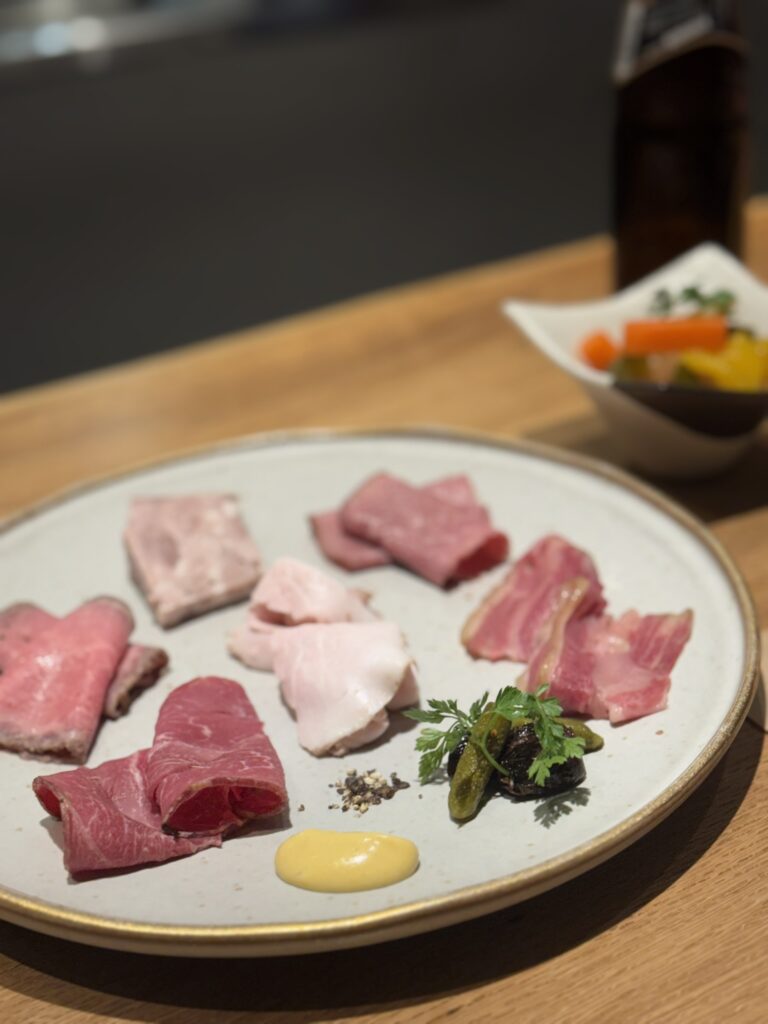
Lean and Marbled Wagyu Steak Comparison Course Two cuts of aged wagyu: one lean (赤身, akami), one marbled (霜降り, shimofuri). The kitchen selects the specific cut based on what is best that day. The comparison format is useful. Lean wagyu aged this way develops a depth of flavor and a firmer texture that distinguishes it clearly from unaged cuts. The marbled section shows the fat at its most expressive: the aroma from karashi aging is most present here.
Kobe Beef and Yukifuri Wagyu Comparison Course One cut of Kobe beef (Tajima cattle certified under the Kobe standard, from Hyogo), one cut of aged Yukifuri wagyu from Obanazawa, Yamagata. This is where the bloodline certificate is most likely to be shown. Kobe beef is defined by origin and certification criteria; Yukifuri by producer selection and aging process. They are made from different animals in different ways, and the comparison makes the differences tangible.
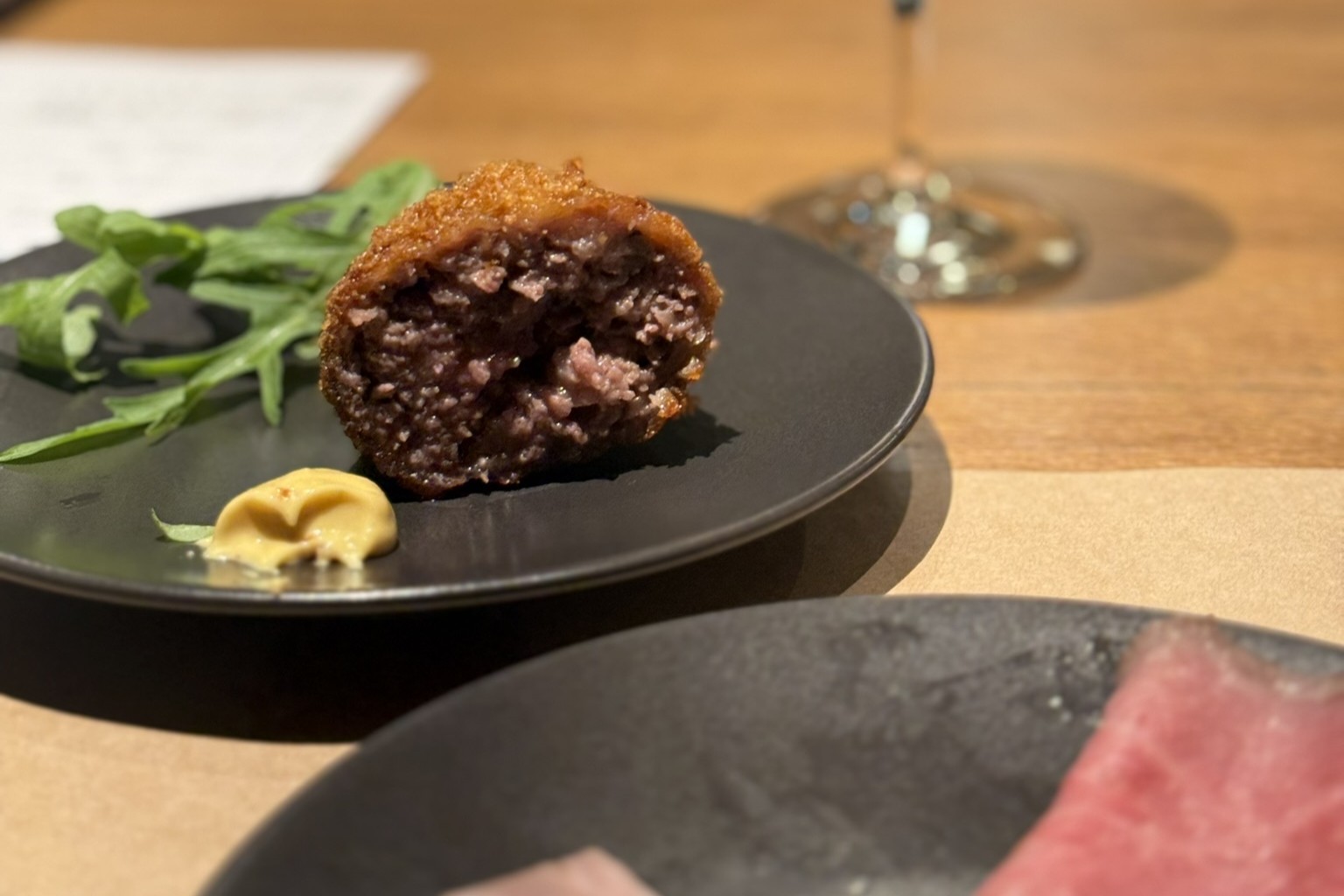
À la carte Courses are not required. À la carte ordering alone is a valid way to eat here, and some of the best items come from that menu. The menchi katsu deserves specific mention: a deep-fried patty of minced aged wagyu, it carries the full character of the karashi-aged beef through the frying. The crust is clean, the inside dense and juicy, and the depth of flavor from two months of aging remains clearly present. It is one of the better versions of this dish available in Tokyo.
Lunch offers a selectable main course from the same aged wagyu, at a lower price point than dinner. For visitors who want to experience the restaurant without committing to a full dinner course, lunch is a reasonable way in.
—
The Experience: Showcase, Counter, and What to Drink
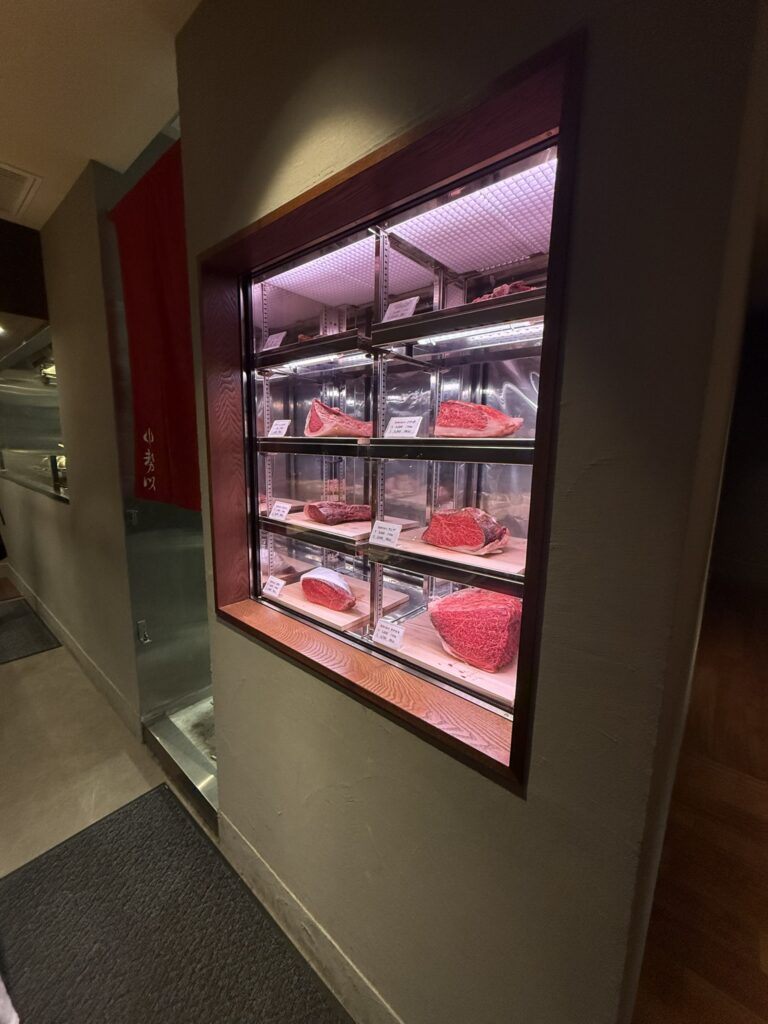
The ordering ritual at Nakasei begins at the showcase. The staff member who takes you there, sometimes called a meat consultant, explains each cut: where on the animal it comes from, how the aging has affected it, what to expect in flavor and texture. If you have questions about the aging process, the certificate, or the differences between cuts, this is when to ask.
The restaurant seats 23 people total: five at the counter, eighteen at tables. The counter faces the kitchen, where you can watch the griddle work from the beginning of your meal. For solo diners or couples, the counter is worth choosing. The energy there is quieter and more focused, closer to the preparation.
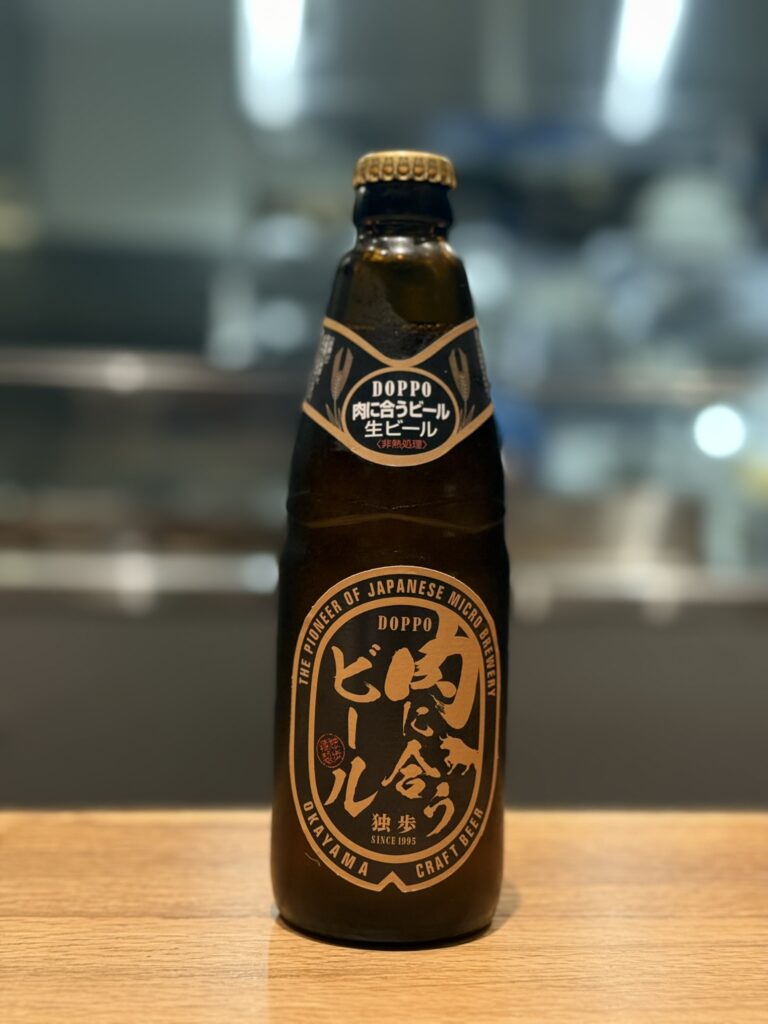
For drinks, the menu includes a beer brewed with rice, offered as a pairing for the aged beef. Rice beers tend to have a lighter body and a clean, dry finish that works well against the richness of wagyu: the beer clears the palate between bites without competing with the aroma of the meat. If you are uncertain what to order with the beef, this is a sensible starting point.
The courses include details that carry their own interest. The charcuterie is made in-house. The French fries use potatoes that have been aged for two years, consistent with the restaurant’s orientation toward time as an ingredient. The dessert changes and is made in the kitchen. The rice, served in a cast-iron pot, arrives near the end of the meal and is eaten with homemade wagyu corned beef.
The restaurant has an English menu. The staff ask guests to avoid strong-scented perfume or cosmetics, as these affect the aromas of the aged beef.
—
Practical Information
Name: Nakameguro Nakasei (中目黒 中勢以)
Address: Aobadai Towa Building 1F, 1-23-3 Aobadai, Meguro-ku, Tokyo 153-0042
Access: 6-minute walk from Nakameguro Station (Tokyu Toyoko Line / Tokyo Metro Hibiya Line), along the Meguro River.
Lunch: 11:30–15:00 (last order 14:00)
Dinner: 17:00–22:00 (last order 20:30)
Closed: Year-end and New Year period only. Open all other days.
Dinner price range: Courses available at dinner. À la carte ordering is also possible without a course. Drinks additional.
Lunch: Selectable main course available at lunch.
Reservations: Recommended. Available through TableCheck.
English menu: Yes.
Payment: Visa, Mastercard, JCB, Amex, Diners, cash.
Age restriction: Dinner is available for guests aged 10 and above.
—
Nakasei and the Neighborhood
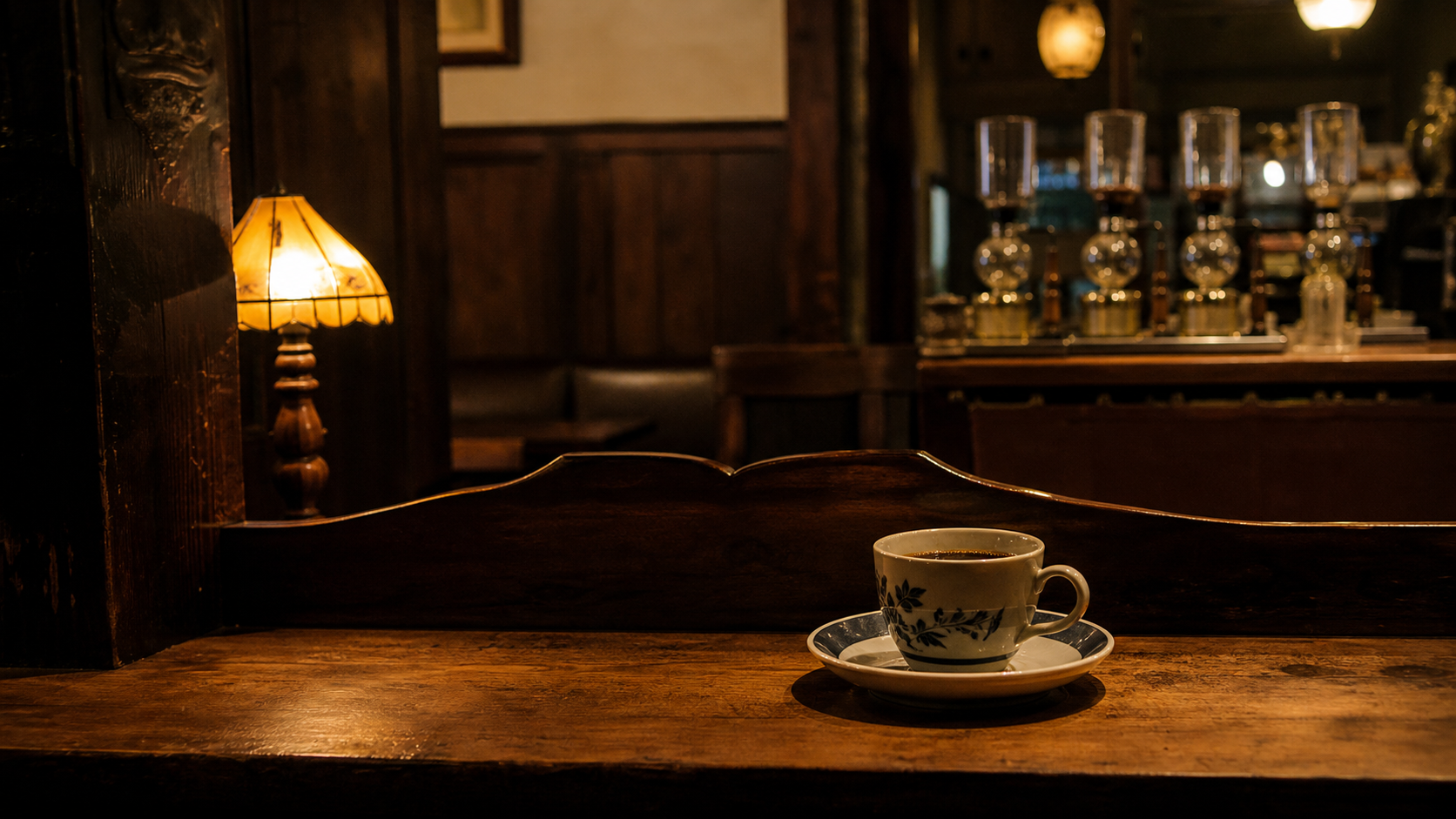
Nakameguro is one of the areas in Tokyo where eating well and walking slowly can happen on the same afternoon. The Meguro River path is lined with independent cafés and restaurants, some of them long-established, some of them recent. Nakasei sits in this stretch. The kissa culture of Tokyo is present nearby: the older coffee shops that carry the same unhurried quality that Nakasei applies to beef.
The Michelin-starred Koshikawa Nakasei continues to operate in Bunkyo. The Nakameguro branch carries the same approach to aging and sourcing into a less formal setting, in a building along a river that most visitors to Tokyo walk past at least once.
The certificate, when you see it, is a small thing: a piece of paper with numbers and names on it. What it represents is that someone kept records, someone cared about the lineage, and that care is now legible at the table.