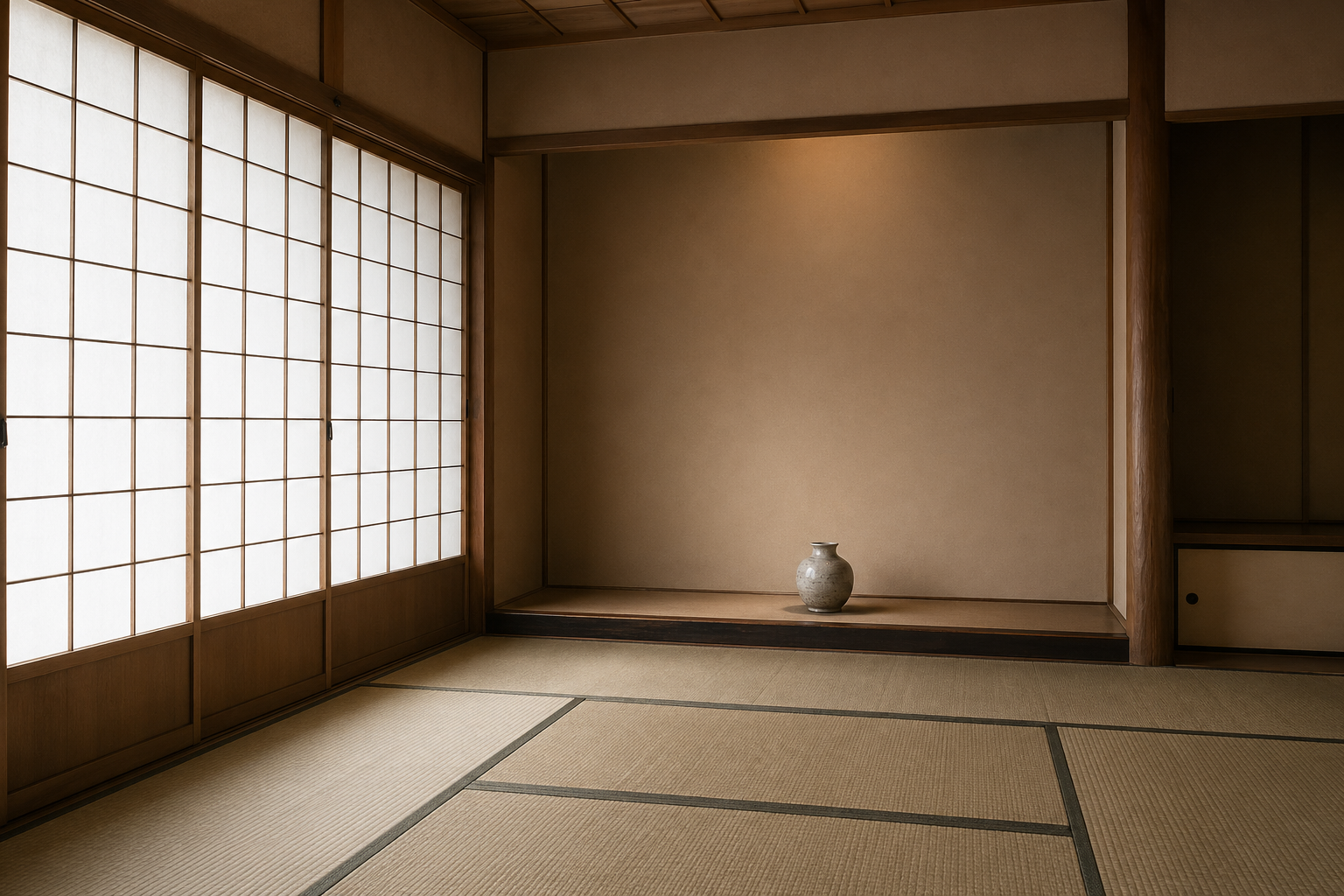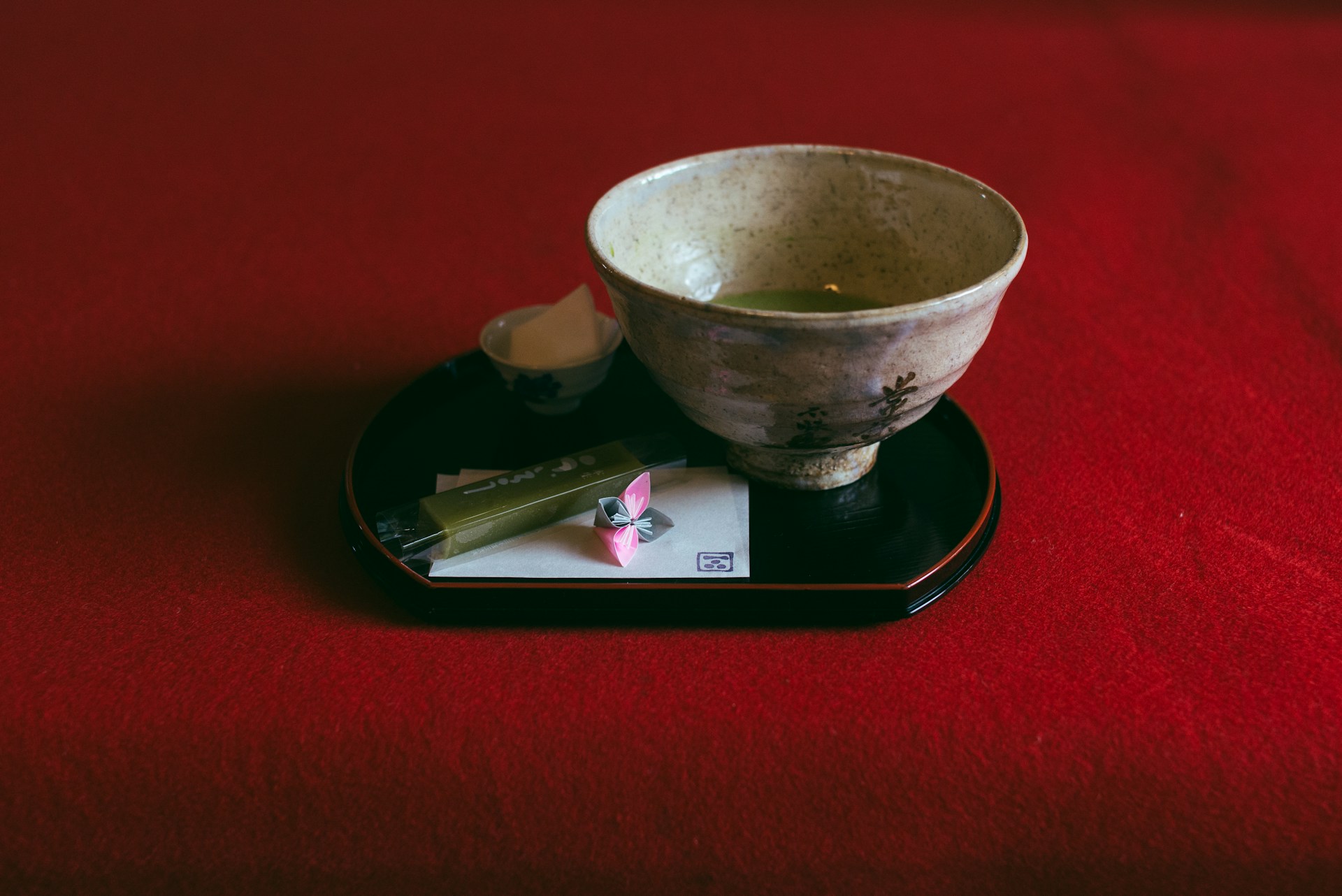
In Japan, Zen is often imagined as something quiet: a stone garden, a cup of tea, a monk sitting in meditation, or a room with very little inside it. These images are not wrong, but they are only the surface. Zen in Japan began as a Buddhist practice, but over time it came to shape more than religious life. It influenced how people sit, clean, cook, arrange flowers, prepare tea, design gardens, and think about space. In this sense, Zen is not only something found inside temples.
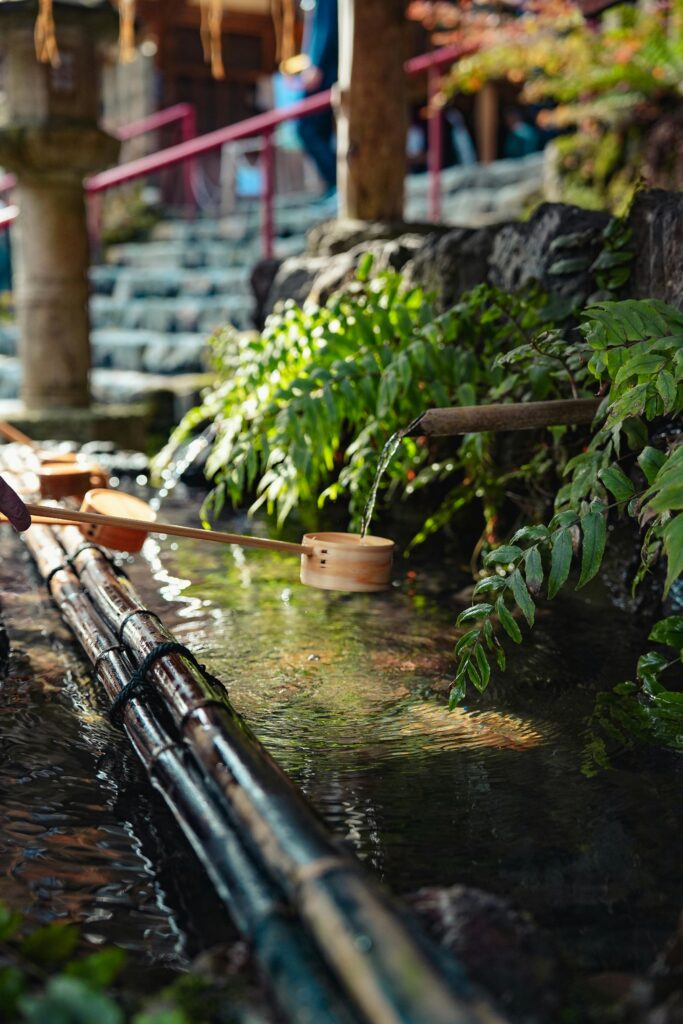
In Japan, Zen is often imagined as something quiet: a stone garden, a cup of tea, a monk sitting in meditation, or a room with very little inside it. These images are not wrong, but they are only the surface.
Zen in Japan began as a Buddhist practice, but over time it came to shape more than religious life. It influenced how people sit, clean, cook, arrange flowers, prepare tea, design gardens, and think about space. In this sense, Zen is not only something found inside temples. It is also a quiet sensibility that appears in everyday gestures and cultural forms.
This article is a starting point. It does not try to explain Zen as a complete religious system. Instead, it looks at how Zen became part of Japanese culture — in food, gardens, tea, space, and the small acts of daily life.
What Is Zen? A Starting Point
Zen is a tradition of Buddhist practice that places strong emphasis on direct experience, meditation, discipline, and attention to the present moment. The word “Zen” is often associated with sitting meditation, but in Japan it also came to describe a broader way of approaching life.
At its heart, Zen asks a simple but difficult question: what happens when we stop adding so much noise to the mind?
This does not mean escaping from life or becoming perfectly calm. Rather, Zen practice often points toward seeing things more clearly through stillness, repetition, and direct attention. A single action — sitting, sweeping, eating, walking — can become a way of returning to what is in front of us.
In recent years, “Zen” has become something of a lifestyle word — used loosely to mean calm, uncluttered, or minimal. There is something true in that association. But Japanese Zen has roots that go deeper than aesthetics. It developed as a demanding religious and cultural practice, shaped by centuries of temple life, monastic discipline, and daily repetition.
Where did Zen come from?
Zen developed from the Buddhist meditation tradition known in China as Chan. It was later transmitted to Japan, where it took root through several schools and became closely connected with temple life, monastic discipline, and cultural practice.
In Japan, the best-known Zen traditions include Rinzai and Soto. Rinzai Zen is often associated with koan practice, disciplined training, and major temple networks. Soto Zen is especially associated with zazen, or seated meditation, and the practice of simply sitting.
These differences matter, but for a first encounter with Zen, it may be enough to understand one thing: Zen entered Japan as a religious practice, but it gradually became part of the country’s wider cultural language.
Zen as a Buddhist Practice
Before Zen became associated with gardens, tea rooms, and quiet interiors, it was first a Buddhist path of training.
The central practice most people associate with Zen is zazen, or seated meditation. In zazen, the body is held upright, the breath is settled, and attention is brought back again and again. The practice may look still from the outside, but it is not passive. It requires discipline, patience, and a willingness to meet the present moment without decoration.
Zen temples also placed importance on routine. Waking, sitting, chanting, cleaning, eating, working, and resting were not separate from practice. The whole day could become a form of training.
This is one reason Zen later blended so naturally with Japanese cultural forms. It did not remain only as an idea. It was expressed through posture, rhythm, repetition, and care.
To understand Zen in Japan, it helps to think less in terms of abstract philosophy and more in terms of practiced attention. Zen is not simply something to believe. It is something to do.
How Zen Shaped Everyday Life in Japan
Of course, Zen remains a Buddhist tradition. But its influence can also be seen in very ordinary actions: cleaning a room, preparing food, arranging a space, serving tea, walking through a garden, or spending time in silence.
One of the most interesting things about Zen in Japan is how it moved beyond the meditation hall.
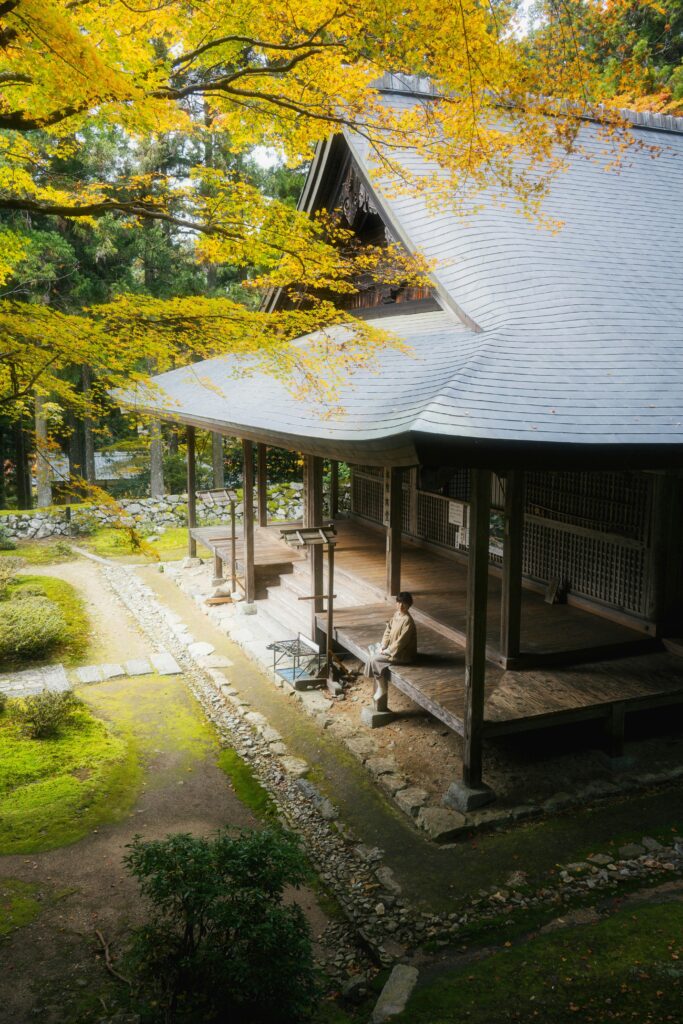
This does not mean that every quiet Japanese custom is “Zen.” That would be too simple. But Zen helped give cultural weight to the idea that small actions can matter. A simple gesture can reflect attention. A plain object can carry depth. An empty space can feel complete.
In this way, Zen became part of a broader Japanese sensitivity toward stillness, restraint, and presence.
Sweeping, cleaning, and attention to small acts
In many Zen temples, cleaning is not treated as a low-value task. Sweeping leaves, wiping floors, and arranging objects are part of practice.
This idea is important because it changes how we understand daily life. Cleaning is not only about removing dust. It is also a way of meeting the space in front of you. The body moves, the mind settles, and attention returns to something simple.
This way of thinking can be seen more broadly in Japanese culture. If you have ever walked into a Japanese inn or small restaurant and noticed how little is in the entrance — perhaps a single flower in a narrow vase, a clean wooden floor, nothing unnecessary — that care is not accidental. The space has been prepared. Someone has paid attention.
For coffeeka, this is one of the most important bridges between Zen and everyday culture. Zen is not only found in temples. It can also be felt in the way a space is prepared for someone to enter.
The quiet discipline of repetition
Zen also values repetition.
Sitting again. Sweeping again. Preparing tea again. Returning to the same small act with care.
Repetition may sound dull, but in Zen-influenced culture it can become a form of depth. Doing something many times does not make it meaningless. It can make the action more precise, more attentive, and more open.
This is one reason Japanese cultural practices such as tea ceremony, calligraphy, martial arts, and flower arrangement are often described as “ways.” The point is not only the finished result. The process itself becomes a path of learning.
The repeated action slowly changes the person performing it.
The Aesthetics of Zen — What You Can See
Zen also influenced what people came to recognize as Japanese beauty.
This beauty is rarely loud. It often appears in simplicity, asymmetry, natural materials, and a sense of incompleteness. A weathered wooden surface, a stone placed in an open garden, a plain ceramic bowl, or a room with only a few objects can all suggest a Zen-influenced aesthetic.
Words such as wabi and sabi are often used to describe related ideas. Wabi can suggest simplicity, restraint, or humble beauty. Sabi can suggest age, patina, and the quiet dignity of time passing. These concepts are not identical to Zen, but they often overlap with Zen-influenced ways of seeing.
A Zen aesthetic does not necessarily try to impress. It often asks the viewer to slow down.
Instead of filling every space, it leaves room. Instead of explaining everything, it allows silence. Instead of polishing away all irregularity, it may allow roughness, shadow, and age to remain.
This is why Zen is so often connected with the idea of negative space — or ma, the meaningful interval between things. A garden is not only made of stones. It is also made of the space around them. A tea room is not only made of objects. It is also made of quietness.
Zen in Food, Gardens, and Tea
The influence of Zen becomes especially visible when we look at food, gardens, and tea.
These are not separate worlds. They all involve attention, restraint, and the careful shaping of experience. They also connect directly with coffeeka’s three pillars: Savor, Space, and Mind.
Food belongs to Savor. Gardens and places belong to Space. The background feeling of stillness belongs to Mind.
Zen helps connect them.
Zen temple cuisine: shojin ryori
Shojin ryori is the traditional cuisine associated with Buddhist temple life. It is usually plant-based and shaped by ideas of simplicity, gratitude, and respect for ingredients.
It is not just “vegetarian food.” The meaning lies in how the food is prepared and received. Seasonal ingredients are used carefully. Waste is avoided. Strong flavors are often restrained. The meal becomes an expression of attention.
In this sense, shojin ryori shows how Zen can enter the act of eating.
A bowl of miso soup, a small dish of simmered vegetables, a piece of carefully seasoned tofu — these are not elaborate. But the care in their preparation can be felt. Each dish reflects a season, a balance, a decision about what is enough.
This connects naturally with Japanese food culture more broadly. Even outside temples, the attention given to season, presentation, and small details often reflects a similar sensitivity.
The Zen garden as a space for presence
Zen gardens are among the most familiar images of Japanese culture. Dry gardens, especially those using stones, gravel, moss, and open space, are often associated with Zen temples.
A Zen garden is not designed only to be looked at quickly. It invites stillness. The viewer may sit, look, and notice how little is actually there — and how much that little can suggest.
Ryoanji, in Kyoto, offers one of the most well-known examples. Its dry garden contains fifteen stones arranged on raked white gravel. The garden is often introduced with the idea that not all fifteen stones can be seen at once from the usual viewing position, though this point is sometimes debated. More important than solving the garden as a visual puzzle is the experience it creates: the viewer is invited to sit, look, and let the open space work slowly on the mind.
Stones may evoke mountains. Raked gravel may suggest water. Empty space may feel active rather than blank.
This is why Zen gardens belong not only to religious history but also to the idea of Space on coffeeka. They show how a place can shape attention — how simply sitting in a particular garden can be its own form of experience.
Tea ceremony and the practice of attention
Tea ceremony, or chado, is not the same as Zen. But historically and culturally, tea and Zen have been closely connected in Japan.
A tea gathering is built from small actions: entering the room, bowing, preparing utensils, boiling water, whisking tea, receiving a bowl, drinking, and noticing the moment.
The beauty of tea is not only in the taste. It is in the pace, the gesture, the room, the season, and the awareness shared between host and guest.
A tea room is often simple. The objects are chosen carefully. The space is small enough to make attention feel intimate. Nothing needs to be excessive.
For modern readers, tea may be one of the easiest ways to feel how Zen-influenced culture works. It turns an ordinary act — drinking tea — into a complete experience of time, space, and presence.
Zen and Modern Japanese Life
Today, Zen appears in many forms.
Some people still encounter it through temple practice and zazen. Others meet it through gardens, tea, architecture, design, or food. Some approach it through mindfulness — though it is worth noting that Zen and mindfulness are not the same thing. Mindfulness, as it is often taught today, draws from multiple traditions and has developed largely as a secular method. Zen is something older, more culturally specific, and more rooted in religious and monastic practice. The two share an interest in present-moment attention, but their origins and purposes differ.
In modern Japanese life, Zen is often subtle. It may appear in a carefully arranged room, a small garden beside a museum, or the way a meal is served with seasonal awareness.
One example that coffeeka returns to often is the kissaten — the traditional Japanese coffee shop. Not every kissaten is quiet in the same way, but many carry an older, unhurried atmosphere: a narrow counter, a single owner, the low sound of jazz or classical music, coffee prepared with care rather than speed. Nothing about it announces Zen. But the care in the space, the quiet between customers, and the sense that time here is not being wasted but spent — these carry a similar sensibility.
For those visiting Japan, this means that Zen is not only something to “visit.” It is something to notice. A temple can be a place of Zen, but so can the pause before drinking tea, the silence of a garden, or the feeling of stepping into a room where nothing is unnecessary.
Zen in Japan is not always dramatic. Often, it is quiet enough to miss.
Where to Go Next on coffeeka
This article is only an entrance.
To understand Zen in Japan more deeply, it helps to follow the paths that extend from it: food, space, tea, gardens, and everyday life.
In Savor, we look at how Japanese food culture carries ideas of seasonality, restraint, and quiet pleasure — from tea and wagashi to the quiet world of kissa (traditional Japanese coffee shops).
In Space, we explore places that invite slower attention: gardens, streets, quiet travel routes, and spaces where time feels less hurried.
In Mind, we return to ideas such as Zen, ma, stillness, and the Japanese sense of “the way” — not as abstract philosophy, but as ways of seeing daily life more carefully.
Zen is not the whole story of Japanese culture. But it offers one useful lens.
Through that lens, a cup of tea becomes more than tea. A garden becomes more than scenery. A quiet room becomes more than empty space.
Closing
Perhaps the best way to begin understanding Zen in Japan is not to define it too quickly.
Sit in a quiet garden for a few minutes. Notice the space between stones. Drink tea without rushing. Watch how light changes on a wooden floor. Step into a small kissaten, order something simple, and notice the care in how it is brought to you.
Zen may begin as Buddhist practice, but in Japanese culture it often remains as a quiet invitation: to pay attention, to leave space, and to find depth in what is already here.
That invitation is what coffeeka is built around — in Savor, in Space, and in Mind.